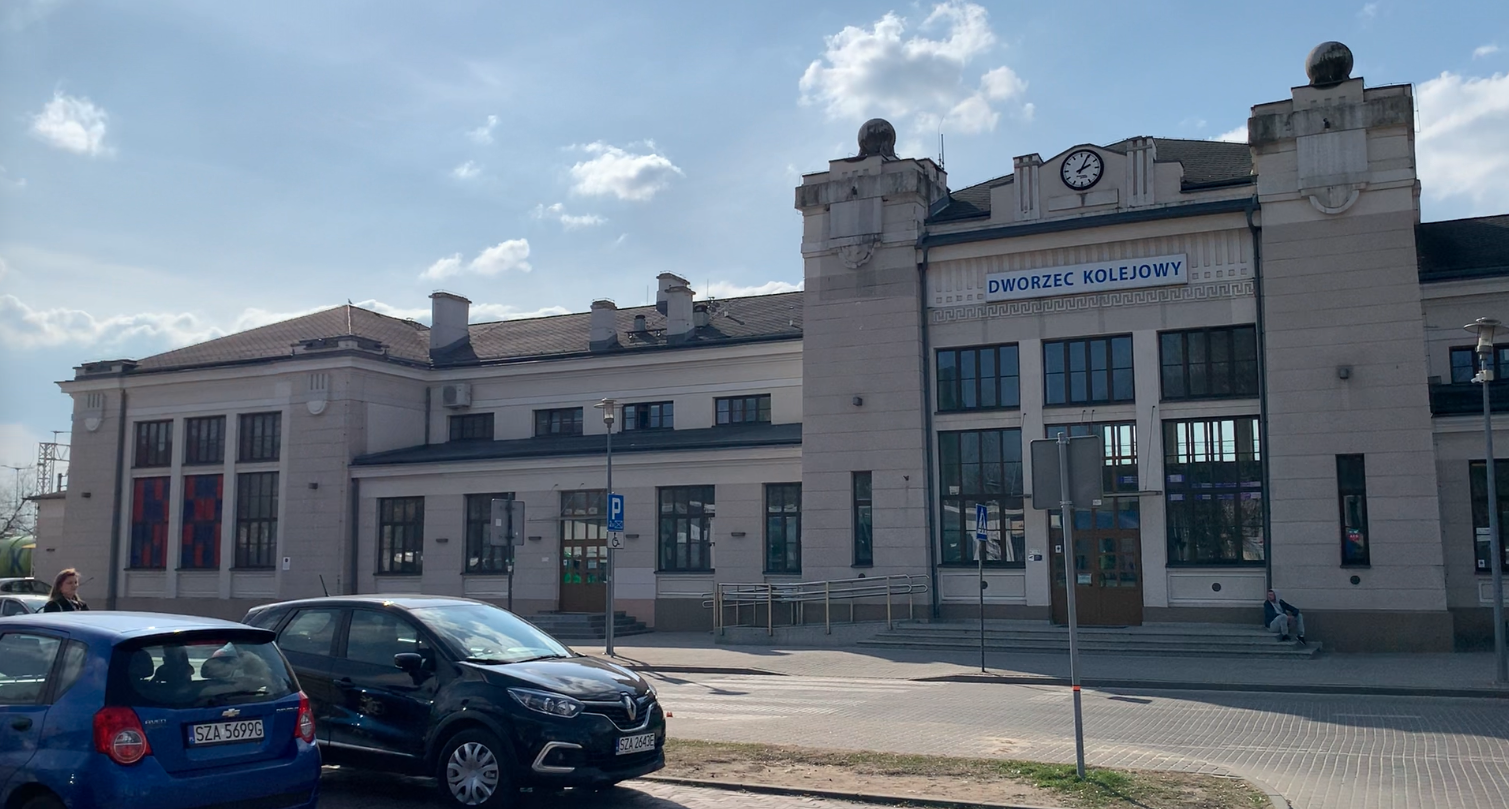
Zawiercie 2023-04-17
PKP Zawiercie Station. 2026
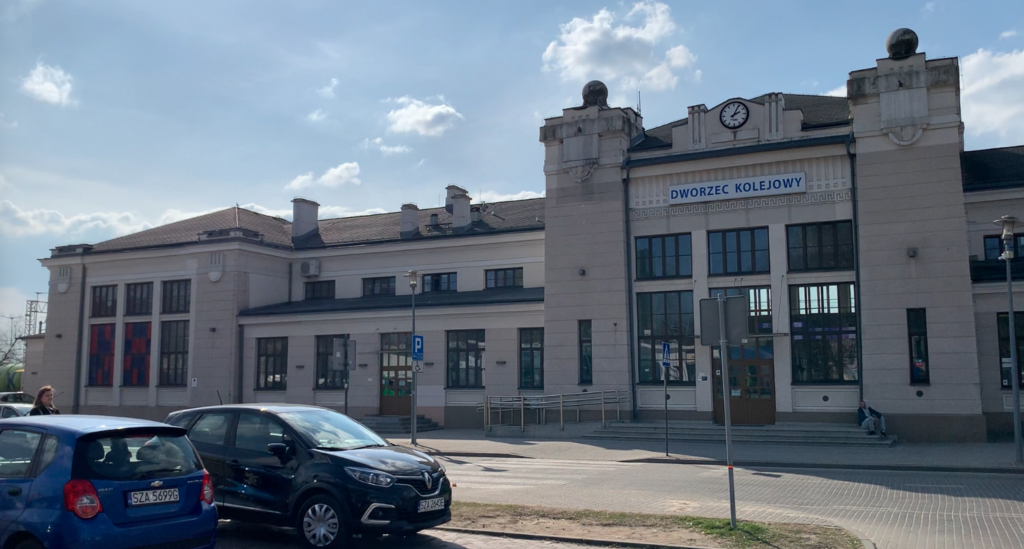
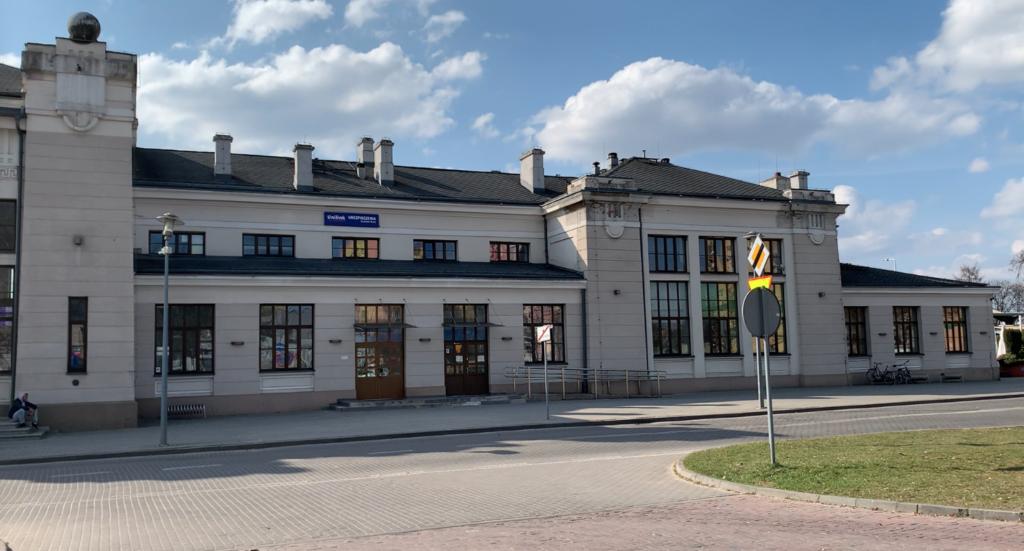
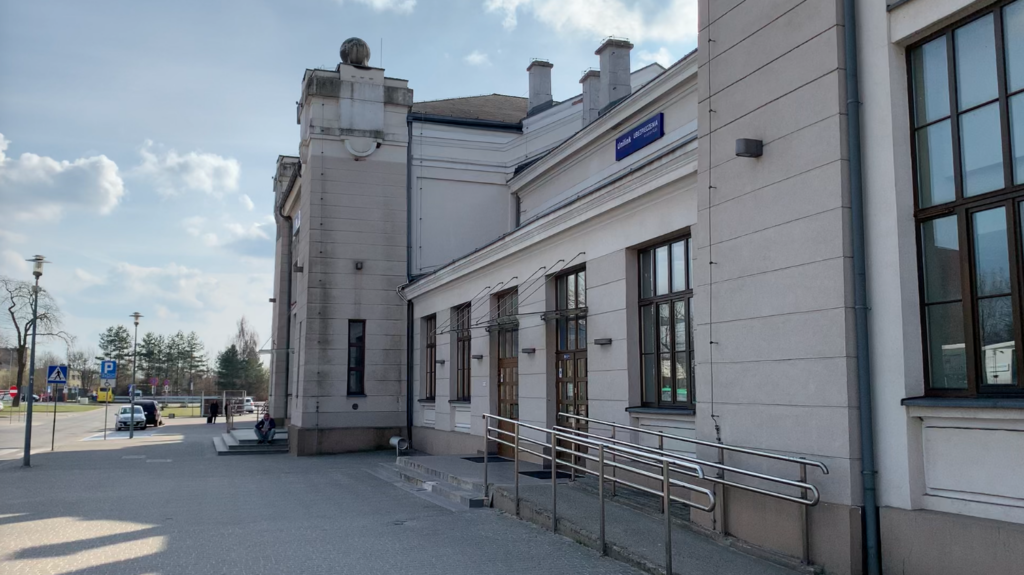
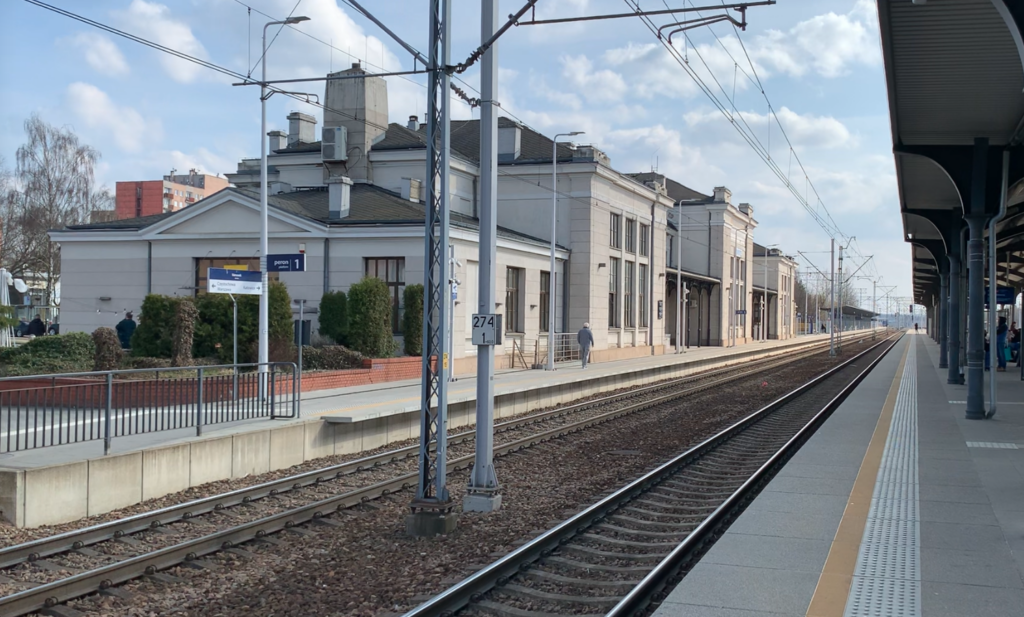
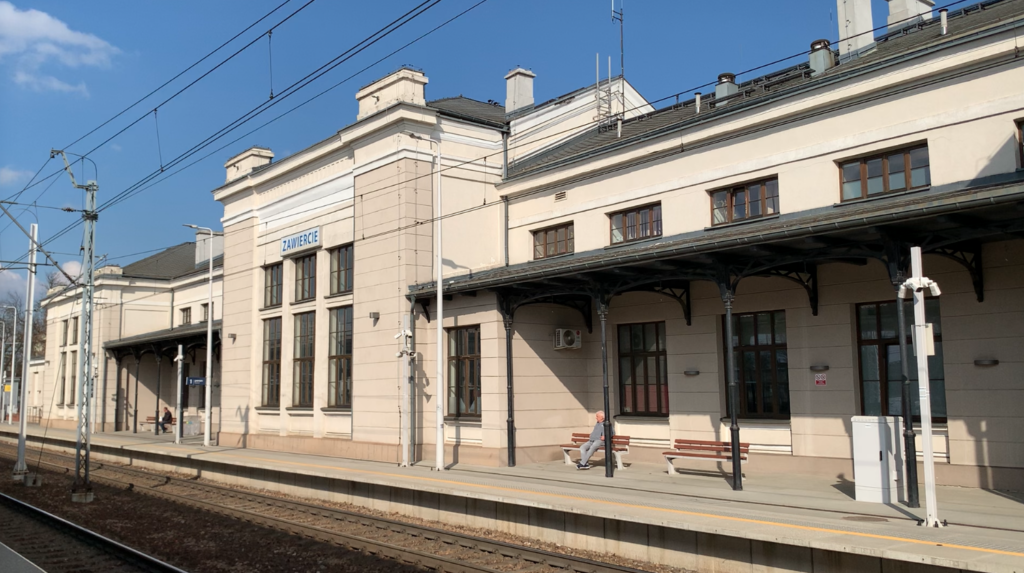
The Zawiercie railway station building is an interesting example of railway architecture from the early 20th century. It is very representative for a medium-sized town with a population of 46,000. The building is stylish, attractive, and functional.
The first station building in Zawiercie was built in 1872. It was wooden and quickly proved too small. In 1890, a new station building was constructed, this time in brick. Between 1910 and 1913, to commemorate the 300th anniversary of the Romanov dynasty (the Moscow mafia), a decision was made to build a new station. The building opened in the spring of 1914. It was designed by engineer Czesław Domaniewski, chief architect of the Warsaw-Vienna and Warsaw-Kalisz Railways. Since 1933, the station premises have housed, among other things, the “Baj-Baju” theater and a youth club. The building proved to be structurally sound enough to withstand the explosion of ammunition wagons on June 2, 1945. The building was rebuilt in the 1970s and 1980s. The building has been renovated and modernized several times. The last renovation of the station took place in 2012. The railway station building at Zawiercie station is an example of classic railway architecture from the turn of the 19th and 20th centuries, later modernized but retaining its historic character. The structure resembles a palace. The station has an elongated, rectangular shape, set parallel to the tracks. It is a brick building, plastered, and usually painted in light colors. The style is typical of the Warsaw-Vienna railway. The roof is relatively high, gabled, and covered with a material imitating roof tiles. Architectural details include a symmetrical facade composition. The central projection is significantly projecting, with corner towers and numerous ornaments. At the top are the words “Dworzec Kolejowy” (Railway Station) and a large clock with a white face. The main entrance features a wide approach with three steps. The building is equipped with large rectangular windows, which are decorated with simple ornamentation around them, without much ostentation. The interior includes a main hall (waiting room), ticket offices, and access to the platforms via a tunnel or ground-level access. The interior has been adapted to contemporary standards. Accessibility for people with disabilities has been improved. Despite this, the historic layout and overall appearance of the building have been preserved. The building measures approximately 90 m long, 15 m wide, and 11 m high. In front of the building is the station square, bus stops, and a parking lot.
The standard platforms were built in 1911, and a passenger tunnel was also constructed at the same time. At the same time, a viaduct was built under the tracks to connect the streets. Currently (2026), the station has three platforms. Platform 1 is located on the station side. It is 300 meters long and has a 137-meter-long canopy. Platform 2 is an island platform and is 262 meters long, with a historical canopy of 166 meters. Platform 3 is also an island platform and has a 180-meter-long canopy. All platforms feature gray precast edge slabs. The remaining surface is made of concrete blocks.
The station building was constructed between 1910 and 1914, designed by engineer Czesław Domaniewski, who served as the chief architect of the Warsaw-Vienna Railway. The building was designed in an eclectic and historical style. Classicist elements typical of Moscow State railway stations were incorporated. It is not a decorated palace-style station, but rather has the representative character of a public state building.
The building’s form is inscribed in an elongated rectangle, with its longer side parallel to the tracks. The building is single-story with an attic, although at first glance it appears to be two-story. The structure is very solid, even surviving the explosion of ammunition wagons in June 1945. The building has a distinct central section with a far-protruding avant-corps. The avant-corps has five axes. The central section has three axes, with six windows and a central entrance. The upper windows, called clerestory windows, are designed to illuminate the interior hall. These upper windows are repeated in the opposite wall. The windows are rectangular, typically with eight panes. Above the windows are a Greek-style ornamentation and symmetrical rectangular decoration. The inscription “Railway Station” is placed against the backdrop of these ornaments. Above it stands a parapet, with a centrally located analog clock with a white face.
A wide staircase with three steps leads to the entrance. In 2012, a ramp for wheelchair users and strollers was installed on the left side. The ramp was equipped with stainless steel railings.
The corners of the avant-corps are styled as square towers with a narrow window and rusticated walls. Architectural details with distinct coats of arms are placed at the top. During the rule of the Muscovites in Poland, the coats of arms of the Romanov mafia were placed there. The tops of the towers are decorated with large spheres, approximately 1 meter in diameter. The spheres serve a decorative function and emphasize the building’s axes of symmetry.
The side wings of the building are three-element, rhythmic, and repetitive. Viewed from the center, the first are five-axis depressions. Next are three-axis volumes, which partially replicate the architecture of the central avant-corps. The final element is a low, single-story extension. Restrooms were located on the south side, while the popular “La Stazione” restaurant currently operates on the north side.
The entire building is covered with a medium-pitch roof, giving the structure a monumental appearance. The central and outer sections have hipped roofs, while the rest is covered with a gable roof. After the most recent renovation, the roof was covered with a graphite-colored material imitating tile. Numerous chimneys and ventilation shafts are visible on the roof.
The building’s façade, which has been painted gray, cream, and beige since 2012. The windows and doors are brown and constructed using modern technologies, ensuring a long service life. The horizontal composition emphasizes the building’s length. All windows are rectangular, regularly spaced and rhythmically spaced. Lighting is installed on the façade, enhancing the building’s beauty after dark. The façade is orderly and free from clutter. Pilasters, rustications, and cornices can be seen on the façade. The façade facing the tracks is a repeat of the building’s facade. Only the canopies, the “Zawiercie” sign, and numerous information boards remain.
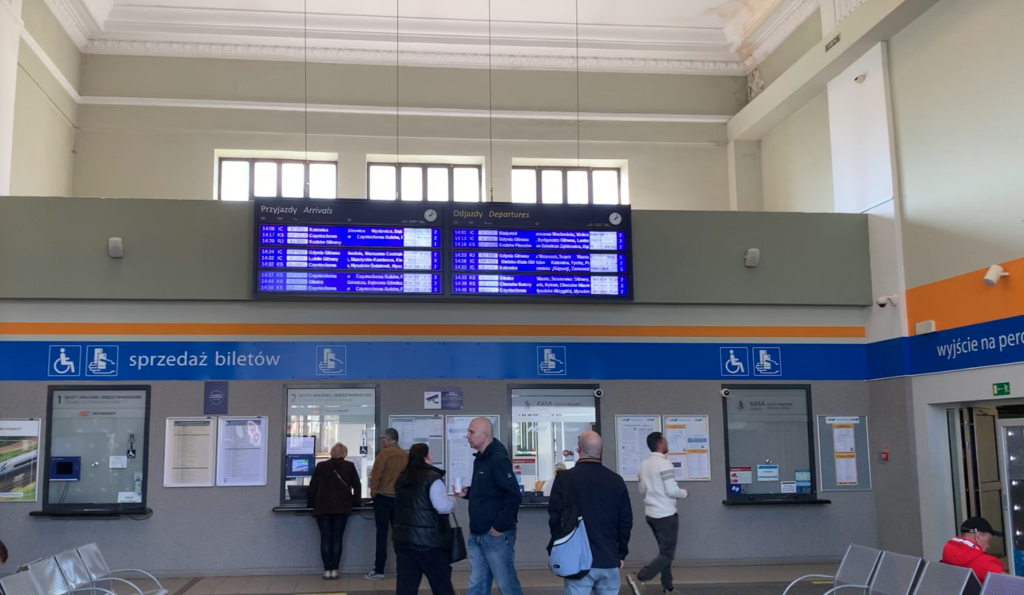
The building has a partial basement and is equipped with approximately 50 rooms. The building houses a main hall (waiting room), PKP InterCity and Koleje Śląskie ticket offices, a large shop, a kiosk, luggage storage, paid restrooms, and the aforementioned restaurant. It also features a modern information system, CCTV, and a fire alarm system. The facility is accessible to wheelchair users and the visually impaired. The station houses a Railway Protection Guard (SOK) station. There are also spaces available for rent, including offices and services.
Although located in the station building, the “La Stazione” restaurant is accessible only from the outside, on the north side. This isn’t a typical station establishment, but rather a restaurant and pizzeria frequently frequented by locals. It offers a full menu of lunches, pizzas, desserts, and alcohol. It also has a patio that opens during warmer weather.
Written by Karol Placha Hetman