Tczew 2026-01-17
PKP Tczew. 2026


City of Tczew.
Tczew is a city in Pomerania, situated on the Vistula River, the largest center in the Kociewie region, known for its strategic location. The city’s population exceeded 57,000 in 2021. Offering tranquility, green spaces, and good infrastructure, it is a good place to live, especially for families, conveniently located near Gdańsk. The city is part of the Tri-City Agglomeration. Tczew is located in the Pomeranian Voivodeship, in Tczew County. From 1975 to 1998, the city administratively belonged to the Gdańsk Voivodeship. Tczew lies on the Vistula River, and is surrounded by the Mill Canal.
The settlement was founded in 1252, and in 1260, it was granted city rights. The city’s area is 22.26 square kilometers. The average elevation is 29 meters. In 2023, the city’s population was 57,218. License plates: GTC, XTC. Geographically, the city lies in the Starogard Lake District, in the Vistula River valley. Tczew is 33 km from Gdańsk. The city is a major transportation hub, connecting the German-Muscovite (Berlin-Königsberg) and Silesia-Porty lines.
Archaeological finds have shown that traces of human settlement date back to 2000 BC. A Roman-period cemetery (500 BC) and traces of early medieval settlement were discovered. Because the settlement was multinational, a city council was established. It was one of the first city councils in Poland. The city controlled the transport of goods east-west and the flow of goods along the Vistula River towards Gdańsk. A customs house operated. A river port was built on the Vistula. Seagoing ships from the Western Hemisphere entered the port. Trade and small craftsmanship flourished here. The city was granted the right to mint coins, which were interchangeable with silver denarii. In 1289, the Dominican Order was brought to Tczew and built a church and monastery here. In 1308, the Teutonic Knights treacherously occupied the city. The city was burned down, and the population was expelled. Only between 1364 and 1383 was the city rebuilt, but it remained under Teutonic control. The city was re-incorporated under Chełmno Law. A castle was built and the city was surrounded by walls with three gates. After the Battle of Grunwald (1410), the city briefly returned to the Crown. In 1440, Tczew joined the Prussian Confederation. In 1466, the city was incorporated into Poland. The city became a Polish grain trading center. The city was plagued by fires, wars, and epidemics. The largest fire occurred in 1577. During the Swedish Deluge and the Great Northern War, the city suffered significant damage. Due to the First Partition of the Polish-Lithuanian Commonwealth, Tczew fell under Prussian rule. The Dominican Order remained a stronghold of Polish culture until 1818, when the order was dissolved in Prussia. During the Napoleonic Wars, the city was briefly controlled by Henryk Dąbrowski’s soldiers and the Polish administration.
A significant date for Tczew was 1857, when the first permanent rail-road bridge was opened. Construction of the bridge lasted from 1851 to 1857. It features turrets and dense iron truss spans. The bridge was designed by F.A. Stüler. The bridge’s pillars were adorned with neo-Gothic towers. Ornately decorated entrance gates were built on the abutments. At that time, it was the longest bridge in Northern Europe, measuring approximately 800 meters in length. The first railway station and railway depot were built next to the bridge. This station no longer exists.
In the mid-19th century, the Prussians demolished part of the defensive walls, towers, and entrance gates dating back to the Swedish and Napoleonic eras. They also demolished the former Teutonic castle.
The railway and road bridge was no longer sufficient. Therefore, between 1888 and 1890, a second bridge was built nearby, 30 meters away. It took over the function of the railway bridge, as the first was now intended to serve pedestrian and vehicular traffic.
By the end of the 19th century, a steam mill, the Muscat machine factory, the Kriesel machine repair shop, the Kelch metal products factory, the royal machine construction plant, the iron foundry, the Hoffmann cement factory, two sugar refineries, a wafer factory, a brewery, a gasworks, a waterworks, a sewerage plant, a municipal waterworks, and the People’s Bank were all built. In 1905, a beautiful post office was built in Tczew. In 1908, a new town hall was built, designed by architect Kurt Hempel. The Catholic Church was the mainstay of Polishness in Tczew. The common language was Germanic, but the majority of the Polish population was bilingual. 57% were Catholics and 43% were Protestants.
In 1918, the People’s Council took over the city. The city paid tribute to the units of General Józef Haller’s “Blue Army.” A daily newspaper, the “Dziennik Tczewski,” was published in 1919. In 1920, the first State Maritime School in Poland was founded in Tczew. The interwar period saw significant industrial development. Numerous factories existed, and crafts, trade, and housing developed. A church dedicated to St. Joseph and a sports stadium were built. The waterworks, sewerage system, and municipal slaughterhouse were modernized. Several Polish newspapers and magazines were published. The 2nd Rifle Battalion was stationed in the city to defend the bridges and the city. The population increased from 16,000 in 1921 to 28,000 in 1938.
On September 1, 1939, Polish sappers blew up the bridges over the Vistula River after Germans attempted to seize them. The German occupation ended on March 12, 1945, when Soviet troops entered Tczew and the dictatorship of the Muscovite state began.
After World War II, Tczew was one of the towns in Gdańsk Pomerania most devastated by front-line operations. Almost all factories were destroyed, and their machinery was taken to Moscow. The city’s population was only 18,000. Residents and immigrants began rebuilding the devastated city. In 2016, Saint Jadwiga of Anjou, Queen of Poland, became the patron saint of Tczew. The oldest monument in the city is the Church of the Exaltation of the Holy Cross, dating from the 13th century. The Church of Saint Stanislaus Kostka, dating from the 14th century, is also a historic landmark. Tczew’s attractions include the bridges over the Vistula River.
PKP Tczew.
Address: Pomorska Street 18, 83-142 Tczew. Note: Some databases or maps locate the station at Jarosława Dąbrowskiego Street, but this information is incorrect. Geographic coordinates: 54.097N 18.789E. Station elevation: 13-17 m.
Tczew is one of the most important railway junctions in Poland. It connects Warsaw, Bydgoszcz, Chojnice, and Piła with the Tricity area, Słupsk, and Koszalin. The station is important for passenger traffic as well as for freight and transshipment. According to the Polish State Railways (PKP), the station is classified as a regional station.
The decision, in the form of a law, to build the Berlin-Königsberg railway line was passed on December 7, 1849. It was already known at that time that the line would run from Bydgoszcz to Tczew and on to Malbork. The Tczew railway station opened in 1852, when a railway line from Bydgoszcz was established. The station was located in the so-called New Town. Since 1852, the city has developed and continues to develop around the railway station.
Work on the Bydgoszcz-Tczew railway line began in 1851. On July 19, 1852, the residents of Tczew saw the first train, consisting of a steam locomotive and several wagons. The train delivered materials for further construction of the railway line. The official opening of the line took place on August 6, 1852, in the presence of the Prussian king. The line to Gdańsk was not an extension of the Bydgoszcz-Tczew line, but a separate project, for which Tczew was the starting point. The line from Bydgoszcz, however, continued to Malbork, Elbląg, and Königsberg. The Tczew-Malbork section opened only on October 12, 1857, when construction of a road-rail bridge over the Vistula River and a second bridge over the Nogat River were completed. Initially, the lines were single-track, but plans were already underway to build a second track.
In 1875, the line from Chojnice, a shortened version of the Eastern Railway, was extended to Tczew, bypassing Bydgoszcz. By 1876, this line was double-tracked. The lines to Malbork were given a second track in 1873, and to Gdańsk in 1876. In 1880, a circular locomotive shed, “Okrąglak,” was built in Tczew on what is now Workshopowa Street. A similar shed was built in Piła. Around 1880, a freight station was built on the line from Bydgoszcz, on what is now Jana z Kolna Street. In 1909, a dormitory building with a canteen was constructed, as well as a waiting room for fourth-class passengers. This latter building was single-story, with an additional floor later added.
At the beginning of the 20th century, Germans in the Tczew and Malbork areas conducted numerous military maneuvers involving rail transport. It quickly became apparent that the Tczew freight station was blocked by echelons. The decision was then made to build a second freight station, on the marshes and meadows where the passenger station platforms now stand. This wasn’t the end. In 1910, construction began on the Zajączkowo Tczewskie station. Within 10 years, including during the Great War, a group of freight tracks, a marshalling yard, and connecting lines were built. The construction of the Zajączkowo Tczewskie station resulted in all freight traffic being relocated here. As early as 1913, the Zajączkowo Tczewskie station received a direct connection to the Chojnice line and a transfer to Gdańsk. The construction of this station was beset by various obstacles: financial, terrain, and a simple lack of workers. It wasn’t until 1917 that the signal boxes, all the switches, and the shape signals were put into operation. By 1920, a third track group was in operation, along with two fan-shaped locomotive sheds with turntables, staff buildings, and other infrastructure.
In 1918, the Republic of Poland regained independence. In 1920, Tczew and Zajączkowo Tczewskie stations became border stations on the route to Malbork and the Free City of Gdańsk. The track layout facilitated transit traffic for Germans and the uninterrupted development of the Republic. The only problem was passenger trains on the Bydgoszcz-Tczew-Gdańsk route. At Tczew station, trains had to be changed heads, and trains had to be pulled onto the bridge towards Malbork. Tczew station also served an important function; hard coal was transhipped to seagoing ships here until the port of Gdynia was opened.
In 1939, the Germans began World War II. The Tczew junction was destroyed in September 1939 and again in February 1945. The station, locomotive sheds, signal boxes, and bridges over the Vistula River suffered the most damage. It was estimated that the Tczew junction was 90% destroyed. The entire Tczew railway junction was practically rebuilt from scratch, as at that time, rail routes were the lifeblood of the economy, which had to be rebuilt after the barbaric actions of the Germans and Muscovites. Due to the shifting borders, the significance of individual railway routes changed. This led to the relocation of passenger platforms to the southwest. This allowed the platforms to easily handle trains from Malbork and Bydgoszcz towards the Tricity area. At the same time, the importance of the route from Chojnice, LK No. 203, declined.
In the 1960s and 1970s, Zajączkowo Tczewskie station recorded the highest freight flow, especially to and from seaports. In 1964, new track groups were built in the ZTC area, including a marshalling yard and signal box, with relay-based railway traffic control devices. Between 1983 and 1988, wagon repair halls were built at this station. Until 2005, the goods yard used skid braking on the marshalling yard. Between 1998 and 2000, the Tczew passenger station was modernized.
In 1968, electric traction reached Tczew from the Bydgoszcz direction. In 1969, the entire Tczew station was electrified. In 1970, electrification began towards the Tricity and Malbork. The route to Chojnice was planned to be electrified. However, this route and its associated connecting lines were never electrified. In 1983, Line No. 9 through Malbork to Warsaw was electrified.
The track layout in Tczew allows freight trains from the coal main line, Line No. 131, to be routed to the Zajączkowo Tczewskie station, bypassing the main station, or from the same main line towards Malbork, directly to the Vistula Bridge through the site of the station’s previous location, to Line No. 9.
Currently, the station has four platforms and seven platform edges. All platforms are 0.76 m high. The shortest is Platform 1, a single-edge platform, which is 280 m long, and the longest is Platform 4, which is 420 m long. Platform 2 is 300 m long. Platform 3 is 400 m long. Platforms 2, 3 and 4 are partially covered with shelters, and access is provided by an enclosed footbridge over the tracks, stairs and lifts.
Currently, rail traffic at Tczew station is controlled by the Local Control Center, the “TW” signal box, located on Kolejowa Street, at platform level. The entire station is equipped with electric turnouts, and the semaphores are illuminated. Between 2009 and 2012, as part of the modernization of line E65, the station underwent a thorough modernization of the track system, replacement of the electric traction, and reconstruction of the platforms. Modern, computerized EBI LOCK 950 rail traffic control equipment from Bombardier was installed, and all control from the signal box, commonly known as the “Mushroom,” was moved to a new facility located on Kolejowa Street. The Local Control Center “TW” also controls Pszczółki station.
A historic railway water tower stands next to the Galeria Kociewska building. Two steam locomotives stand as industrial monuments in Tczew; TKh49-11 and TKT48-170 (painted in black and white stripes). There were plans to organize a railway museum in the circular locomotive shed, the so-called “Okrąglak.”
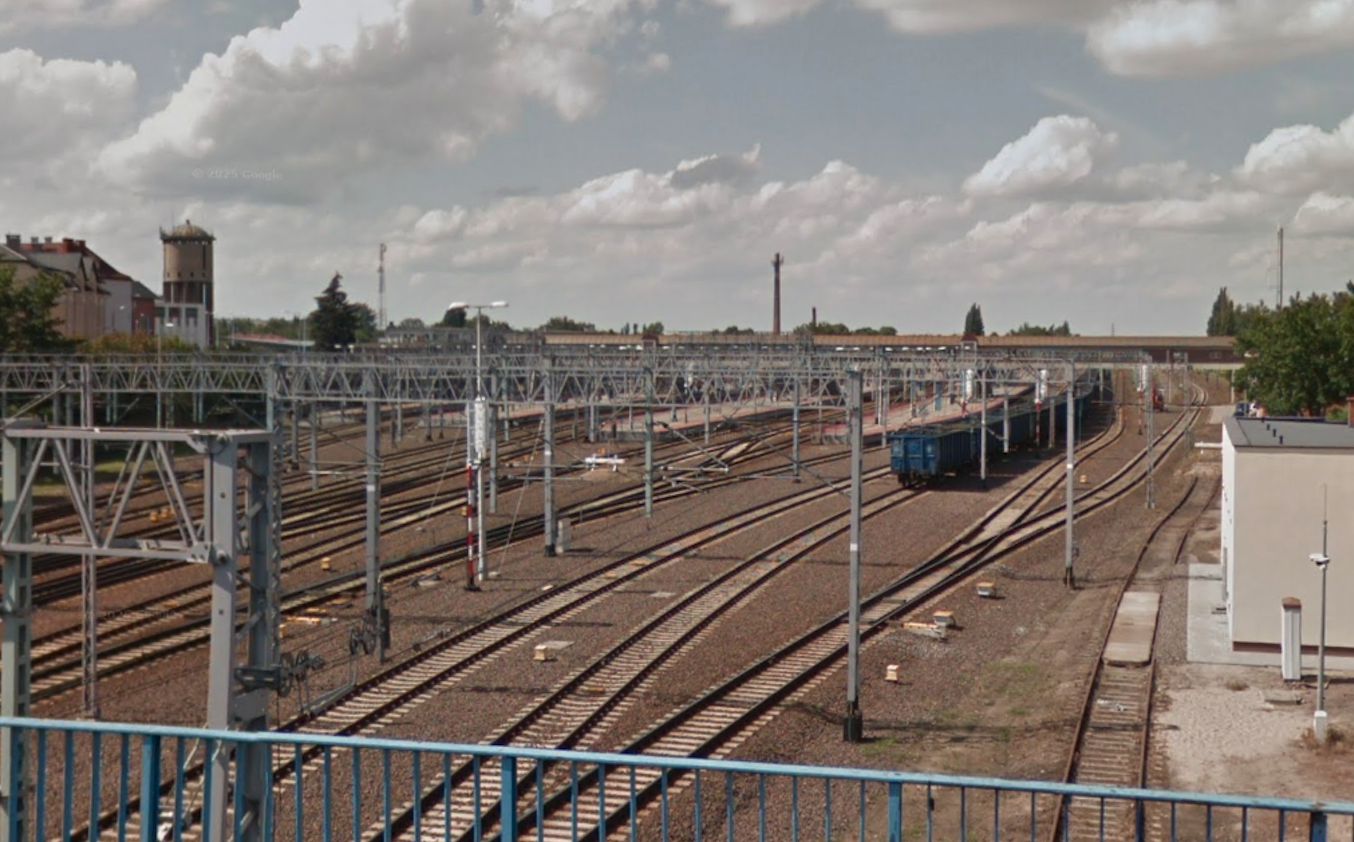
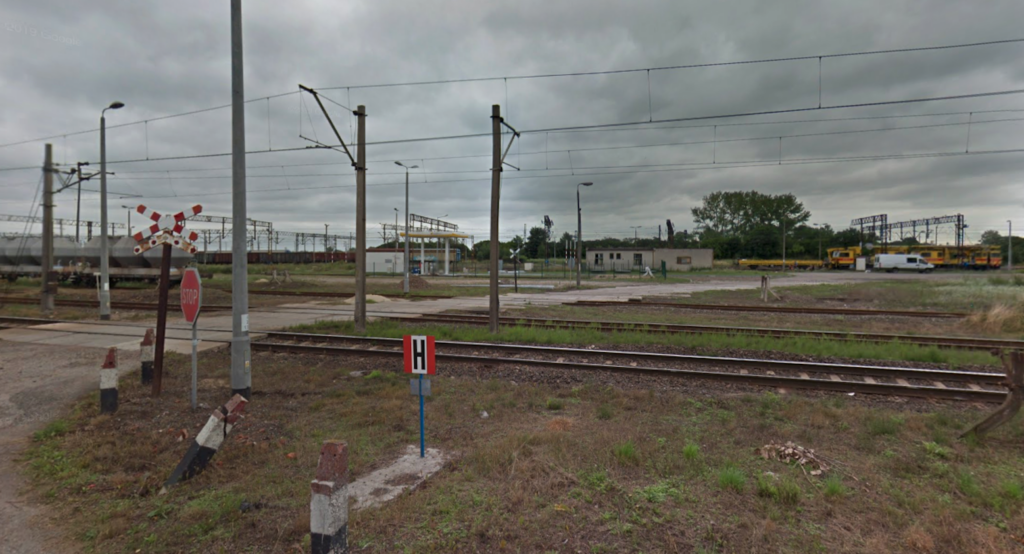
As befits a railway city, there are numerous railway facilities here. There are several stations and electric traction substations. On Gdańska Street, there is a historic fan-shaped locomotive shed with a turntable. Currently (2026), it houses the Transport Means Repair Plant. In the northern part of the city is the PKP Cargo – Pomorski Zakład Spółka, and there is another historic fan-shaped locomotive shed, also used by the PKP Cargo – Pomorski Zakład Spółka. Next to the locomotive shed stands another water tower. Nearby is the Zajączkowo Tczewskie “ZTA1” station. A little further on are two service platforms, and to the north, across the Motława River, there is a third service platform. Just before the Motława River, there is a group of freight tracks. Just before the Motława River, a road viaduct crossed the tracks, of which only ruins remain. This viaduct is called the Zajączkowski Bridge. To the north, beyond the Motława River, is the “ZTA” signal box, and next to it is the aforementioned service platform 3. Near the Motława River and Motławska Street, the Zajączkowo Tczewskie station/stop building once stood. Currently, a private residential building occupies this location. Between the tracks is the “ZTB” signal box. To the northwest, there is another group of freight tracks. These accommodate freight trains up to 700 meters long. There are 28 holding tracks. The Rów Młyński Struga River flows under the tracks. Beyond the next river, there is another group of freight tracks. There are 26 of them, but they can accommodate freight trains up to 1,000 meters long. Beyond the station level, is the “ZTC” signal box. Further towards Trójmaist, there are four main tracks. There is the Miłobyś passenger stop. There are two single-edge platforms here, adjacent to the main tracks of the passenger tracks, on the northeast side. The “ZTD” signal box is at the stop.
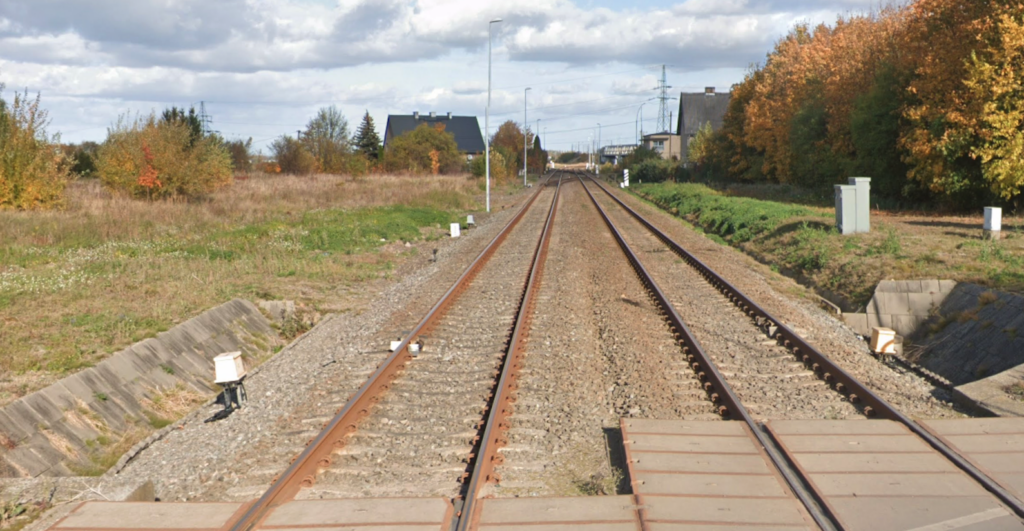
Let’s now return to the area where the PKP Cargo plant is located and head southwest. Here, you’ll find tracks leading to Chojnice and the city’s freight bypass. The tracks cross viaducts over National Road No. 91 and Solidarności Avenue. Further along the eastern side of the tracks flows the Mill Canal, and on the western side are the Family Allotment Gardens. There are five tracks in total, belonging to different railway lines. The most important are the tracks to Chojnice and LK No. 203, which merge into two of the three. This third track is the freight track from Zajączkowo Tczewskie station. The two remaining tracks turn eastward and then join Railway Line No. 131 to Bydgoszcz. The Mill Canal flows under all these tracks to the west and then follows the railway line to Chojnice. The Tczew Suchostrzyki “TS” signal box is located here. The line passes through DW No. 224, Jagielońska Street.
The tracks towards Bydgoszcz connect with line No. 131 at the Górki “Gk” signal box. There were also sidings to local factories at this point, but they are currently unused. The main tracks of line No. 131 run north through the city. From the Wojska Polskiego Street viaduct, there are switches and more siding tracks. This was the site of the first freight station in Tczew. On the western side of the tracks is the “Okrąglak” locomotive shed. Further on, two main main tracks turn left to the Tczew passenger station. One main track turns east and joins line No. 9 before the bridge over the Vistula River. Nearby is the PKP Energetyka Zakład Północny plant. In this area of the Tczew junction, there are no conflicts between rail and road traffic. There are four viaducts over the tracks; Two viaducts on 1 Maja Street, the 800th Anniversary of Tczew Viaduct, and Mostowa Street. Thanks to this, Tczew avoids traffic jams and long waits at closed railway crossings. Without a doubt, the track system in Tczew, built mainly after 1945, is logical and efficient.
Tczew Railway Station
The first railway station in Tczew was built between 1856 and 1857. It was located closer to the rail-road bridge over the Vistula River, on the site of today’s 1 Maja Street and roundabout. The station was designed by Friedrich August Stüler. The first railway station in Tczew was built on the site of the original historic Zamayte Hill, which was surrounded by a bend in the Mill Canal, built in the mid-14th century. The station was located near the Vistula River, on the axis of the rail-road bridge, between two railway lines: the Bydgoszcz and Gdańsk lines. This location was dictated by the route of the Eastern Railway from Berlin to Königsberg. A tree-lined avenue led to the station, an extension of the new road from Tczew to Gdańsk. The building was two-story, triangular in shape, with 13 axes, an entrance projection, and constructed of yellow brick. The bricks were supplied by a local brickyard. The individual station blocks were covered with slightly pitched hipped roofs. The front section housed the post office, freight forwarding, and ticket and baggage offices. A transverse corridor provided communication between the platforms. The rear section was occupied by bright and spacious waiting rooms/restaurants for travelers and dining facilities. The waiting rooms/restaurants for first and second class were divided by a glass wall. There was a separate area with a ladies’ salon and a royal salon. On the first floor, the last room was the royal salon, with a semicircular wall and large windows offering views of the Vistula valley, the bridge, and the view towards their Muscovite brethren. The building also contained a third-class waiting room, accessible to all travelers. The first floor housed apartments for the stationmaster, postmaster, and restaurateur. The station was an island station, located between the tracks, similar to the stations in Poznań, Piła, and Toruń. A large shelter stood in the station square, under which carriages, horse-drawn carriages, and cars carrying passengers stopped. The square was paved. A huge clock with a white face was placed on the building’s facade.
The station survived until World War II, when it was destroyed by military operations on September 1, 1939, and from February 22-22, 1945. Most of the damage was caused by bombing. In March 1945, a fire started by the Muscovites destroyed the building, leaving it unfit for demolition, which was completed in 1955.
After World War II, no station buildings remained at the station. Passenger services were handled in barracks and preserved warehouses. In 1949, a new, modernist station opened, featuring a large hall, well-lit by windows located near the ceiling. Designed by architect Zygmunt Polatyński, the station was connected to the platforms and the rest of the city by a footbridge. The footbridge was completely enclosed.
The station’s most recent renovation was carried out between 2019 and 2021. The interior was completely redesigned and the facades were renovated. Renovation and modernization work lasted from August 2019 to mid-2021. The renovation was carried out as part of the 2016-2023 Station Investment Program, financed by the state budget, with minimal EU funding (Infrastructure and Environment Operational Program). On August 19, 2021, the modernized station building officially opened to passengers. The station modernization included: renovation of the facade and exterior of the building, improving the aesthetics and durability of the structure. Adaptation of the facility to the needs of people with disabilities, including the installation of elevators, automatic doors, indoor and outdoor paths, Braille signage, and tactile station maps. The building is equipped with modern installations and systems: CCTV, access control, fire alarms, and an intelligent building management system (BMS). The building features energy-efficient solutions and insulation, replacement of windows and doors, and the installation of photovoltaic panels. Functional improvements to the interior have been made: renovated waiting rooms, four ticket offices, improved lighting, and a comfortable passenger space. Improvements to the surrounding area include a new surface for the square in front of the station, landscaping, and bicycle racks with a repair station. The total cost of the renovation was PLN 17.9 million gross.
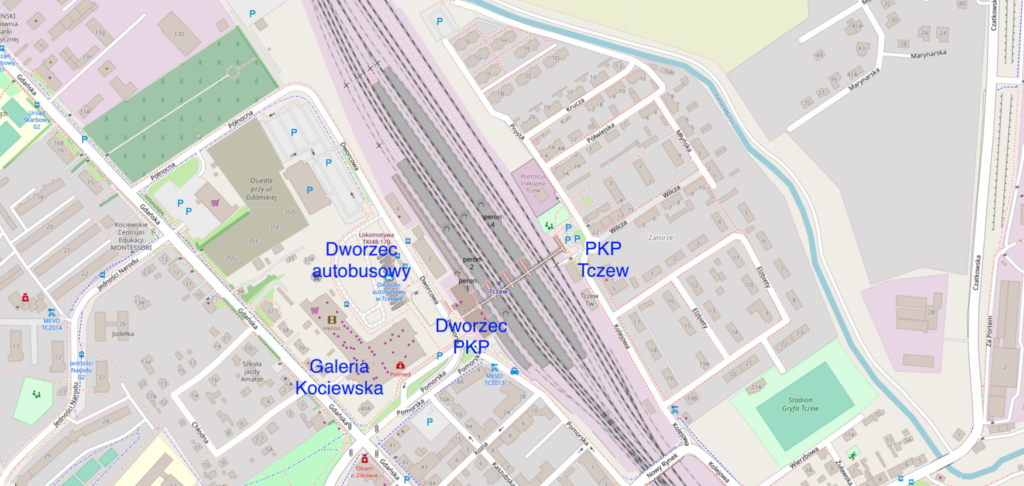
The station building is open 24 hours a day. Ticket offices operate within the building. There are four ticket windows: PKP InterCity and Polregio. A restaurant, a kiosk, and a bakery are available at the station. Toilets and Wi-Fi access are also available 24/7. Both the station and the footbridge over the tracks have been free of architectural barriers. The bus station, the “Kociewska” shopping mall, and the water tower are located next to the station.
Passenger traffic
Since 2017, the station has seen increasing passenger traffic. In 2017, the station served 2,850,000 passengers, and in 2024, 4,380,000 passengers, ranking it 23rd in Poland. A slump occurred only in 2020, when the station served 1,980,000 people. This was due to the Chinese coronavirus pandemic. InterCity (IC, ICP, TLK) and PolRegio trains stop at the station. On January 15, 2026, exactly 200 passenger trains departed from Tczew station. You could travel to the following stations: Białystok, Bielsko-Biała Główna, Bydgoszcz Główna, Chojnice, Elbląg, Frankfurt/Oder, Gdańsk Airport, Gdańsk Wrzeszcz, Gdynia Chylonia, Gdynia Główna, Gliwice, Gorzów Wielkopolski, Jelenia Góra, Katowice, Kołobrzeg, Kostrzyn, Kraków Główny, Krynica-Zdrój, Kwidzyn, Lichkov, Luzino, Łódź Fabryczna, Malbork, Olsztyn Główny, Poznań Główny, Rzeszów Główny, Słupsk, Smętowo, Starogard Gdański, Szczecin Główny, Szklarska Poręba Górna, Warszawa Zachodnia, Wrocław Główny, Zakopane, Zielona Góra Główna, and Żory. However, the Germans can no longer travel to their Russian brethren, as there is no connection to Königsberg and onward to Moscow or St. Petersburg. For now, the brothers are pretending not to like each other.
Freight traffic. Ninety percent of freight traffic is handled by the Zajączkowo Tczewskie railway station. Traffic is routed via connecting roads, significantly reducing congestion at Tczew station.
Railway lines
Railway Line No. 9 is a double-track line, electrified at 3 kV DC, and has a length of 323.393 km. The line was constructed in sections between 1852 and 1876, during a period when Poland was partitioned by Germans, Muscovites, and Austro-Hungarians. The line was constructed in the Russian Partition and the Prussian (Germanic) Partition. The line runs from central Poland northwestward and lies within the Masovian, Warmian-Masurian, and Pomeranian Voivodeships. Railway Line No. 9, connecting Warsaw East with Gdańsk Główny, is the second railway line in Poland, after the Central Railway Line (CMK), on which passenger trains can run at a speed of 200 km/h. This is due to the modernization of this route carried out over the past few years. This line is very important for rail traffic not only on the Warsaw – Gdańsk – Gdynia section, but also for the Słupsk – Koszalin – Kołobrzeg connection. In January 2020, tests were carried out towards the Tricity at 200 km/h, including runs of the EZT ED250 “Pendolino” train. The tests were conducted under the supervision of ETCS Level 2. However, remember that from 2024, classic railcar trains with EU200 locomotives can also travel at 200 km/h. The formal introduction of 200 km/h on LK No. 9 took place on December 13, 2020. This approval covered several sections with a total length of 113 km. On the remaining sections, speeds of 170-190 km/h were permitted. The railway infrastructure was adapted to 200 km/h already in 2015. The tracks and ETCS Level 2 system installations were modernized at that time. All work was completed, and certificates were issued by 2021.
The Chorzów Batory – Tczew railway line No. 131 is a railway line in Poland connecting the Upper Silesian and Częstochowa Industrial Districts, and the Rybnik Coal District with the railway junction in Tczew, and further on to the Port of Gdańsk and the Port of Gdynia. Built as a freight line, it bypasses major cities, with the exception of Bydgoszcz. The line passes through five voivodeships and 18 counties. It practically coincides with one of the most important investments in the Second Polish Republic, the coal main line. Line No. 131 was built and opened in sections between 1852 and 1933. Completion work on the supporting infrastructure lasted until 1935. The line was electrified between 1965 and 1974. LK No. 131 is the longest (493.472 km) line managed by PKP Polskie Linie Kolejowe, a main line, almost entirely double-track, standard gauge, electrified, of national importance, as part of line C-E 65.
Railway line No. 203 Tczew – Piła Główna – Kostrzyn is a 342.890 km long, double-track and single-track, non-electrified line. From Tczew, it runs southwest to Poland’s western border. The line runs through the Pomeranian, Greater Poland, and Lubusz Voivodeships. The maximum train speed is 120 km/h. The line has long, straight sections, and if it had a greater impact on the Polish economy, it could be increased to 200 km/h.
Railway line No. 730 is a single-track, mostly electrified, locally important connecting line, connecting the area of the Zajączkowo Tczewskie station with the Tczew Suchostrzyki branch station. The line allows for travel from the Tricity towards Chojnice without changing tracks and bypassing Tczew station. The line is fully included in the comprehensive and core TEN-T freight transport network.
Railway line No. 726 is a connecting, primary, primarily double-track, electrified railway line of national significance, connecting junction No. 71 at Tczew station with junction No. 402 at Zajączkowo Tczewskie station (ZTB area). It is 2.945 km long and has a maximum speed of 60 km/h.
Railway line No. 727 is a primary, single-track, non-electrified railway line connecting Tczew station with the Malinowo branch station. It is 1.232 km long and has a maximum speed of 60/80 km/h.
Railway line No. 728 is a primary, single-track, electrified railway line connecting switch No. 46 at Tczew station with the ZTB area of Zajączkowo Tczewskie station. It is 3.768 km long and has a maximum speed of 60 km/h.
Railway line No. 732 is a primary, single-track, electrified railway line of national significance connecting switch No. 3 (former Tczew Południe station) with switch No. 11 (former Tczew Wisła station) within Tczew station. This line allows for travel from Malbork towards Bydgoszcz without changing heads and bypassing the main part of the station. It is 0.848 km long and has a maximum speed of 30/40 km/h.
The following junctions are located within the city of Tczew: Górki, Malinowo, and Tczew Suchostrzyki.
Written by Karol Placha Hetman