Tarnobrzeg 2026-06-30
City of Tarnobrzeg.
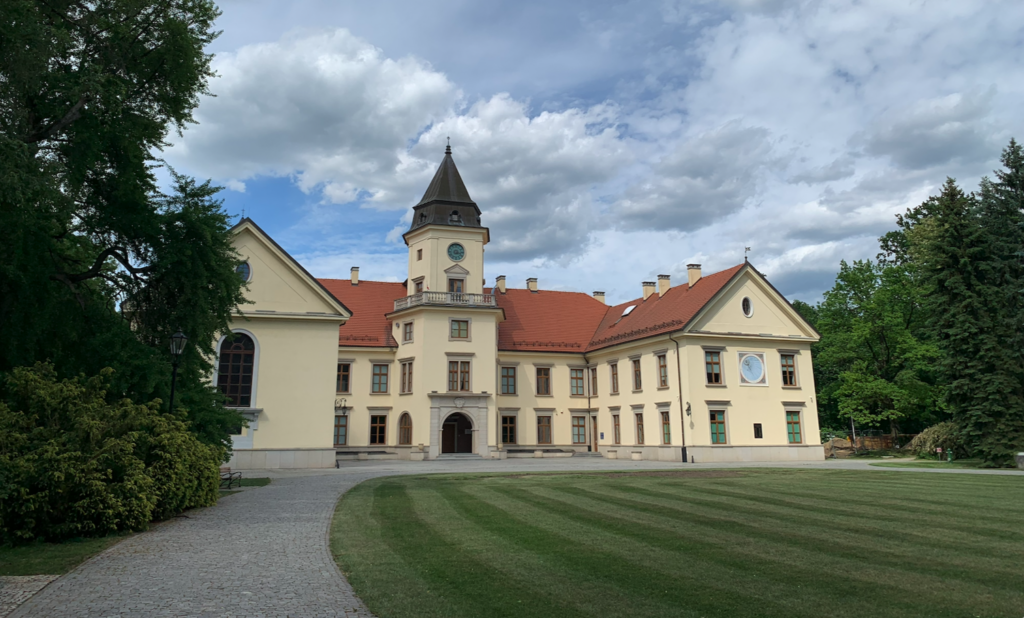
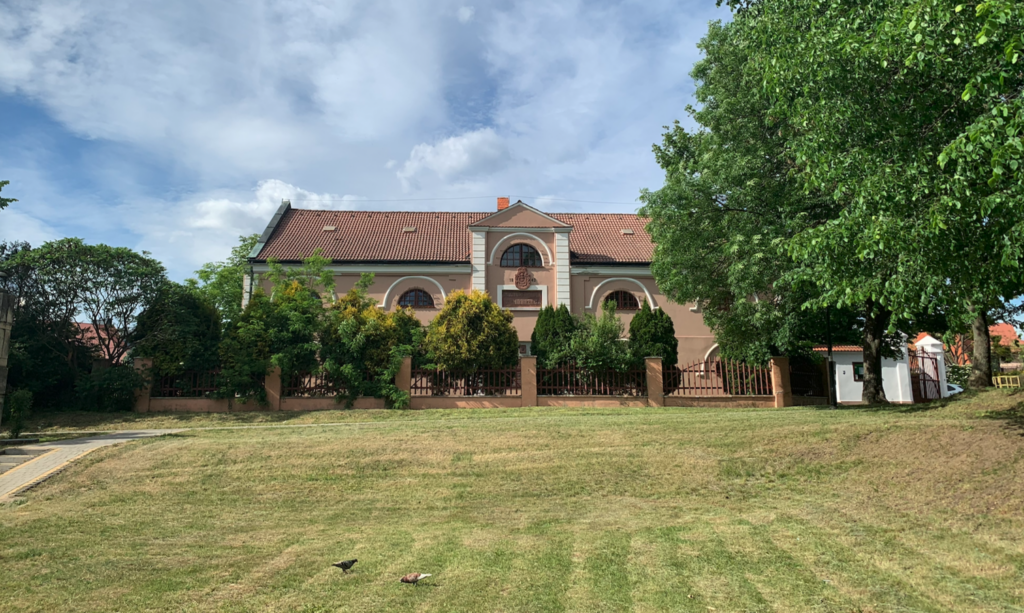
Tarnobrzeg is a city in Poland, in the Podkarpackie Voivodeship, with county rights. It was founded in 1593 and received city rights before 1681. The city is very large in terms of area, covering 85.4 square kilometers. The distance from the southern to the northern city limits is approximately 20 kilometers. In 2024, the city’s population was 43,224. Vehicle license plates: RT, YT. Tarnobrzeg is intersected by three provincial roads: DW723, DW758, and DW871 (Wisłostrada). The latter was formerly national road No. 84. National Road No. 9 runs to the south, while National Road No. 77 runs to the north. The Tarnobrzeg bypass was completed in November 2022. From 1975 to 1998, the city was the seat of the Tarnobrzeg Voivodeship. From the 1950s to the 1990s, it was Poland’s largest sulfur mining and processing center.
The declension of the word Tarnobrzeg is interesting. The genitive form is: to Tarnobrzega, from Tarnobrzega / to Tarnobrzegu, from Tarnobrzegu. Linguists agree that both forms are correct. The first form is historical and used by older generations. The second form is used primarily by younger and immigrant generations. The form “to Tarnobrzegu” is logical with the form “to Kołobrzeg.”
Tarnobrzeg received city rights in 1593, but they were never implemented. The city was re-granted city rights before 1681. The name Tarnobrzeg refers to the noble family that founded the city, the Tarnowski family. The fact that the name Tarnobrzeg originated with the Tarnowski family is now indisputable. It must be remembered that during the communist era, communists pushed the idea that the name Tarnobrzeg derives from the blackthorn that grows along the Vistula River. At that time, the communists engaged in a period of erasing the family history, calling it the “elimination of the bourgeoisie.” It must also be remembered that the Tarnowski family palace was built in the village of Dzików, and another nearby settlement, Miechocin, was much older, more populous, and administratively more important. As a result, the charter for Tarnobrzeg was never executed. Until the 20th century, these two settlements prevailed in common usage, instead of the name Tarnobrzeg. Even the Democratic Party congress in 1927 is called the Dzików congress. The town of Tarnobrzeg has been recognized as a common administrative unit only since the 19th century. During this time, Tarnobrzeg became the county seat, and a railway station was built in Tarnobrzeg. After the discovery of sulfur deposits in nearby Machów, Jeziórko, and Grębów, Tarnobrzeg developed rapidly and became the seat of the voivodeship, which was named Tarnobrzeg Voivodeship. Even Our Lady of Dzików began to be called Our Lady of Tarnobrzeg. On September 8, 1904, the first coronation of the image of Our Lady of Dzików took place. Tarnobrzeg was a center of trade, crafts, and Marian devotion. The Roman Catholic faith developed in the region as early as the 12th century. In the 14th century, the first fortified castle was built in Dzików. Around 1645, a brick castle was built. In 1693, construction began on a brick Dominican monastery complex and another Roman Catholic church.
As early as the 18th century, Sunday schools operated at the churches, teaching reading, writing, arithmetic, and catechism. In 1864, the first secular school and hospital were founded. In 1867, a telegraph station and a stagecoach station were established in Dzików. In 1870, the first brewery opened. In 1887, a railway connection was opened between Dębica and Rozwadów. In 1913, the railway station was built. The town was not spared invasions, floods, and plagues. In 1894, a public hospital named after Zofia Tarnowska, née Zamoyska, was founded, which remains in operation to this day.
During the Great War, a military airport was built in 1914. In October 1918, the Austrian army withdrew and handed over power to the Polish Liquidation Commission in Kraków. However, the Tarnobrzeg Republic was proclaimed in the area, modeled on the Soviet Republic. The self-proclaimed republic’s authorities were pacified by the Polish Army, and the area was incorporated into the Polish-Lithuanian Commonwealth. In 1936, Tarnobrzeg was incorporated into the Central Industrial Region (COP) plan.
On September 13, 1939, the German army entered Tarnobrzeg, and the occupation began. Since 1941, the Jędrusie partisan unit had operated in the area. On August 5, 1944, the Soviet army entered Tarnobrzeg. In the autumn of 1944, three bridges were built over the Vistula River; pedestrian traffic, artillery transport, and a narrow-gauge railway.
The small old town is centered around the market square. The remaining infrastructure, 80% of it, was built after 1953, along with the construction of the sulfur industry. Residential estates, mostly built using prefabricated concrete slabs, predominate. A vast number of supporting facilities were built: shops, kindergartens, schools, post offices, a district court, a stadium, and sports halls. Tarnobrzeg has eight nurseries, 14 preschools, 10 primary schools, 12 secondary schools, and three higher education institutions.
Tarnobrzeg is historically located in Lesser Poland. As a result of the partitions of Poland, the city became associated with Galicia. This affiliation was maintained during the Second Polish Republic, and during that time, the city administratively belonged to the Lviv Voivodeship. Tarnobrzeg lies on the right bank of the Vistula River, in southeastern Poland, in the Sandomierz Basin, on the border of the Tarnobrzeg Plain and the Vistula Lowland. Tarnobrzeg directly borders Sandomierz and, across the Vistula River, the Świętokrzyskie Voivodeship. The Tarnobrzeg region is home to numerous forests, part of the Sandomierz Forest. The dominant trees are Scots pine, English oak, black alder, beech, and birch.
Significant changes occurred after the exploitation of sulfur deposits began. On September 28, 1953, sulfur deposits were discovered, extending from Swoszowice near Kraków. From 1957, the city experienced rapid development, including the construction of new housing estates, industrial expansion, and the development of an industrial district. In 1976, the administrative boundaries were expanded to include neighboring towns. Sulfur was mined using the open-pit method. Tarnobrzeg was a center for sulfur mining and processing, as well as sulfuric acid production. Even the broad-gauge railway line built in the 1970s was named the Metallurgical Sulfur Line, which was later renamed the Broad-Gauge Metallurgical Line. In the 1990s, sulfur mining declined, and the method was further changed from open-pit to hot-water smelting. Meanwhile, Lake Tarnobrzeg was created on the site of the former basin after sulfur extraction. In the 1990s, the mine in Piaseczno was closed first. Then, the Machów mine closed after 40 years of sulfur mining. The Machów mine was the largest open-pit sulfur mine in Europe. The Tarnobrzeg Special Economic Zone was established on the site of the Siarkopol plant.
Tarnobrzeg Railway Station.
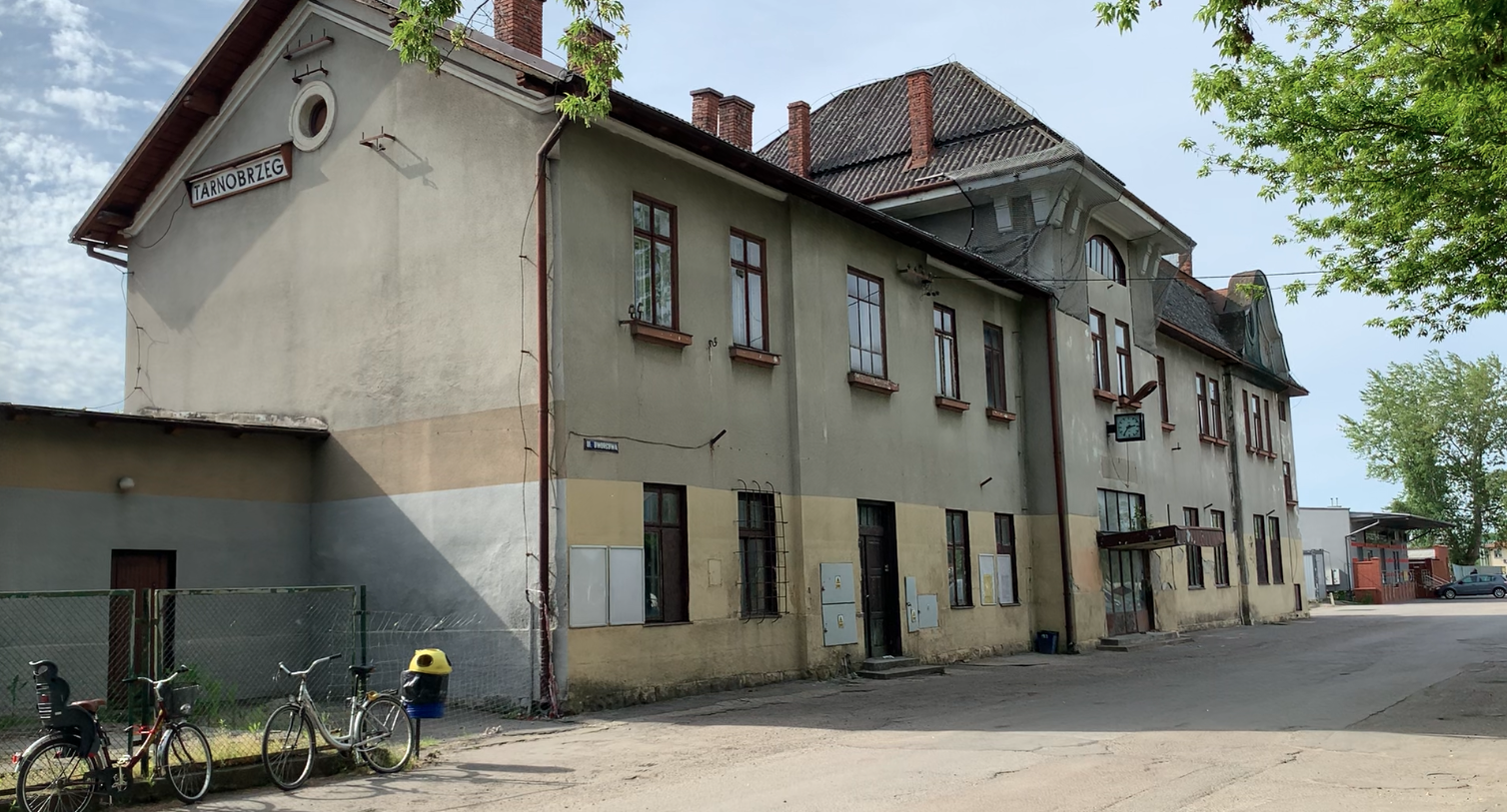
The Tarnobrzeg railway station is located at 5 Dworcowa Street, 39-400 Tarnobrzeg. Geographic coordinates: 50.567 N 21.696 E. Elevation: 160 m. The Tarnobrzeg railway station is located east of the Old Town, approximately 1,900 m from the Old Market Square. Access to the station is provided by DW No. 871 and DW No. 723. Nearby is a viaduct on DW No. 871. To the east of the station are wasteland, and to the southwest are family allotment gardens.
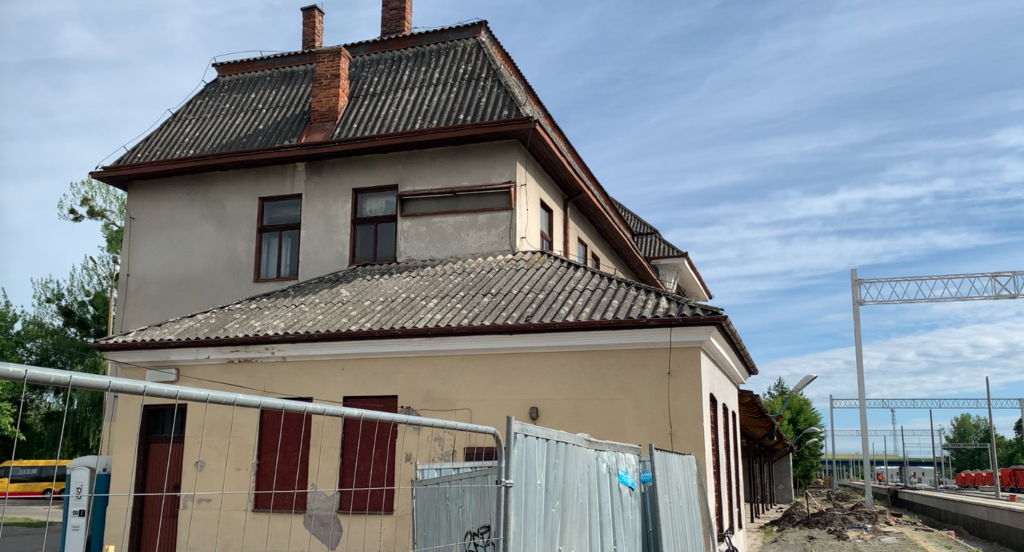
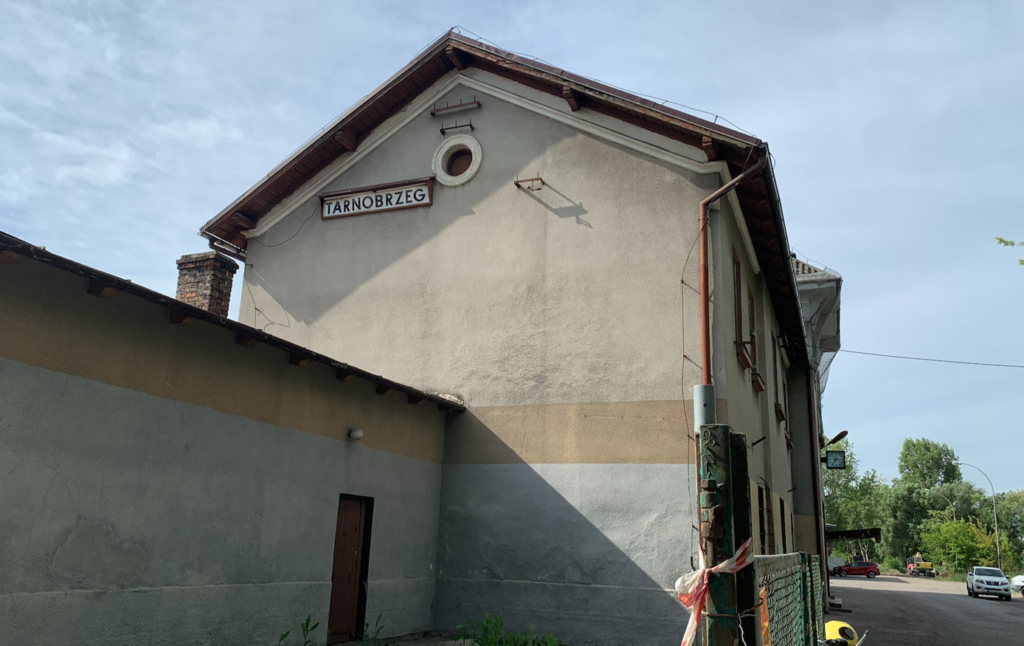
The Tarnobrzeg railway station dates back to 1887, when a stop was established on the Dębica-Rozwadów railway line. Currently, it is LK No. 25 Łódź Kaliska-Dębica. The station building was constructed in 1913. Until 2025, the station had two platforms and three platform edges.
Electrification. Regarding the railway station in Tarnobrzeg, on Line No. 25, two stages of electrification should be distinguished: The Skarżysko Kamienna – Sandomierz section was electrified in 1987. The Sandomierz – Tarnobrzeg – Chmielów section was electrified earlier, in 1980. This means that Tarnobrzeg station was connected to the overhead lines in 1980, when the electrification of the section from Sandomierz to Chmielów was completed.
Between 2000 and 2009, the Rzeszów – Ocice section of Line No. 71 was renovated. The line was adapted to a maximum speed of 120 km/h. This allows you to reach Tarnobrzeg from Rzeszów in 70 minutes.
Since September 1, 2009, the Dębica – Mielec – Tarnobrzeg line has been closed. On December 15, 2024, rail connections were restored on the Dębica-Mielec-Tarnobrzeg section. This was the result of the modernization of railway line No. 25 on the Dębica-Mielec-Padew section, which was completed between 2019 and 2022.
On August 8, 2025, PKP Polskie Linie Kolejowe S.A. signed a contract with Swietelsky Rail Polska sp. z o.o. for construction work on railway line No. 25 on the Padew-Tarnobrzeg-Sobów-Sandomierz section. The tender was announced on September 4, 2024, and the results were announced on March 21, 2025. Work began on November 3, 2025.
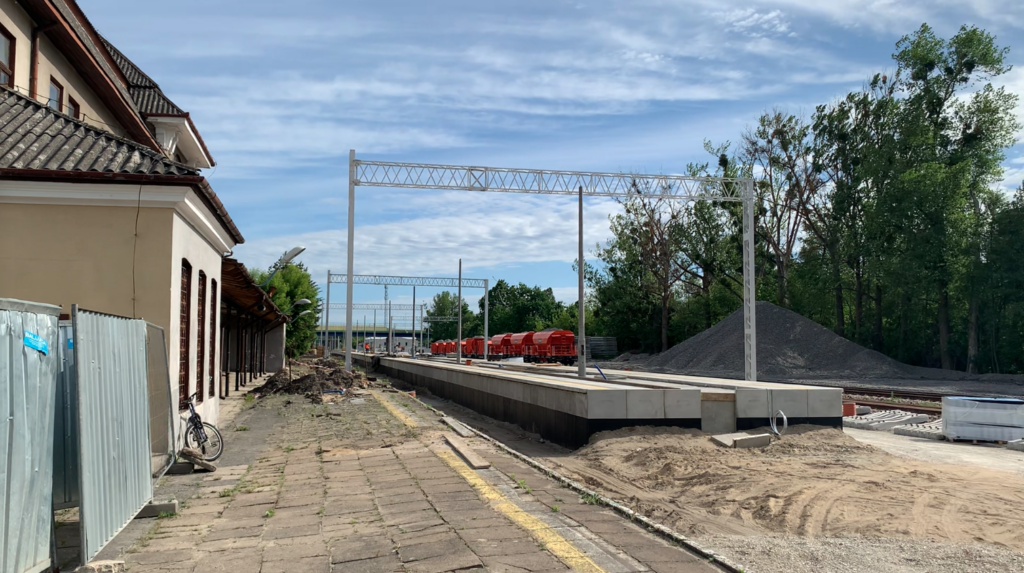
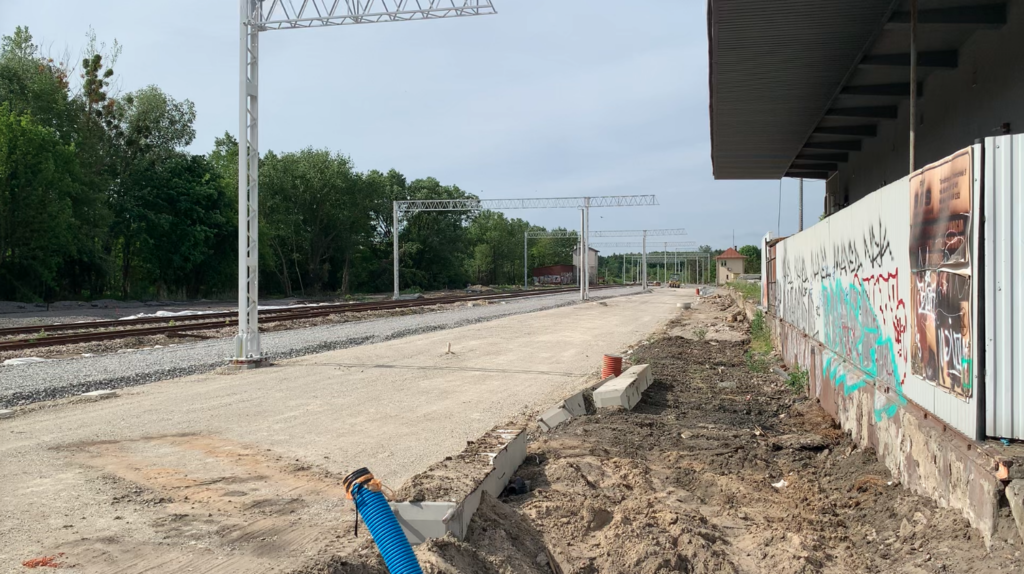
Currently (2026), the largest modernization project is underway at the Tarnobrzeg station, which is comparable to the electrification of this station. The tracks and platforms have already been dismantled. New platforms, tracks, switches, and electric traction will be built. Platform 1 will be built on the site of the former Platform 2. The new Platform 2 will be built on the eastern side. There will be no platform next to the station building itself. An underpass is planned. Until now, passengers accessed Platform 2 via a walkway across the tracks. The reconstruction is being carried out as part of the project “Works on railway lines no. 25, 74, and 78, on the Stalowa Wola – Tarnobrzeg – Sandomierz – Ocice – Padew section,” a program launched during the United Right era. The total investment value is PLN 900 million. Part of the funding was obtained from the European Funds for Eastern Poland program. However, the majority of the funding will come from the state budget. In 2026, the pace of work slowed due to irregular financing of the investment by the current government of Volksdeutsche, communists, and Freemasons. The main goal of the investment is to improve the technical condition of the railway infrastructure and increase the speed of passenger trains to 120 km/h, which will significantly reduce travel times. Conservative estimates indicate that all trains will return to Tarnobrzeg in September 2026. The underpass will begin at the BHP store and lead to Platforms 1 and 2. The underpass will significantly improve passenger safety. Plans include the construction of P+R parking lots, bus stops, bicycle parking spaces, and a shopping zone. Work at the station is expected to be completed in December 2027.
Since 2016, passenger traffic at Tarnobrzeg station has steadily increased. In 2017, the station served up to 200 passengers per day. During the Chinese coronavirus pandemic, traffic dropped to 150 passengers per day. By 2022, the station was already serving over 300 passengers per day, and in 2024, over 500 passengers per day, ranking it 617th among railway stations in Poland. It’s worth noting that 10 years earlier, the station wasn’t among the top 1,000 railway stations in Poland. On Sunday, June 28, 2026, 19 passenger trains departed from Tarnobrzeg station. Trains were available to stations such as Dębica, Lublin Główny, Rzeszów Główny, Sandomierz, Stalowa Wola Południe, and Stalowa Wola Rozwadów.
The station building.
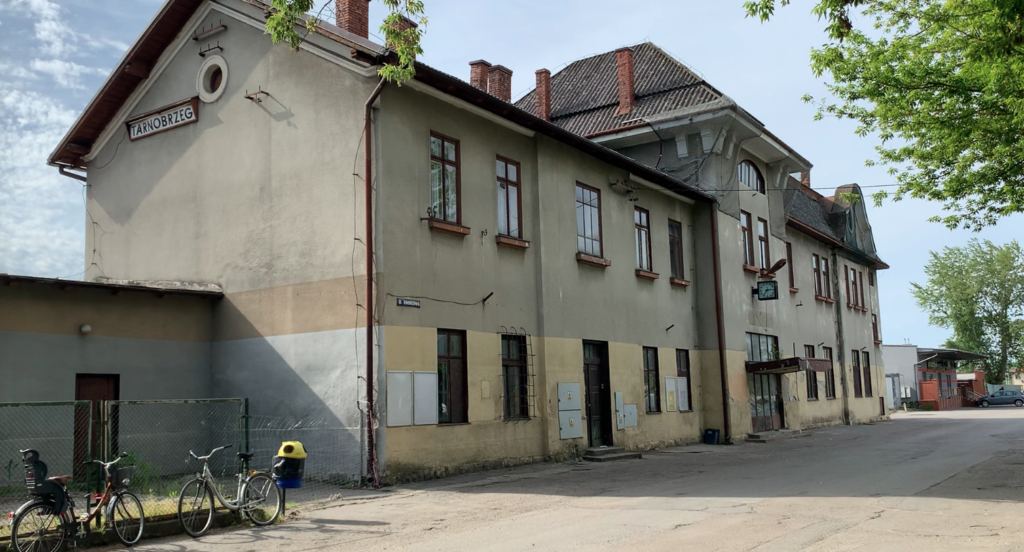
The railway station building was funded by the Tarnowski family, the same family that contributed to the city’s founding and development. The station was built on the site of a train stop on the Łódź Kaliska-Dębica railway line, currently LK No. 25.
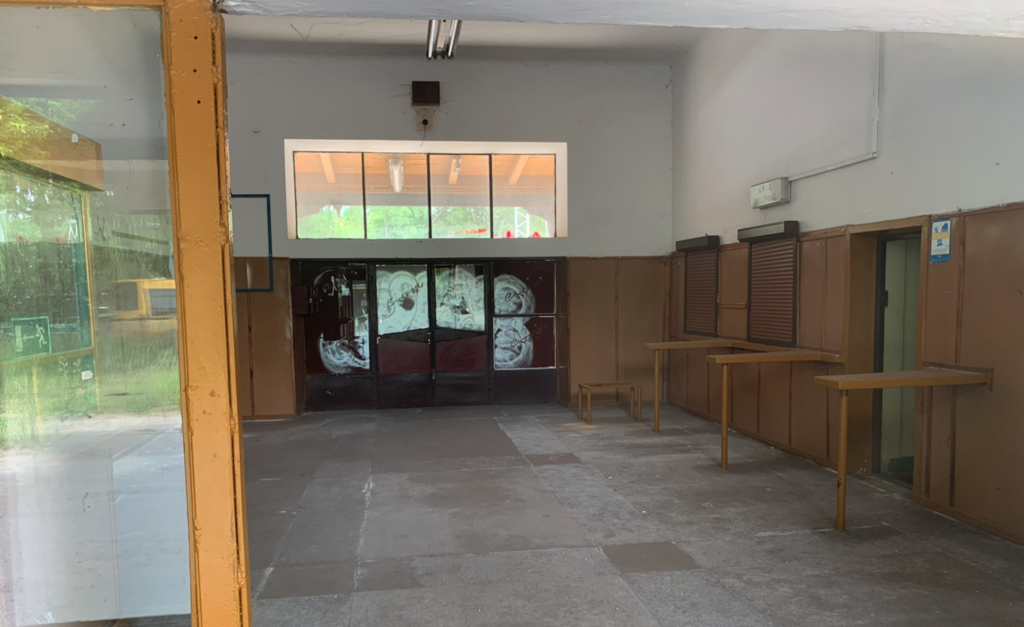
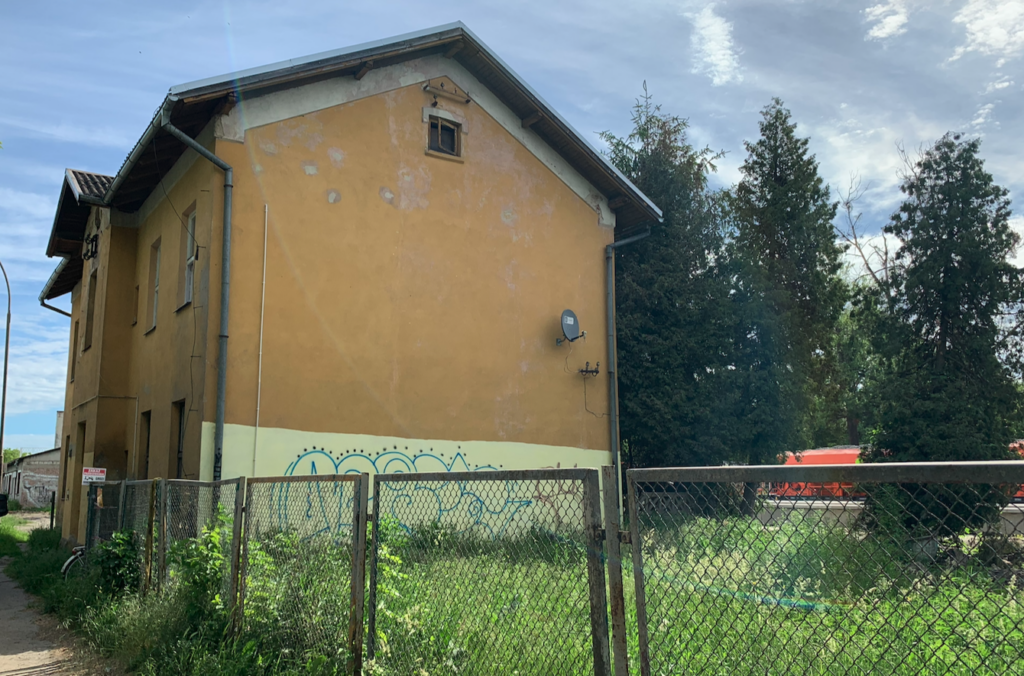
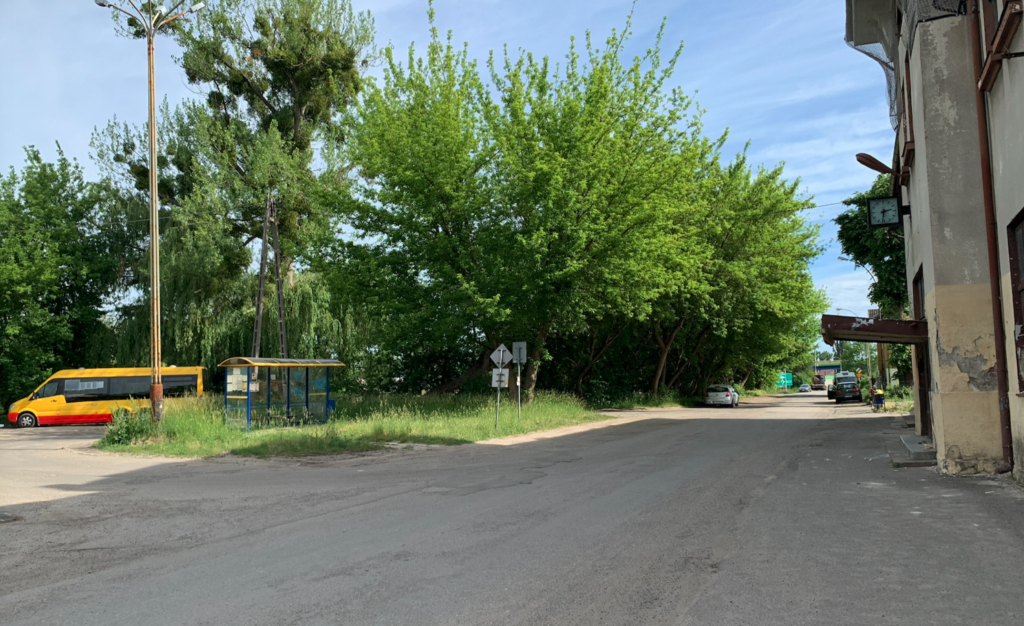
The station building is not particularly impressive, but it was very practical and useful. It was built on an elongated rectangle. It is 47 meters long and 9 meters wide. The building is two-story, constructed of red brick, and has eleven axes. The central section has a projection, and this is where the main entrance to the station hall is located. This section is covered with a hipped, Polish-style mansard roof. A Polish-style roof is similar to a mansard roof, but both slopes are the same. On the south side, there is also a projection, where the antique elements are present. On the north side, a projection was also constructed, but this section is covered with a gable roof. The entire structure was covered with ceramic roof tiles, which were replaced with corrugated asbestos sheets. A roof abuts the platform side of the building. The building is plastered. Additionally, there are single-story extensions on the south and north sides. Currently (in 2026), the building is awaiting a general renovation. However, it should be noted that the structure is not damaged. The plaster is undamaged, and the walls have not been vandalized. Since 2015, the station building has been closed to passengers. The waiting room, restrooms, and ticket offices are not accessible. Tickets can be purchased from conductors or online. The station square is paved and finished with asphalt. Public and suburban buses stop there.
Since July 2023, talks have been underway between the city authorities and representatives of PKP SA and PKP Nieruchomości regarding the modernization of the station building. Each proposal was considered. However, the building’s intended function has not been determined. The considerable distance between the railway station and residential areas is a significant challenge. In 2023, the station was ranked 34th among 44 investments included in the “Passenger-Friendly Stations” program. City officials emphasized that without coordination among all stakeholders, it would be difficult to achieve the desired result. The creation of a transfer center in Tarnobrzeg increases the chances of renovating the historic station.
It should be noted, however, that in April 2024, the talks were interrupted by PKP. The new government of Volksdeutsche, communists, and Freemasons ordered a review of the station investments. It turned out that a new list of station investment programs was being prepared, and until a final decision is made on which stations will be revitalized, all preparatory work has been suspended. This concerns not only the Tarnobrzeg station but also 26 other facilities, including those in Krosno, Lubaczów, and nearby Sandomierz. This is certainly about money, which this government doesn’t have and is in the process of liquidating the Polish Economy. And it’s not about substantive arguments. What’s more, the Tarnobrzeg city authorities received information from PKP Nieruchomosci in Kraków that if they built the transfer center themselves, they would have a better chance of renovating the station building. It also emerged that the government had reduced funding for the renovation of LK No. 71, which will prevent trains from increasing their speed to 120 km/h. The second piece of information was that only one double-edged platform would be built in Tarnobrzeg. This means that significant passenger train traffic is unlikely, and the construction of the transfer center is unlikely to be completed. Under the current government in Poland, there will only be one InterCity Hetman train remaining in Tarnobrzeg.
Tarnobrzeg Narrow Gauge.
Few people remember that for a short time, Tarnobrzeg had a narrow-gauge railway. The station was located near Professor Stanisław Pawłowski Street, which was the founder of the Polish Sulphur Industry. According to available information, the geographical coordinates are 50.585 N 21.681. Elevation: 153 m. The Dzików housing estate. This was the terminus of the narrow-gauge railway line: Koprzywnica – Błonie – Ciszyca – Tarnobrzeg Wąskotorowy.
At the beginning of 1945, the Soviets built three bridges across the Vistula River. These wooden bridges were primarily intended to support the Soviet offensive westward. The first bridge was intended for pedestrians, near the ferry crossing. The second bridge was for tanks, artillery, and vehicles, near Skalna Góra. The third bridge was for the narrow-gauge railway. The idea behind the railway line was to connect Tarnobrzeg with Koprzywnica station, and then with Bogoria station and the Ponidzie Narrow Gauge Railway network, also known as the Świętokrzyska Railway or Jędrzejów Commuter Railway. The railway bridge was made of wood, resting on piles driven into the Vistula River bed. It was constructed as a temporary structure and guarded by the Soviet military.
Importantly, in Tarnobrzeg, the narrow-gauge railway was not connected to the standard-gauge railway station. The distance between the stations was 2,600 meters. The Tarnobrzeg-Bogoria section was approximately 40.20 km long. In March 1945, during the ice floe rafting down the Vistula River, the bridge was destroyed. The line was dismantled in late 1945, on the Ciszyca-Tarnobrzeg Narrow-Gauge section. In May 1951, the Koprzywnica-Błonie-Ciszyca section was dismantled. Available maps from 1956 indicate the Koprzywnica-Vistula River section. Residents of Ciszyca recalled that the line was private and had horse-drawn traction.
Currently, no trace of the Tarnobrzeg Narrow-Gauge station remains. Nearby, the Museum of the Polish Sulphur Industry is located, occupying the historic Tarnowski family granary. There is also a technical monument: a PLOT gun, model 1939, 85 mm caliber, 52-K, KS-12.
Written by Karol Placha Hetman