Szczucin 2026-05-18
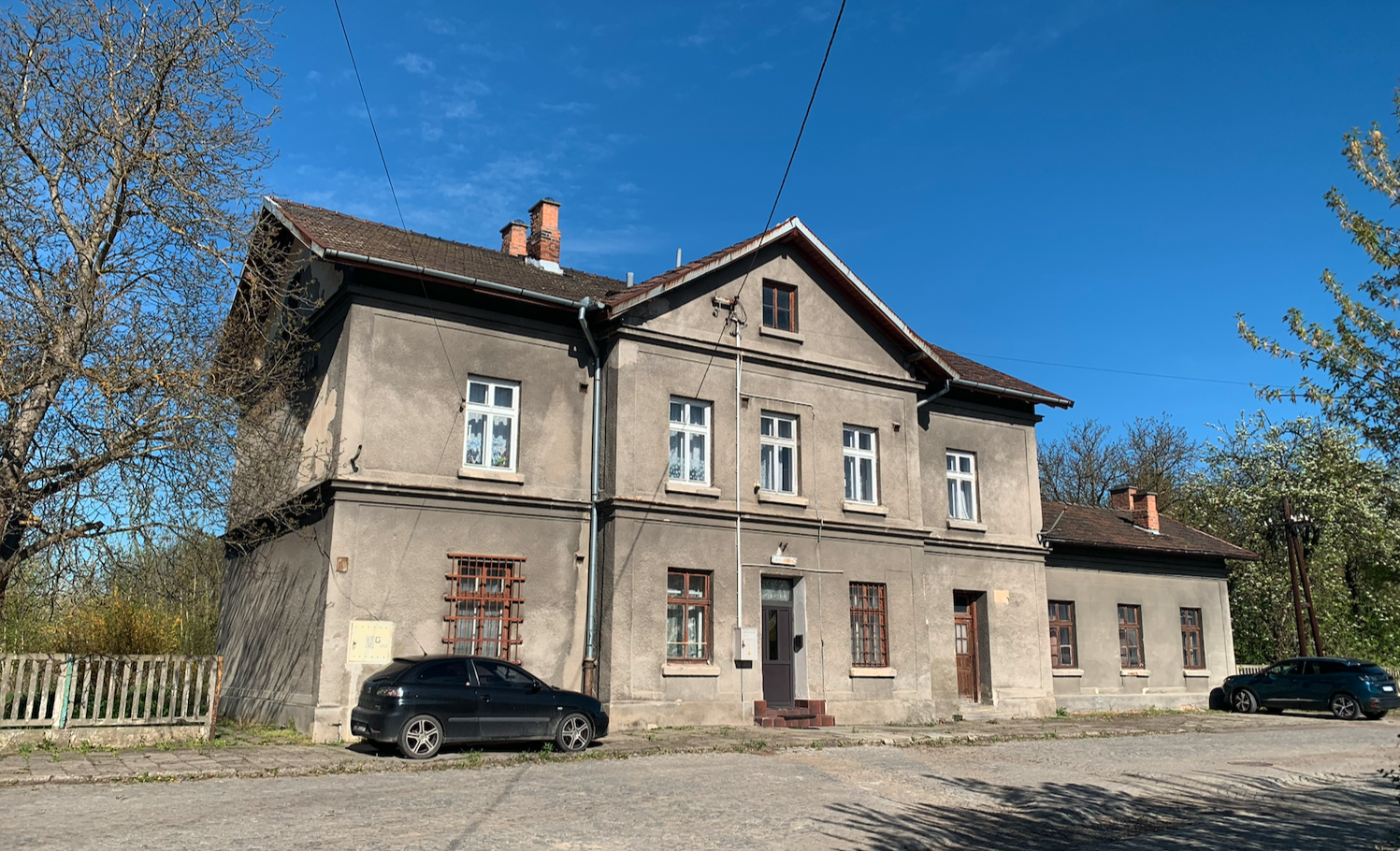
PKP Szczucin near Tarnów.
Szczucin is a town in Poland, in the Lesser Poland Voivodeship, in Dąbrowa County, Szczucin Commune. The town held town rights from the 14th century until 1936, and was re-granted in 2009. Szczucin operates as an urban-rural commune. The town’s area is 6.85 square kilometers. In 2024, the town’s population was 4,086. Vehicle license plates are KDA. From 1975 to 1998, the town administratively belonged to the Tarnów Voivodeship. The name Szczucin etymologically derives from the word szczuka, meaning pike. In 1326, the settlement was written as Sucin, and in 1345, as Sczucin.
Szczucin is located in the Sandomierz Basin, in the northeastern part of the Lesser Poland Voivodeship, on the right bank of the Vistula River. The town borders the Świętokrzyskie Voivodeship. The Vistula River marks the border between the voivodeships. National Road No. 73 Warsaw – Kielce – Tarnów – Jasło runs through Szczucin. There is also National Road No. 982 Szczucin – Mielec.
The settlement was founded in the early 14th century. The first written mention dates back to 1326. Szczuci was a knight’s property and had a Roman Catholic parish. Its inhabitants were lumberjacks, farmers, raftsmen, fishermen, and small craftsmen. A river port was established on the Vistula River, from which timber was shipped from the Sandomierz Forest. There was also a crossing over the Vistula River, on the historic north-south route.
After the first partition of Poland, Szczucin found itself under Austrian rule. Administratively, it belonged to a district, initially in Pilzno, then in Tarnów. The outbreak of World War II halted the town’s development. Initially, the Muscovites had the upper hand, occupying Szczucin until May 1915. After the Battle of Gorlice, the Muscovites were forced to retreat along the entire Galician front. This allowed for the stabilization of life in the area. As a result of the Treaty of Versailles, Szczucin found itself within the borders of the reborn Poland. In 1934, as a result of local government reform, the Szczucin commune was established. The regulations at the time stipulated that a town should have a minimum population of 3,000, which it did not. In 1936, Szczucin was officially downgraded to a village. A large percentage of the population were Polish Jews, due to the tolerance and permission for this community to conduct business in Poland. Jews did not have such rights in all of Western Europe, and from Great Britain, France, and Italy, they were brutally expelled.
On September 1, 1939, Germans and their Russian brethren invaded Poland. Heavy fighting raged in the Szczucin area, in which the retreating Kraków Army bravely resisted the overwhelming Germanic forces. On September 7, 1939, on the orders of General Szylling, the local bridge over the Vistula was blown up, along with the Germans already inside. Despite their bravery and courage, the Polish units were defeated. Many soldiers were taken prisoner. About a hundred of them were locked in a school guarded by Germans. On September 12, 1939, an insulted and slapped Polish officer shot and killed a German rag. As a result, Wehrmacht soldiers began shooting the prisoners, and incendiary bombs were thrown into the school. The prisoners struggled to escape the flames while the Germans shot at those jumping out of the windows. Seventy Polish soldiers were killed. Their deaths are commemorated with a monument. During the German occupation, resistance groups operated in Szczucin, and clandestine education was conducted. In 1943, soldiers from the “Jędrusie” partisan unit executed the hated district commander of the Blue Police, who had been subservient to the Germans. At the turn of 1944 and 1945, the Germans, preparing to defend their position on the Vistula River and fortifying the area, evicted the residents of Szczucin. Some houses were demolished, and the bricks were used to build fortifications.
After World War II, Szczucin, as a village, had a small-town character. On January 1, 2009, Szczucin regained its town status. The town’s most valuable monument is the Church of St. Mary Magdalene, dating from 1680, built on the site of the first church. The town once housed a palace, of which only a park remains. Szczucin is home to the only Road Construction Museum in Poland and Europe. Importantly, admission to the museum is free. The town still hosts markets twice a week, on Wednesdays and Saturdays, a tradition dating back to the town’s founding.
Vistula Bridge in Szczucin.
The Vistula Bridge makes Szczucin an important road transport hub. The bridge in Szczucin over the Vistula River is a truss bridge, with the roadway located at the bottom. The bridge has a riveted structure and is currently painted green. The bridge’s total length is 430 m and its total width is 9.50 m. It has a single carriageway with two traffic lanes and two pedestrian walkways. The bridge is supported by reinforced concrete piers, two of which are positioned in the river. The bridge has three main spans: 72 m + 84 m + 72 m, and five plate girder spans located in the inter-embankment area (floodplain). The bridge’s upper section has variable height. The highest structural elements are located above the main piers. The bridge was built in 1939. The designers were Polish engineers Eugeniusz Hildebrandt and Zygmunt Pieślak; the Design Office of the Ministry of Communications. The bridge was destroyed in 1939 and 1945 due to German and Russian warfare. It was rebuilt in 1941 and 1953. In 1953, the work was carried out by Mostostal Warszawa. The last major renovation of the bridge was carried out in the 1970s. Previously, this location was occupied by a wooden truss bridge from 1925, consisting of eight spans, each 41.30 meters long. A single track of the Szczucin-Jędrzejów narrow-gauge railway ran through the center of the bridge. On the metal bridge, the track was placed on the southwestern edge. The track was dismantled in the 1970s, and the rail areas were filled with asphalt.
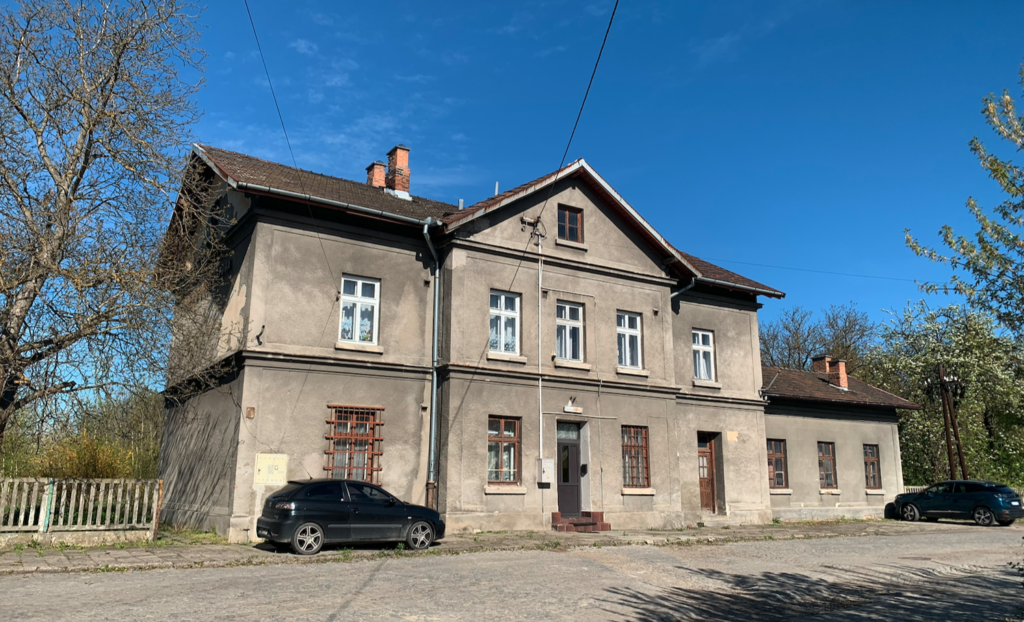
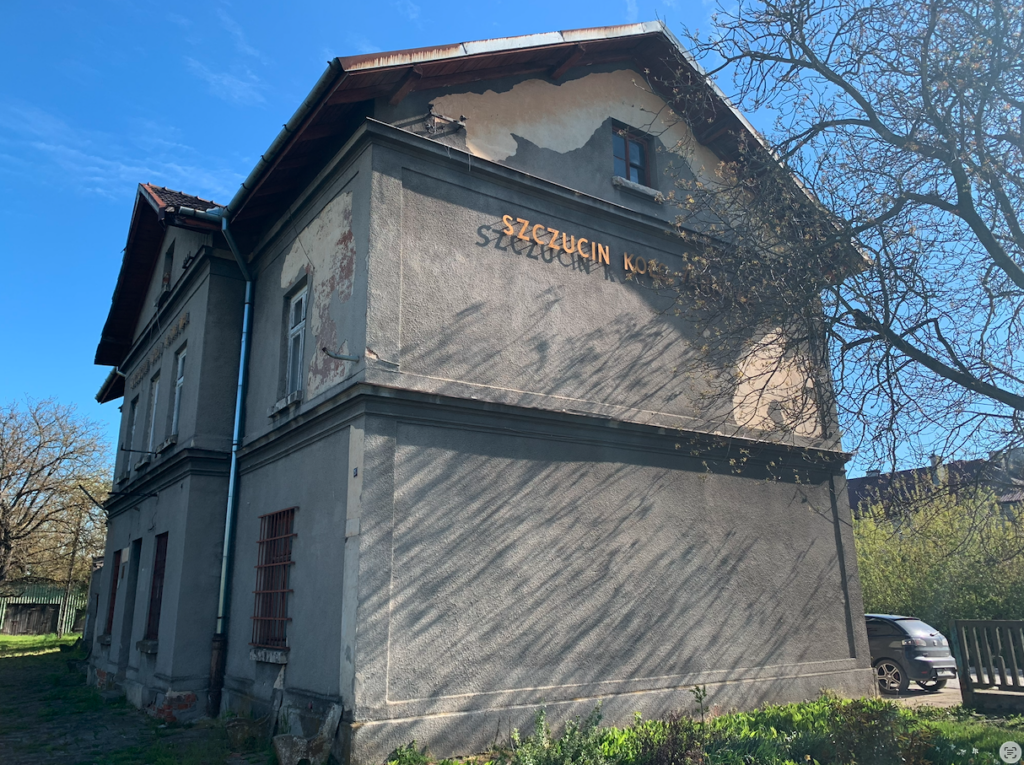
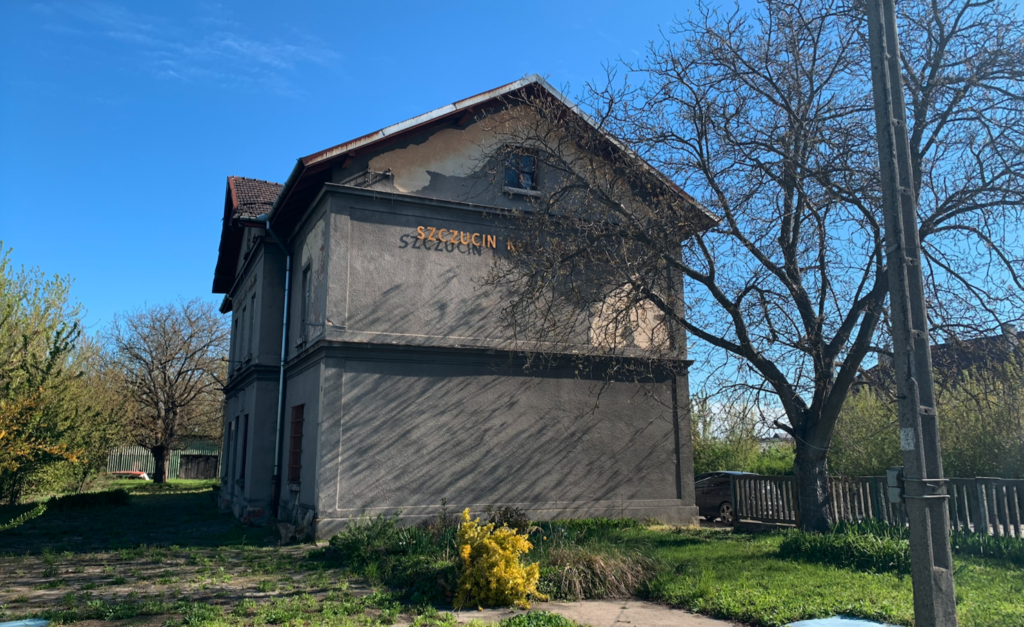
Szczucin Railway Station near Tarnów.
Address: Szczucin near Tarnów. Geographic coordinates: 50.309 N 21.074 E. Elevation: 166 m.
The railway station opened on October 15, 1906, as the last on the Tarnów-Szczucin railway line. The line was named “Szczucinka.” Currently, it is LK No. 115. The station served as a connection between the Austro-Hungarian standard-gauge Tarnów-Szczucin line and the Muscovite-State-owned narrow-gauge Szczucin-Jędrzejów Wąskotorowy line. The station design was approved in 1905 by the then director of the Staatsbahn-Direction in Kraków, engineer Kułakowski. Freight and passenger traffic on the standard-gauge and narrow-gauge lines continued until 1978. After World War II, the railway was primarily used by residents of Powiśle and employees of large industrial plants in Tarnów. Passenger service in Szczucin was suspended on April 2, 2000, during the “joyful” liquidation of Polish railway connections under the communist, Volksdeutsche, and Masonic governments. The official narrative was the line’s unprofitability. The last scheduled passenger (special) train arrived in Szczucin in June 2006. The last freight train arrived at Szczucin station in September 2007. Officially, the station closed on October 1, 2007.
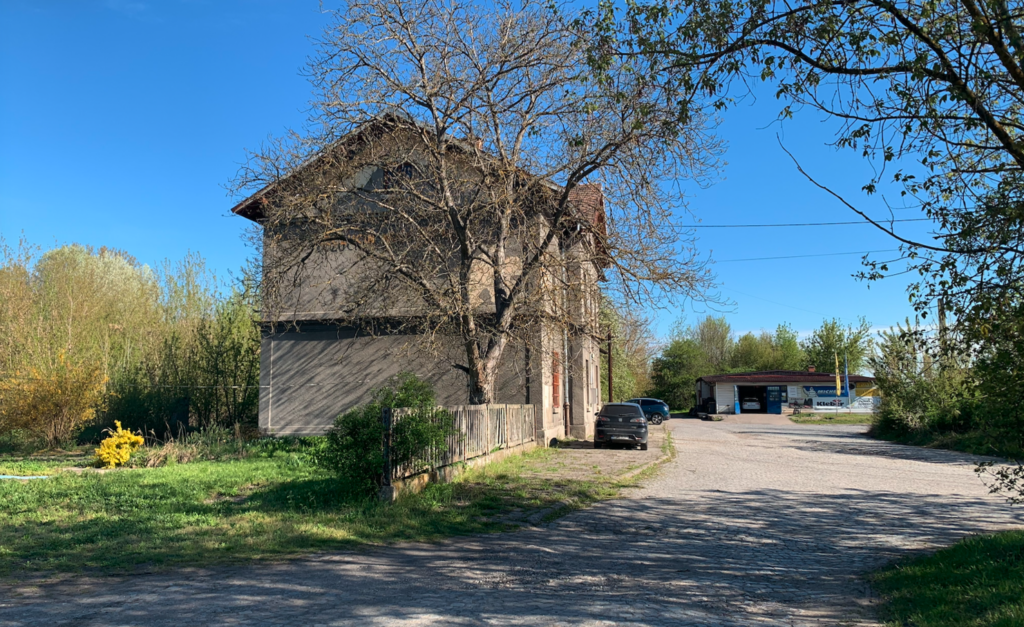
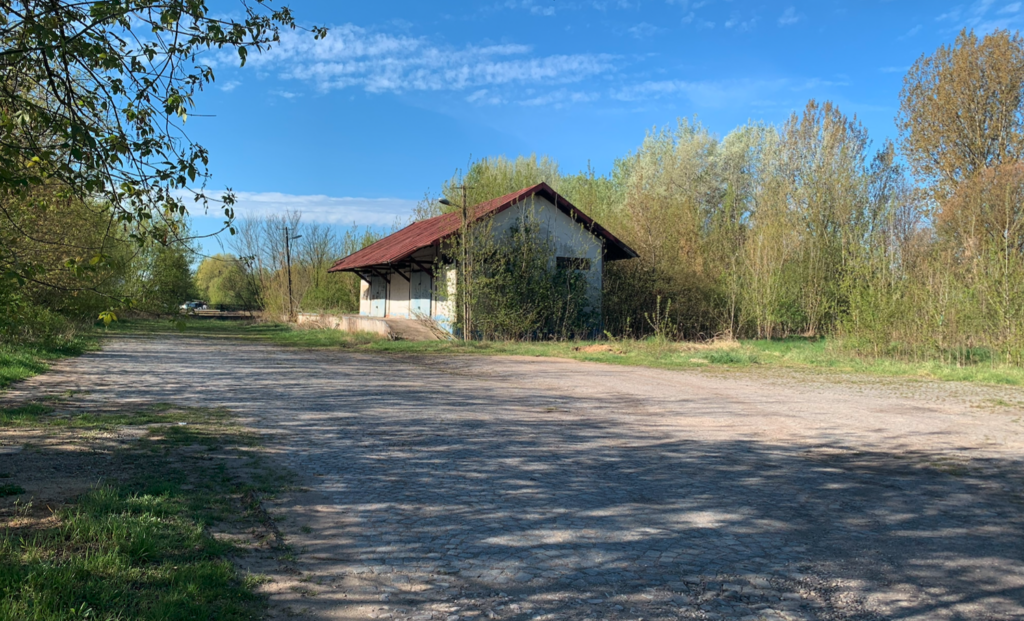
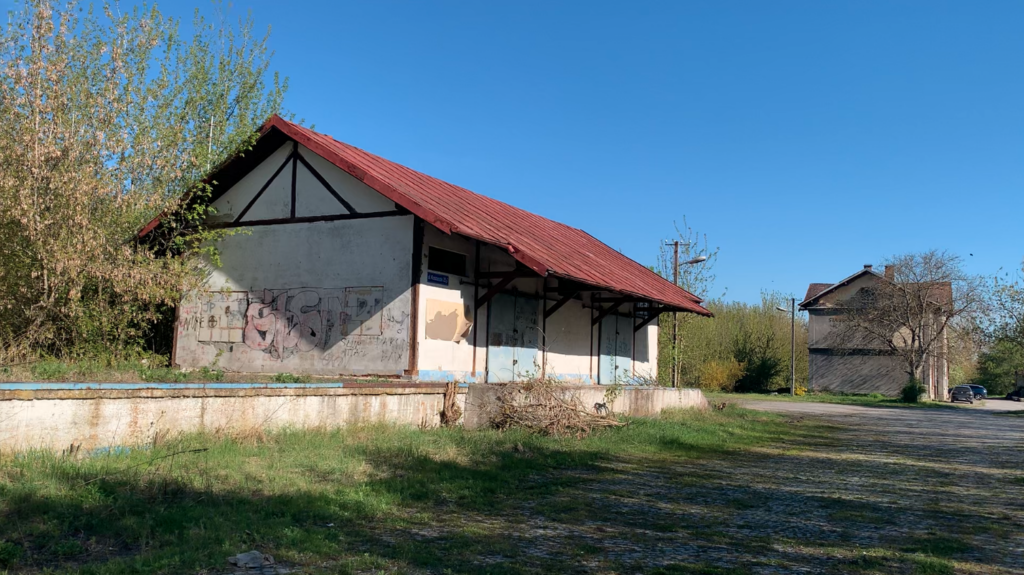
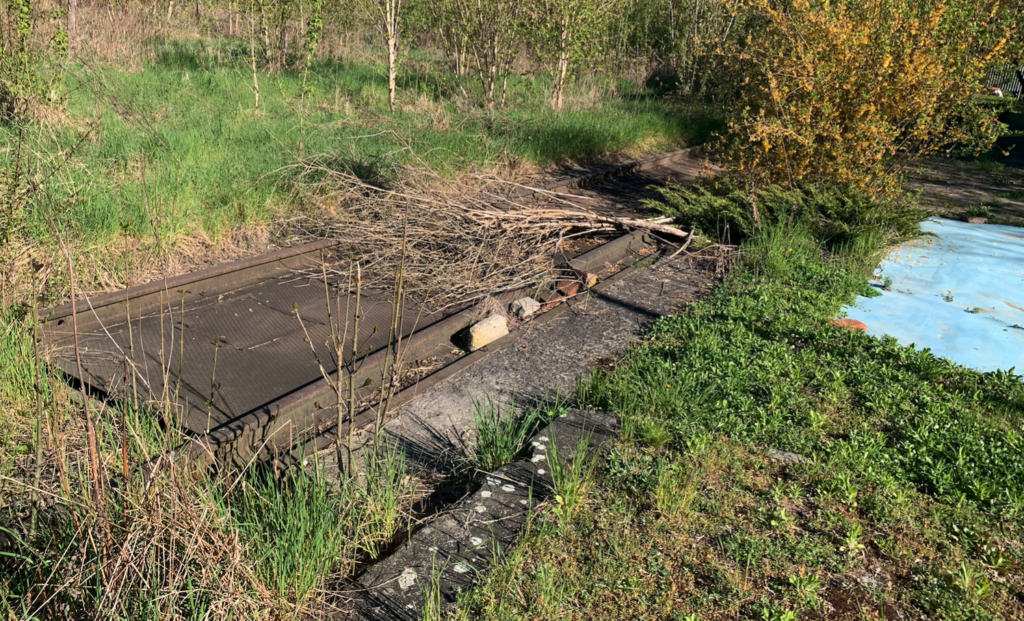
Currently (2026), the station building is in good condition because it is occupied. The building is well-maintained, with new gutters and repaired roof tiles. The plaster is in good condition. The semaphores, water crane, and water tower have been dismantled. An unwelded railway scale remains. The rails and some switches remain. The outlines of two single-edge platforms remain. The entire station area is overgrown with self-seeded trees. The station area has been partially fenced off. A well-preserved railway warehouse is still in use. Auxiliary station buildings, housing a car tire vulcanization facility, have also been preserved.
The narrow-gauge railway on the left bank of the Vistula River was significantly expanded. It connected not only Szczucin with Jędrzejów, but also such well-known towns as Staszów, Kielce Główne, Bogoria, Pińczów, and Chmielnik, and in the east, it reached as far as Tarnobrzeg.
History of the construction of Railway Line No. 115.
In the 1870s, landowners from Powiśle Dąbrowskie submitted a request to the Imperial-Royal Austro-Hungarian Empire to build a railway line to Tarnobrzeg via Dąbrowa Tarnowska. The request reached the Privileged Galician Railway of Charles Louis (CLB). However, the railway company was not interested in building this connection. In 1887, a railway line was constructed: Dębica – Tarnobrzeg – Rozwadów. This led to even less interest in building a line through Dąbrowa Tarnowska. In the 1890s, Prince Andrzej Lubomirski became interested in the railway. His wife, Eleonora née Husarzewski, owned significant landed estates near Szczucin. Other landowners joined the prince. They already had a concrete plan for a railway line: Tarnów – Dąbrowa Tarnowska – Szczucin – Sandomierz. Other figures connected with the Dąbrowa region contributed to the creation of this line. Jan Franciszek Baron Konopka (1855–1948) played a significant role. He owned numerous estates. Baron Konopka was also a member of the Galician Parliament from the Tarnów district and a long-time vice-president, and later president, of the Dąbrowa Tarnowska District Council. Thanks to his efforts and in his best interests, the road, instead of a straight line, was curved towards Brno and Olesno.
During the Galician parliamentary sessions, the matter was raised repeatedly. However, due to a lack of funds in the treasury, the project stalled. Furthermore, the landowners lacked the funds to undertake the project themselves. In 1898, the military became involved. The international situation was increasingly tense, and the military wanted to ensure rapid transport to the border with Moscow. The project was approved, but in a shortened form, to Szczucin. This plan was accepted by the landowners. In 1898, a construction committee was established, chaired by Prince Andrzej Lubomirski. The committee included local landowners and entrepreneurs. They purchased shares worth approximately 500,000 crowns, and the investment was estimated at 3,000,000 crowns. The Austrian government purchased shares worth 900,000 crowns, and the Galician government took out a loan for 2,000,000 crowns. In 1900, the Galician parliament approved the construction of a new railway line. The Tarnów-Szczucin Railway Joint-Stock Company (Lokalbahn Tarnow-Szczucin AG, LTSz) was established. The company took out a loan of 2,000,000 kroner and issued 1,400,000 kroner shares. On October 7, 1905, a concession for the construction of the line was issued. Work began in October 1905, and due to the flat terrain, progress was very rapid. The cost of building the line was 2,663,257 kroner. Finishing work, carried out after the line’s opening, amounted to 261,449 kroner. Construction of the line took 12 months.
Three new steam locomotives, series 97 kkStB, were purchased to operate the line. Interestingly, two of these locomotives were transferred to the Polish State Railways (PKP) after the Great War. They were designated; TKh12-10, TKh12-11. The railway was operated by the Imperial-Royal Austrian State Railways (k.k. Österreichische Staatsbahnen, kkStB) and was subordinated to the Kraków-based ED Krakau. Initially, the route operated one pair of passenger trains and one freight/passenger train. In 1908, another pair of passenger trains was added.
The Great World War broke out. In early November 1914, a narrow-gauge railway line between Staszów and Szczucin was built for war purposes. The track gauge was 715 mm. Traction was horse-drawn. A makeshift wooden bridge was constructed across the Vistula River. A few days later, the Tranów-Szczucin railway line was occupied by the Muscovites. The tracks were converted to broad, Russian-style gauge. However, after a battle near Gorlice, the Muscovites began to retreat. During their retreat in February 1915, the Muscovites burned the wooden narrow-gauge railway bridge over the Vistula. After the Austrians regained control of the line, the line was converted back to standard gauge.
After Poland regained independence, the line became part of the Kraków Railway Company (PKP) management. The bridge over the Vistula River was in very poor condition. Therefore, for several years, Szczucin ceased to be a transfer station from standard gauge to narrow gauge. In 1926, a new wooden bridge with a narrow-gauge track was built, running along the center of the roadway. Narrow-gauge trains once again reached the Szczucin Wąskotorowy station.
In the 1920s, six pairs of passenger trains ran along the Tarnów-Szczucin route, three of which were operated by a steam passenger car. The global crisis limited the number of pairs on the route. Some trains had shortened routes, only to Dąbrowa Tarnowska. Freight trains had fewer wagons. In the second half of the 1930s, due to the construction of the Central Industrial District (COP), plans were made to expand the railway lines. The Kielce-Busko-Zdrój railway line was built. This line was intended to reach Mędrzechów, where it would connect with the “Szczucinanka” railway line. The planned length of the route was 83 km. The expansion plans were revised in 1938. A line was planned: Radom-Ostrowiec-Szczucin. The existing lines: Warsaw-Radom and Tarnów-Szczucin were to receive a second track. Electrification of these routes was also planned. It was never implemented because the Germanic and Russian brothers started World War II on September 1, 1939. Even before the outbreak of World War II, in 1939, a new, modern bridge over the Vistula River, with a narrow-gauge railway track, was opened.
Around September 7, 1939, the Germans occupied the Tarnów-Szczucin railway line. The line was not destroyed, but the Vistula crossing was damaged and inoperable. The Germans incorporated the lines into the Eastern Railways (Ostbahn) and placed them under the Kraków Directorate (Ostbahn Direktion Krakau). The bridge over the Vistula was rebuilt, and the transshipment station in Szczucin reopened. The railway was used primarily for the plundering of trees in the Sandomierz Forest and the removal of war loot. In 1945, the Vistula bridge was damaged again. In January 1945, railway line No. 115 was dismantled by the Muscovites. In August 1945, the Muscovites officially handed over the line to the Polish administration, but did not return the tracks. The lines were incorporated into the Kraków Railway Directorate. Reconstruction of the line lasted until October 1946. Residents of nearby towns worked on its reconstruction. In 1953, after the reconstruction of the bridge over the Vistula River, Szczucin once again became a transshipment station. The narrow-gauge railway received a new gauge of 750 mm. In 1953, construction of a standard-gauge line from Kielce to Busko-Zdrój station was completed. There were plans to build a section from Busko-Zdrój to Żabno, which would significantly shorten the distance between Tarnów and central Poland. A lack of funding for the construction of a new bridge over the Vistula River near Nowy Korczyn hindered this.
In the 1960s, LK No. 115 operated steam locomotives of the Ol49, TKt48, and Ty2 types. They used type 43A passenger cars, one of the most distinctive post-war PKP cars, with Class 1 or Class 2 compartments. Type 101A passenger cars, manufactured from the late 1950s and widely used in the 1960s, were also used. There were also cars dating back to the pre-war years, such as the “boczniak” type and cars with open platforms, two- and three-axle. Around 1975, SM42 and SP42 locomotives were assigned to LK No. 115, the latter in winter, as they had a passenger car heating system. Around 1980, Bipa (Bhp) double-decker cars began to be used on passenger trains. In 1975, seven pairs of passenger trains ran on the line. The travel time for the entire line was approximately 1 hour and 25 minutes. In May 1978, narrow-gauge railway service was suspended, and the line was subsequently closed. The tracks on the bridge were removed, and the rail holes were filled with asphalt. Passenger trains on Line No. 115 primarily transported employees of Tarnów factories: the Nitrogen Plant, Mechanical Plant, and the “Tamel” Electric Engine Factory. Niedomice housed a cellulose factory. Dąbrowa Tarnowska housed a district hospital, specialized health centers, offices, schools, and agricultural processing plants. Szczucin housed asbestos plants. In 1989, Poland experienced economic and social changes. Communists transformed into businessmen, and many factories went bankrupt or were sold to foreign capital to close them down and eliminate competition. Asbestos and cellulose plants were closed. The Nitrogen Works significantly reduced production and staff numbers. Passenger capacity plummeted. In 1991, only six pairs of trains operated on the line, and in 1994, only five pairs. The double-decker cars were replaced with 120A type open-top cars. Interestingly, in 1997, the journey time along the entire route was approximately 1 hour and 5 minutes, a very good result. The benefits included shorter stops at stops.
Rail transport was no longer competitive with individual and bus transport. Furthermore, rail transport was already unprofitable. To save the day, automatic passing loops were installed at the stations in Żabno and Dąbrowa Tarnowska. These were experimental and were in the testing phase. Scheduled passenger services were suspended on April 3, 2000, and freight services were suspended on the Żabno–Szczucin section in 2006. The last passenger train ran from Tarnów to Szczucin in June 2006, and the line was officially closed in 2007. Since then, rail traffic has been based on siding services on the Tarnów–Żabno section or occasional special trains.
Between 2007 and 2011, talks were held between the Polish State Railways (PKP) and local governments for the latter to take over the line. The takeover failed because ownership of the plots containing the railway tracks had not been regulated. This is a legacy of communism, where land ownership rights were not regulated, and some communists exploited these situations to make quick money.
Railway line No. 115 was commissioned in 1906, during the partition period. The line was never electrified. It is a single-track line. The line includes four railway stations, 11 passenger stops, and some also have loading bays. There are over 100 level crossings along the route. The Tarnów-Żabno section is in sporadic use. The passable section of the line is class C3; Axle load: 196 kN/axle, 20 t/axle, and maximum linear load: 71 kN/m, 7.2 t/m. The line begins at Tarnów station, turning right and north from LK No. 91 at km 76. The route then runs north through Tarnów and the Tarnów County, then Dąbrowa County. In Żabno, the line turns northeast towards Dąbrowa Tarnowska. In Dąbrowa, the route turns again, this time towards Olesno, from where the line heads north and then east towards Szczucin. The tracks are constructed of type S-49 rails and reinforced concrete and wooden sleepers. The existing trackage dates from 1981-1983. In 2026, a significant portion of the line from Żabno station onwards will be impassable. Much of the track is overgrown with self-seeding weeds, making it impossible to traverse. There are also sections of the line where the rails have been dismantled.
Railway line No. 115 Tarnów – Szczucin is 48.80 km long. It begins in Tarnów. Tarnów station (0.00 km, elevation 205 m). LCS and railway lines No. 91 and 96 are located here. Tarnów Północny passenger stop (1.26 km, elevation 200 m). There is one track and one platform here. The ticket office was closed, and the station building was demolished. Klikowa passenger stop (3.81 km, elevation 197 m). Tarnów Klikowa siding station (4.20 km, elevation 198 m). One track, one platform. The station was closed. Łukowa Tarnowska station (9.86 km, elevation 190 m). One track, one platform. The station building was closed. It was the “Łk” switching station. Łęg Tarnowski passenger stop (km 12.02, elevation 188 m). One track, one platform. The station building has been demolished. Niedomice passenger stop (km 14.21, elevation 185 m). One track, one platform. The station building has been demolished. There is a siding to the ZUH Niedomice chemical plant (km 14.38, elevation 185 m). Żabno passenger stop and loading bay (km 16.04, elevation 184 m). Three tracks, one platform, the building is closed. Former “Żb” switching station. Fiuk passenger stop (km 20.01, elevation 210 m). One track, one platform, the building has been demolished. Dąbrowa Tarnowska passenger stop and loading bay (km 24.76, elevation 192 m). Two platforms, four tracks, the station building is occupied. Olesno Tarnowskie passenger stop and loading bay (29.93 km, elevation 177 m). Single track, one platform, the building was closed. Dąbrówki Breńskie passenger stop (34.38 km, elevation 170 m). Single track, one platform, the building was demolished. Mędrzechów passenger stop and loading bay (37.90 km, elevation 171 m). Single track, one platform. Kupienin passenger stop (40.73 km, elevation 170 m). Single track, one platform. Delastowice passenger stop (43.26 km, elevation 169 m). Single track, one platform. Szczucin near Tarnów station (48.80 km, elevation 166 m). The station building is inhabited. Narrow-gauge railway line No. 2013 was located here.
In 2010, it was reported that trains would not return to the Dąbrowa Tarnowska – Szczucin section near Tarnów. A bicycle path is planned for this location. Repeated attempts by the local governments of the Dąbrowa and Tarnów districts to save the line were unsuccessful. PKP PLK (Polish State Railways) designated narrow-gauge railway line No. 115 as suspended, slated for closure. In March 2015, representatives of the six local governments through which the railway line runs signed an agreement on the joint implementation of a bicycle route following the route of the disused line. It was fashionable in Poland to replace tracks with bicycle paths. Most of these completed paths lead nowhere, ending abruptly in a forest or open field. However, the controversial investment did not come to fruition because at the beginning of August 2016, following protests from people living near the railway line and the actions of the Railway Enthusiasts Association in Kraków, the decision to close the closed railway line was blocked.
In August 2016, the private rail operator SKPL submitted an offer to the Marshal’s Office of the Małopolska Voivodeship and the municipalities through which LK No. 115 runs to resume service on the line, initially on the Tarnów–Dąbrowa Tarnowska section, serving both passenger and freight traffic. Despite positive discussions, the plans were never implemented. Without conducting an audit, someone estimated that interest in the service would be low. The operator supported local governments in obtaining ownership of LK No. 115. If this were to happen, SKPL declared that it would carry out the necessary renovations using its own funds.
In 2018, the United Right Government raised hopes. This was linked to the implementation of the grand plan to create the Central Communication Port (CPK). A connection between LK No. 115 and Busko-Zdrój station was planned. In this situation, Tanów would have a direct connection to CPK via Kielce. The plans went very far and were recorded in the Journal of Laws, coming into effect on May 29, 2019. The entire Sitkówka Nowiny – Busko Zdrój – Szczucin – Tarnów railway line would be designated Railway Line No. 73. Unfortunately, following the parliamentary elections on October 15, 2023, the Volksdeutsche, communists, and Freemasons once again came to power. The entire CPK program was first limited and then eliminated. The Nowy Sącz – Tarnów – Busko Zdrój – Kielce – Opoczno – CPK spoke No. 7 was never built.
However, there are occasional discussions regarding the restoration of passenger traffic on the Tarnów – Dąbrowa Tarnowska section. The Marshal’s Office periodically considers this possibility. In September 2019, the first passenger journeys in many years took place on Railway Line No. 115, organized as part of the Małopolska Railway Tourism Trails. Steam-powered trains then traveled from Tarnów to Żabno. This event was repeated in subsequent years, and the rides were very popular. Due to the Chinese coronavirus pandemic, tourist transport was suspended in 2021.
In 2026, news of the modernization of Railway Line No. 115 Tarnów-Szczucin surfaced again. This time, the information was provided by Poland’s ruling elite. It was announced that the line would be modernized by 2029. The estimated investment value is PLN 500 million. The work is to include track replacement, platform repairs, modernization of level crossings, and repairs to culverts and small bridges. It was announced that passenger train speeds will increase to 120 km/h. The tender is to be announced in 2026, and the contract is to be signed in the first quarter of 2027. The project is planned to be divided into two stages: Tarnów-Żabno and Żabno-Szczucin. The first stage is worth PLN 200-250 million. This section is still open to freight traffic, although the traffic is low. The maximum speed of freight trains is 40 km/h. The Żabno-Szczucin section is in much worse condition and requires virtually complete reconstruction. However, the current government has no plans to extend the line from Szczucin to Busko-Zdrój station, despite pressure from local government officials. However, let’s remember that the current government is known for lies and the slogan “What harm can a promise do?” and, above all, it is destroying Poland, not building it. Their plans, declarations, and grandiose announcements are worthless. Representatives of the Polish Railway Line (PLK PKP) stated that financing for this investment appears uncertain. There is no document that has been sent from the Ministry of Infrastructure to the Ministry of Finance. The conclusion is: under this government, the railway to Szczucin will not return. Currently, overgrown tracks are being cleared in some locations along LK No. 115.
Written by Karol Placha Hetman