Staszów 2026-06-23
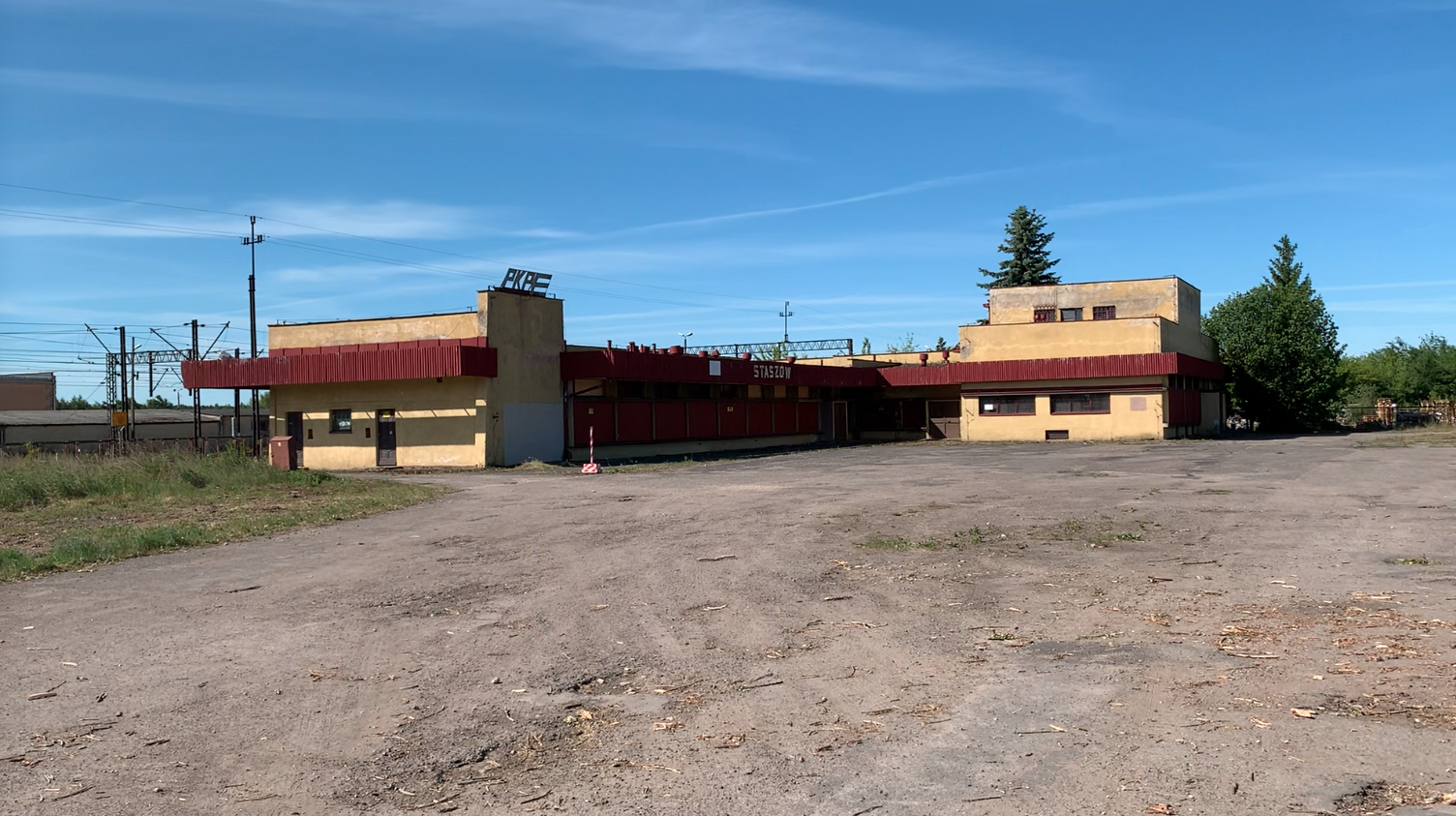
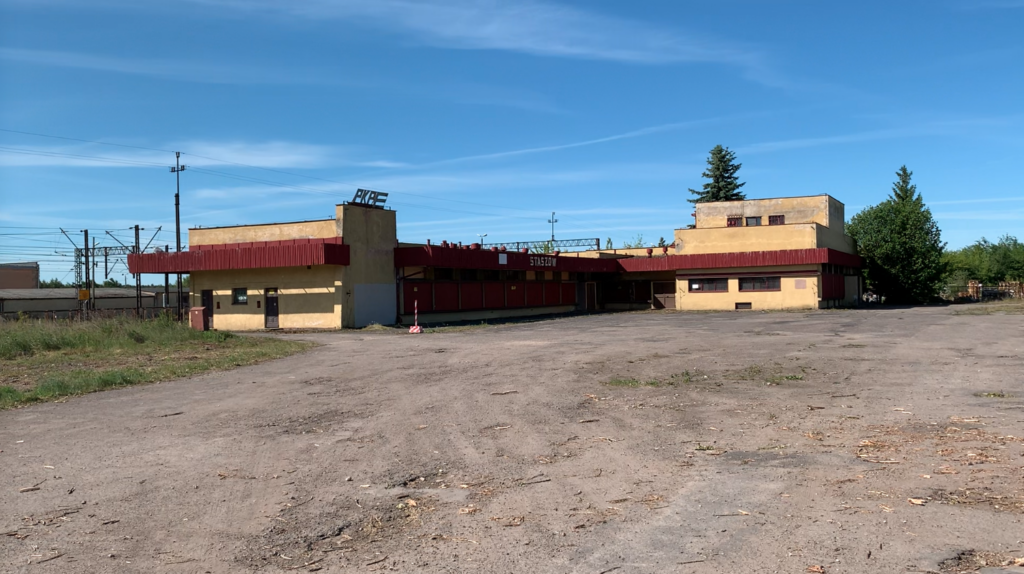
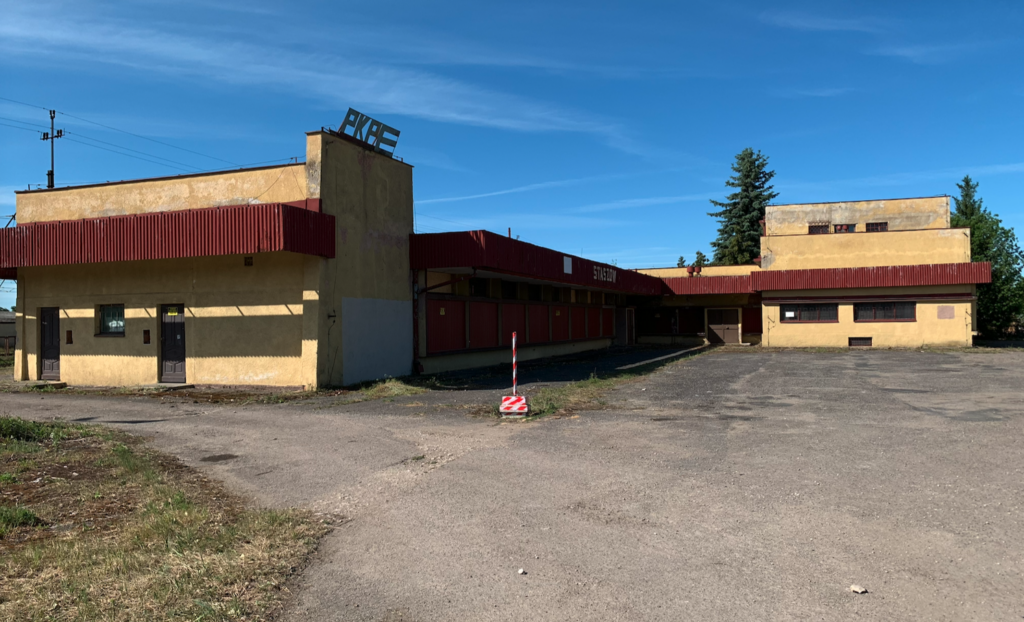
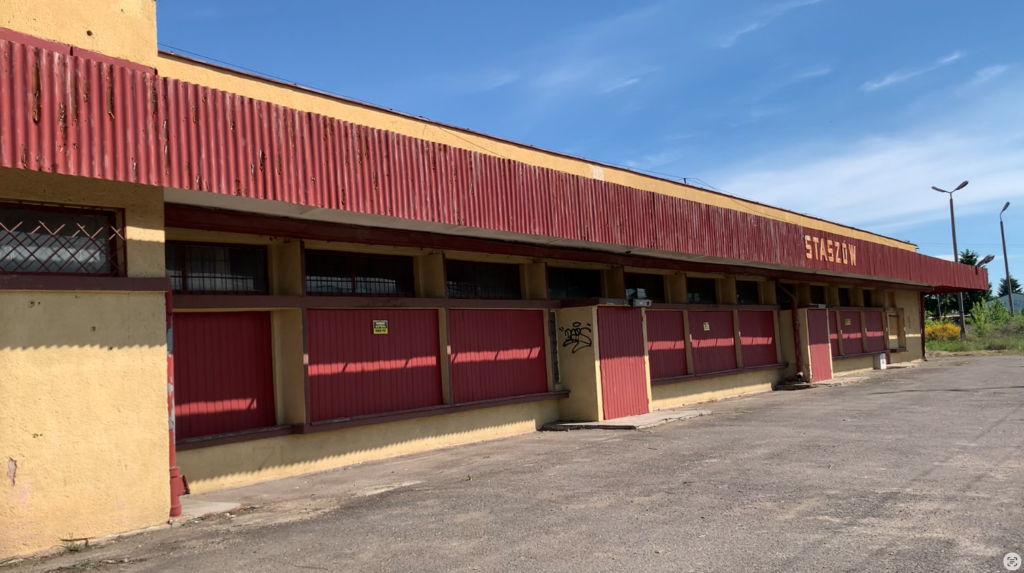
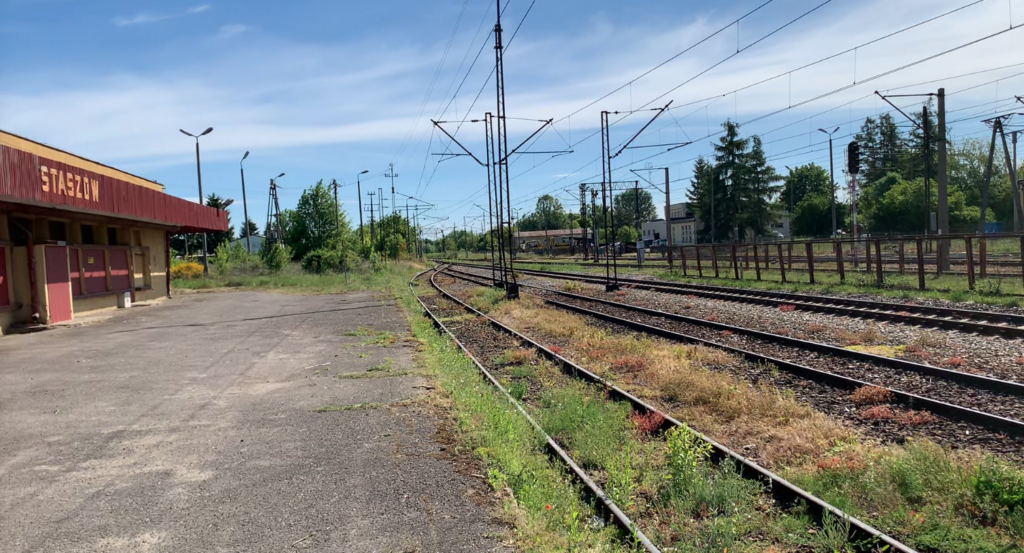
Staszów Railway Station.
Geographic coordinates: 50.550N 21.156E. Elevation 194 m. Address: Krakowska Street 45C, 28-200 Staszów.
Staszów is a town located in southeastern Poland, in the Świętokrzyskie Voivodeship, and is the seat of Staszów County and the Staszów Municipality. The Czarna Staszowska and Desta rivers flow through the town.
The first mention of Staszów dates back to 1241, when the village was burned down by Tatars. In 1525, thanks to Hieronim Łaski, the town was granted town rights and became a private noble town. Over the centuries, Staszów passed through various owners, including the Opaliński and Czartoryski families. In the 18th century, the town was an important center of trade and crafts. Staszów retains its medieval urban layout, with a market square and a town hall in the center. Among the most important historical monuments is the 14th-century Church of St. Bartholomew, which has been rebuilt several times. The town also boasts 18th- and 19th-century tenement houses and a town hall dating back to 1783. In 2025, Staszów celebrated the 500th anniversary of its town charter.
As of 2023, Staszów had a population of 13,680. The town covers an area of 26.88 km² and is divided into several neighborhoods, including Stare Miasto, Golejów, Radzików, and Pocieszka.
Staszów is located in southeastern Poland, in the Świętokrzyskie Voivodeship, in the central part of the Sandomierz Upland. It is located 57 km southeast of Kielce (the voivodeship capital) and 51 km southwest of Sandomierz. The distance from Staszów to Tarnów is 70 km, to Krakow 116 km, and to Warsaw 208 km. The city’s elevation ranges from 180 to 210 m. The city lies on the Czarna Staszowska River, a tributary of the Vistula River. The city is surrounded by a hilly landscape characteristic of the Świętokrzyskie Uplands. The surrounding area is primarily forests, farmland, and small hills. The Świętokrzyska Forest and the Chańcza Reservoir, a popular recreational area, are located nearby.
Railway in Staszów.
The Staszów region is an area exceptionally neglected in terms of transportation, a fact contributed to by the Muscovites, as the area was under their rule. The situation improved somewhat during the Great War, when the Austrians built many kilometers of narrow-gauge lines. Staszów found itself on the Bogoria-Staszów-Szczucin railway route near Tarnów. Even during the communist era, the road and railway network remained underdeveloped. Even in the 21st century, successive governments showed little interest in developing transportation in this part of Poland. The LHS railway line and the freight line to the Połaniec Power Plant were exceptions.
The narrow-gauge railway in Staszów was a crucial element of the local transportation infrastructure for over 70 years. Its history dates back to the Great War, when in 1915, Austro-Hungarian troops began construction of a narrow-gauge line with a track gauge of 600 mm, initially as a field railway. In 1917, the Bogoria – Staszów – Jędrzejów section was completed.
The Staszów Wąskotorowy station was part of the Jędrzejów Wąskotorowy – Szczucin line near Tarnów Wąskotorowy, which reached a length of 137 km. In 1953, the line was converted to a 750 mm gauge. The railway served both passenger and freight transport, serving local communities and industry. The last passenger train ran from Bogoria to Staszów around 1990, after which the railway was decommissioned. Currently (2025), few material traces remain of the former narrow-gauge railway in Staszów. All the memorabilia collected from this railway can be viewed at the Staszów Land Museum. For narrow-gauge railway history enthusiasts, the “Ciuchcia Ponidzie” tourist railway still operates in the Świętokrzyskie region, running between Jędrzejów and Pińczów. Although it does not extend through Staszów, it offers the opportunity to experience a historic train journey in picturesque surroundings.
Railway Line No. 70 Włoszczowice – Chmielów.
Railway Line No. 70 Włoszczowice – Chmielów was one of the few railway lines completed, intended to smooth the railway system in Poland after World War II. The line was intended to relieve congestion on the main railway routes by creating alternative routes. Line No. 70 was commissioned in stages. On July 19, 1969, the Włoszczowice – Grzybów section was opened, on May 31, 1972, the Grzybów – Staszów section, and on September 20, 1973, the Staszów – Chmielów section. The line’s name changed due to the change in the name of the terminus. The line’s previous name was Włoszczowice – Chmielów near Tarnobrzeg.
From the very beginning, electrification of railway line No. 70 was planned. Electrification with 3 kV DC current was planned. In reality, electrification took place several years later. On November 26, 1988, the Włoszczowice-Rytwiany section was electrified, and on December 21, 1989, the Rytwiany-Chmielów section was electrified.
Line No. 70 is 88.137 km long. It runs north-south. Currently, the maximum speed is 60 km/h. Passenger service continued until 2013. One of the last trains was the Przemyśl-Wrocław and Wrocław-Przemyśl service. Currently (2026), there is no passenger service on the line.
The line was used to transport, among other things, sulfur from the mines in Grzybów. When the mines were closed, part of the station in Grzybów was closed, as well as part of the railway infrastructure at the Raczyce, Chodków, and Nagnajów stations.
Since 2022, the revitalization of railway line No. 70 has been under consideration. This program was entitled “Increasing the capacity of selected railway lines by optimizing traffic control devices and station systems.” On April 17, 2024, a tender for some of the planned work was awarded. The line is planned to increase passenger train speeds to 100 km/h. However, in 2025, under the new government in Poland, a declaration was made to increase speeds to 120 km/h. In reality, the previous tender was canceled and work was suspended. The goal was to keep things as they were, meaning passenger trains would not return to Line No. 70. In 2026, a transshipment terminal is planned at the Grzybów and Grzybów LHS stations, with Mirbud as the contractor.
Włoszczowice station (0.00 km, elevation 267 m), beginning at Line No. 73. Chmielnik station (13.65 km, elevation 258 m). Raczyce passing loop (24.78 km, elevation 210 m). Grzybów station (39.81 km, elevation 220 m). Staszów station (49.35 km, elevation 200 m), next to it is the LHS station, railway line No. 65. Rytwiany station (51.58 km, elevation 199 m), railway line No. 75. Strzegomek station (62.58 km, elevation 201 m). Osiek Staszowski passenger stop (70.43 km, elevation 181 m). Stary Łężek loading bay (80.22 km, elevation 151 m). Świętokrzyskie/Podkarpackie provincial border (82.67 km). Nagnajów station (84.55 km, elevation 167 m), railway line No. 70a. Chmielów station (87.11 km, elevation 161 m), railway line No. 25, 933.
Staszów standard-gauge railway station.
Staszów Railway Station has a station building that was commissioned in 1980. The station opened on May 27, 1972. On that day, the first passenger train from Kielce arrived in Staszów. It was an SM42 locomotive, plus two 43A Ryflak carriages. After electrification, EN57 trains arrived in Staszów. Residents of the Staszów area unanimously agreed that the route was poorly planned. The main drawback was the location of the stations and passenger stops at a considerable distance from the centers of towns and villages.
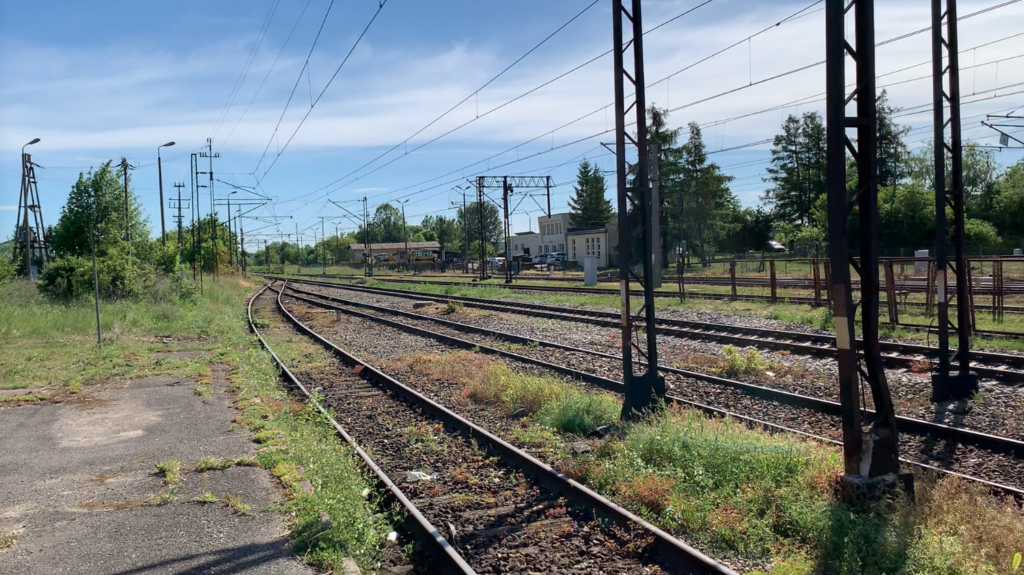
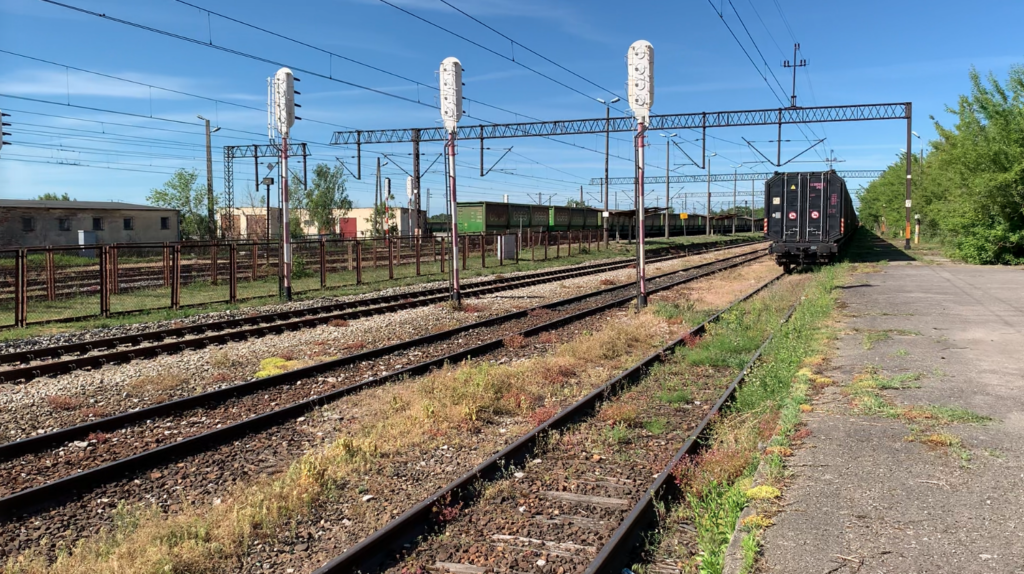
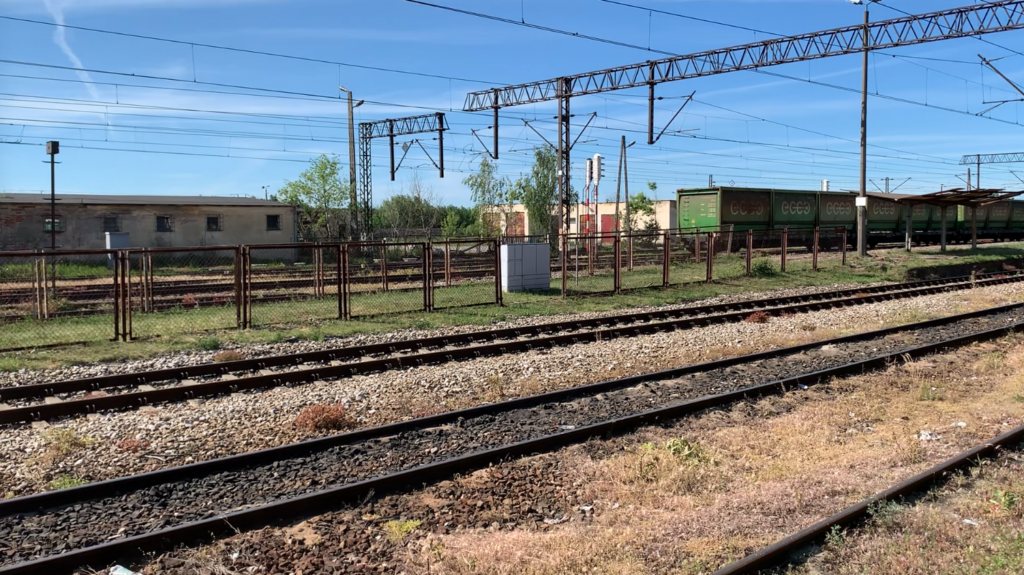
Staszów station has two platforms and three platform edges. Platform 1, a single-edge platform, is located next to the station building and is 250 meters long. Platform 2, an island platform, has two edges and is 293 meters long. This platform features six bus shelters, benches, and trash cans. Currently (2026), the shelters are dilapidated. Twelve street lamps have been installed on the platform. The surface was made of paving slabs, but is currently overgrown with grass and weeds. Access to Platform 2 was at the level of the tracks, from the eastern side. Between the tracks, the walkway leading to Platform 2 is enclosed by a high fence with steel frames and mesh. The crossing over the tracks has now been removed.
The station was opened only in 1980, as a building housing the Polish State Railways (PKP) and the Polish State Bus (PKS). The building is two-story. The building housed a waiting room, train and bus ticket offices, a RUCH kiosk, a bar, and a student lounge. The station square housed a taxi rank and a food kiosk. At that time, the station served 200-300 passengers daily.
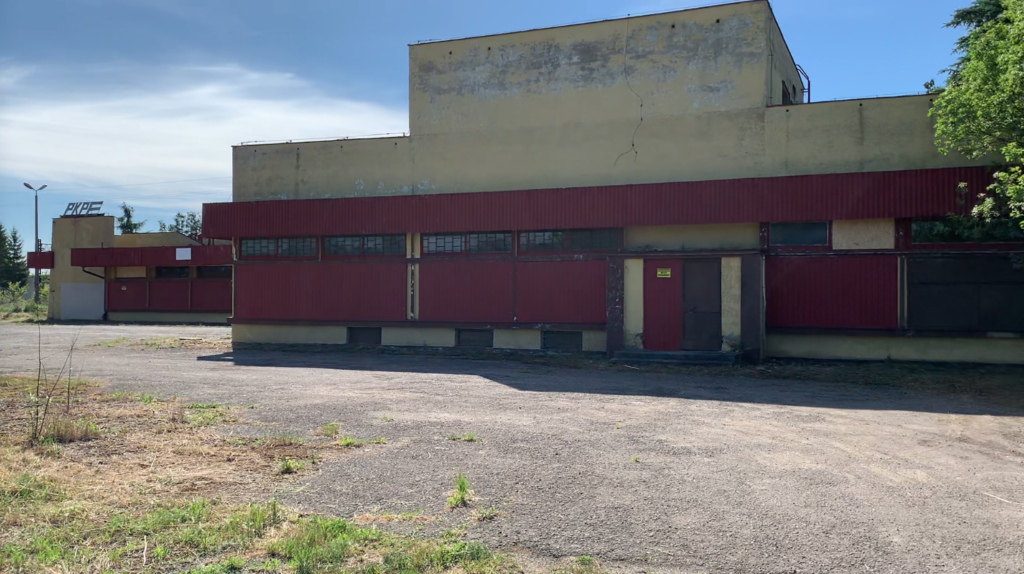
The station building was constructed on a polygonal plan, formed by two rectangles connected by a rectangular connector. The total length of the building is 54 meters and width 30 meters. The building was covered with flat roofs made of sheet metal and roofing felt. The slight roof slopes direct rainwater to numerous drainage channels. The building was equipped with electrical, water, sewage, and central heating systems. Decorative sheet metal cornices were made of sheet metal. The building has numerous doors and large windows. The doors are made of steel and glass, and the windows are similarly constructed. The main structure is brick and plastered. The dominant colors are light yellow and burgundy. The building was designed as a purely utilitarian structure, free from unnecessary elements that would increase construction and operating costs. The building has been secured against vandalism. The windows and doors have been additionally protected with sheet metal and painted burgundy.
To the south of Staszów Station is the LHS station and terminal. Near Staszów, railway line No. 70 runs parallel to LHS line No. 65.
In 2000, the first major cuts in rail service occurred. Connections were made unfavorable to passengers, and their number was limited. It became impossible to take a train to Kielce, settle an errand at the office, and return the same day. Passengers were left with PKS connections. However, in 2009, the local PKS branch also abandoned the Staszów station. All service and commercial outlets in the station building were closed. The building was padlocked with all possible security measures.
During the United Right government, there were plans to improve Poland’s railway system and eliminate social exclusion. Residents of Staszów and other towns were offered two options for reaching the CPK (Central Communication Port). The first option was to reach Stalowa Wola and travel via spoke No. 6, or to Busko-Zdrój station and travel via spoke No. 7. However, after the Freemasons, Volksdeutsche, and Communists came to power in 2023, all plans were scrapped. Even the small plans for the Busko-Zdrój-Żabno-Tarnów and Połaniec-Mielec connections have disappeared.
In 2024, a special train ran along railway lines No. 70 and others. The organizer was TurKol Railway Tourism. PKP InterCity, PKP Cargo, SKPL, and RailPolska joined in organizing the journeys. The train was assembled from a historic locomotive and passenger cars. The route; Połaniec, Tarnobrzeg, Stalowa Wola, Biłgoraj, Zamość, Hrubieszów Miasto, Przeworsk, Rzeszów, Jasło, Sanok, Łupków, Uherce Mineralne, Kraków, Wadowice, Andrychów, and Chabówka. This was the longest route. There were also shorter journeys, for example: Staszów – Połaniec – Staszów.
The authorities of Staszów and other towns (Oleśnica, Rytwiany) continue to want to revitalize passenger traffic on line No. 70. A transfer center is planned. According to the plan, parking lots and bicycle paths would be built around the station. The estimated cost is PLN 20 million. Initial plans include purchasing the station building in Staszów. A proposal was made to purchase it for 20% of the value, with 80% as a donation. The Staszów authorities intend to apply for funding for the project from the Regional Operational Program of the Świętokrzyskie Voivodeship. To launch the Kielce-Staszów connection, PLN 11 million is required, along with PLN 4 million for the Kielce-Połaniec connection. The issue is complicated because lines 70 and 75 are single-track, and any renovations result in a complete closure of traffic. The work must be carried out in stages, in sections of 5-8 km. Current work (2025), carried out by PKP PLK, aims to maintain the lines’ passability.
Written by Karol Placha Hetman