Skawina 2026-02-02
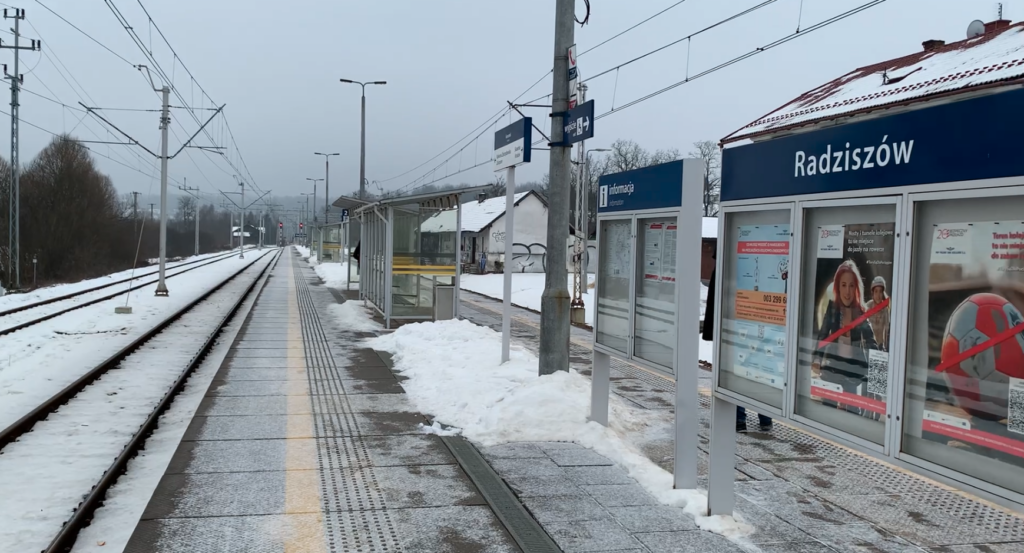
PKP Radziszów. 2026
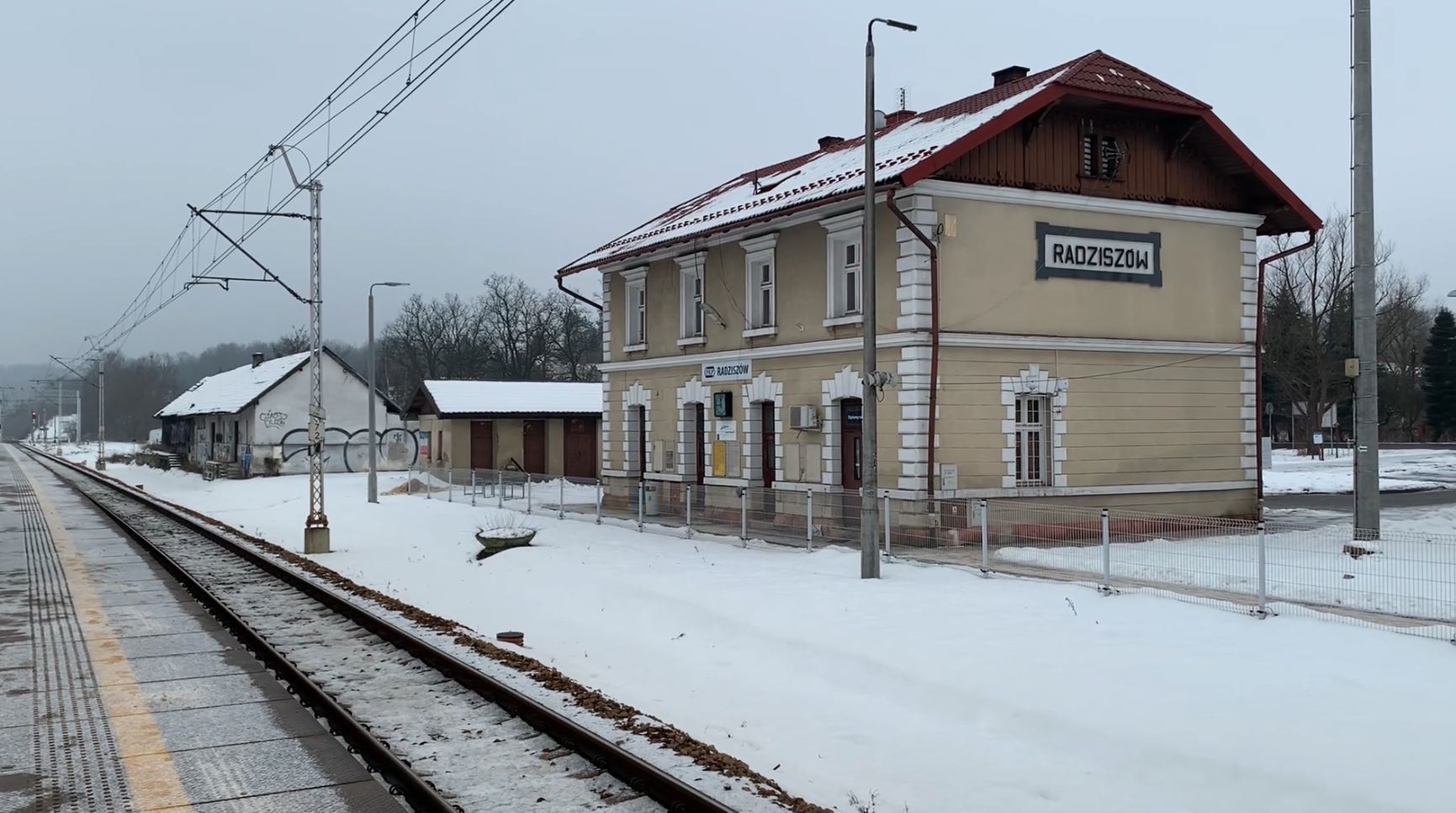
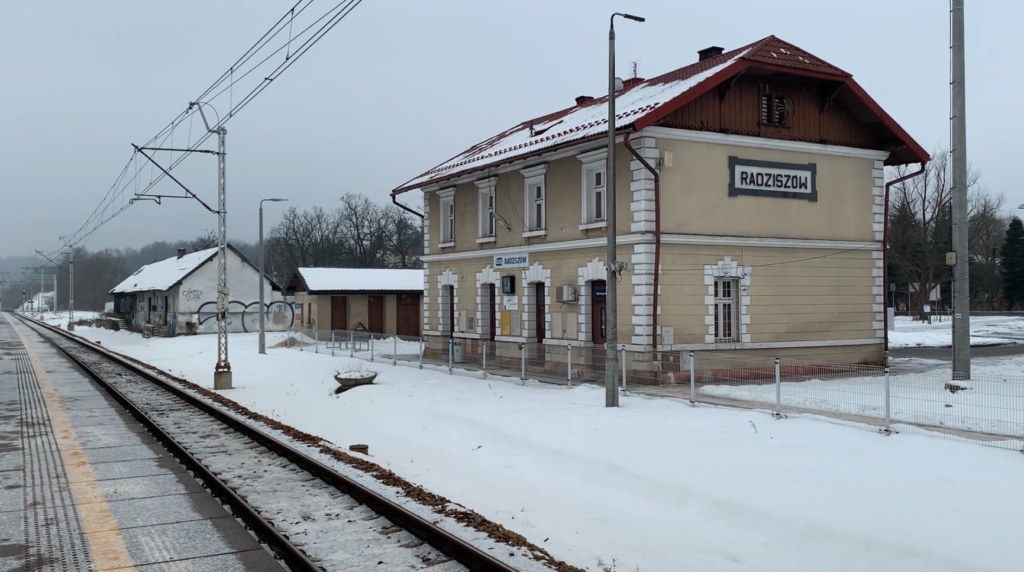
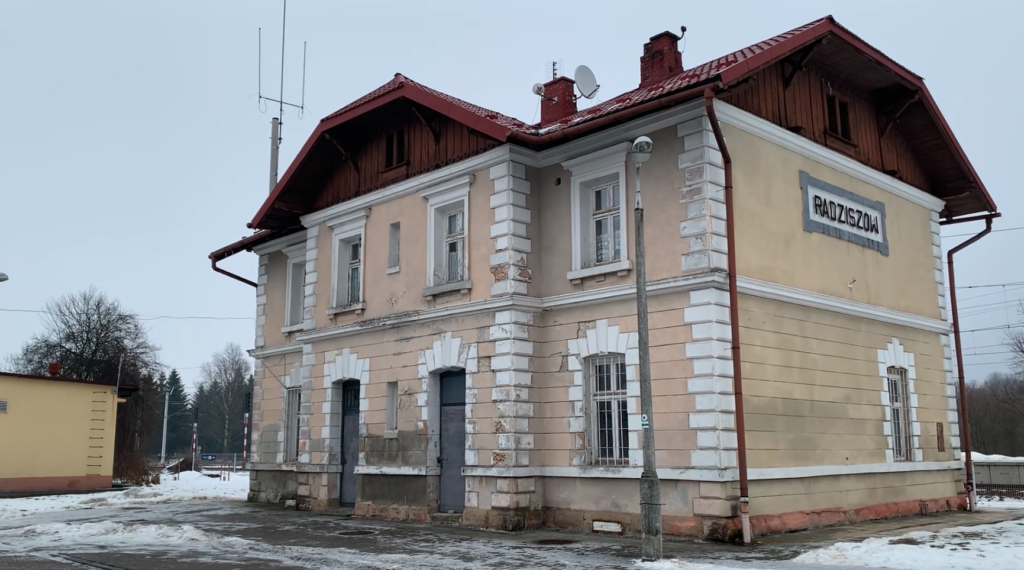
Radziszów Railway Station. Address: 139 Zawodzie Street, 32-052 Radziszów. Geographic coordinates: 49.918N 19.809E. Elevation: 230 m.
Radziszów Village.
Radziszów is a village in Poland, located in the Lesser Poland Voivodeship, Kraków County, and Skawina Commune. The village comprises the settlements of Brzegi, Podlesie, Rozparka, Wytrzyszczek, Zadworze, and Zawodzie. Radziszów has an unofficial coat of arms. The name of the village derives from the Old Slavic name Radziesz or Radziszek, but other forms have also appeared in various documents over the centuries.
The first mention of the village comes from a document by papal legate Idzi from 1124. In 1250, Duke Władysław of Opole granted the village of Radeszew to Bolebor, the abbot of Tyniec. This document was confirmed in 1519 by King Sigismund I the Old. Subsequently, the village became the property of the Benedictine Abbey in Szczyrzyc. During the existence of the Duchy of Oświęcim, the Skawinka River divided this area into Silesia and the Kingdom of Poland. The village became private property, only to return to the Benedictine Abbey in Tyniec. In the 18th century, the village became the property of Primate Gabriel Podoski. Following the partition of Poland in 1781, these lands became part of the Austrian partition, and then the Austro-Hungarian partition. The village was entered into the government register of religious funds and put up for sale. The Dzieduszycki family became the new owner. During the so-called Galician Massacre of 1846, incited by the Austrians, fighting took place here, during which the residents defended the Dzieduszycki family from rebels. The Dzieduszycki family gifted the residents with agricultural produce and funded four church bells. These bells were looted by the Austrian army during the Great War and melted down for weapons. The estate then passed to the Orzechowski family and subsequent owners. Before World War II, the land was parceled out. Between 1934 and 1937, a district children’s sanatorium was built in Radziszów. From 1954 to 1972, the village was the seat of the Radziszów community. From 1975 to 1998, the town administratively belonged to the Kraków Voivodeship.
Throughout its history, the village has been destroyed, burned, and flooded. The last flood occurred in 2010. In 2021, the population was 3,619. The village includes a historic manor house and the parish church of St. Lawrence and St. Margaret.
Radziszów is located on county road No. 1939K, leading from Skawina to Krzywaczka (national road No. 52) and then to Kalwaria. The railway line runs along the Skawinka River, which flows through the center of the village, for approximately 7 km. The village covers approximately 15 square kilometers. Geographically, it is located in the Carpathian Foothills. The terrain is heavily undulating, agricultural, and forested. The villages in this region are typically linear villages.
Radziszów Railway Station.
The railway station in Radziszów opened on December 16, 1884, as part of the construction of the Galician Transversal Railway. The construction positively influenced the region’s economic development, reducing the so-called Galician poverty. The railway enabled access not only to Skawina and Kraków, but also to Vienna, as well as emigration across the Great Pond, via the Mysłowice transfer station.
During World War II, Germans changed the station’s name to Radziszów because they were unable to pronounce the Polish name.
It is currently LK No. 97. The Skawina-Sucha Beskidzka line was electrified on July 17, 1974, as part of the electrification of the Kraków-Sucha Beskidzka and Chabówka-Zakopane railway lines. Simultaneously, the line was modernized. Light signals were installed in place of the shape signals.
In 2006, the Radziszów station building underwent a minor renovation. The façade, window and door frames, and roof were renovated. The work was carried out as part of the launch of the so-called Papal Trail; the St. John Paul II Railway Trail.
The modernization of LK No. 97 on the Skawina-Sucha Beskidzka section and the construction of a connecting line in Kalwaria Zebrzydowska were key investments by PLK PKP in the region. The goal was to shorten train travel times and increase the number of passenger connections, especially given the presence of single-track railway lines in the area. This concerned the main connection between Kraków and Skawina with Wadowice, Andrychów, and Bielsko-Biała. The new connecting line, in the Kalwaria Zebrzydowska area, was opened in 2023. A 500-meter track connecting LK 97 (Skawina – Żywiec) and LK 117 (Kalwaria – Bielsko Biała) was built, reducing travel time by approximately 15 minutes. New high platforms were built along the route. The tracks, overhead lines, and SHP system installations were replaced.
As a result, the Małopolskie Railways and InterCity modernized their route network, increasing the number of routes. Despite the modernization, the single-track nature of the line remains a challenge for full capacity on the sections to Sucha Beskidzka, Chabówka, and Zakopane.
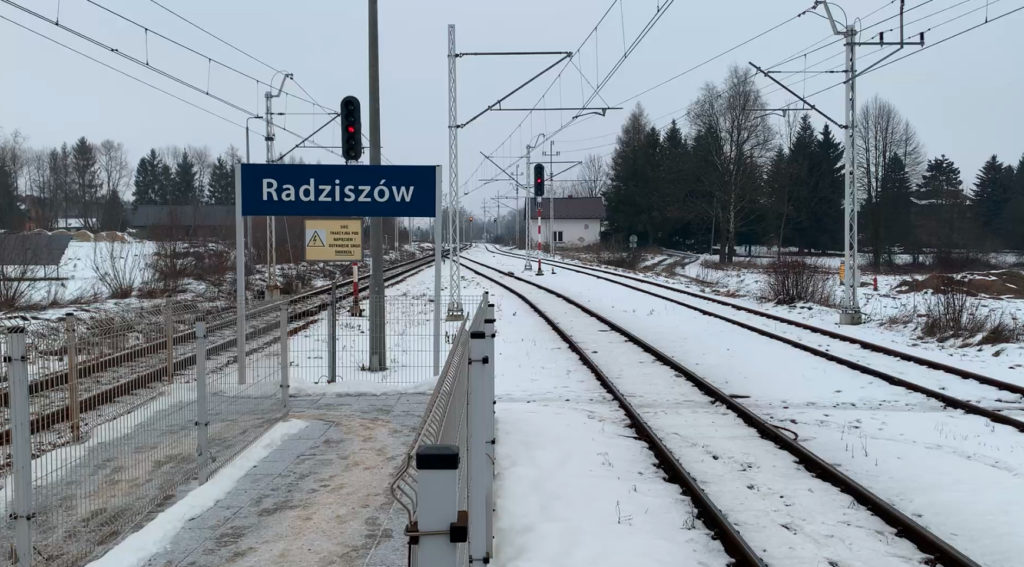
Radziszów railway station underwent a thorough modernization in 2019, as part of work on railway line No. 97 Skawina – Sucha Beskidzka. The reconstruction included raising the platform to a height of 0.760 m, replacing the rail traffic control (SRK) devices with computer-based MOR-1 systems, shortening track No. 3, and increasing the line speed to 100 km/h, which improved train traffic. Raising the platform made it easier for passengers to board trains. Access to the platform remains at track level, but is accessible and safe for passengers in wheelchairs, with strollers, large luggage, or bicycles. Type E relay devices with traffic lights were previously installed at Radziszów station. TVU cameras have been installed at the level crossings, which not only improve the safety of vehicles and pedestrians but also provide information to traffic controllers when trains have passed the crossing.
As part of the investment, a new passenger stop, Radziszów Centrum, was built, which opened on December 15, 2019. It should be noted that Radziszów station is located far from the village center, on the southern edge of the town.
Currently, Radziszów station has one island platform and two platform edges. The ticket office has been removed. Passengers have access to free parking and bicycle parking. The station is operated by PolRegio. In 2017, the station served up to 50 passengers per day, and in 2022, up to 100 passengers per day. In 2023, there was a slight decrease in passenger numbers, but it’s worth noting that the Radziszów Centrum passenger stop opened around that time. As a result, the total number of passengers and residents of Radziszów has increased significantly. Currently (2026), the station near the platform has tracks 1 and 2, and a side track 4. Track 3, the one next to the station building, has been removed. This track was not electrified. There was also track 5 near the warehouse, ending with a buffer stop, which was also demolished. The exit from Radziszów station towards Skawina is protected by a protective rib located at the end of track No. 4, after switch No. 2. The line speed has also been increased to 100 km/h.
On February 2, 2026, 35 passenger trains departed from Radziszów station. They served the following stations: Bielsko-Biała Główna, Kraków Główny, Rabka Zaryte, Sucha Beskidzka, and Zakopane.
Written by Karol Placha Hetman