Oświęcim 2026-02-19
Oświęcim Railway Station.
Geographic coordinates: 50.041N 19.201E. Elevation 232 m. Address: Oświęcim – Powstańców Śląskich Street 22, 32-600 Oświęcim.
The City of Oświęcim.
The settlement was founded in the 12th century. Town rights were granted in 1272 and confirmed in 1291. From 1315 to 1564, the city was the capital of the Duchy of Oświęcim-Zator. From 1564, Oświęcim was a royal city of the Crown of the Kingdom of Poland. Historically, the city belongs to the Kraków Region. During the Partitions of Poland, it was part of the Austro-Hungarian partition. After Poland regained independence in 1918, the city belonged to the Kraków Voivodeship. During the German occupation (1939-1945), the city was incorporated directly into the Raj and became part of the Upper Silesian Province.
In Oświęcim, the Germans established the largest concentration camp for Polish citizens. It consisted of the Auschwitz-Birkenau concentration camp and extermination center. The complex included the Auschwitz I main camp in Oświęcim, the Auschwitz II-Birkenau concentration camp in Brzezinka, and the Auschwitz III-Monowitz concentration camp in Monowice, with a system of numerous subcamps. In the 1960s, schools taught young people that 5 million people were murdered in a Germanic concentration camp. In the 1990s, it was reported that only 1.5 million people died. Currently, it’s estimated that approximately 1 million people died. If this continues, the Freemasons will claim that no one died there. Moreover, the Germans claim it was a Polish concentration camp. That’s why history lessons in schools are so important. Only 200,000 people survived until liberation.
This wasn’t the end of the barbaric behavior of the Germans in Oświęcim. During the war, they expanded a chemical factory belonging to the IG Farben concern, where they produced Zyklon B, which was used to murder and gas people. Doctors who conducted pseudo-medical experiments on concentration camp prisoners collaborated with the concern. Officially, IG Farben was liquidated in 2012, but its “know-how” was acquired by other Germanic companies.
The city of Oświęcim belongs to the Lesser Poland Voivodeship, in Oświęcim County. Geographically, Oświęcim lies on the Soła River, which flows into the Vistula River outside the city. The Oświęcim Basin (Kotlina Oświęcimska) was named after the city. The basin contains numerous reservoirs, both natural and artificial. There are the Macocha and Młynówka streams, several ponds, and Lake Kruki. The basin lies between the Carpathian Foothills and the Silesian Upland. Currently (2021), Oświęcim has a population of 37,231. The city has an area of 30 square kilometers.
Oświęcim Railway Station.
The Oświęcim railway station was opened in 1856, when Lesser Poland was under Austro-Hungarian rule. This was when rail service on the Dziedzice-Trzebinia route was launched. In the second half of the 19th century, Oświęcim became an important railway junction. Three lines of the railway connected here: the Emperor Ferdinand Northern Railway, which ran from Kraków to Vienna, which was completed in 1856; the Prussian Wrocław-Katowice-Mysłowice line, and the Mysłowice-Oświęcim section, which opened in 1864. The Karol Ludwik Oświęcim-Skawina-Podgórze (Kraków) railway line was opened in 1884.
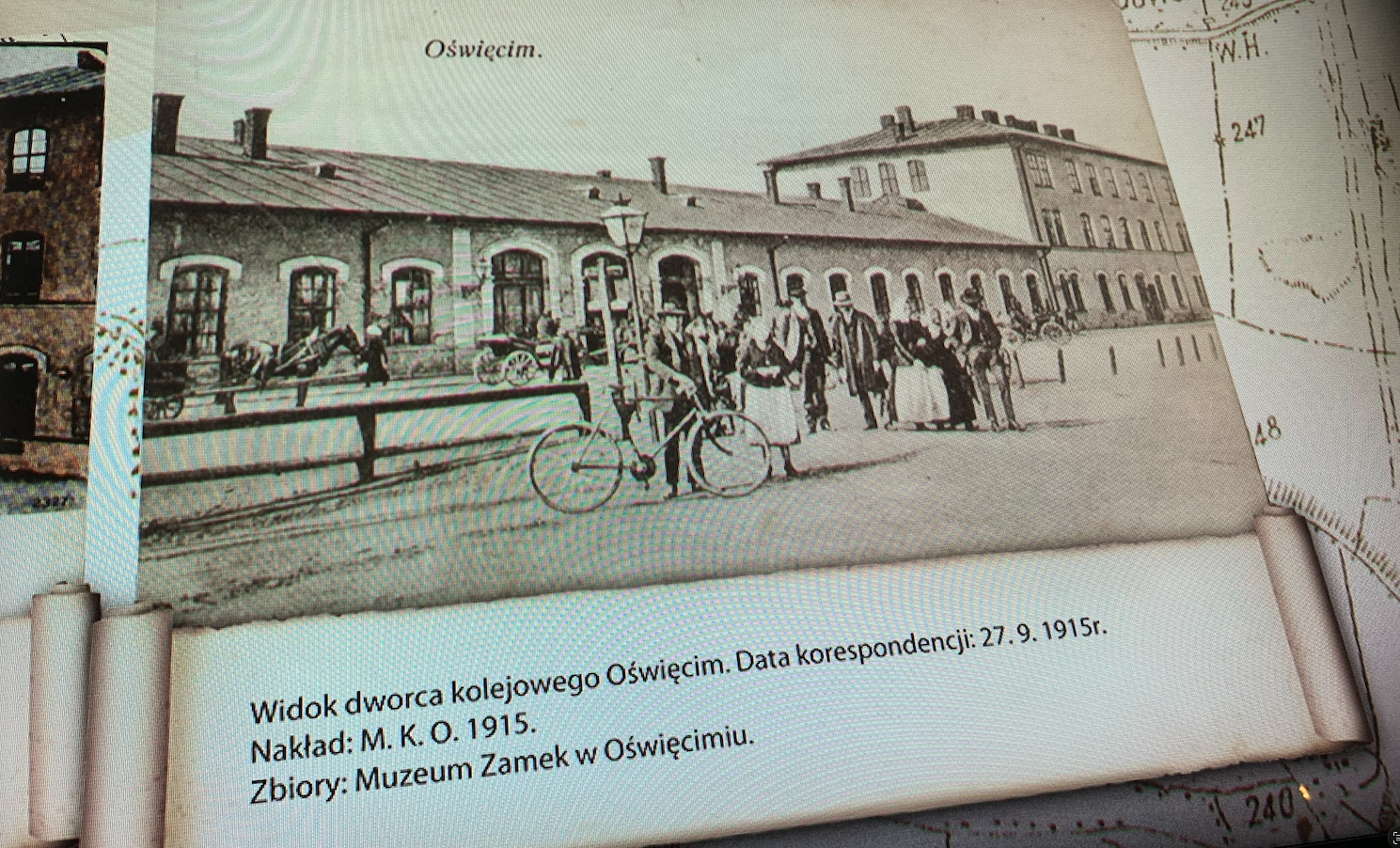
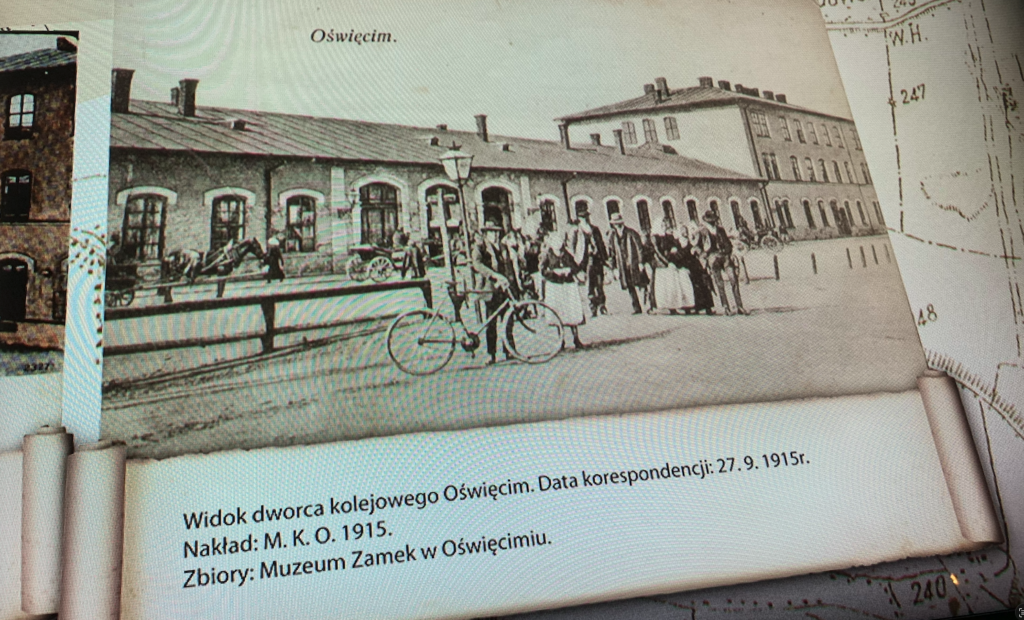
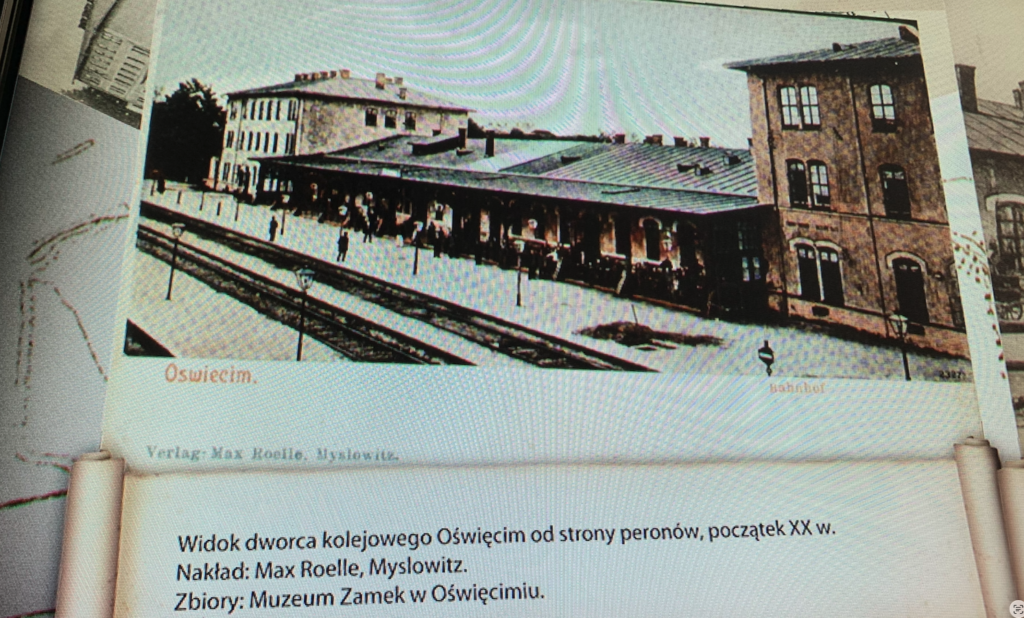
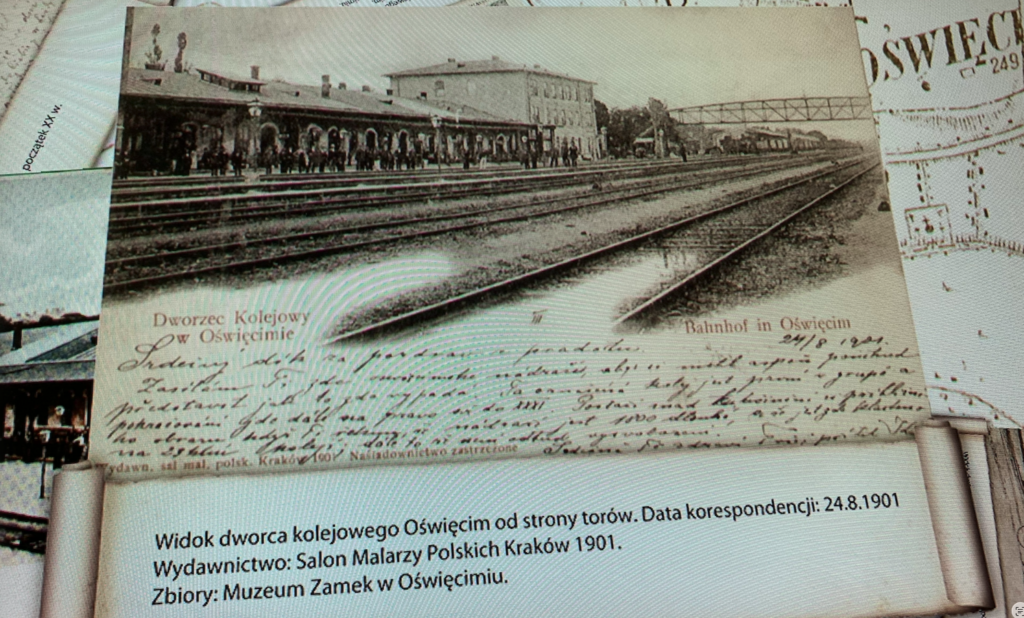
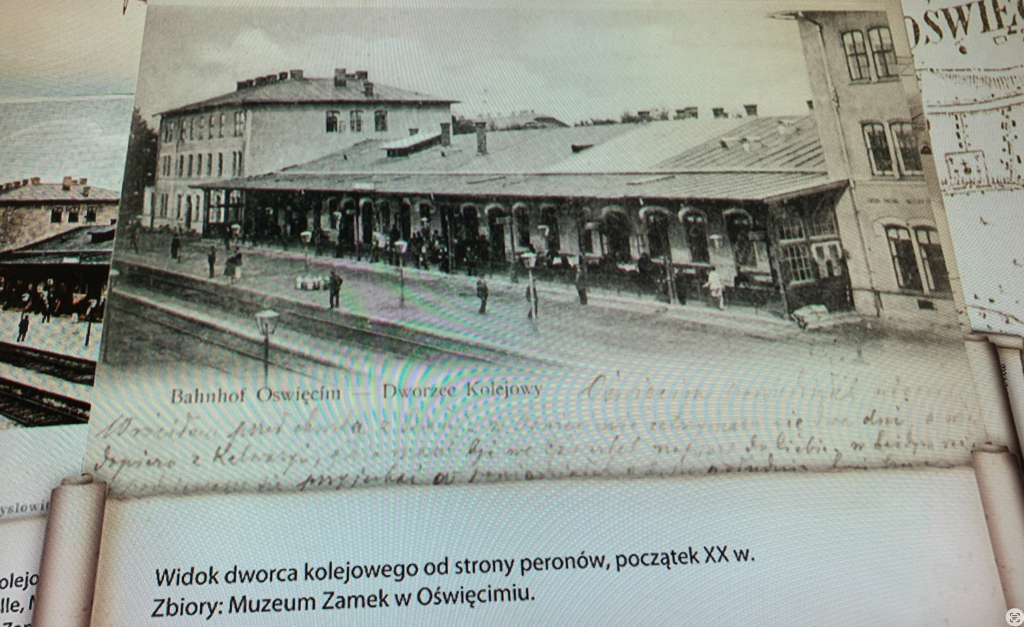
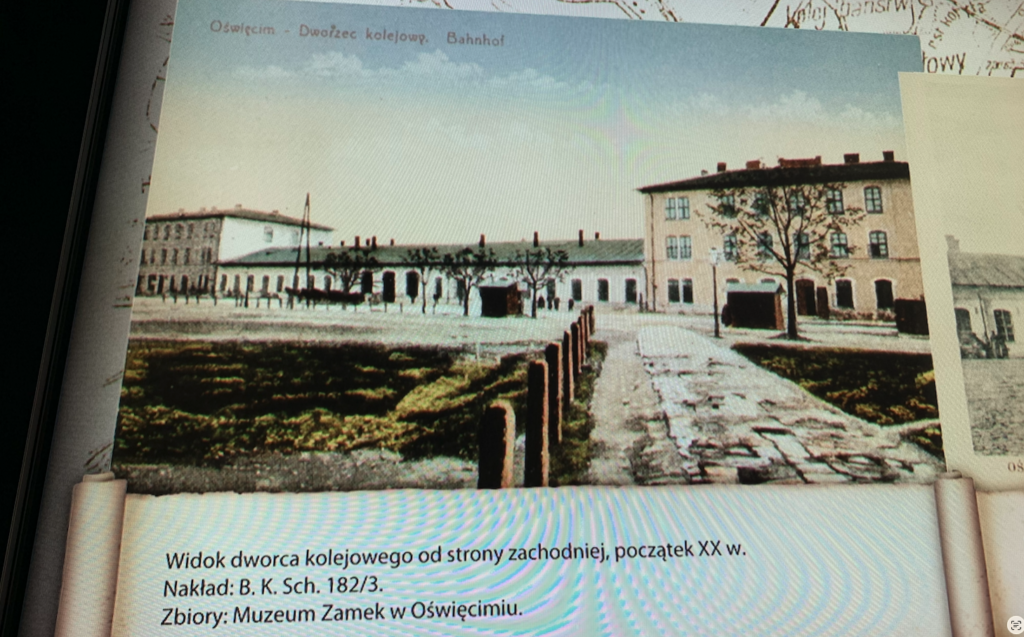
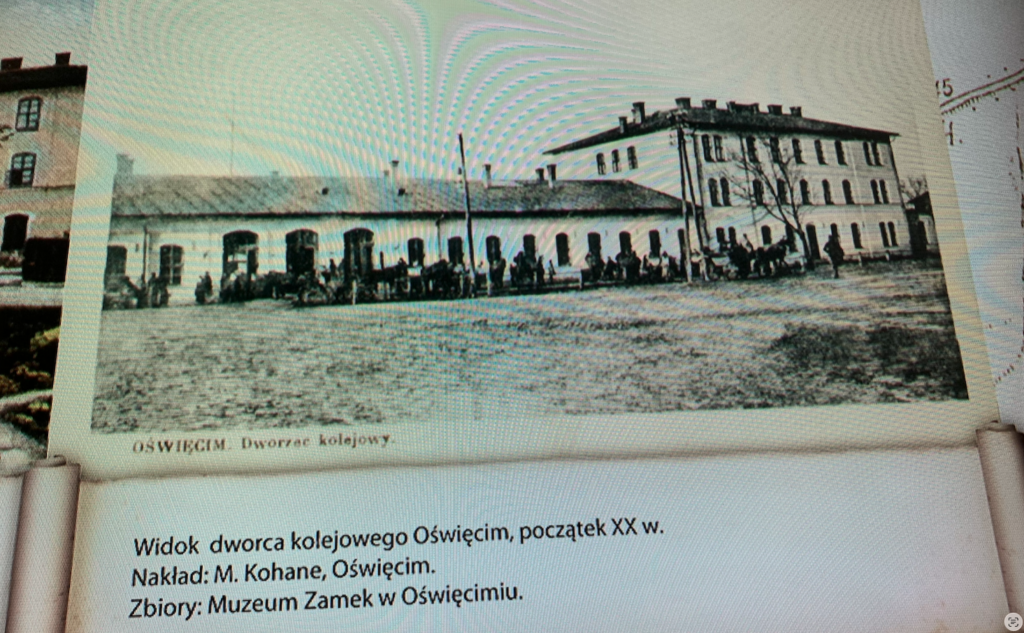
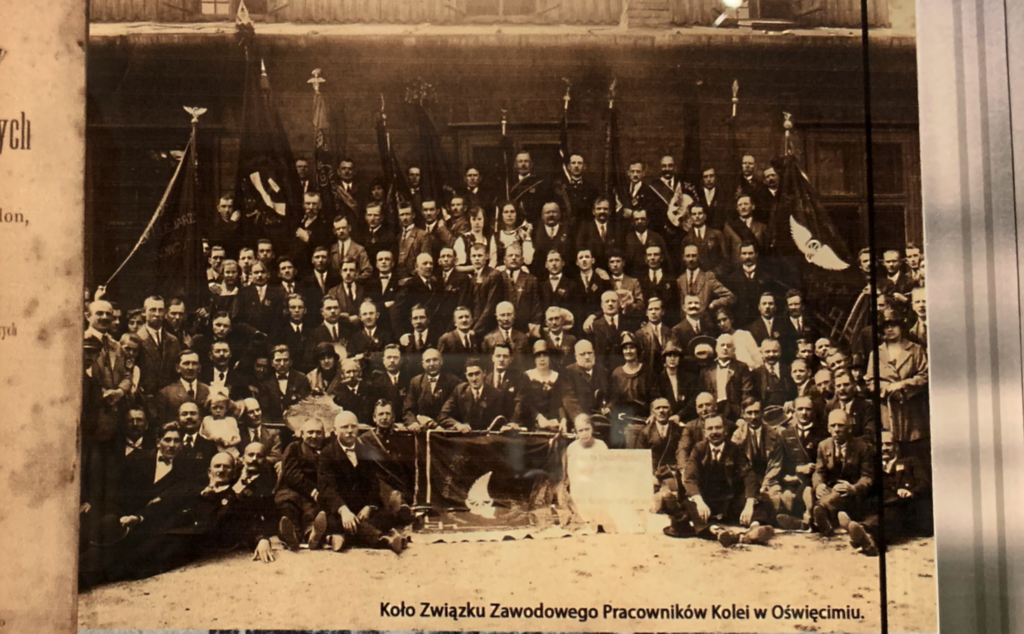
The exact construction date of the Oświęcim railway station, which was built in the then-commune of Brzezinka in the second half of the 19th century, is unknown. The station was a three-story structure. The central, single-story section was long and spacious and housed ticket and baggage claim offices and waiting rooms/restaurants. The outer sections consisted of two two-story administrative and residential buildings. In later years, an additional floor was added. This station building survived until its reconstruction in 1963.
Railway Line No. 93 Trzebinia – Zebrzydowice.
Railway Line No. 93 Trzebinia – Zebrzydowice is 81.408 km long, runs east-west, is a double-track line, and is fully electrified. The line was built in stages. On December 17, 1855, the Bohumin-Zebrzydowice-Dziedzice section was opened, and on March 1, 1856, the Dziedzice-Oświęcim section was opened. By the end of 1856, the Oświęcim-Libiąż-Trzebinia section was in operation. From the very beginning, the rails had a 1435 mm gauge.
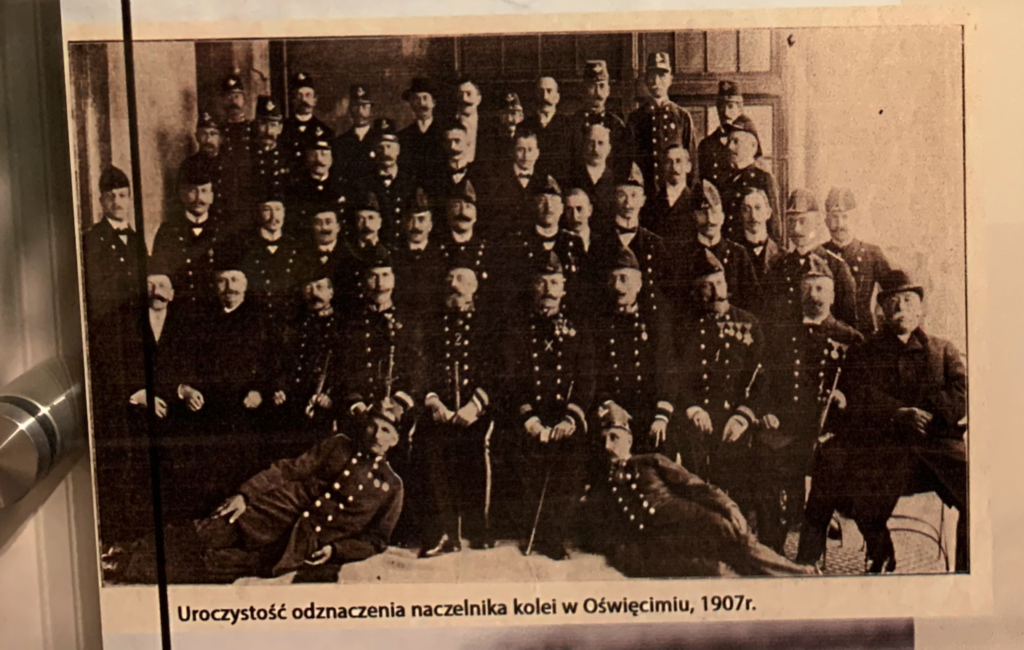
The first owner was the Imperial-Royal Privileged Northern Railway of Emperor Ferdinand. On January 1, 1906, the route was nationalized by the Kaiserlich-Königliche Staatsbahnen (kkStB), the Imperial-Royal State Railways. In 1918, the route was divided between Poland and the Czech Republic. In Poland, the Polish State Railways (PKP) became the owner.
Railway line No. 93 is a line of national importance. The construction of line No. 93 allows passenger trains to reach speeds of up to 120 km/h on the Trzebinia – Dziedzice section and up to 160 km/h on the Dziedzice – state border section.
The electrification of the line took place in three stages. Electrification: on April 29, 1964, for the Dziedzice – state border section; on December 4, 1971, for the Oświęcim – Dziedzice section; and on April 30, 1973, for the Trzebinia – Oświęcim section.
Since 2001, as a result of budget cuts implemented by the Masonic governments, rail connections were systematically reduced and tracks were not properly repaired. As a result, travel speeds decreased and journey times increased. Rail transport became uncompetitive with road transport.
It was not until 2015 that a feasibility study for the revitalization of the railway lines began. In 2017, the first major renovation works began. One example is the Libiąż station. On December 25, 2015, due to the poor technical condition of the tracks and switches, the speed was limited to 30 km/h. A tender for the station renovation was then announced, and Skanska won. As a result of the work, 9 km of track was replaced, the overhead lines were rebuilt, and platforms were modernized. The railway siding leading to the Janina Coal Mine was also renovated. As a result of the work, passenger train speeds increased to 100 km/h and freight trains to 70 km/h.
On October 2, 2017, a contract was signed for the renovation of Line No. 93 on the Trzebinia-Oświęcim section. In February 2018, the contractor, PNiUIK Kraków, entered the construction site.
On August 27, 2018, PKP PLK signed a contract with PORR for the design-build modernization of Line No. 93 on the Oświęcim-Dziedzice section. The project included the design and reconstruction of the double-track Line No. 93 from 0.700 km to 44.950 km, excluding Libiąż station, which was modernized as part of a separate project. The stations rebuilt included Chrzanów, Chełmek, and Oświęcim, along with engineering structures and crossings, level crossings, roads (with associated infrastructure), ground reinforcement and protection, platforms and access roads, overhead lines, non-traction power systems, and rail traffic control equipment. The contract included the renovation of 63 km of track, 106 switches, 13 level crossings, 45 engineering structures, and 23 structures eliminating architectural barriers for people with disabilities. The work was completed in 2022. The total project value was PLN 1,005,799,936.58. The project also included railway lines: No. 94 on the Dwory–Oświęcim section, No. 138 on the Oświęcim–Nowy Bieruń section, No. 699 on the Oświęcim OWC–Oświęcim OWC1 section, and No. 882 on the Oświęcim–KWK Czeczott section. A new track was constructed on the Dziedzice–Brzeszcze KWK section. Geological surveys revealed that soil reinforcement was necessary in many areas. Many infrastructure elements had to be dismantled and rebuilt. Since 2020, passenger trains have been resumed on the Kraków Główny – Trzebinia – Oświęcim route, with nine pairs per day. PolRegio operates the route. The Dziedzice – Zebrzydowice section has been operated by Koleje Śląskie since 2014.
In 2022, a Dynamic Passenger Information System was introduced on line no. 93 at the following 11 stations: Chrzanów Śródmieście, Chrzanów, Chełmek, Libiąż, Gorzów Chrzanowski, Oświęcim, Brzeszcze, Brzeszcze Jawiszowice, Jawiszowice Jaźnik, Kaniów, and Dankowice. The system provides up-to-date information on passenger train traffic. In the event of a power outage, the UPS system will maintain operation for another 15 minutes. Audio passenger information systems are available in signal boxes at individual stations and at the Dziedzice Local Control Center.
Railway line No. 94 Kraków Płaszów – Oświęcim.
The Kraków Płaszów – Oświęcim railway line is an east-west line. The line is 64.502 km long, double-track, and electrified at 3 kV DC. The line was commissioned in 1884. Electrification was completed in two stages: on October 30, 1970, on the Kraków Płaszów – Spytkowice section, and on September 9, 1971, on the Spytkowice – Oświęcim section. The route is of national importance, primarily for freight traffic between Silesia and Kraków. Since 2000, passenger traffic on the line has been declining, especially on the Skawina – Oświęcim section. The Kraków Płaszów – Skawina section was important because it continued on Line No. 97 towards Zakopane. The last passenger train to run the entire route, Line No. 94, in 2014, was an international Interregio train from Krakow to Ostrava in the Czech Republic: Krakow – Skawina – Oświęcim – Czechowice Dziedzice – Zebrzydowice – Ostrava. In 2015, train services on the Krakow – Skawina – Oświęcim route were reinstated. However, after a year, due to the poor condition of the tracks and the long travel time, they were suspended again. At the end of 2022, after repairs, passenger service was restored. In 2017, a long-distance InterCity train ran on the following routes: Warsaw – Krakow – Skawina – Oświęcim – Dziedzice – Vienna. There was also a train on the Przemyśl – Krakow – Trzebinia – Oświęcim – Prague route. Services were suspended due to the renovation of Line No. 93 from Trzebinia to Czechowice Dziedzice and the renovation of the Dziedzice junction. Renovations are scheduled to be completed by the end of 2023.
Railway Line No. 138 Oświęcim – Katowice.
The Oświęcim – Katowice railway line No. 138 is 32.761 km long, double-track, and electrified. The line runs from south to north. It runs through the Lesser Poland and Silesian Voivodeships. The maximum speed is 110 km/h.
Railway Line No. 882 Oświęcim – KWK Czeczott.
The Oświęcim – KWK Czeczott railway line No. 882 is a 9.551 km long freight line. The line enabled the Czeczott Coal Mine to operate freight trains running directly through Oświęcim station towards Trzebinia, Skawina, and Mysłowice. The Czeczott mine also has a second line towards the town of Bieruń. The Piast and Ziemowit coal mines are also nearby. The maximum speed is 40 km/h (freight trains).
Written by Karol Placha Hetman