
Oleśnica 2022-03-21
Oleśnica Railway Station.
Address: Kolejowa Street 1, 56-400 Oleśnica, Lower Silesian Voivodeship, Poland. Geographic coordinates: 51.201N 17.386E. Elevation: 157 m (515 ft).


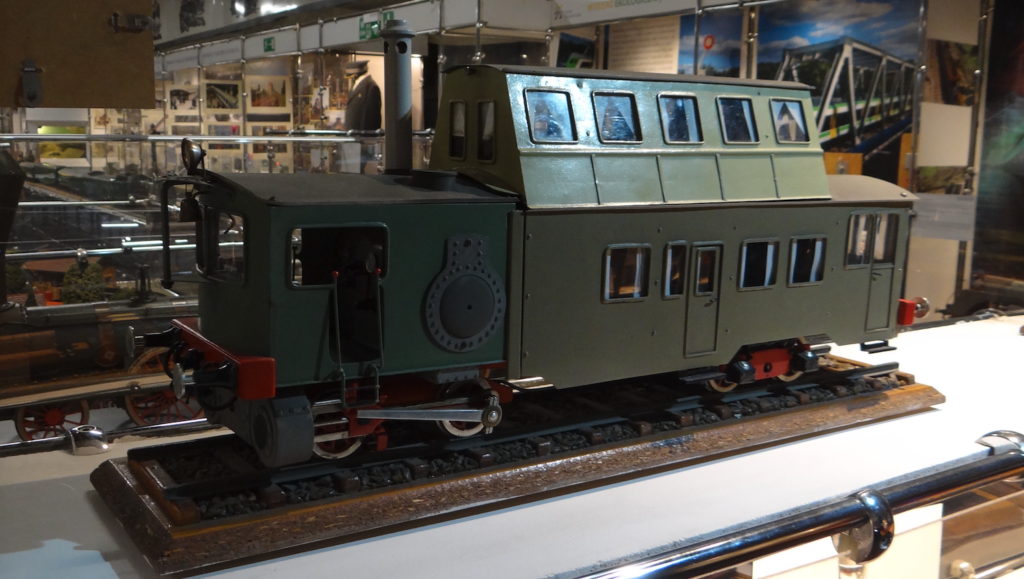
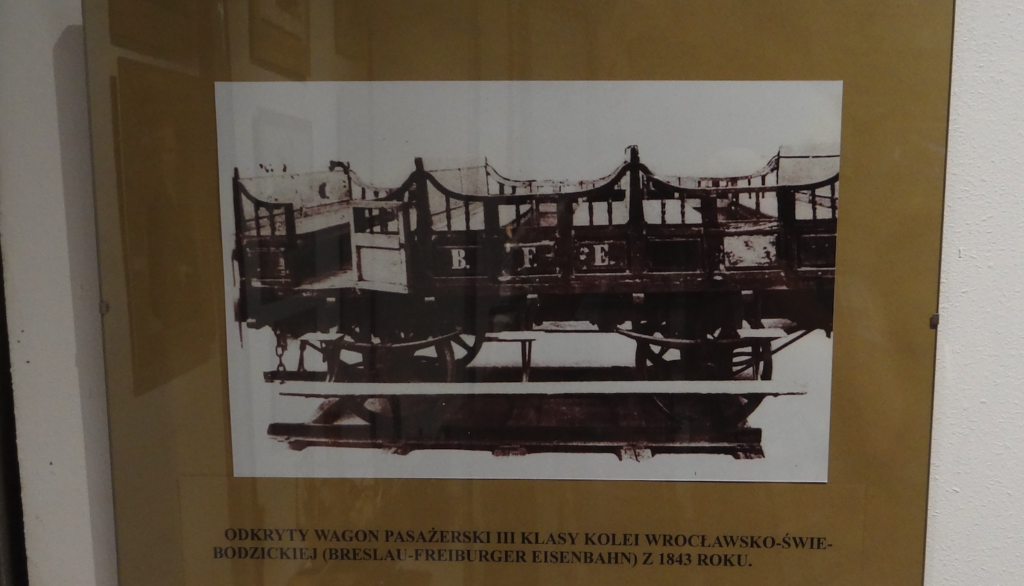
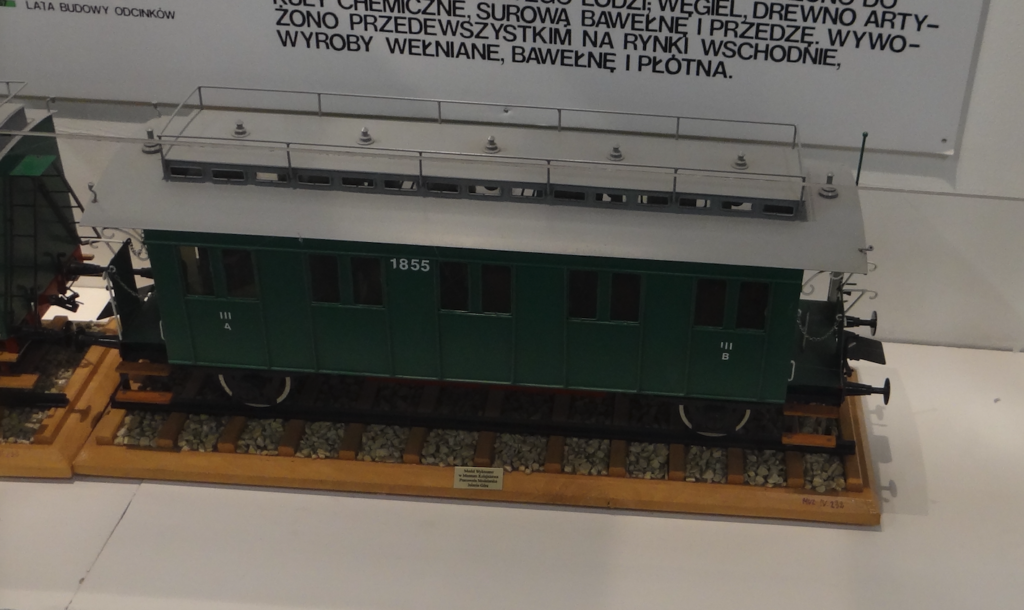
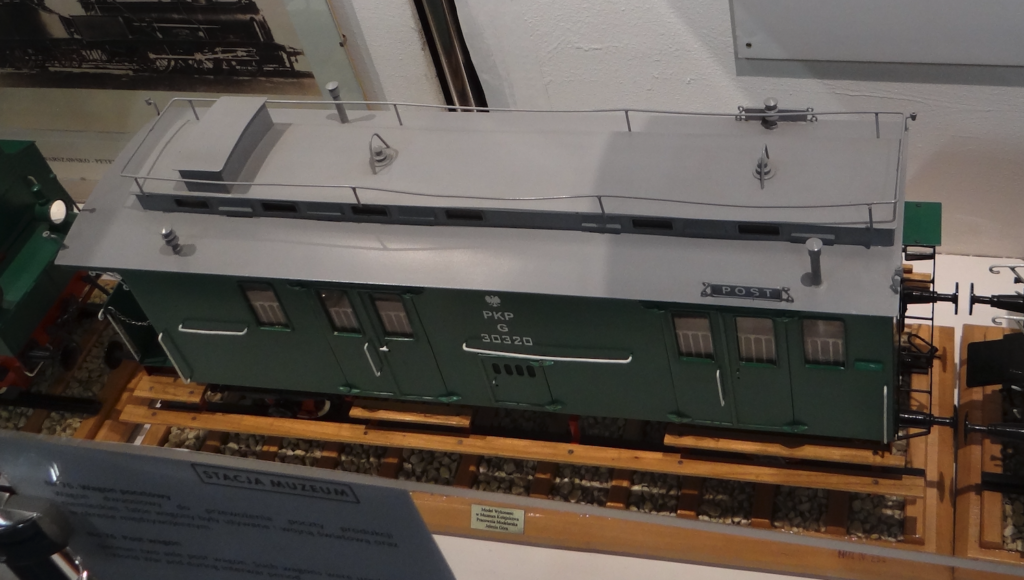
History of the City of Oleśnica.
Oleśnica was undoubtedly a Piast stronghold. From 1294, the town belonged to the Duchy of Głogów. The settlement received city rights on February 22, 1255, from Henry II the White, Duke of Wrocław. The town was established under Środa law. A mint was already located here in the 13th century. Oleśnica is marked on all maps from the 14th century. From 1320, Oleśnica was the capital of the duchy and the residential town of Duke Konrad I, who styled himself heir to the Polish Crown. After the death of Konrad the Younger, the last ruler of the local Piast dynasty, in 1492, Oleśnica and the duchy were transferred to the Ziębice branch of the Czech Poděbrady dynasty. From 1647, the city came under the rule of the Dukes of Württemberg. Oleśnica has always had close ties with Kraków. The city also benefited from its location, lying on the route from Wrocław to Greater Poland and Masovia. One of the first printing houses in the Piast lands was opened here. One of the most famous grammar schools was also established here. An invisible border between Polish and Germanic languages ran between Oleśnica and Wrocław. Oleśnica was a decidedly Polish-speaking town. The character of Oleśnica changed in 1850, when a military garrison was established there.
In 1868, a railway line connecting Wrocław with Upper Silesia was built through Oleśnica. During this period, a gasworks, waterworks, a hospital, and rolling stock repair shops were built here. The Great War spared the town of Oleśnica. This was also the case throughout almost the entirety of World War II, but only until the turn of January and February 1945, when Oleśnica was occupied by the Muscovites. By the end of April 1945, 80% of the city had been destroyed by Soviet forces. This was not the result of ordinary warfare, but rather through looting, destruction, and fires set by the Muscovite occupiers.
How strong is the Germanic influence in Olesnica? Germanic influence in Olesnica is historically very strong, culturally and architecturally moderate, but today it primarily reflects heritage rather than the city’s current national identity. This is especially true because for most of Olesnica’s history, the majority of residents spoke Polish or were bilingual. Until 1945, the city was called Oels and belonged to the Germanic states: Prussia, then Germany. After the Piast princes, the city was ruled for several centuries by the princes of the Poděbrady dynasty and later the Württemberg dynasty. During the interwar period, the population was almost entirely German-speaking. After 1945, a population exchange took place. As a result of the new division of Europe, carried out by the great men of this world, Olesnica returned to Poland. Olesnica was quickly settled by Poles. A small group of indigenous inhabitants remained in the city, who spoke Polish in Olesnica and felt Polish. However, the city’s reconstruction took a long time.
In 2008, Oleśnica had a population of 37,414 and an area of 20.96 square kilometers. Regarding education, while Oleśnica offers high-quality education at the primary, middle, and secondary levels, no higher education institution has been established, excluding the officer training academy. Most young people continue their education in Wrocław. Unfortunately, in 2011, Oleśnica has high unemployment.
Oleśnica has convenient road connections: the S8 motorway, two national roads, No. 8 and No. 25, and provincial roads, No. 340 and No. 451. The city of Oleśnica has a large bus station and convenient connections to major Polish cities. Most buses run on the route to Wrocław. Oleśnica also has a bypass, which prevents heavy traffic from passing through the city center.
Oleśnica is a major railway hub. There are two train stations: Oleśnica and Oleśnica Rataje (a passenger stop). Lines from Wrocław, Katowice, Lubliniec, Kluczbork, and Ostrów Wielkopolski connect here. Just a few years ago, international trains connected the city to Dresden or the Czech Republic.
Barracks in Olesnica. In 1850, Olesnica became a Garrison Town. There were (generally speaking) two barracks complexes in Olesnica. One, called the Red Barracks, was used, among other things, by the 1st Training Motor Regiment from 1972 to 1989.
The second complex, called the White Barracks, is of greater interest to us. It was here that the TOSWL (Air Force Technical Officer School) was located. The White Barracks were built at the end of the 19th century and were expanded (rebuilt) several times. The Polish Army only settled in the White Barracks in 1950. The 11th and 12th Junior Aviation Specialist Schools were opened there. In 1955, the Air Force Technical Officer School was located there.
Is Olesnica rich compared to other cities in Poland? The short answer: it’s a city with above-average wealth for its size, but it’s not among the wealthiest in the country. Oleśnica benefits from its proximity to Wrocław, which is 30 km away. The city has a well-developed industrial and logistics zone. Many residents work in the Wrocław metropolitan area but live in Oleśnica. Life in Oleśnica is comparable to many cities in Lower Silesia, but the standard of living is lower than in large metropolises such as Warsaw, Wrocław, and Poznań. The city’s advantages include well-developed manufacturing and logistics companies, good road infrastructure (the S8 motorway and proximity to the A4 motorway through Wrocław), average unemployment for a city of its size, and an influx of residents from Wrocław, a result of suburbanization. Housing prices are significantly lower than in Wrocław. Residents’ incomes are higher than in many small towns in central and eastern Poland. The city has good infrastructure: schools, sports facilities, and historical monuments. Compared to other Polish cities with a population of 35,000–40,000 inhabitants, Oleśnica fares better than the national average for cities of this size, but is not among the very richest small towns.
At the end of 2024, the unemployment rate in Oleśnica County was 5.9%, according to data from the District Employment Office. At that time, the office registered 2,240 unemployed people, with the largest number coming from the city of Oleśnica itself, and unfortunately, this applies to young people. In the following months and at the beginning of 2025, the unemployment rate in the county remained around 6-7%, significantly higher than the provincial average (5.2%) and above the national average. In 2025, monthly data indicated an average unemployment rate of around 6.3-7.1% in the county. But remember: When the United Right was in power, unemployment in Poland was only 2.5%, and after two years of rule by communists, Volksdeutsche, and Freemasons, unemployment rose to 6%.
Oleśnica is home to several large companies and plants that are the largest employers in the city and region. These include companies with both foreign and Polish capital. The largest employers in Olesnica are: 1. GKN Driveline Polska Sp. z o.o. A large automotive plant producing drivetrain components for companies such as VW, Toyota, Porsche, Volvo, and Audi. It is one of the largest employers in the city, employing hundreds of people in production and logistics. 2. Allucrom Sp. z o.o. A metal and surface treatment plant providing industrial services and anti-corrosion protection. 3. Guillin Polska Sp. z o.o. A company producing plastic packaging. 4. ROM Logistics Sp. z o.o. A manufacturer and distributor of upholstered furniture, also a significant local employer. 5. Kerry Polska (in the district). A food additives production plant. Often with job offers in Olesnica and the surrounding area. 6. ANIS Sp. z o.o. A manufacturer of foil packaging and plastic materials, operating in the Olesnica district. There are also other important employer groups in the region. Furniture and woodworking companies in Oleśnica County – for example, production plants and factories that employ many workers. Trade and services – larger stores, shopping centers, and chains such as Dino, supermarkets, and markets. Public institutions – schools, city hall, and healthcare.
The Piast Castle in Oleśnica, dating back to the 13th century, still delights tourists. The 13th-century Basilica of St. John the Apostle still stands proudly. There are approximately 18 valuable architectural monuments in Oleśnica. These include four churches, the town hall, the Wrocław Gate, medieval walls, a water tower, and many others. Most of these monuments were rebuilt after World War II and are systematically preserved. Here are the most important monuments and historical sites in Oleśnica worth seeing, as Oleśnica is one of the most interesting centers of architecture and history in Lower Silesia: 1. Castle of the Dukes of Oleśnica. The most famous and impressive monument in the city. It was the former residence of the Dukes of Oleśnica, dating back to the 13th–16th centuries, rebuilt in the Renaissance style. The cloisters, courtyard, and numerous architectural elements remain to this day. 2. Basilica of St. John the Apostle. This is a Gothic basilica from the 13th–15th centuries, formerly a castle church, connected to the castle by a passage built in the 17th century. The interior contains, among other things, a chain library, a Mannerist pulpit, and the tombs of the Poděbrady and Württemberg princes. 3. Market Square and Town Hall. The historic market square with tenement houses from the 17th–19th centuries and the Classicist town hall, which was the center of city life and a symbol of the city’s long-standing local government tradition. 4. Wrocławska Gate. This is the last surviving of the four former city gates and fragments of Oleśnica’s defensive walls. Currently, it houses exhibitions and galleries. 5. Holy Trinity Church. This is a Baroque church with a richly decorated interior and an interesting sacral history. It is also frequently used for early music and organ concerts. 6. The Widows’ House is a historic building, later converted into a music school, known for its Baroque façade and interesting social history. In Oleśnica, there are preserved fragments of the former city walls, historic tenement houses on the Market Square, and historical parks such as the Municipal Park.
PKP Oleśnica.
The railway station in Oleśnica, in the Lower Silesian Voivodeship, is located 32 km from Wrocław. According to the PKP classification, the station is classified as a regional station. The station’s geographical coordinates are 51°12′03″N 17°23′09″E. In 2019, Oleśnica station served up to 2,000 passengers per day, and in 2022, it was expected to serve up to 2,500 passengers per day. The station is located on Kolejowa Street.
Oleśnica also has the Oleśnica Rataje railway station, located northwest of the city center. There is no consensus yet on the date of construction of the station and the Oleśnica Rataje station building.
On May 28, 1868, Oleśnica station opened, simultaneously with the opening of the Wrocław Mikołajów-Oleśnica line. Oleśnica railway station opened on May 28, 1868, on the section from Wrocław. The station was built according to the Prussian railway scheme, meaning the station was located between the tracks. Currently, the southern section of the station is a passenger station, while the northern section is a freight station.
Oleśnica station is an important point on the railway map of Lower Silesia. Oleśnica gained a railway connection in the second half of the 19th century. This was of great importance for the city’s commercial development. In 1871, a major connection to nearby Syców, 27 km away, was launched.
The station building.
The station building was constructed with unplastered brick, characteristic of many public buildings of the time, drawing on the traditions of medieval architecture. Construction reportedly took about four months in 1868. The building was relatively large. A representative façade was added to the west of the station square, but a similar façade appeared on the south side. A representative double entrance door was placed in the projection. A balcony was placed above the entrance, used for ceremonial functions and as a speech space. The building is two-story high, with the corners stylized as towers; they are three stories high. The lower windows are representative, larger, and topped with a semicircle. The entire structure is covered with gently sloping roofs. The station square was paved and fenced off the entrance to the tracks. Gas streetlights were installed in the station square and on the platforms.
The station building housed first-, second-, and third-class waiting rooms/restaurants. The first-class restaurant hosted piano and chamber orchestra concerts on Sundays and holidays. Local artists sang. The restaurants were located so that their exits led directly to the platforms. The station housed the post office, telegraph office, and a shop. There was a hairdresser/barber and a shoeshine shop. Toilets were in a separate building behind the station. The building had two separate lounges: one for single ladies traveling and one for special guests, whom we now call VIPs. Apartments for the restaurant’s director and owner were located on the upper floors. There were also staff rooms for railway workers and office workers.
The Oleśnica railway station was built in 1868 and expanded to its current size over the course of several years. During the Germanic era, as well as during the Polish People’s Republic, the Oleśnica railway station repeatedly earned the distinction of being the most beautiful station in Lower Silesia. The station building is a spacious, expansive structure. It is built in the shape of the letter “G.” Its western facade faces Kolejowa Street. Platform 1, with a roof adjacent to the building, faces south. The station includes a ticket office, waiting room, restrooms, and railway and security staff rooms. Currently (2022), the building is awaiting a complete renovation. Initially, the building was built in an L-shaped plan and was very impressive. Each façade was representative. The ground floor featured palace-like windows. The station is three stories high, with a basement, and a total area of 1,300 m². During the Germanic era, in the 19th century, the building was repeatedly considered the most beautiful station in Lower Silesia.
After 1989, following the collapse of rail transport in Poland, the building served as a residential building. In early 2024, work began to restore it to its original function. After many years, the renovation of the historic railway station began. BERGER Bau was entrusted with this project. BERGER Bau has already completed the renovation of numerous other railway stations across Poland. Successful projects have included stations in Strzelin, Zgorzelec, Malczyce, Kąty Wrocławskie, Wałbrzych, Dąbrowa Górnicza, Świebodzin, Witnica, and Węgliniec. The renovation work at the Oleśnica station was a step towards the revitalization of this key transportation hub. Seven companies participated in the tender, announced by the railway company PKP PLK. On November 21, 2023, BERGER Bau was selected to carry out the investment. The total cost of the project is estimated at PLN 54.8 million. Completion is planned for 2026.
The renovation will restore historic elements, such as the brick facade, window and door joinery, wooden elements, and the station platform shelter. Demolition of the secondary extension in the east wing, the extension on the north side, and the reconstruction of the historic pergola on the north side are also planned. The restroom building will be converted into a summer waiting room, and new exits to the patio will be created. The technical building next to the station will be demolished. All utilities in the main building will be replaced. The windows and doors will be replaced.
The interior of the restored station includes a lobby that will serve as a waiting room. Restrooms and service outlets, including retail and catering outlets, will be located there. A stylized sign above the premises is also planned. In response to public demand, a PolRegio ticket office will also be installed in the building. The ground floor will be designated for local government educational and workshop activities, with a multi-purpose room and office space. The first floor is planned to house commercial spaces for rent and two conference rooms. The building will be barrier-free, with elevators installed. Historic elements, such as post-war steel and glass partitions, ceramic flooring, and wall cladding, will be restored. The scope of renovation and adaptation work is significant given the size of the building. The building will be shaped like the letter “C” because the annex will be demolished. The station courtyard will be a garden (patio) enclosed on the north by a pergola for vines. Only the garden side will feature straw-colored plaster. The entire building will be covered with a new roof.
Currently (January 2026), the building is undergoing revitalization to restore its former glory and to re-establish its passenger service functions adapted to current needs. The InterCity and PolRegio ticket office and waiting room will be restored. The decision was made to strip the plaster and restore the historic red brick façade. The station is an example of typical Germanic railway architecture. Located near the city center, the station building is an important element of the historic railway infrastructure of the city and region.
Oleśnica Railway Station.
In 1855, the Opole-Tarnowitz Railway Company (Oppeln-Tarnowitz Eisenbahn Aktiengesellschaft; OTE) applied to the government of the Kingdom of Prussia for a concession to build the Opole-Tarnowskie Góry railway line and other connections. On November 13, 1865, the government of the Kingdom of Prussia granted the company a concession to build a 128.1-kilometer standard-gauge railway line connecting Wrocław with Vossowska (Fosowskie). The first stage consisted of connecting Wrocław (Nadodrze Station) with Oleśnica. On May 20, 1868, the first service train ran along this route, and on May 28, 1868, passenger service began on this section. Two railway stations, Wrocław-Nadodrze and Oleśnica, were officially opened at that time, along with other smaller stations along the route. The second track on the Wrocław-Oleśnica section was not laid until 1886.
On November 15, 1868, the Oleśnica-Namysłów-Kluczbork line and on to Fosowskie opened. In 1871, another important connection was launched, to nearby Syców, 27 km away.
After the establishment of the Right Bank of the Oder Railway (R.O.U.E.) in 1868, leading from Wrocław through Oleśnica to Tarnowskie Góry in Upper Silesia, a project was developed to establish the Oleśnica-Gniezno Railway. It was intended to shorten the coal transport route from the mines of Upper Silesia to the cities of Pomerania by 75 km. Until then, these cities had been using hard coal exported from England via seaports. This line also had military significance, as it ran along the border with Muscovy, specifically the Russian partition of the Kingdom of Poland.
In 1872, the statute of the newly established Oels-Gnesener Eisenbahn-Gesellschaft (Oels-Gnesener Eisenbahn-Gesellschaft) was approved. KOG for short. In Oleśnica, the railway’s track embankment ran near Oleśnica Castle and crossed the castle grounds, including the summer house – Lusthaus, founded by the Poděbrady family. During the Württemberg era, it housed a café (inn) called Monplaisir.
In 1871, construction began on a single-track railway line leading to Milicz, Krotoszyn, Jarocin, and onward to Gniezno. The Oleśnica–Jarocin section was completed on June 30, 1875. The length of this line’s construction was likely due to the Germans’ involvement in the war with France and financial difficulties. France lost the war and was forced to pay an indemnity of 5 billion gold francs. This amounted to approximately 1,450 tons of gold. The indemnity was planned to be repaid over five years. France repaid it sooner, in 1873. Without a doubt, this money helped revitalize the economy of the new German Empire, but the Germans remained arrogant and haughty.
On June 30, 1875, the single-track line was completed. It was 161 km long and cost over 20 million marks. The route included 14 railway stations and 13 stops. Fourteen freight warehouses were built, five locomotive sheds (approximately every 45-50 km) with 24 locomotive berths, eight steam-powered water stations, and 32 guardhouses and guardhouses. Due to the varying terrain, most of the line ran on embankments (92 km) and through cuttings (54 km), with only 16 km running on level ground. At that time, the Oleśnica Rataje (Rathau) passenger stop was built.
The first stop beyond Oleśnica was in Dobroszyce, with a station and freight warehouse built at kilometer nine. The next stop was in Grabowno Wielkie at kilometer 17.5. Grabowno also served as a station for the town of Twardogóra, as the town was located too high and extending the railway tracks was uneconomical. It wasn’t until 1910 that a track to Twardogóra, Międzybórz, and beyond, which had military significance, was built. A railway station and freight warehouse were built in Grabowno, which were modernized in 1888 and 1905. In 1910, a water station was built, complete with a water tower and cranes, which still exist.
At the end of 1875, the KOG’s rolling stock included 25 Prussian steam locomotives, 48 passenger cars (Classes 1, 2, 3, and 4; each car was distinguished by its color), and 456 freight cars. The coal cars were two-axle with a load capacity of 15,000 kg. The Class 4 cars were open wagons and were relatively quickly decommissioned. Passenger and freight trains ran on the route, and the journey from Oleśnica to Gniezno took 210 minutes, with stops of a few minutes at 12 stations, not including Oleśnica and Gniezno. The commercial speed was 46 km/h. In Gniezno, passengers had to transfer to a railway operated by another company. To increase passenger capacity, steam cars were introduced. A typical passenger car, with a steam engine, could carry up to 100 passengers and reach a speed of 40-50 km/h. The wagons were 3 or 4-axle, with one or two drive axles.
In 1886, the Oleśnica-Gniezno Railway was nationalized through its purchase. Until then, the KOG (Community Railway Organization) had its headquarters in Oleśnica. This was based on an 1879 act, which nationalized previously private railway lines in German-occupied territory. Between 1875 and 1886, three railway stations operated in Oleśnica.
At Oleśnica station, the expansion of the tracks adjacent to the platforms and the construction of a freight station began after 1870, when freight transport increased.
The next project was a railway connection between the German-occupied and Muscovite brothers, which was intended to increase trade between the two empires. Several concepts for this connection were developed, with the concept lobbied by Wrocław prevailing. The plan was to build a railway connection between Wrocław and Warsaw (Breslau-Warschauer-Eisenbahn, a railway line). This included the construction of a route from Oleśnica to the Podzamcze border station (Wilhelmsbruck, now Wieruszów). On March 12, 1870, Emperor Wilhelm I approved a concession for the construction of a 58-kilometer railway line from Oleśnica to the Wilhelmsbruck (Podzamcze) border station.
On November 10, 1871, the Oleśnica-Syców line was opened. It was constructed in stages. The first section from Oleśnica to Syców was officially opened on November 10, 1871. On March 1, 1872, the section from Syców to Kępno was completed, and on May 26, 1872, the entire line from Oleśnica to the Podzamcze border station (now a suburb of Wieruszów). The route was built by a joint-stock company. Its headquarters was in Syców. Unfortunately, due to the lack of interest from the Muscovites in this connection, the route played a secondary role. It was built as a single-track line, and a second track was never added. After World War II, the route was not electrified.
Around 1890, wagon repair shops were opened in Oleśnica. There was a five-station locomotive shed with a turntable. There was a freight section of the station with a loading ramp, storage yard, and warehouses. A water station with a steam engine, a water tower, and cranes were also in operation. Employees at the freight station had staff and staff rooms, as well as staff apartments.
In 1900, Oleśnica station housed: the Right Bank of the Oder Railway Station. The freight station at the western head of the station. The Wrocław-Warsaw Railway station buildings, in the eastern part of the station. A wooden five-station locomotive shed, built around 1870 and demolished in 1900 for the construction of a new locomotive shed. The Right Bank of the Oder Railway Station building also housed the ticket offices for the Wrocław-Warsaw Railway. The Wrocław-Warsaw Railway offices were located in a small palace at Gartenstrasse 22, now 11 listopada Street 22, Oleśnica. In 1903, a roof was added to the station building on the side of Platform 1.
In 1908, construction began on a railway line from Grabowno Wielkie towards Twardogóra, Międzybórz, and onward to Ostrów Wielkopolski. This line does not begin in Oleśnica, but is closely connected to it. A switch was placed at Grabowo Wielkie station, leading the lines eastward. Stations were then built at Twardogóra, Bukowina Sycowska, and Międzybórz Sycowski. From there, the line curves northward. Additional stations include Pawłów Wielkopolski, Sośnie Ostrowskie, Granowiec, Barki, and Odolanów. The line curves eastward. Stations include Tarchały Wielkie and Ostrów Wielkopolski. The line is 53.9 km long. It was completed in 1910. It was a typically Germanic line, intended to boost the economic development of the area. The line failed to achieve this goal, as the Germans started the Great War, and in 1918, the Pawłów Wielkopolski-Ostrów Wielkopolski section of the line became part of Poland. After World War II, which was re-initiated by the Germans, the entire line was transferred to Poland. The line was electrified. Currently, the line is part of Railway Line No. 355. Work was carried out between 2024 and 2026 to restore the line’s technical parameters, including track replacement and modernization of crossings and platforms.
In 1941, under Wehrmacht supervision, construction began on the Łukanów-Dąbrowa Oleśnicka railway line. The initial section near Lucień was built by 400 prisoners of war from the Lucień camp. The line was intended to shorten travel times from Wrocław towards Krotoszyn and Ostrów Wielkopolski and bypass the Oleśnica station.
On July 19, 1945, after wartime destruction, the Wrocław Nadodrze-Oleśnica railway line reopened. A temporary bridge was built over the Widawka River between the Wrocław Nadodrze and Wrocław Psie Pole stations. The bridge was 92 meters long. It was rebuilt within 21 days. German prisoners of war, sent by the Soviets from their camp, participated in the work. This provided Wrocław with a connection to Katowice, Łódź, and Warsaw. In place of the temporary wooden bridge, a concrete bridge was opened in 1947.
On August 20, 1945, Polish Railwaymen officially took over the station in Oleśnica, which had been administered by the Soviets. By 6:00 PM, all stations were clear of Russians.
On January 25, 1946, the rebuilt truss bridge over the Odra River, between Wrocław Główny and Wrocław Nadodrze, was opened. This enabled trains to reach the center of Wrocław.
In the 1960s, approximately 300 employees were employed at Oleśnica station. These included crews of conductors, train dispatchers, trackmasters, switchesmen, ticket counter staff, and an administrative team. Three ticket counters and one baggage claim were open. There was also a station bar, a waiting room, and a youth club. There was a grocery store, a RUCH kiosk, and a hairdresser. Back then, you could travel directly from Oleśnica to Lublin, Warsaw, Jelenia Góra, or Łódź. There were more local connections than there are today (2026). Of course, there was a huge amount of freight traffic. Freight trains were formed at the freight station. The station had the capacity to shunt up to 1,200 freight wagons per day. The station dispatched and received 60 freight trains per day.
Platforms at Oleśnica station.
Between 1911 and 1913, island platforms were built: Platforms 2, 3, and 4, and construction of an underground passenger tunnel began simultaneously. Entrances to Platforms 2 and 3 were completed at the end of 1912. The entrance to Platform 4 opened in January 1913. Platform 1 is located next to the station building and is 90 meters long. The surface is asphalt. Platforms 2, 3, and 4 are island platforms. Each platform is 270 meters long and covered, with the covered area 105 meters long. The platform surfaces vary: concrete, paving slabs, and asphalt. Access to the platforms is provided by a passenger tunnel that leads to Przemysłowa Street, which is located outside the station on the south side. The station also has a freight tunnel, which is unused and closed. Access from the station to the northern part of the city is provided by a footbridge over the freight station tracks.
The southern section of the Oleśnica station tracks and the seven tracks of the freight station are electrified. Electrification of the Oleśnica station began in 1972. The freight station is located on the northern side of the station. It has 18 tracks and numerous switches. The first seven tracks are electrified. A pedestrian bridge over 100 meters long spans the tracks. The bridge leads from the station square to Moniuszki Street. Freight ramps and warehouse buildings are located in the western part of the station. The northern part of the station housed a locomotive shed. It housed a coal yard, a wagon turntable, and a shed. The ZNTK Oleśnica production halls are located nearby. There are also factory halls occupied by OLKOL. The plant specializes in welding, repair, and maintenance of finished metal products. The company specializes in the renovation and modernization of electric locomotives. Address: 20 Moniuszki Street, Oleśnica. OLKOL continues the traditions of ZNTK Oleśnica.
At the eastern terminus of the station stands a reinforced concrete water tower dating back to the 1960s. An identical water tower stands at the Olsztyn Główny station. At the station, next to the station building, stands an older water tower.
In 2019, Oleśnica station served up to 2,000 passengers per day, and in 2022, it will serve up to 2,500 people per day. The station is located on Kolejowa Street. In 2022, approximately 2,600 passengers use the Oleśnica railway station per day. Passenger service at Oleśnica station is provided by PolRegio and Koleje Dolnośląskie. Passengers primarily travel to Wrocław. From Oleśnica, you can travel directly to the cities of Wrocław, Milicz, Jelcz-Laskowice, Namysłów, Ostrów Wielkopolski, Lubliniec, Krotoszyn, Kluczbork, and Częstochowa. Approximately 40 passenger trains depart from the station daily. A ticket from Oleśnica to Wrocław costs 11.90 PLN, and the journey time is approximately 40 minutes. On March 4, 2026, 56 trains departed from Oleśnica station. You could travel to the following stations: Częstochowa, Jelcz-Laskowice, Kluczbork, Krotoszyn, Lubliniec, Milicz, Namysłów, Ostrów Wielkopolski, Syców, Twardogóra, and Wrocław Główny.
ZNTK Oleśnica.
In 1910, the decision was made to build the R.A.W. Oels railway workshops, today’s Z.N.T.K. Between 1911 and 1913, large factories were founded to manufacture and repair railway rolling stock. Thanks to the railway, new jobs were created, housing development expanded, and schools and kindergartens were built for the children of railway workers and plant employees.
The Railway Rolling Stock Repair Works (Zakłady Naprawcze Taboru Kolejowego) is a company with over a century of tradition. It has been in operation since October 1, 1913. The plant, known as the Main Railway Workshops (Reichsbahnausbesserungswerk Öls), was built over a three-year period. Initially, the plant performed all periodic repairs to steam locomotives for the Wrocław and Opole railway districts. In 1933, the plant employed 1,320 people. In 1945, the plant was destroyed during the war. After World War II, the plant found itself in Poland. Rebuilding the plant took over three years. The plant repaired steam locomotives and railcars. From 1970, it repaired diesel and electric locomotives used by the Polish State Railways (PKP). In 1980, the plant employed approximately 1,500 workers. is a company with a rich tradition of repairing, servicing, and modernizing electric and diesel locomotives, as well as passenger cars. The company provides a high level of services provided by qualified staff and extensive technical support. Its clients include PKP InterCity, PKP Cargo, and Przewozy Regionalne.
In 1997, the company was privatized. OLKOL was established, which specializes in the repair, modernization, and rental of electric and diesel locomotives. Another important activity of the company is the transport of goods: aggregates, and construction materials.
Railway lines in Oleśnica.
Railway line no. 143.
Railway Line No. 143 Kalety – Wrocław Popowice. The route is of national significance, is double-track, and electrified. Oleśnica lies at km 133.69 of the route. The line runs through the Silesian, Opole, and Lower Silesian Voivodeships. The sections that make up the present-day line are: On May 28, 1868, the Wrocław Nadodrze – Oleśnica section opened. On November 15, 1868, the Oleśnica – Kluczbork section opened. On July 1, 1883, the Kluczbork – Olesno Śląskie section opened. On May 1, 1884, the Olesno Śląskie – Lubliniec section opened. On October 15, 1884, the Lubliniec – Kalety section opened. In 1906, the Wrocław Mikołajów station opened. On September 7, 1972, the line was electrified. Between 2012 and 2015, the Kluczbork – Kalety section was modernized. Since 2015, the Oleśnica – Wrocław Psie Pole section has been modernized. Since 2018, work has been underway to remove permanent 30 km/h speed restrictions (viaducts and culverts). This has allowed passenger trains to maintain a constant speed of 120 km/h. Two new passenger stops have been created: Pielgrzymowice, 116.76 km of the route, and Mirków, 150.17 km of the route (due in 2023).
Railway Line No. 281.
Railway Line No. 281 connects Oleśnica and Chojnice, via Milicz, Krotoszyn, Jarocin, Września, Gniezno, Janowiec Wielkopolski, Nakło nad Notecią, and Więcbork. Railway Line No. 281 is of national significance on the Oleśnica – Milicz section. The line is double-track and partially electrified. It runs from south to north. The total length of Line No. 281 is 310 km.
Railway Line No. 181.
Railway line No. 181 connects Oleśnica and Herby Nowe. The route was established in 1872. It is 149.43 km long. The maximum speed is 100 km/h. The line has two main sections: Oleśnica and Kępno, and Kępno and Wieluń, and Herby Nowe. This route has always been single-track and non-electrified. It runs east-west through the town of Syców. Syców was once a junction station. On November 10, 1871, the Oleśnica and Syców section opened, and on March 1, 1872, the Syców and Kępno section opened. The route runs past the former military airport in Oleśnica. Railway sidings leading to the airport branched off this line. These tracks delivered construction materials and supplies for the construction of the airport and barracks, and later the goods needed for their operation. Until 2002, passenger and freight traffic was maintained on the Oleśnica-Kępno section. In 2002, passenger traffic was suspended. Freight traffic was sporadic. In 2010, freight traffic was suspended. Partial track renovations were undertaken, replacing damaged wooden sleepers with new ones, filling gaps in the trackbed, and repairing damaged railway equipment. Railroad crossings were improved and equipped with warning signals. The line renovation cost PLN 21 million. As a result of the renovation, the maximum speed increased to 40 km/h. In 2016, freight traffic was restored. Currently (2022), local governments of the districts along route No. 181 are working to restore passenger traffic. The route remains passable for freight trains.
Written by Karol Placha Hetman