Kolbuszowa 2026-11-16
Kolbuszowa
Kolbuszowa is a town in the Subcarpathian Voivodeship, located in Kolbuszowa County. It sits on the Nil River, within the Kolbuszowa Plateau, part of the Sandomierz Basin. The Nil River is only 13 kilometers long. Historically, Kolbuszowa belongs to the Sandomierz Land, situated on the southeastern edge of the historic Lesser Poland (Małopolska) region. The town lies at the intersection of several roads—National Road 9 (Radom–Rzeszów), Provincial Roads 875 and 987—and is also served by railway line No. 71. The town has a population of approximately 8,400 residents.
Kolbuszowa is home to a large ethnographic park—the Museum of Folk Culture (an open-air museum dedicated to the Rzeszów and Forest [Lesowiacy] ethnographic groups)—which features over 80 structures representing the traditional architecture of the Sandomierz Forest (Puszcza Sandomierska). The open-air museum was established in 1978 and frequently serves as a filming location for various motion picture productions. An important landmark in Kolbuszowa is the All Saints’ Church—a historic structure dating back to the early 20th century, with roots reaching as far back as the 16th century. Kolbuszowa is home to a major furniture factory with a long-standing tradition: KFM-Furniture sp. z o.o. Unfortunately, the facility is now owned by a German entity, the PAIDI Möbel GmbH group. The plant generates an annual revenue of 90 million PLN. Another local enterprise is Drewkol (located at 59B Piłsudskiego Street, Kolbuszowa), a manufacturer of furniture, MDF fronts, and interior furnishing components that has been in operation since 1996.
Kolbuszowa functions as an urban-rural municipality. The town covers an area of 7.98 km², and as of 2024, it has a population of 8,394 residents. Its postal codes are 36-100, 36-101, and 36-102, and vehicle registration plates bear the code “RKL.” Since January 1, 1999, Kolbuszowa has once again served as the seat of the Kolbuszowa County (powiat).
The town’s name is derived from its founder, a man surnamed Kolbuski (also known as Kolbe or Kolbusz). The name was first recorded in 1504, and the town was granted its charter before 1683. Between 1975 and 1998, Kolbuszowa was part of the Rzeszów Voivodeship. A trade route connecting Sandomierz and Przemyśl ran through the town. When the voivodeships were established, the town fell within the borders of the Sandomierz Voivodeship. In terms of ecclesiastical administration, it belonged to the Diocese of Kraków, and after 1786, to the Diocese of Tarnów. In 1609, the town became part of the Ostrogski *ordynacja* (an entailed estate). The estate was poorly managed and gradually fell into debt, with successive holders violating the terms of the entailment. This sparked a major political scandal, and the matter was eventually brought before the Sejm (parliament). In 1766, the *ordynacja* was dissolved.
Following the First Partition of Poland in 1772, Kolbuszowa came under Austrian rule and was incorporated into the Kingdom of Galicia and Lodomeria. From 1773 to 1782, the town served as the seat of a district (*powiat*) within the Pilzno Circle (*cyrkuł*). In 1782, it was briefly part of the newly created Rzeszów Circle, but following a redrawing of the circle boundaries in 1783, it was placed within the Tarnów Circle. Following the abolition of the *cyrkuły* (administrative districts) in 1850, Kolbuszowa fell under the jurisdiction of the *Bezirkshauptmannschaft* (district authority) of Sędziszów. When the *cyrkuły* were reinstated after the 1855 agrarian reform, Kolbuszowa became the seat of one of the so-called “small districts” (*Bezirke*) within the Tarnów *cyrkuł*. Upon the granting of autonomy to Galicia in 1867, Kolbuszowa became a district town (*miasto powiatowe*).
Kolbuszowa was known for its crafts, including locksmithing, carpentry, woodturning, and wheelwrighting. Goods produced there were traded throughout Poland and Lithuania. Because these products competed with those manufactured in Austria, their transport was hindered, and additional fees were imposed—a situation that led to the stagnation of craftsmanship in Kolbuszowa.
On August 5, 1919, an act dated July 19, 1919, concerning the construction of the Rzeszów–Sandomierz railway, came into effect; it stipulated that the construction of a rail line passing through Kolbuszowa, Tarnobrzeg, and Sobów was to begin in 1919. However, due to the defeat of the Central Powers in the war and the restoration of Poland’s independence, these plans were not initially carried out.
On September 9, 1939, a battle took place between Polish soldiers and numerically superior German forces. Approximately 100 Polish soldiers were killed, and 300 were wounded; German losses were significantly lower. In retaliation for the resistance put up by Polish soldiers and the civilian population, the Germans burned down over 300 houses. During the occupation, units of the Home Army (AK) and the Peasant Battalions (BCh) operated in and around Kolbuszowa. One of their notable achievements was passing on to the Allies intelligence regarding the V-1 and V-2 rockets, which the Germans were testing at the Blizna-Pustków proving ground. The town of Kolbuszowa was captured by units of the 13th Army of the Soviet 1st Belorussian Front. After the war, the communists erected a monument to the Soviets; this monument to the Soviet occupiers was demolished on April 26, 1993.
There are several points of interest in Kolbuszowa, including the Collegiate Church of All Saints. The church reached its final form in 1949, though the parish dates back to 1523. Originally a wooden structure, the church was destroyed by fire in 1852 and subsequently rebuilt between 1853 and 1854. It underwent further reconstruction and expansion from 1929 to 1935. Another historic structure is the Tyszkiewicz family burial chapel. The town’s historic market square was revitalized in 2012. The Tyszkiewicz Palace in nearby Werynia, which currently houses a music school.
The town has seven kindergartens, two primary schools, a state music school, and three post-primary schools. There are two parishes and four cemeteries. Two local newspapers are published: *Przegląd Kolbuszowski* (a monthly) and *Korso Kolbuszowskie* (a weekly). There are also 10 sports clubs operating within the town.
PKP (Polish State Railways) Kolbuszowa.
The railway station in Kolbuszowa serves as a local rail-to-bus transport hub. Station address: 3 Księdza Ludwika Rudzki Street. Geographic coordinates: 50.246°N, 21.783°E. Elevation: 210 m.
In 1964, the railway line from Rzeszów to Głogów Małopolski was extended to Kolbuszowa. The construction of the railway station in Kolbuszowa was part of the development of the Rzeszów–Dęba Rozalin railway line, with work beginning in 1957. The station was ceremonially opened on June 7, 1964; the first train was hauled by a Ty2 steam locomotive. In 1970, work resumed on further extending the line toward Dęba Rozalin, which was officially completed on November 27, 1971. That same year, the line was extended to Nowa Dęba and Tarnobrzeg, thereby providing Kolbuszowa with a connection to central Poland, including Warsaw. The primary driver for the expansion of the railway network was the development of the sulfur industry. All trains were operated using steam or diesel traction. Between 1973 and 1992, long-distance trains also passed through the Kolbuszowa station.
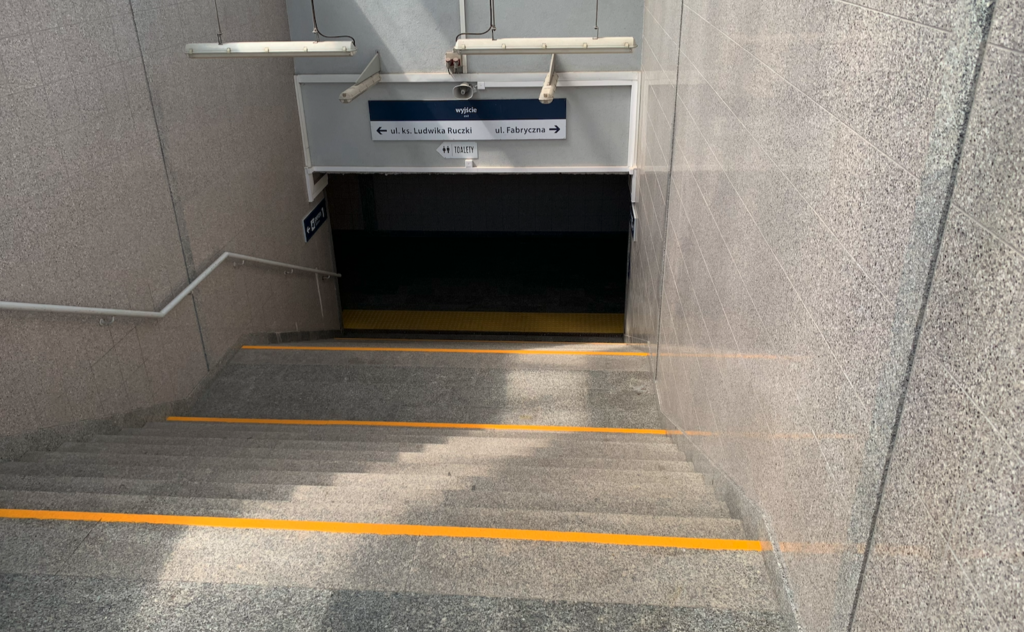
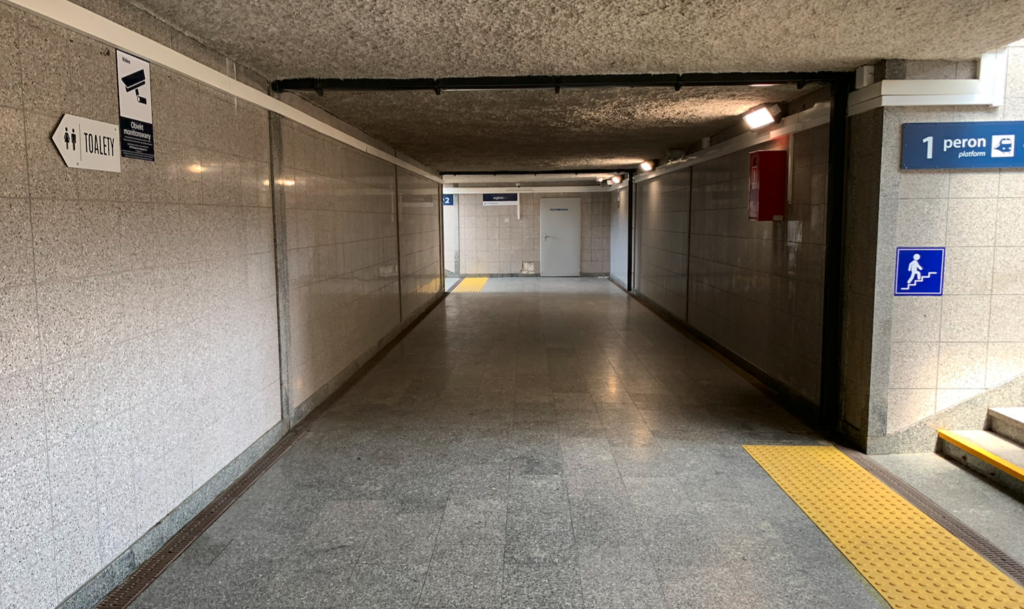
On April 3, 2000, passenger services were suspended, and by June 2001, freight trains also ceased to pass through the station. This period coincided with a time when Poland was governed by *Volksdeutsch* sympathizers, Freemasons, and communists—individuals who readily dismantled railway connections in economically weaker regions of the country. In 2007, passenger services were resumed on the Rzeszów–Kolbuszowa section, and in 2009, the route was extended to Tarnobrzeg. The most recent reconstruction and revitalization of the railway station took place prior to its electrification. On June 9, 2009, the modernized and rebuilt station was opened for service. The project included the reconfiguration of the station’s track layout, the construction of an island platform and a second single-edge platform, as well as a pedestrian tunnel. The station was also adapted to accommodate passengers with disabilities. The renovation cost 24,559,600 PLN and was carried out by Przedsiębiorstwo Robót Komunikacyjnych w Krakowie S.A., based on a design prepared by Movares Polska Sp. z o.o.
In 2015, work began on the electrification of railway line No. 71. On November 16, 2018, PKP PLK signed a contract with PKP Energetyka for the electrification of the railway line passing through Kolbuszowa station. Electrification work commenced in September 2019 and was completed in January 2021.
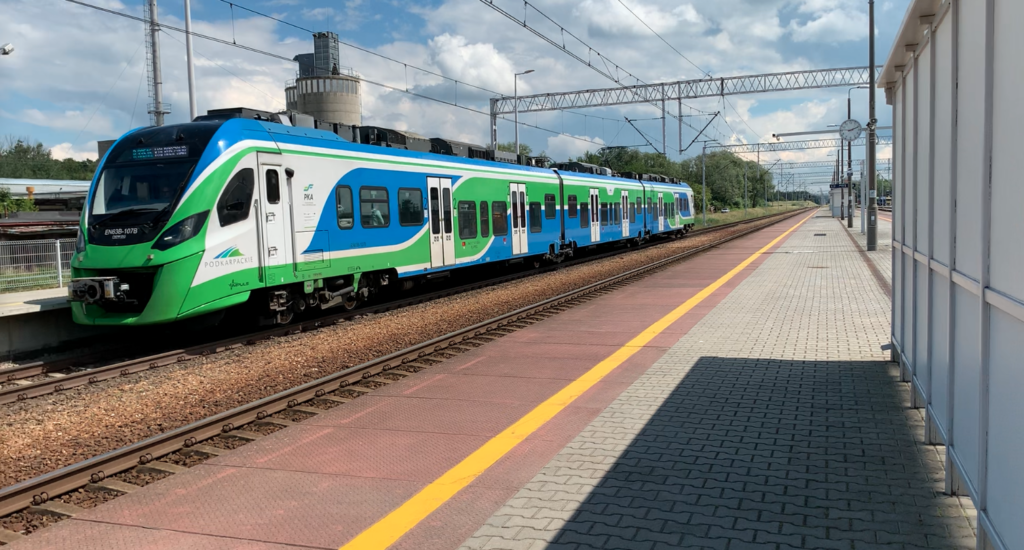
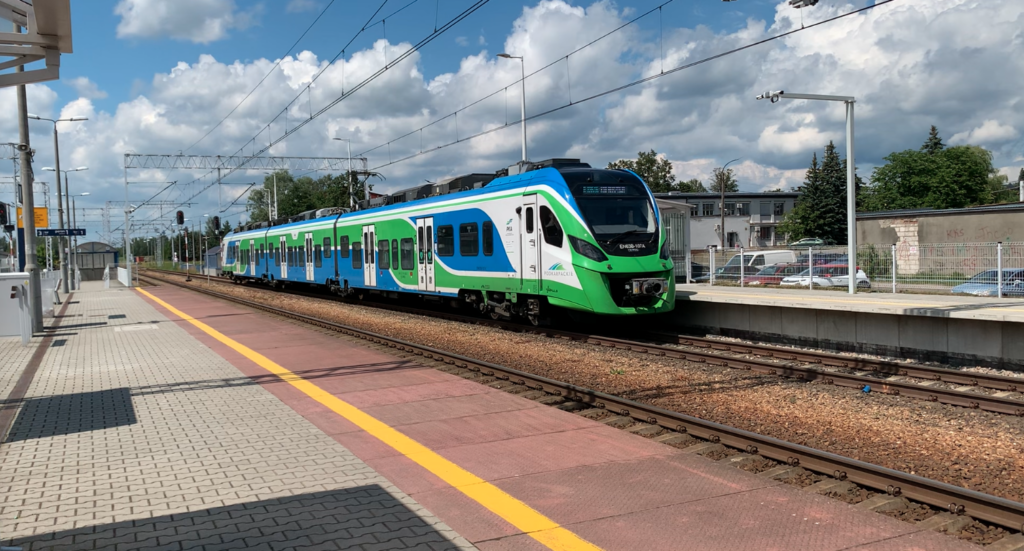
On January 3, 2022, as part of the Podkarpackie Agglomeration Railway (Podkarpacka Kolej Aglomeracyjna) network, 22 pairs of commuter train services were launched between Rzeszów Główny and Kolbuszowa, operated using electric multiple units (EMUs).
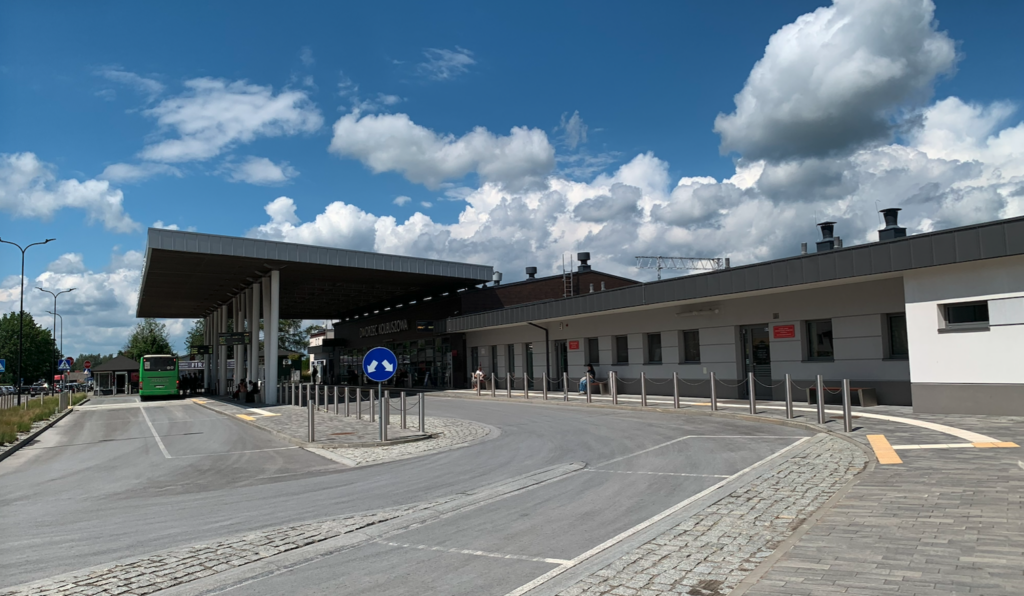
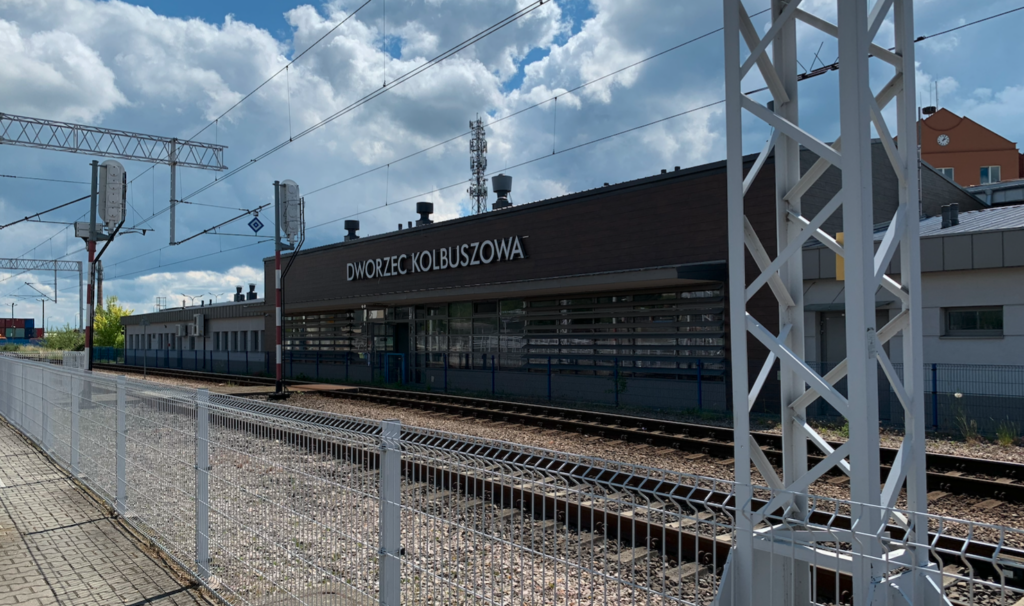
The railway station in Kolbuszowa is one of the most attractive in Poland. While the structure itself is quite simple, the canopy over the station square serves as an excellent extension of the building’s form; this canopy was added during the most recent renovation. The station was originally constructed between 1971 and 1973 to serve both rail and bus passengers. In 2017, the facility was transferred from the Polish State Railways (PKP) to the Municipality of Kolbuszowa. Redevelopment work began on September 1, 2020, and the renovated station was opened for use on May 11, 2022. The station building houses a waiting area, a ticket vending machine (installed in August 2026), restrooms, a room for parents with children, and a children’s play corner. It also accommodates a food service establishment, a tourism office, a community room with a library corner, and a service point operated by the “Centrum Natura” Vocational Activity Center, run by Caritas. The premises are monitored by Railway Security (SOK) officers and the municipal police. The building is open Monday through Friday from 6:00 AM to 8:00 PM, and on Saturdays from 8:00 AM to 4:00 PM. These measures help travelers feel secure, though the facility remains closed on Sundays and public holidays. The building is fully accessible to people with disabilities. Furthermore, the station serves as the headquarters for the Municipal Police, as well as the department for family benefits and the alimony fund, which is part of the Municipal-Community Social Welfare Center. Next to the building, there is a car park for passenger vehicles, as well as stops for local and long-distance buses.
The trains are operated by PolRegio (Podkarpacka Kolej Aglomeracyjna) and InterCity carriers. Tickets can be purchased at the ticket machine at the station, from the train staff or online. On November 15, 2016, 20 trains left Kolbuszowa station. You could go to the following stations: Lublin Główny, Przemyśl Główny, Rzeszów Główny, Stalowa Wola Południe, Stalowa Wola Rozwadów, Warszawa Wschodnia. These trains included two pairs of InterCity trains on the Przemyśl Główny – Warszawa Wschodnia route; one No. 1336 Witos and the other No. 1330 San. The passenger traffic at the station is systematically increasing. In 2017, the station served up to 150 passengers per day. In 2023, there were already up to 700 passengers per day, and in 2025, there were almost 1,000 passengers per day. The modernization of the station received the 3rd Prize in the Construction of the Year 2009 competition, organized by the Polish Association of Construction Engineers and Technicians. In 2023, the reconstruction of the station in Kolbuszowa received the “Investment of the Year” title in the Podkarpackie Local Government Award competition, organized by the Podkarpackie Association of Local Governments and the Business Promotion Center.
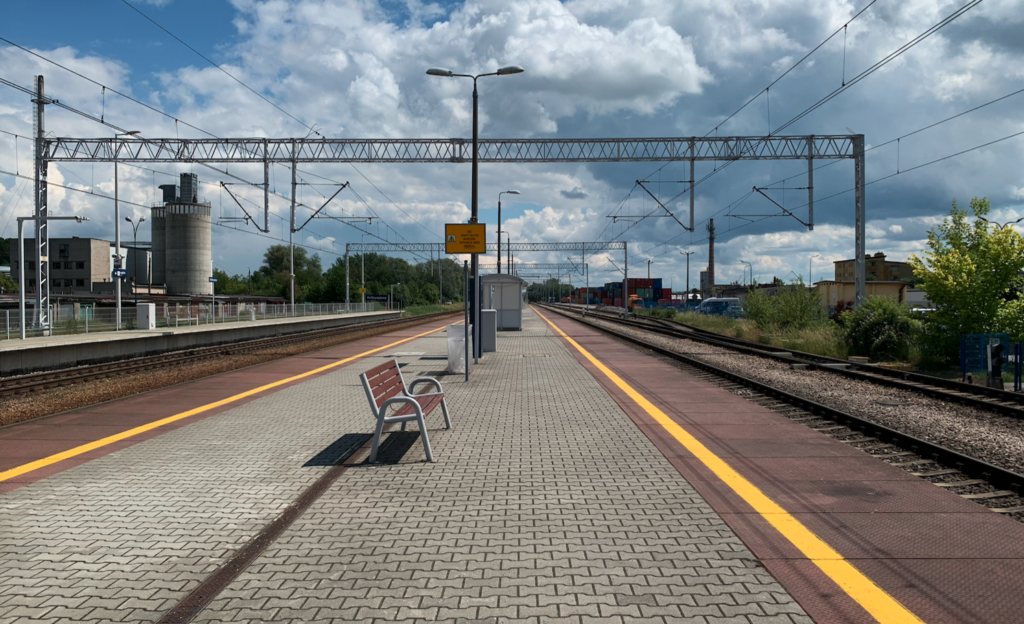
Currently (2026) there are two platforms and three platform edges at the station. Platform 1 is an island platform and has two platform edges. It is 400 m long, which allows it to handle the longest passenger trains. The width of the platform is 10 m. It is a high platform, which makes it easier for passengers to get on and off the carriages. The height from the rail head is 0.55 m. There are six bus stop shelters with benches on the platform. In addition, there is full platform infrastructure; lighting, waste bins, display cases with railway information, information boards, audio system, clocks, monitoring system. Access to the platform is provided by a tunnel. Platform 2 is a single-edge platform, 150 m long. The height from the rail head is 0.76 m.
In 2016, PCC Intermodal opened a container terminal at the station. The square has an area of 10,000 m2 and allows transshipment of up to 60,000 TEU per year.
Railway line No. 71 Ocice – Rzeszów Główny.
Railway line No. 71 Ocice – Rzeszów Główny, this is practically the line that connects Tarnobrzeg with Rzeszów. The line is 67.374 km long and runs longitudinally. The line was built with normal rail gauge. The line is single-track and electrified (2021) with 3 kV DC. The maximum speed of the train is 120 km/h.
History of Railway Line No. 71.
The construction of this line was a long and arduous process. It was intended to connect the Kraków–Lviv railway line with Sandomierz. At the same time, work had already begun on the Lublin–Sandomierz–Tarnobrzeg line. Plans to build a railway through the Sandomierz Basin date back to the era when Poland was under Austro-Hungarian rule; the entire proposed route was to lie within the territory of Galicia, and the initiative had the support of the government in Vienna. However, the route had not even been mapped out at that stage, leading to a dispute between the authorities of Dębica and Rzeszów, both of which claimed that the new line should begin in their respective city. The outbreak of the First World War in 1914 made it impossible to commence construction. The plans were revisited during the Second Polish Republic, in the context of the development of the Central Industrial District (COP). On August 5, 1919, an act passed on July 19, 1919, concerning the construction of the Rzeszów–Sandomierz line, came into effect. The planned route was to pass through Kolbuszowa, Tarnobrzeg, and Sobolów—which is how it was ultimately constructed.
In 1938, the section between Ocice and Dęba Rozalin was opened. Further development was halted by the Second World War, but construction resumed after the end of hostilities. The Rzeszów–Kolbuszowa section was opened between 1960 and 1964, and in 1971, the section between Dęba Rozalin and Kolbuszowa was completed, thereby finalizing the entire line. Railway traffic consisted primarily of freight transport, with a large proportion accounted for by military trains. There were also passenger trains; however, due to the lack of electrification, these were hauled by steam locomotives—and, from 1972 onwards, by diesel locomotives as well. Maintaining long-distance passenger services proved difficult, as it necessitated the frequent changing of locomotives.
From 1990, rail traffic on the line began to decline steadily. By 1992, express trains had ceased running on the route, and in 2000, all passenger services were suspended entirely. In June 2001, freight traffic was also completely halted along the Dęba Rozalin – Kolbuszowa – Widełka section. This decline was linked to the dismantling of the Polish railway system under successive liberal and post-communist governments. Between 2006 and 2008, during the tenure of a right-wing administration, attempts were made to restore rail traffic. Efforts began with clearing the tracks of self-seeded vegetation, shrubs, and grass; additionally, the turnouts, signaling systems, and level crossings were renovated.
On March 1, 2007, passenger service was resumed on the Rzeszów–Kolbuszowa section. From December 13, 2009, the line began hosting passenger trains running between Rzeszów and Stalowa Wola Rozwadów, and from December 12, 2010, between Rzeszów and Lublin. The latter service was suspended in 2013. On March 1, 2011, a long-distance connection between Zamość and Zielona Góra was launched, utilizing Railway Line No. 71. In 2014, plans were prepared for the electrification of Line No. 71; however, no tender took place, and the work did not commence. In September 2016, the construction of a new stop, Chmielów Zagumnie, was completed. Between March 2019 and May 2019, a passing loop was constructed at the Majdan Królewski stop.
Thanks to the efforts of the governing coalition in Poland—the United Right (Zjednoczona Prawica)—a contract for the electrification of Line No. 71 was signed with PKP Energetyka on November 16, 2018. The electrification process took place between September 2019 and January 2021. It represented one of the most significant railway investments in southeastern Poland. The electrification enabled the introduction of electric multiple units (EMUs) operated by the Podkarpackie regional rail service (part of the PolRegio network and the Podkarpackie Agglomeration Railway). On December 12, 2021, an InterCity long-distance train service between Rzeszów and Szczecin was launched, running via Line No. 71. Previously, the train had operated via stations including… Przeworsk and Nowa Sarzyna. Travel time has been significantly reduced. As of January 3, 2022, the Subcarpathian Metropolitan Railway (Podkarpacka Kolej Aglomeracyjna) began operating 16 pairs of trains on the Rzeszów Główny – Kolbuszowa route.
Written by Karol Placha Hetman