Ełk 2026-02-15
PKP Ełk. 2026
City of Ełk.
Ełk is the largest city in the region. The city was founded in 1425 as a tenement village and received city rights in 1445. The city has an area of 21.05 square kilometers. The population is 61,903 (as of 2020). The city belongs to the Warmian-Masurian Voivodeship. The current name Ełk was approved on May 7, 1946. Ełk is located in the Ełk Lake District, which is part of the Masurian Lake District. The city lies on Lake Ełk, Lake Sunowo, and the Ełk River, a tributary of the Biebrza River. In 1398, a brick castle was built in Ełk, and settlement developed nearby. The town received its charter in 1435. In 1454, Ełk joined the Prussian Confederation. Under the Treaty of Thorn in 1466, Ełk became part of the Kingdom of Poland, remaining a fiefdom under the Teutonic Order. After the secularization of the order in 1525, it became part of the Kingdom of Poland, remaining under the rule of the secular Prussian princes, with the obligation to practice Lutheranism.
During the Great War, Ełk suffered significant damage, especially between 1914 and 1915. During World War II, Ełk and its surrounding area were subjected to forced labor for many citizens of occupied countries. On January 24, 1945, the Red Army entered the abandoned town of Ełk. The Muscovites plundered and destroyed 50% of the town. The city was handed over to Polish administration on April 6, 1945. On June 8, 1999, the city was visited by Saint John Paul II the Great.
History of the City of Ełk.
The Ełk Lake District, also known as Lycker Seenplatte, was shaped by glacial action during the last ice age, approximately 15,000-20,000 years ago. As a result, hundreds of glacial lakes, moraine hills, river valleys, and forests formed, which today characterize the region’s landscape.
The history of the city of Ełk dates back to 1396-1400, when a fishing settlement operated on an island in Lake Ełk, in the lands of the Yotvingians. Like the Prussians, the Yotvingians were not Slavic tribes. The word “ełk” means moose. These tribes did not develop state structures. Each settlement was headed by an elder. Their religious culture was based on beliefs in deities, omens, and spirits. The tribe was poorly armed, but not defenseless. It is known that the Yotvingians had watchtowers along the trade routes from Belarus to the Baltic Sea. When the Teutonic Knights were brought to Poland, tragedy struck both the Prussians and the Yotvingians. Murders, arson, exiles, and forced Germanization. Ultimately, these tribes were exterminated in the 15th century. The entire area was taken over by the Teutonic Knights, who established tenement villages there. Settlers were brought in, mainly from Masovia and Lithuania. Only the guardhouses and castles were occupied by Germans. The Teutonic Knights built a small wooden castle on the site of an existing Yotvingian watchtower. The castle had a strategic location and also provided security for the local population. Because it was located near the Lithuanian border, it was a convenient base for expeditions into Lithuania. In 1408, the castle was rebuilt into a brick fortress for the Teutonic Knights. The inhabitants engaged in beekeeping, hunting, fishing, and sheep and goat breeding.
Several years after the Battle of Grunwald, the castle was destroyed by Polish forces under the command of King Władysław Jagiełło. In 1497, the castle was rebuilt again, this time in brick. A drawbridge was also built connecting the castle with the adjacent settlement.
The village near the castle was founded in 1425, the same year as the village of Orzysz. The tenement village was under Chełmno law. The first village head was Bartosz Bratomil, a Polish settler from Mazovia. The village had 48 łans, with 1 łan being 16.8 hectares. The head of the village received 4 łans, and was obligated to provide an armed unit and one supply wagon, at the behest of the Teutonic Knights. He was also responsible for transporting Teutonic letters to the starosty in Ryn and Giżycko. The village was entitled to one fair per year. In 1435, the village was enlarged to 102 łans.
The wars fought in the region had a tragic impact on the village, which was burned, and residents were killed or expelled. The castle was destroyed again. The castle was rebuilt in 1497 and became the seat of the starosta of Ełk. The town was repeatedly plagued by epidemics. They broke out in 1559, 1563, 1572, and 1653. By 1499, the town had approximately 600 inhabitants. A school was founded.
The first Catholic parish was established in 1469. The parish church of St. Catherine was built on what is now Wojska Polskiego Street.
On April 10, 1525, the Prussian Homage took place in Kraków’s Main Market Square. The Grand Master of the Order, Albert of Prussia, dissolved the Teutonic State, transformed it into the Duchy of Prussia, converted to Lutheranism, and thus created the first Protestant state in Europe. This had far-reaching consequences. Catholic priests who did not convert to Lutheranism were expelled. A strong Germanization began, and the administrative system was changed.
In 1546, a church school was established in Ełk, with lessons in Polish, which quickly achieved a high standard, as evidenced by the fact that by 1580, as many as 48 graduates continued their studies at various universities. Graduates knew Latin, Polish, and Germanic languages. In 1599, the school was granted the rank of a princely school. From 1551 to 1558, the first printing house operated in Ełk, founded by Jan of Sącz. Jan and his son Hieronim were teachers. The printing house published publications primarily in Polish, primarily religious works, such as lives of saints and prayer books. A hospital was also established around the same time. From 1569, the city enjoyed the privilege of holding a weekly market.
During the Swedish Deluge, in 1655, the city was occupied by the Swedes. But in reality, it was the Duchy of Prussia that supported the Swedes in their fight against the Polish-Lithuanian Commonwealth. Lithuanians and Tatars sided with Poland. In 1656, the Tatars, under the command of Hetman Wincenty Aleksander Gosiewski, after the Battle of Prostki, burned the town, murdered many inhabitants, and took the rest into captivity.
On August 23, 1669, the Great Elector Frederick William granted the town city rights. After the Swedish Deluge, cooperation between the Duchy of Prussia intensified, entering into a union with Brandenburg, and ultimately with the Kingdom of Prussia. The hostile attitude towards Poland remained unchanged, even though most of the region’s inhabitants spoke Polish. Ełk stagnated. Furthermore, in 1688, the town was ravaged by a great fire. The church, town hall, and 80 houses were lost. The town was plagued by fires in; 1688, 1695, 1819, and 1822. In 1690, Frederick III once again renewed Ełk’s city rights and granted new privileges. At that time, the town was a typical linear settlement, with city gates at each end. The town’s buildings were wooden, but very compact, which facilitated fires. A church was located in the town center. A crossroads led here over a long bridge connecting the town with the castle. The castle and other fortress buildings occupied the entire island and were surrounded by a wall with loopholes.
The 18th century was a good time for the town. Following the wave of military expansion, the town received barracks and an infantry garrison was stationed here. In 1720, a school with Germanic as the language of instruction was founded. In 1764, the first pharmacy opened. By 1732, Ełk had a population of 1,053.
In 1800, a Polish teachers’ seminary was established, organized and directed by the Archpriest of Ełk, Tymoteusz Gizewiusz. The Polish population was not marginalized, but it was essential to know Germanic both orally and in writing. Germanic was the mandatory language in public offices. Despite this, Ełk became an important center of Polish movements. Around 1860, a post office and a permanent stagecoach to Orzysz were established in Ełk. In 1876, a telegraph was launched at the post office.
The next impetus for Ełk’s development came from the railway. On December 8, 1868, a railway line from Königsberg was opened. A document dated July 25, 1870, granted a concession for the construction of a railway from Ełk to the Prussian-Muscovite border, and on July 21, 1871, the first train began operating. In 1879, trains ran on the Olecko-Gołdap route, and on November 16, 1885, to the town of Pisz. The Ełk-Pisz-Olsztyn line was established. In 1893-1894, a second track was built on the Ełk-Korsze section, and in the spring of 1914, the Ełk-Turów narrow-gauge railway was opened.
In 1888, the castle was rebuilt. It served as a prison, which was closed down only in 1976. Between 1895 and 1904, waterworks and sewage systems were built in the town. Between 1886 and 1898, a gasworks was opened, and gas street lighting was installed. In 1898, municipal telephone service was launched, which by 1912 had already reached 700 subscribers. In 1898, the municipal power plant was commissioned. In 1910, a new reinforced concrete bridge, the Suermondt-Brücke, was built on Lake Ełk. During the Great War, Ełk was on the front line and suffered significantly. Artillery fire destroyed the city’s entire downtown, which was painstakingly rebuilt in the 1920s and 1930s. The city’s reconstruction took place along what are now Mickiewicza, Armii Krajowej, and Wojska Polskiego streets. New machine factories, sawmills, breweries, bakeries, brickyards, and inns were founded. During the interwar period, a Polish Consulate operated in Ełk.
During World War II, started by the Germans and their Muscovite brethren, Ełk lost 25% of its urban development. During World War II, Ełk and the surrounding area were the site of numerous forced labor camps for Poles, French, and other nationalities. It was an area of fierce resistance from Home Army soldiers. In January 1945, fighting raged for Ełk. On January 24, 1945, the abandoned city was occupied by Soviet troops. The Soviets devastated and pillaged it. Fifty percent of the city’s buildings were destroyed. By the decision of the world’s greats, Ełk became part of Poland. On April 6, 1945, the devastated city was handed over to Polish administration. This was the first time in history that Ełk found itself within Polish borders. Let us remember that in previous centuries, it was frequently conquered by Poles, and in the period 1466-1657, it was a vassal state of Poland and a fiefdom. In the 19th and 20th centuries, the city was a strong center of Polishness, with 70% of the population speaking Polish. Immediately after the war, Ełk was a depopulated district capital. The city was frequently visited by looters.
The city underwent social and economic transformation. The first settlers were people from the poorer regions of Mazovia, and less frequently, those resettled from the Eastern Borderlands, the Vilnius Region, and the Grodno Region. Later settlement was facilitated by the reconstruction of railway lines and the reopening of former factories and workshops. During the communist era, Ełk’s future was seen in the expansion of industry, particularly the processing, agri-food, and timber industries. In 1989, the city of Ełk reached a population of 50,000. Unfortunately, after 1989, most factories closed. Attempts were made to revive tourism. On March 25, 1992, Ełk became the seat of the Ełk Diocese. On June 8, 1999, Pope John Paul II came to the city on a pilgrimage. This visit attracted 250,000 faithful, the largest gathering in the city’s history to date. In 2009, the city was visited by the President of the Republic of Poland, Lech Kaczyński. In 2018, to commemorate the centenary of Poland regaining independence, a monument to Marshal Józef Piłsudski was unveiled in front of the city hall.
Ełk Castle. On June 8, 2010, a local entrepreneur purchased the castle complex from the city authorities for 1.75 million złoty. Under the terms of the agreement, the castle was to be modernized within five years of the purchase date, with the intention of turning it into a hotel complex. In 2026, work was still ongoing, but significant progress had been made.
Ełk Railway Station.
Address: 16 Jarosława Dąbrowskiego Street, 19-300 Ełk, Poland. Geographic coordinates: 53.825N 22.363E. Elevation: 127 m.
In 1868, the city of Ełk gained a railway connection with Królewiec, via Giżycko-Kętrzyn-Korsze. The route then extended south to the border with Moscow. The Ełk railway junction, by Masuria standards, is a large and important railway junction. Its history began on December 8, 1868. In 1879, Ełk station became a junction. In the following years, additional lines were built, ultimately extending the station to five directions. All lines are single-track, although some sections were double-track until 1945. All three latitudinal lines converged at Ełk station: from Królewiec through Korsze, from Czerwonka station, and from Olsztyn to Szczytno and Pisz. It was a well-developed network, even exceeding regional needs.
Electrification of Ełk station took place in December 1990, when electric traction was installed from the Grajewo side. Further electrification was planned through Giżycko, Kętrzyn to Korsze, as well as the Biała Piska, Pisz, Ruciane Nida, Szczytno, Pasym, and Olsztyn Główny lines. Currently, the electrification of the Ełk-Giżycko section has been completed, and preparations are underway for the electrification of the Giżycko-Kętrzyn-Korsze line. Until May 1992, the entire Ełk junction was served by steam traction, with a small amount of diesel traction. In the 1980s, Ełk station housed one of the largest steam locomotive sheds.
Between 2020 and 2024, the Ełk and Ełk Towarowy railway stations underwent extensive renovations. Grade-separated rail-road intersections were constructed. A new track layout, new platforms, and a new railway control system were installed. In the near future, all trains on the Ełk – Korsze section will be operated by electric locomotives.
During the United Right’s government, a plan was developed to modernize railway lines in eastern Poland, in the north-south direction, and to connect with the Baltic countries. As a result, the Rail Baltica program was developed, involving the modernization of railway line No. E75. The Ełk railway station was incorporated into this line’s system. The current Ełk railway station is the result of investments as part of the construction of the international Rail Baltica railway line. The work received minimal funding from the EU’s Connecting Europe Facility (CEF). In addition to the Ełk station, the investment also included the Ełk Szyba Wschód stop. The Ełk train station was built in 1868. The station building has survived to this day. It was constructed in the barracks style, typical of Prussian architecture. Decorative elements were incorporated. The building is constructed of red brick, has two stories and an undeveloped attic. It has a partial basement. It had 18 axles and two projections. The window frames were white. The roof was decorated with decorative details in the Tyrolean highland style. The building contained ticket and baggage counters, waiting rooms/restaurants appropriate to the class, railway rooms, an apartment for the stationmaster and restaurateur, a telephone and telegraph exchange. A clock was placed above the main entrance, in a roof truss. In 1910, the main entrance was expanded. An annex was added, which included three entrance doors and a representative hall.
In 1915, the station building burned down. Only the walls remained. Around 1925, the building was rebuilt. It acquired features typical of the Third Reich architecture. Among other things, a watchtower with a clock and a dome atop the roof was added. The attic received 18 swallowtails and became usable. During the Great War, the water pumping station for the water tower was also destroyed.
During World War II, the building was burned down by the Muscovites. After the war, the building was rebuilt, retaining its function, although most of the architectural details were simplified. Among other things, the building was covered with a low, hipped roof, and the attic was unusable. The main hall was preserved, but three large windows were added on the second level. The same windows face the tracks. A clock was placed above the entrance. During the communist era, a propaganda inscription was placed on the building: “The Party is the guiding force of the state and the construction of socialism.” In the 1980s, neon signs with inscriptions were installed on the building; The building was plastered and painted sandy yellow and light brown.
During renovations in 2013-2014, the building’s historic appearance was partially restored, particularly the roof. At that time, the building was entered into the Municipal Register of Historic Monuments. But let’s be honest, the building is far from its original appearance, and elements from the first half of the 20th century remain. The building houses a ticket office (three windows), a waiting room, sanitary facilities (toilets), and technical support. A new traveler information system has been installed. The roof has been raised and covered with red tiles. The facade has been painted white and gray. The window and door joinery, which is now brown, has been replaced. A new tunnel entrance was constructed. Architectural barriers were removed. Numerous amenities for disabled people were introduced, including a station map for the blind. Fire alarm, CCTV, Wi-Fi, and air conditioning systems have been installed. The Open Tours HOSTEL opened on the second floor. The area near the station was cleaned up, the station square was rebuilt, and traffic management was changed.
Near the station is a historic railway shelter building. The station also includes an office building, warehouse buildings, and signal boxes. Around 1910, a passenger tunnel was built. The tunnel walls were clad with white ceramic tiles, and the floor was covered with light and burgundy terracotta. The tunnel connected both parts of the city.
During the station’s modernization, the platforms were completely rebuilt and a new passenger tunnel was built. In addition to the stairs, elevators were installed. New bus shelters were installed on the platforms. A complete renovation of the platforms was completed in 2022-2023. The platforms were raised to the standard height of 0.76 m from the railhead. Long canopies were installed. Small architectural features were installed: benches, rest areas, waste bins, railway information displays, and a sound system. At the same time, a new passenger tunnel was constructed. The new tunnel is 110 meters long, leading from the station building to the other side of the station, towards the Zatorze housing estate. Currently, the station has three island platforms and six platform edges. Platform 1 is 400 meters long and has tracks No. 6 No. 4. Platform 2 is 400 meters long and has tracks No. 2 No. 1. Platform 3 is 300 meters long and has tracks No. 3 No. 5. Trains will stop at Platforms 1 and 2 from December 15, 2023, in conjunction with the new timetable.
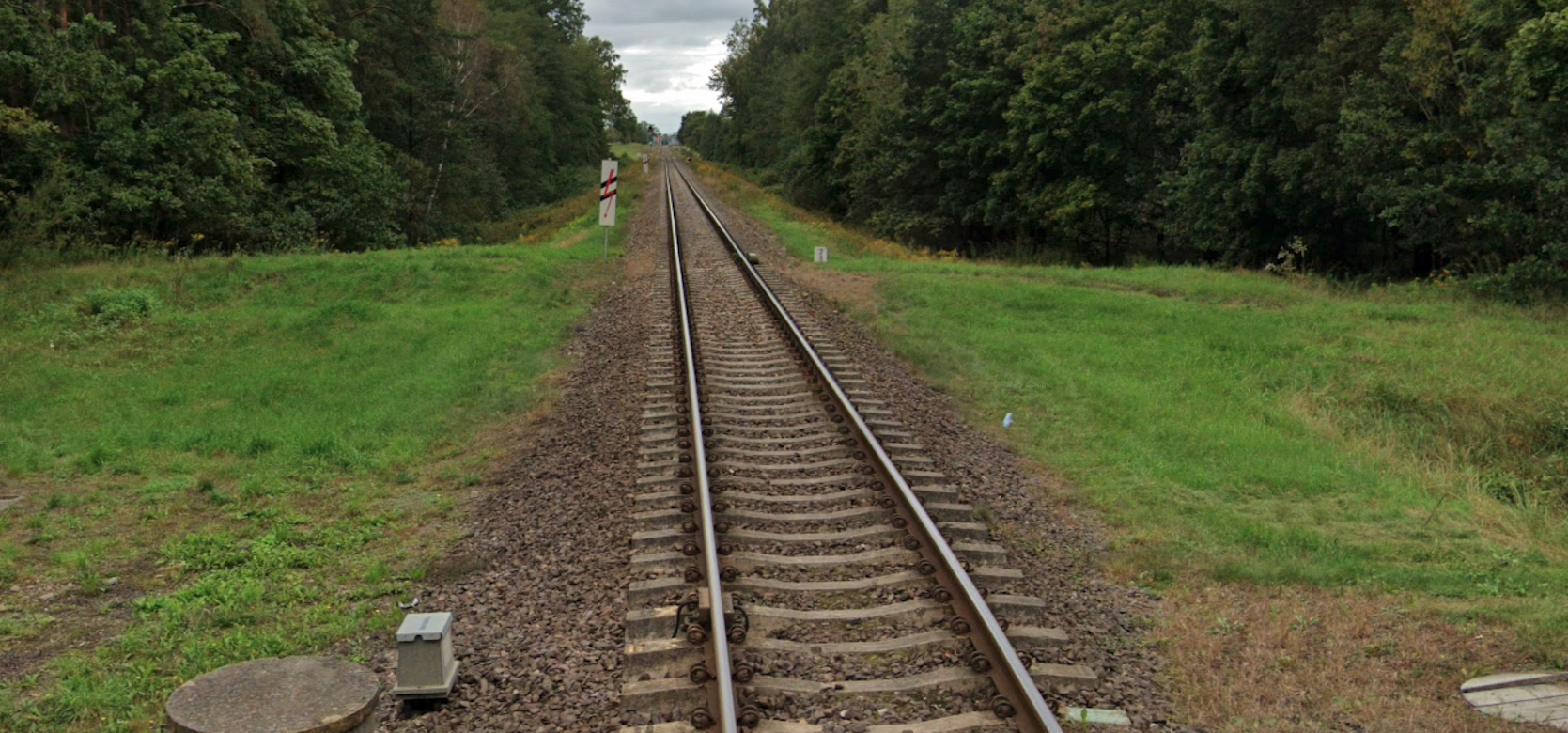
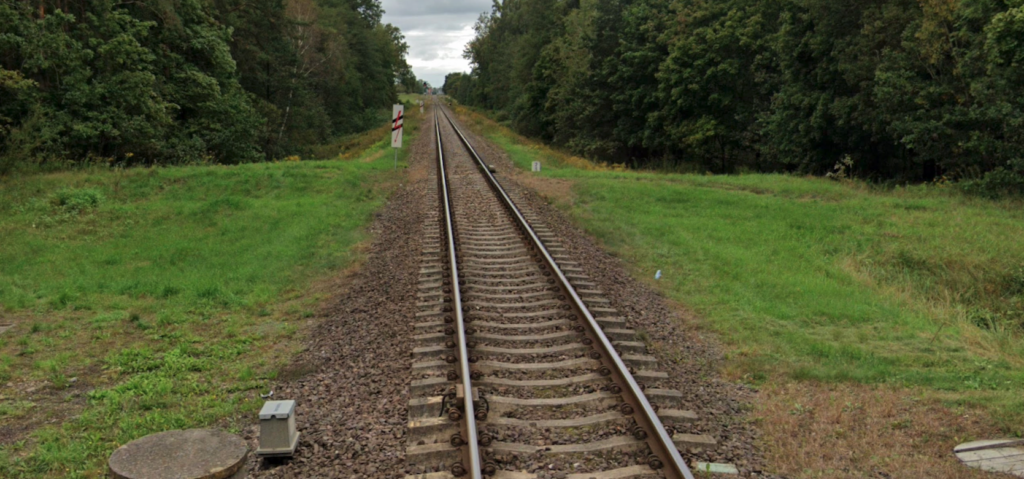
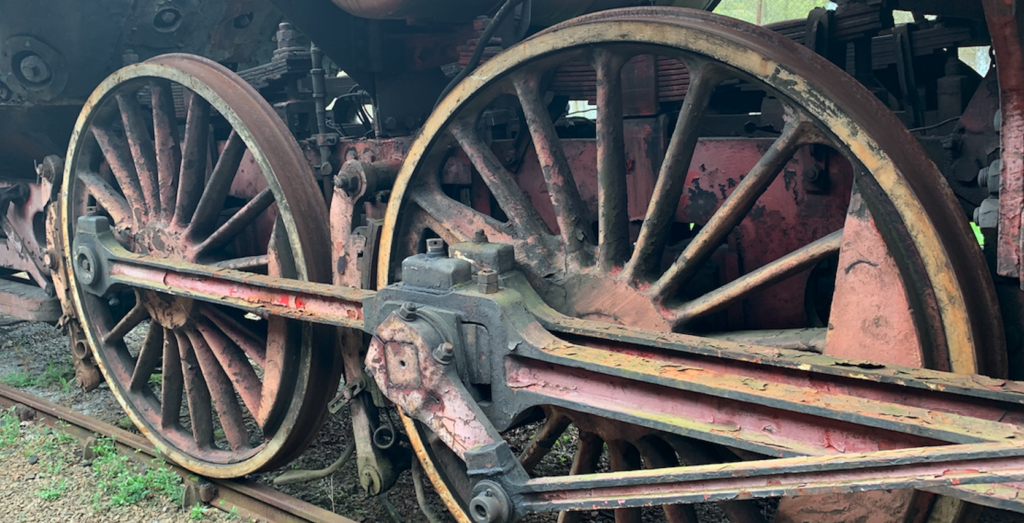
Locomotive Shed. A fan-shaped locomotive shed was built in the first years of the station’s existence, with a turntable in front. In 1990, the locomotive shed was expanded. Another section was added on the north side. This section was never completed and remained unused. In 2010, the locomotive shed was abandoned. Several historical examples of rolling stock stand on the side tracks of Ełk station. New engineering structures have been constructed in the city. In addition to the Ełk station, the Ełk Szyba Wschód stop was also built, with two 200-meter single-edge platforms. Nearby, on the site of the former railway-road crossing along Kolejowa Street, a viaduct was built for the tracks. Drivers can safely pass under the tracks, while passengers have convenient access to the platforms.
The separate Ełk Towarowy station, with its separate signal boxes, is no longer in place. The entire track system is now part of Ełk station. This is achieved by centralizing equipment and controlling train traffic from a single location. To this end, a modern Local Control Center (LCS) was built, equipped with advanced computer equipment. This allows train dispatchers to control train traffic on the 40 km of track and 118 switches that currently comprise Ełk station. After the track system was rebuilt, freight trains up to 740 m in length can be dispatched.
On February 14, 2026, 19 passenger trains departed from Ełk station. They served the following stations: Białystok, Gdynia Główna, Giżycko, Kraków Główny, Olsztyn Główny, Szczecin Główny, and Wrocław Główny. The routes are operated by InterCity (TLK) and PolRegio. Trains include: Train TLK 51110 – BIEBRZA departs from Gdynia Główna for Białystok at 07:04. Travel time: 6 hours 26 minutes. Train IC 1806 – RYBAK departs from Białystok for Szczecin Główny at 06:13. Travel time: 11 hours 53 minutes. Train IC 1806 – RYBAK departs from Białystok for Szczecin Główny at 06:13. Travel time: 11 hours 53 minutes. Train IC 6520 – SŁOWACKI departs from Wrocław Główny for Giżycko at 13:20. Travel time: 8 hours 26 minutes.
Railway lines:
The Ełk junction is a five-way railway hub in Masuria. One might assume that rail traffic is very heavy here. Unfortunately, this is not the case. Each of the five directions is single-track, inherited from East Prussia. Furthermore, there is no eastbound route. The most important is the Białystok-Grajewo-Ełk-Giżycko-Kętrzyn-Korsze line. The second most important line is the Ełk-Biała Piska-Pisz-Szczytno-Olsztyn route. The Ełk-Orzysz line is used exclusively for freight traffic. The Ełk-Olecko-Suwałki line is also used exclusively for freight traffic. Furthermore, train heads must be changed at Olecko. There are no other railway lines from Olecko: Olecko-Kruklanki-Giżycko and Olecko-Gołdap (distance 35 km). Another problem is the lack of a direct connection between Ełk and Warsaw. Traveling through Białystok is necessary. There is also no direct rail connection between Ełk and Augustów, which is only 49 km away. The railway network throughout northeastern Poland reflects a low population, poor industrialization, and a crisis resulting from the inept rule of communists, Freemasons, and Volksdeutsche. These areas were, and are, the first to be deprived of funding. A growing number of residents struggle to recall the days when regular passenger trains operated along the railway lines. Restrictions on transport services began as early as 1992, when services were canceled on Saturdays, Sundays, and public holidays, and staffing at railway stations began to be cut. As early as May 1995, the decision was made to close the Olecko–Gołdap section to passenger service, and for over 20 years, no passenger trains have reached Gołdap.
It was not until the United Right government that the first attempts were made to revive rail traffic. The Ełk-Giżycko section was successfully electrified, with the track being replaced at the same time. Electrification work has begun on the Giżycko-Kętrzyn-Korsze section. Unfortunately, the Freemasons returned to power, and the completion of the electrification was put in doubt.
Railway line No. 38, which carries trains from Białystok and Korsze, from which line No. 353 reaches Olsztyn Główny station. Lines No. 38 and 41 form part of the E75 railway line, known as Rail Baltica.
Railway line No. 41 to Gołdap via Olecko. The line is closed on the Olecko-Gołdap section, but is only open for freight traffic. Lines No. 38 and 41 form part of the E75 railway line, known as Rail Baltica.
Railway line No. 219 to Olsztyn Główny via Szczytno.
Railway line No. 223 to Czerwonka via Mrągowo. The line is closed on the Orzysz – Mikołajki section, but is operational on the freight section.
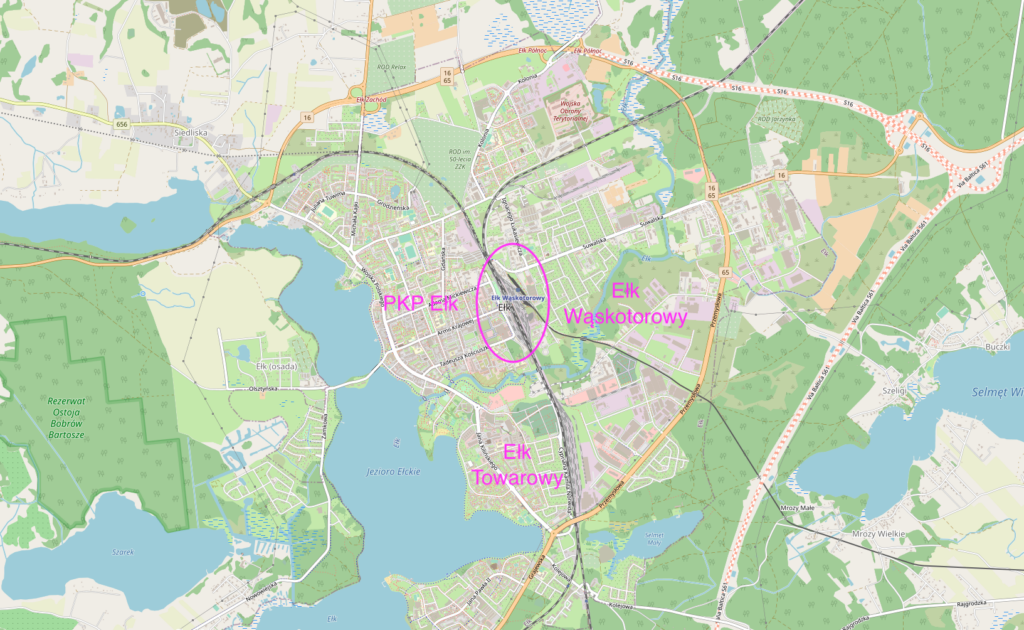
Throughout its history, the Ełk junction has had three passenger stops: the aforementioned Ełk Szyba Wschód stop, the Ełk Szyba Zachód stop, and the Ełk Zachód stop, which is now closed.
Ełk Narrow Gauge Railway.
In 1913, the Ełk Narrow Gauge Railway was launched. This railway operates to this day (2026) as a tourist railway. The Ełk Narrow Gauge Railway, with a track gauge of 750 mm, from Ełk Wąskotorowy to Turowo, is closed on the Sypitki – Turowo section, but is open for seasonal tourist traffic. The Ełk Narrow Gauge Railway runs through the municipalities of Ełk, Kalinowo, and Prostki. The total length of the railway line was 48 km. The Ełk Narrow Gauge Railway (EKW) is one of the few railways of its kind in Poland, and the only one in Warmia and Mazury, still in active operation today. The railway was built between 1912 and 1918. Construction was carried out by the Szczecin-based company Lenz & Co., which completed the work very quickly due to contractual requirements. After completion, the line was handed over to the Prussian government. In 1913, the railway was officially opened, opening the sections on the Ełk–Borzymy and Laski Małe–Zawady Tworki lines.
The first project to build the Ełk Narrow Gauge Railway was developed in 1905. The investment was primarily intended to generate economic benefits. The Ełk Railway Joint-Stock Company (Lycker Kleinbahn Aktiengesellschaft) was established to implement the project. LKAG’s shareholders were the Prussian state, with a share of 1,050,000 marks; the Province of East Prussia and the County of Ełk, with shares of 525,000 marks each; and Lenz & Co., a company from Szczecin entrusted with the construction, supply of rolling stock, and operation, with a share of 490,000 marks. The company’s total capital amounted to 2,590,000 marks. The company had the right to purchase land for the construction of lines and station and stop facilities.
The narrow-gauge railway station in Ełk was located next to the existing standard-gauge railway station. Work began at the turn of 1911/1912. A brick station building and a half-timbered locomotive shed with two tracks were constructed at the Ełk station. A turntable for the locomotives was not constructed, but a railway triangle. The first project involved building a single-track line with a 1000 mm gauge from Ełk via Brodowo to Borzymy (Borzymmen), 24.90 km long, with a 9.80 km branch line to Zawady-Tworek, which opened on October 22, 1913. Type H-93 and H-100 rails were used for construction. The site had favorable conditions, with only a few exceptions: wetlands. The maximum gradient was 13 per mille, and the minimum curve radius did not exceed 150 meters. A number of engineering structures were built along the route, including a reinforced concrete bridge over the Ełk River, two steel bridges: on the Lega River near Sypitki and on the Pietraszka River, and two road viaducts near Kalinów.
During this time, five pairs of trains were in operation during the day. Trains did not run at night. One morning train and one afternoon train carried a mail wagon. The train consisted of freight and passenger wagons of Class 2 and 3. Eight passenger wagons, two mail/luggage wagons, and 36 freight wagons were purchased. The first steam locomotives were purchased in 1913 from Arnold Jung Lokomotivfabrik GmbH, Jungenthal, Kirchen a.d. Sieg. These were 4 locomotives, with a power of 130 HP, type 1’Bn2t (tank locomotive with a twin engine for saturated steam, two driving axles and a front rolling axle). Locomotive numbers: No. 1-2010-1913, 2-2011-1913, 3-2012-1913 and 4-2013-1913.
The outbreak of the Great War interrupted the construction of further sections and destroyed the existing line. The rolling stock was either exported to the Muscovite state or destroyed. The company’s losses were estimated at 550,000 marks. After the Muscovites were ousted in early 1915, new rolling stock was brought in and reconstruction of the line began. It reopened on December 1, 1915. The final section, from Kallinowen (Kallinowen) to Turow (Thurowen), opened on October 5, 1918.
In 1915, the line’s reopening required the purchase of new rolling stock. Steam locomotives were again ordered from Jung. The first to be delivered were two 1’Bn2t type locomotives, numbered 2290-1916 and 2291-1916. These locomotives were similar to the previous ones. In 1919, an additional steam locomotive, type 1’Cn2t Jung No. 3054-1920, with 160 hp, was purchased. Passenger and luggage carriages were purchased from the Waggon und Maschinenbau AG (WUMAG) factory in Görlitz. A new feature was the installation of semi-automatic Scharfenberg couplers.
In the 1920s, the railway was renovated, but it faced difficult times. It should be remembered that this was the outskirts of the Germanic region. It was sparsely populated and had little infrastructure. The soils in this region are very diverse: brown soils, podzolic soils, and peat soils, which hindered agricultural development. Industrialization in the area was low, and the railway was threatened with closure.
In 1924, the East Prussian Railway Company (Ostdeutsche Eisenbahn-Gesellschaft) purchased the shares belonging to Lenz & Co., thus taking over the operation of railway traffic. On June 30, 1924, the Ełk Railway was merged with other East Prussian railways belonging to ODEG. A new company was established under the name East Prussian Commuter Railways SA (Ostpreußische Kleinbahnen AG). In 1927, the timetable consisted of five pairs of trains. Trains continued to run only during the day, but some trains stayed overnight at terminal stations. In the summer of 1939, the timetable consisted of six pairs of trains. However, additional trains were also scheduled, especially in the autumn during the harvest season. There were also additional trains during the Ełk fair. The company improved the passenger carriages’ equipment, and all were Class 2. Mail and luggage carriages were guarded by guards. In 1933, the rolling stock consisted of: 5 tank locomotives, 9 two-axle passenger carriages, 2 two-axle mail carriages, and 37 two-axle freight carriages with a load capacity of 7,500 kg and a wheelbase of 3.50 m. In 1933, the railway employed 39 workers, transporting 59,000 passengers and 31,000 tons of goods. In 1938, the railway carried 54,837 passengers and 29,026 tons of goods. However, in 1939, the number of connections decreased slightly but steadily. Some connections were shortened. The number of carriages in trains was also reduced. Funding for repairs and modernization decreased. Contract and seasonal workers were laid off.
During World War II, the railway’s importance unexpectedly increased. This was due to the confiscation of cars for war purposes, and agricultural produce had to be transported. This continued until September 1944, when the Soviet front approached. It was understood that the offensive would begin in the coming weeks. On January 24, 1945, the Soviets entered Ełk. Fortunately, the narrow-gauge railway was undamaged. The light rails were not targeted for theft by trophy troops. The station building in Ełk, the stops in Milejewo and Kalinowo, and the bridge in Sypitki were destroyed. Fortunately, all the locomotives survived.
The Polish administration took over the city of Ełk on April 6, 1945. At that time, the city was almost deserted. People gradually arrived from Mazovia and the Eastern Borderlands, especially from the Vilnius and Grodno regions. The railway was taken over by the District State Railways in Olsztyn. The railway was renamed the Ełk Narrow Gauge Railway. The rolling stock left behind by the Germans was supplemented by rolling stock from the destroyed Olecko Railway. Irregular train services began in the summer of 1945. By 1946, trains were running according to a regular timetable. In 1946, three pairs of trains were running: two to Turów and one to Zawada-Tworki. Freight transport volumes and employment were increasing.
At that time, the railway operated steam locomotives; No. 1 – 1’Bn2t, Jung 2290/1915 – from 1947: Tya1-3152. No. 2 – 1’Bn2t, Jung 2291/1915 – from 1947: Tya1-3151. No. 3 – 1’Cn2t, Jung 2358/1916 – from 1947: Txa2-3341 (ex Olecka Railway No. 3). No. 4 – 1’Cn2t, Jung 2359/1916 – from 1947: Txa2-3342 (ex Olecka Railway No. 4). No. 5 – 1’Cn2t, Jung 3054/1920 – from 1947: Txa2-3343. Passenger carriages; Five two-axle Class 3 passenger cars with open platforms, manufactured by WUMAG. Two two-axle luggage cars, manufactured by WUMAG. Freight cars: 30 two-axle cars with a load capacity of 7.5 tons and a wheelbase of 3.50 m.
In 1949, Warsaw decided to standardize all narrow-gauge railways in Poland to the 750 mm gauge. This was a wise decision, as it enabled the standardization of all railway rolling stock in Poland. This left only three track gauges in Poland: 750 mm, 1435 mm, and 1520 mm. The latter, the Moscow gauge, was used at transshipment stations in eastern Poland and on some lines remaining after World War II. The narrow-gauge railway in Ełk was converted to 750 mm in 1951. The change in track gauge, apart from a complete replacement of the rolling stock, did not significantly impact the railway’s operation.
In 1957, organizational changes took place. The Narrow Gauge Railway Department of the District Railway Company (DOKP) in Olsztyn was liquidated and the Commuter Railway Management Board (DOKP) in Warsaw was established in its place. The name was changed to the Ełk Commuter Railway (Ełk Commuter Railway). After the closure of the District Railway Company (DOKP) in Olsztyn, the Directorate of Commuter Railways (DOKP) in Warsaw took over supervision of the railway.
For many years, the railway played an important economic role, transporting both passengers and goods. However, during the communist era, its role diminished. Trucks took over. From the late 1960s, a steady decline in passenger traffic began, driven by the growth of road transport. In the 1950s, approximately 350,000 passengers and 40,000 tons of freight were transported annually. These figures declined in subsequent years. In 1996, only 61,510 people and 4,305 tons of cargo were transported.
In 1967, diesel traction was introduced. In 1989, the tracks were replaced along the entire route with S42 and S49 rails. In 1992, the railway underwent its final modernization, involving the use of bogies to transport standard-gauge wagons. This same system was used, among others, in Małopolska on the Kocmyrzów-Kazimierza Wielka-Charsznica railway. In 1997, due to the poor technical condition of one of the viaducts over the tracks, services on the Laski Małe-Zawady Tworki section were suspended.
On September 30, 1991, in recognition of its beauty and historical value, it was entered into the register of historical monuments. Since 2014, the railway has been housed within the Ełk Historical Museum (MHE), which, since 2018, has been located in the former station building on the revitalized Ełk Railway Park grounds. In 2002, the Ełk City Council took over the narrow-gauge railway because it was threatened with closure. The historic buildings of the main narrow-gauge railway station and the tracks are still preserved in Ełk. Along the railway route, outside Ełk, there are preserved historic structures associated with its operation, including stations, bridges, viaducts, culverts, a shelter, and others. Furthermore, the Ełk railway station grounds contain interesting examples of historic rolling stock, both standard-gauge and narrow-gauge.
The route of the narrow-gauge railway line. The line begins at the main Ełk Narrow-Gauge station and heads southeast. The line crosses Towarowa Street at an intersection. Then, a viaduct crosses National Road No. 621, Przemysłowa Street. The line then passes under the National Road No. 65, Via Baltca. The line passes the village of Mrozy Wielkie. Then, there are the villages of Regielnica and Kałęczyny. At the Laski Małe station (12.030 km), the line branches. One branch heads south. It passes the villages of Wiśniowo Ełckie, Kopijki, and Zawady-Tworki (9.690 km). This was the former border with Moscow. The second branch heads northeast. Then comes the Sypitki station. The Małkin River is here, and the current bridge is inactive. Therefore, the line ends here. But further on, there were stations: Pisanica, Romanowo, Dutki Ełckie, Grądzkie Ełckie, Kalinowo, Maże, Milewo, and Turowo. Turowo (37.860 km) is the last station on the border with Moscow. The active section is 15 km long.
Currently, the Ełk Narrow Gauge Railway offers tourist passenger transport using trains pulled by a Lyd1 (WLs150) diesel locomotive or a Px48-1752 steam locomotive with closed (type 1Aw) and open carriages, known as “summer trains.” The train runs on the Ełk – Sypitki – Ełk route according to the timetable or upon request.
Written by Karol Placha Hetman