Dęblin 03-11-2026
Stacja kolejowa Dęblin.
Geographic coordinates: 51.578N 21.834E. Elevation 116 m. Address Dęblin, Dworcowa 6 street.
The history of the city of Dęblin is described in a separate chapter.
In November 1918, the Ivanogorod fortress and the Ivanovo Selo railway junction came under the control of Polish Army units. At the same time, the name Dęblin was restored to them, but the name of the settlement Irena was retained, which survived until 1954, when the City of Dęblin was established, including all adjoining areas – the fortress with residential buildings, the railway junction, the Irena settlement and the airport with all its barracks and residential buildings and the Mniszech palace complex.
The fortress, which lost its military significance, has survived to this day in a rudimentary form. Its facilities were and are used for the needs of the army, as barracks, weapons depots, warehouses and the like. In 1920, it played a significant role as a place of concentration of Polish troops that set off on a victorious offensive from the Wieprz River in the war against the Moscow plague (Bolsheviks).
In the interwar period, the 15th Infantry Regiment and the 28th Light Artillery Regiment were stationed in the Dęblin fortress, and just before the outbreak of the war, the citadel was a place of mobilization of artillery units. Some forts were also used by the aviation school for bomb and ammunition storage and as a shooting range.
Rail; Iwanogorod-Łuków, Nadwiślańska, Iwanogrodzko-Dąbrowska.
First, a trail was built that connected Ivanogorod-Łuków. This line was intended to connect the Ivanogród fortress with the Warsaw-Terespol railway, which ran through Łuków, and thus with other fortresses: Brest and Modlin, and indirectly also with the Warsaw citadel. The construction of this section was a requirement for obtaining a concession to build a railway along the Vistula River, because the Moscow authorities perceived the construction of the railway mainly from military and strategic terms. The Moscow state is always preparing for war, and the existence of its inhabitants is irrelevant to them.
The Vistula Railway is a historic railway line in Poland, built in the second half of the 19th century, which played an important role in the development of transport in the macro region. The Vistula Railway was launched in 1877 and was one of the key railway investments in the territories of the Kingdom of Poland under the Muscovite partition. The main purpose was military transport between forts; Dęblin, Warsaw and Modlin with fortresses in Volhynia. During the partition period, the line had strategic military and logistical importance, facilitating the movement of troops and equipment. Secondly, the line was to improve transport connections in the region and enable more efficient transport of goods and passengers.
Initially, the line connected Mława with Kowel, passing through towns such as; Warsaw, Dęblin, Lublin, Chełm, Rejowiec and Włodawa. What’s more, the Iwanogród (Dęblin) station was a junction station from the very beginning. Later, the route was extended and modified to include branch lines. It enabled the transport of agricultural products, raw materials and industrial goods. The line was equipped with the infrastructure necessary to handle large freight and passenger flows, including stations, depots, sidings, water towers, locomotive sheds, warehouses and bridges. This route was supplemented by a branch to Brest-Litovsk leading through Łuków.
Initially, the Vistula Railway was built according to the broad-gauge Moscow standard (1,524 mm, or 60 inches), but later part of the line was converted to the European standard gauge standard (1,435 mm). This value, i.e. exactly 1435 mm, is the track width (rail gauge), i.e. the so-called normal rail gauge. In the imperial system, this is exactly 4 feet 8.5 inches. During the Great World War and the front was moving east, the Germans rebuilt the track to a normal width. At the end of World War II, the Muscovites tried to make the tracks wide again.
In the interwar period and after World War II, the line was modernized and transformed many times to meet the growing transport needs. First of all, electrification with 3 kV DC was carried out on the entire section, which is currently in Poland.
Nowadays, the route of the former Vistula Railway is an important element of the Polish railway network, although it operates under other names and is managed by modern railway companies. Modernizations of railway infrastructure, including electrification and automation, have improved the efficiency and comfort of travel on these routes.
The Vistula Railway was therefore a key project that contributed to the economic and infrastructural development of the regions through which it ran, and its legacy is still visible in the Polish railway system.
The Vistula Railway was soon followed by the construction of the Iwanogrodzko-Dąbrowska Railway, i.e. Dęblińsko-Dąbrowska, which connected Dęblin with Zagłębie Dąbrowskie. The railway was built in the period 1884-1887. The line was intended to improve military logistics and economic integration within the Muscovite Empire, particularly in the strategically important western regions. The railway connected the city of Ivanogorod (Dęblin) with Dąbrowa Górnicza, an important industrial center. This route facilitated the transport of coal and other industrial products from Zagłębie Dąbrowskie, a key industrial region in Poland. Due to its location and the period in which it was built, the Ivanogród-Dąbrowska Railway played a key role in the movement of troops and military supplies. This was particularly important during the Great World War, when the region was the site of intense military operations. After the end of the Great World War and the rebirth of Poland as an independent state, the railway network, including the Iwanogrodzko-Dąbrowska line, became part of the newly established Polish State Railways.
In 1887, the entire route of the Ivanogorodzko-Dąbrowska Railway was completed, the construction of which began in 1882.Then, several branches were built, including to Koluszki, which enabled the transport of coal from Zagłębie Dąbrowskie and fabrics from weaving factories in the Łódź area to the rest of the Kingdom of Poland and deep into the Muscovite state. This raised the profile of the Ivanogród junction station and ensured its development. The Ivanogród-Dąbrowa Railway represents an important chapter in the history of Poland and the wider Eastern European transport infrastructure, reflecting the interplay of economic, military and social forces during the region’s transformation.
Dęblin railway station.
The railway station in Dęblin is an important transport hub located in the Lublin Voivodeship, Poland. Dęblin is a city located at the intersection of several important railway lines, which makes this station of strategic importance for both passenger and freight traffic. The railway station in Dęblin was opened in 1876, as part of the construction of the Vistula Railway, connecting Mława with Kowel. On August 17, 1877, the Vistula Railway was put into operation over the entire length of 530 km.
The first station was built with the opening of the first railway section, the Iwanogród-Łuków section, launched in 1876. In 1887, when the Ivangorod-Dąbrowa Railway was launched, a separate station of this company was built, but it is not known exactly where it was located. Probably one was next to the other. In fact, currently, the Dęblin station is two separate buildings with different histories and perhaps it is a souvenir of two stations of different railway companies.
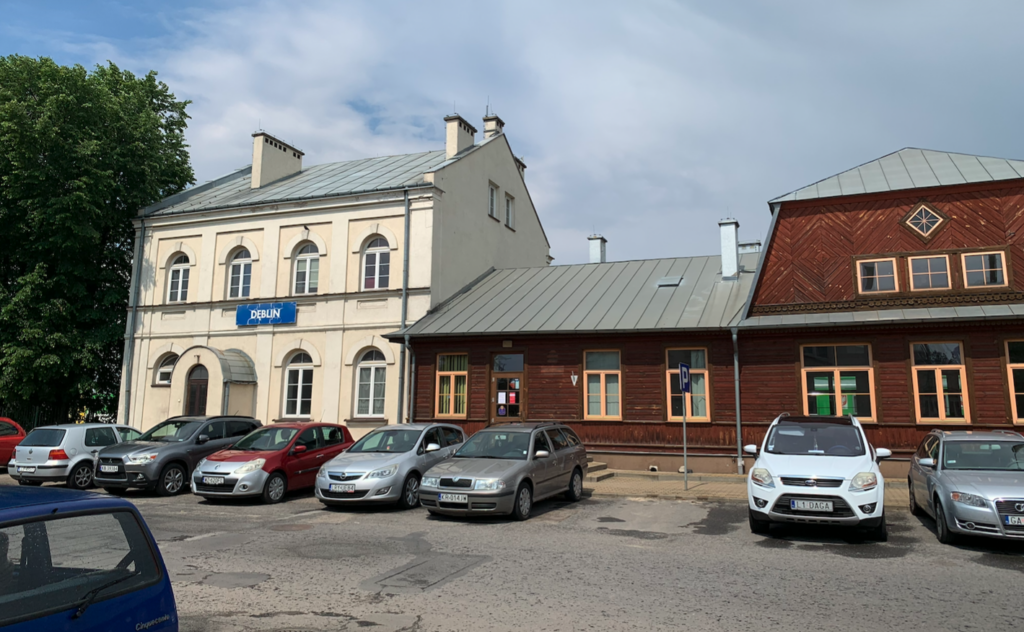
In 1897, both companies were nationalized and the entire infrastructure was under one state management. The brick building, on the north side, was built in 1900. Its shape has remained virtually unchanged for over 120 years. Changes to the entrance to the building were made only during the last renovation. The wooden station building was built in 1924 and replaced the building destroyed during the Great World War (1915). The wooden building served as the main station. There were cash registers, a waiting room, a bar and a kiosk (shop). At that time, the brick building served as service rooms for railway workers handling traffic at the station.
The current (2026) station complex is an example of well-preserved railway construction in the Lublin region. The complex includes a station and a number of administrative, residential and technical buildings, built in the period 1877-1925. The railway building complex was built in several stages. The first station building was put into use in 1877 and was a makeshift building. In 1896, the first two-story multi-family houses were built (ul. Dworcowa 5 and 7), and in 1900, a brick station and a residential and administrative building called Belweder (ul. Kolejowa 16).
In 1910, the name of the station was changed to full Russian, from Ivanogród to Ivanogorod. On May 1, 1916, the name of the Ivangorod station was changed to Dęblin. In 1939, after the German invasion of Poland, the name of the station was changed from Dęblin to Deblin. The name Dęblin was restored in 1945.
In 1915, retreating Moscow troops destroyed the station. The brick station building was in ruins, and in its place a wooden station was built, which still exists today. The station was partially rebuilt by Austrian troops. Then, shaped semaphores were installed at the station.
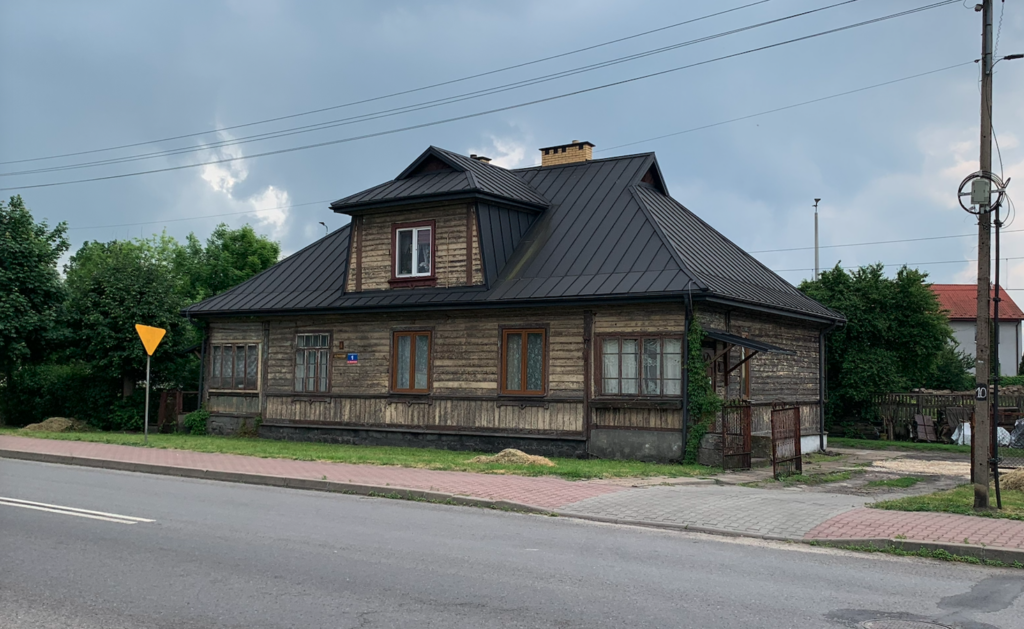
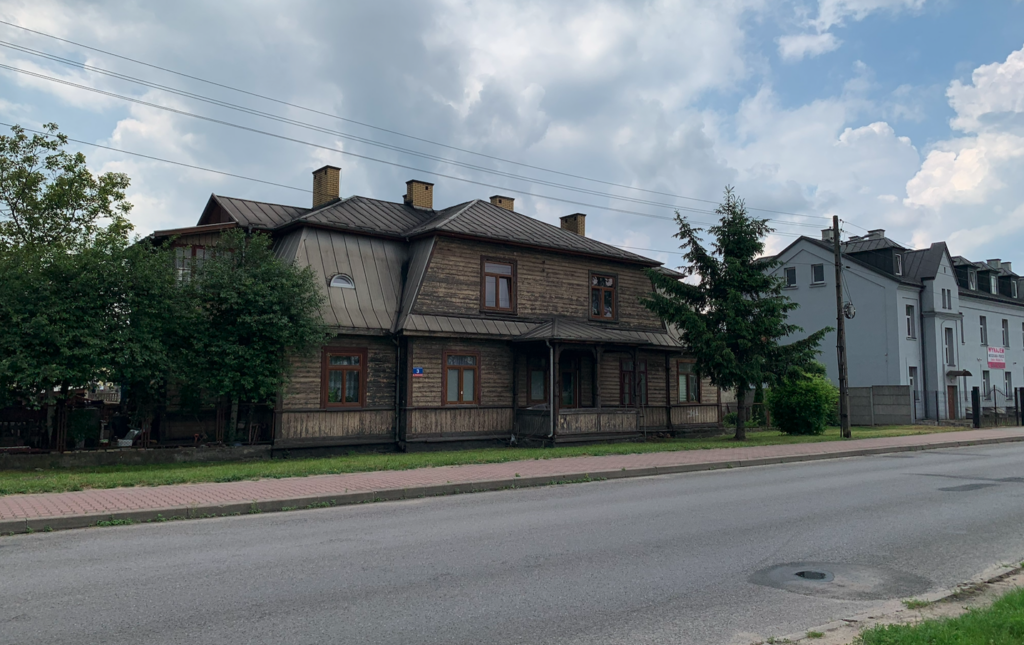
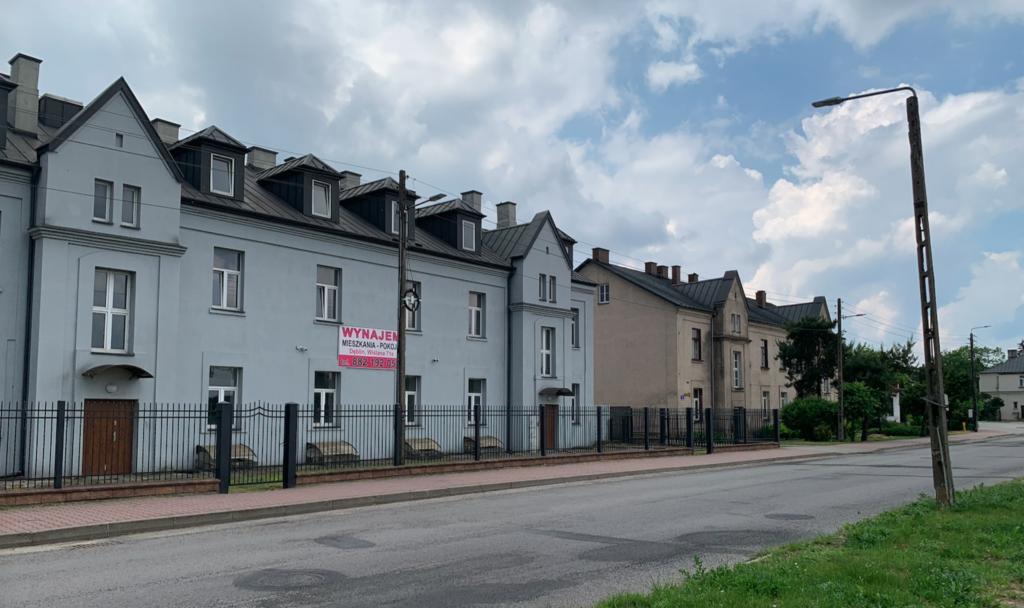
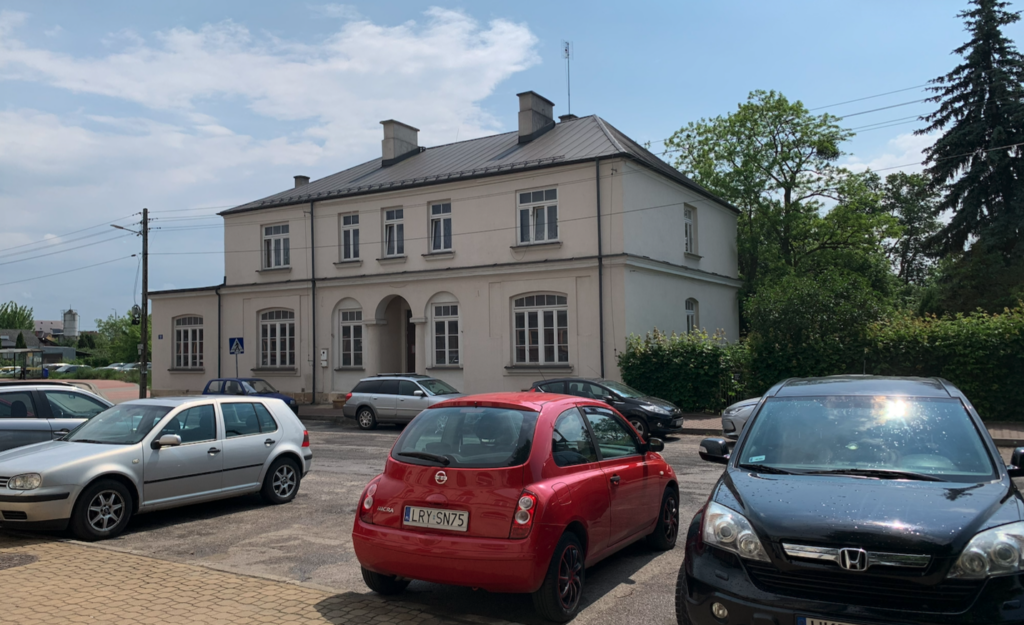
In 1920, a water tower was built, which has an octagonal base and is covered with a mansard roof with tiled roofs. Around 1935, a second water tower was built, which is rectangular in base and made of reinforced concrete. This tower stands on the premises of a freight station. In the period 1921-1926, four wooden multi-family houses in the form of villas were originally built, of which three currently exist: Dworcowa Street 1, 3, 13. In 1923, another building intended for administrative and residential purposes and a health service building (Dworcowa Street 11) were built. Three more brick residential houses were built for railway workers at Dworcowa Street. The houses are brick, villa-like, two-story, covered with mansard roofs and rich facades.
In 1924, a large wooden station building was added to the existing station building from the east, intended to serve passengers. The station building, both, were last renovated in 2003-2005. Then both buildings were connected by an internal passage. The entrance to the brick station was rebuilt. The layout of the rooms and their purpose were changed.
The wooden part of the station, single-story, with nineteen axes, boarded, built on a very elongated rectangular plan, with two symmetrically arranged dormers, covered with a hipped roof. The roof in the central and extreme parts is gable. The roof is covered with galvanized sheets. The roof of the brick building is also covered with galvanized sheet metal. The railway station in Dęblin was damaged both during the Great War and the Second World War.
In the history of Dęblin, there were three locomotive depots. The third locomotive depot was one of the largest in this part of Poland. It was built at the end of the 19th century. The fan locomotive shed had 32 stations, with a built-up area of approximately 7,000 m2. There were skylights installed on the roof. Around 2020, the locomotive shed was demolished. There is still an office building at Towarowa 4. The building is a two-story building made of red brick, unplastered, covered with a gable roof made of corrugated asbestos panels. In front of the building there is a chapel with a painting of Our Lady of Częstochowa; Patron saints of railway workers of the Dęblin junction. In 2020, the shrine was moved close to the station. The concrete fence along Towarowa Street has survived. The one-story building of the Dt1 executive signal box remains nearby.
The second locomotive depot is located at the height of the platforms on the eastern side of the station. The locomotive depot has been renovated and has a reduced number of stands. The turntable is open. This facility is part of Zakład Naprawy Infrastruktury Kolejowej Sp. zoo; Machine Equipment Base in Dęblin.
The last major expansion of the station took place in the 1940s. The Germans started its expansion, but did not finish it. The work continued after World War II. A large locomotive shed was renovated. More water cranes were added. A new signal box and a signalman’s building were built in what is now Tysiąclecia Street.
The last renovation of the station was carried out in 2017-2019. The track layout was partially changed. The tracks, turnouts and electric traction were replaced. The station platforms were rebuilt. A new passage for passengers was built under the tracks and platforms, which is accessible to people in wheelchairs via elevators and ramps. Until now, passengers had access to the platforms at track level. Currently (2026), the station has three platforms and five platform edges. The platforms are high and have roofs. Platforms 2 and 3 are of the island type and are 375 m long. On each of these platforms there are two shelters, each 50 m long. Platform 1 is single-edge, located at the station and is 200 m long. Platform 1 is intended for trains that end or start their run from Warsaw in Dęblin.
There are currently no ticket offices at the Dęblin station (2026). There are ticket machines here. In 2018, the station served up to 2,200 passengers per day. In 2022, the station served up to 3,800 passengers per day. In May 2024, 70 passenger trains departed from Dęblin station. You could go to: Biała Podlaska, Błonie, Bydgoszcz Główna, Chełm, Drzewica, Gorzów Wielkopolski, Hrubieszów Miasto, Jagodin, Kołobrzeg, Kraków Główny, Lublin Główny, Łowicz Główny, Łódź Fabryczna, Łuków, Radom Główny, Rzeszów Główny, Sochaczew, Szczecin Główny, Świnoujście, Terespol, Warsaw Central, Warsaw East, Warsaw West, Zielona Góra Główna, Żyrardów.
Railway channel-radio frequency: R3 – 150.225 MHz. Railway channel-radio frequency: R4 – 150.325 MHz. Railway channel-radio frequency: R6 – 150.450 MHz.
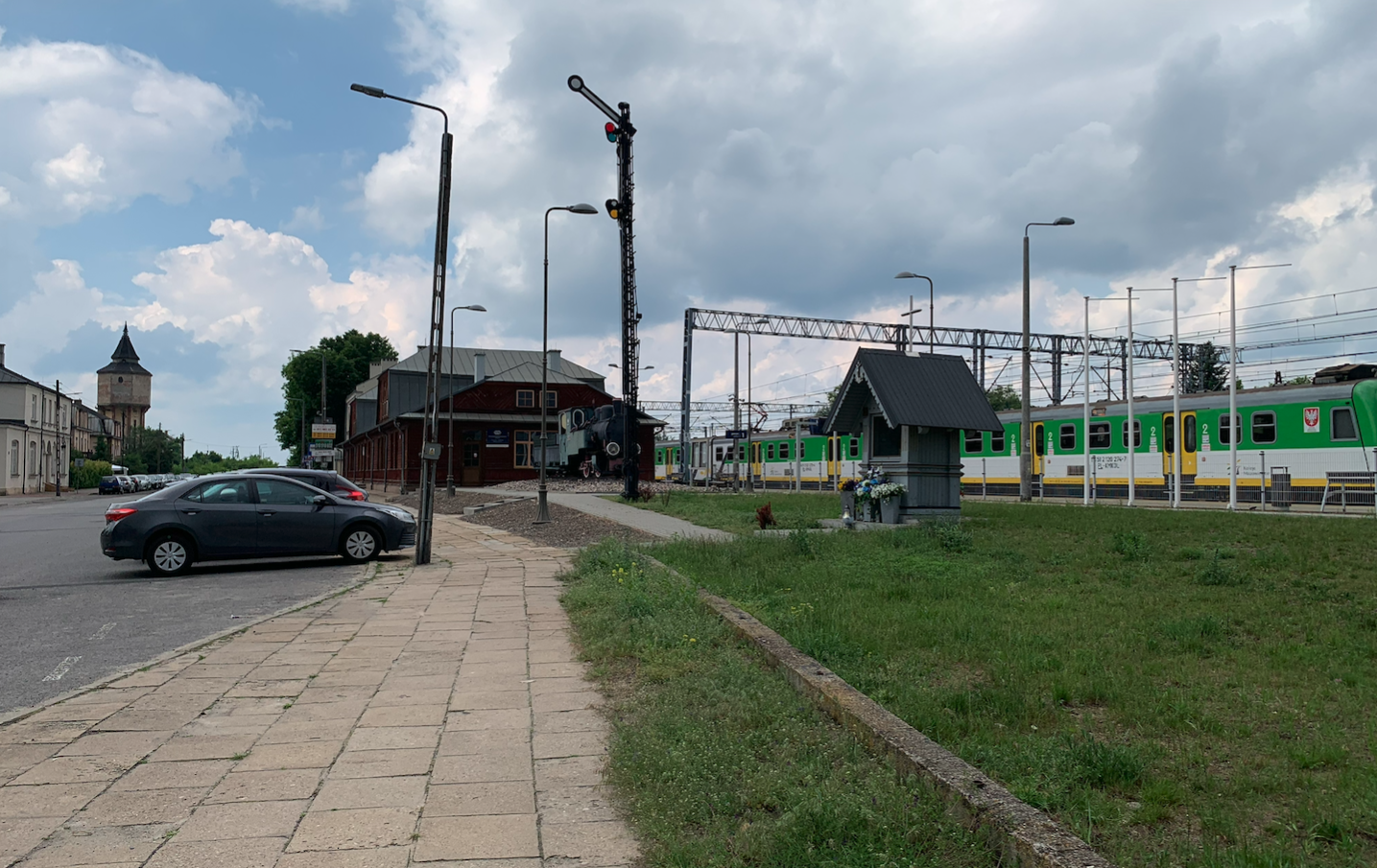
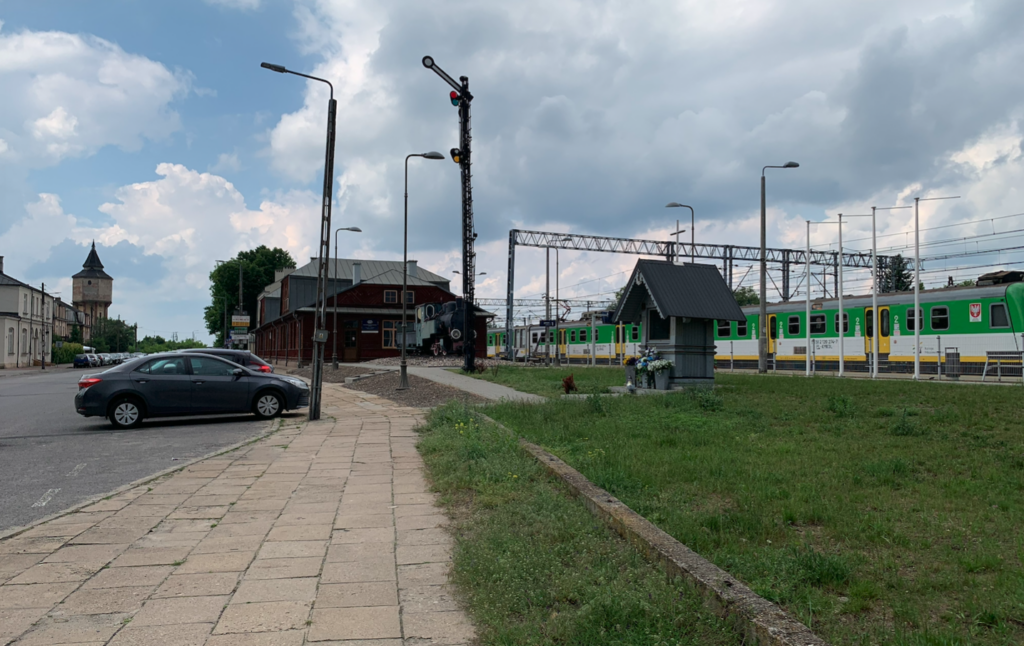
At the Dęblin station, the T49-112 steam locomotive stands as a monument next to the station. Two-axle steam locomotive Ryś 1541: Fablok No. 1908 from 1949. The locomotive has a four-axle coal trailer. Next to it there is a historic shaped semaphore.
Dęblin Towarowy railway station.
Geographic coordinates: 51.569N 21.842E. Elevation 115 m.
The Dęblin Towarowy station is located south of the Dęblin station. In its heyday, it had over 20 through tracks. Currently (2026) 10 tracks are in use. The station level is located between Towarowa and Nadatki streets. There was a marshalling hill here. Some of the former railway buildings are used by private companies not related to the railway. There is a water tower at the station, with a rectangular base and made of reinforced concrete. There is also a wagon scale and a gauge. There are railway lines within the station; No. 7 Warszawa Wschodnia Osobowa – Dorohusk (104,300 km of line). No. 26 Łuków – Radom Główny (62.570 km of line). No. 770 Dęblin R11 – Dęblin R273 (3,090 km). A siding runs from the station to the area of the military unit, which is located within the fortress.
There were two signal boxes at the station. The buildings are preserved in good condition. Currently (2026), traffic is controlled from the new LCS (Local Control Center) at the Dęblin station, which was launched in 2020.
Dęblin Stawy railway station.
Geographic coordinates: 51.602N 21.890E. Elevation 131 m.
Dęblin Stawy station is a station on the Dęblin – Łuków line, where the lines from Dęblin: No. 26 Łuków – Radom Główny converge. No. 579 Stawy – Dęblin DB. Until 2017, the station served passenger traffic. The Dęblin Stawy railway station plays an important military role because it serves several railway sidings; 3rd Regional Logistics Base – Stawy Depot.
Railway lines:
Railway line No. 7 Warszawa Wschodnia Osobowa – Dorohusk is a line of state importance. The length is 267.471 km. The line runs from Warsaw towards the south-east. The line is double-tracked (except for the section from Wólka Okopska to the border with Ukraine), electrified with electricity, with a voltage of 3 kV DC. The maximum speed is 160 km/h. The railway line was opened in 1877 as a broad-gauge railway with a gauge of 1,524 mm. After it was taken over by PKP in 1918, the rail gauge was changed to the standard 1,435 mm on the entire railway line. On December 15, 1936, the Warszawa Wschodnia – Otwock section was electrified. In the 1950s, electrification of subsequent sections of the railway line began; On January 5, 1958, Otwock – Pilawa. On November 8, 1968, Pilawa – Lublin Główny. On December 20, 1981, Lublin Główny – Świdnik. On May 27, 1983, Świdnik – Jaszczów. On December 3, 1983, Rejowiec – Chełm. On December 27, 1983, Jaszczów – Rejowiec. The electrification of the railway line was completed on April 1, 1984, when the Chełm – Dorohusk section was electrified.
Railway line No. 26 Łuków – Radom Główny is a line of state importance, 117.108 km long. The line is electrified with a voltage of 3 kV DC. Maximum speed 120 km/h. Construction periods; 1876, Łuków – Stawy. 1885, Dęblin – Radom. 1935, Ponds – Dęblin. The line is single- and double-track in sections. Electrification: 1967, Dęblin – Radom. 1988, Łuków – Dęblin.
Railway line No. 579 Stawy – Dęblin DB, a 5.658 km long line, single-track, electrified, maximum speed 70 km/h. Stawy Station is a technical station located on railway line No. 26 towards Łuków.
The Dęblin – Stężyca line was a siding running westwards, from the Dęblin station to the Logistics Base – Stężyca Storage. Length approximately 3,000 km. Additionally, there are railway sidings, for example to the Dęblin Fortress.
Railway bridge over the Vistula.
It is worth mentioning that Dęblin has two main rivers; the Vistula and the Wieprz, which flows into the Vistula here. The Wieprz River long ago flowed into the Vistula much further north-west, near the town of Drachalica. About 20 kilometers further than now. Around the 17th century, the Wieprz River developed a new bed and flows into where it is today.
On August 17, 1877, the Vistula Railway was put into operation over the entire length of 530 km. 289 bridges and culverts were built along its route. They were designed by employees led by engineer Tadeusz Chrzanowski. Currently, there are two parallel steel bridges of the plate girder type across the Wieprz River. Each of them has three spans, supported by two abutments and two pillars. Total length of the bridge 174 m.
The Iwanogrodzko-Dąbrowska Railway was built in the period 1882 – 1887. The line length was 461 km, and the tracks on the bridges were 2,583 m long. The entire line had 324 bridges. These were mostly steel bridges with brick abutments. For span lengths of up to 12 meters, plate girders and I-beams were used. When the spans were longer, trusses were used.
The first bridge over the Vistula was built in 1885. The main designer of the bridge was engineer Stefan Zieliński. The first bridge over the Vistula River was 448 m long. It consisted of five spans, each 88 m long, with a lattice structure and constant height. The four pillars of the bridge were placed on caissons that go into the river bottom to a depth of 17 m, below the normal water level. The stone pillars were equipped with small chambers to break the spring ice floes. The width of the spans was 8.5 m, which made it possible to lay two tracks. However, it was decided to lay only one track, so that the other part would constitute a road for military vehicles. The contractor for the spans was the Warsaw company Lilpop, Rau i Loewenstein. The span elements were transported by barge from Warsaw. On site, they were assembled and placed on pillars. The bridge was called Zajezierze after the town on the left bank of the Vistula.
As a result of the Great World War, the bridge was destroyed and passenger and goods traffic was carried out using ferry crossings. The destruction was caused by Moscow troops in 1915. Reconstruction of the bridge began in 1915. The work was carried out by Austrian troops. At first, a makeshift wooden bridge was built on the south side. One railway track was laid on this bridge and train traffic began. The rebuilt bridge was opened in 1916. It was a steel bridge with one preserved span for two tracks. The remaining spans were rebuilt (narrowed) to a width of 4.5 m, only for one track.
In 1929, a new bridge was built, with a new design with parabolic spans. In 1939, as a result of German aggression against Poland, the Polish Army blew up the bridge. In 1940, the Germans rebuilt the bridge, and in 1944, they blew it up again. In 1947, the bridge was rebuilt. KONSTAL from Chorzów participated in the work.
Currently, it is a parabolic truss structure with the roadway placed at the bottom. The bridge is double-tracked. It stands on old supports on diaphragm walls. There are caissons in the bottom of the river. There is electric traction on the bridge.
The history of the Chapel of Our Lady Queen of Poland, patron saint of railway workers at the Dęblin junction.
In the period 1837-1847, the construction of the Ivanogorod fortress, and an Orthodox church and a Catholic chapel for the needs of the garrison soldiers were built there. In 1876, railway traffic was launched on the Ivanogorod – Łuków route. On August 17, 1877, traffic was launched on the entire 530 km long Vistula Railway line. In 1879, the Governor General of Warsaw ordered the removal of the Catholic chapel from the fortress. An altar was built under a roof at the railway station. On January 25, 1885, the Dęblin-Dąbrowska Railway Society was founded by Zygmunt Count Wielkopolski, Tomasz Count Zamoyski, Karol Scheibler, Wilhelm Rau Lowenstin, Leon Gondstand and Jan Bloch; launched the first train on this route. In 1917, thanks to the efforts of engineer Fizych, the chapel was rebuilt and a painting of Our Lady of Częstochowa was placed there; patron saint of Dęblin railway workers. On August 15, 1919, the chapel was consecrated. At that time, efforts were made to build a Catholic church in Dęblin, because the nearest church was in Stężyca, 7 km away. On August 12-16, 1920, a victorious Polish-Moscow battle took place near Dęblin. The Polish Army destroyed the Mozyr protection group. In the period 1939-1945, the chapel was dismantled and hidden from the Germans. In 1946, the chapel was assembled and placed next to the administrative building of the locomotive depot. In the period 1946-1953, masses were celebrated at the chapel on Saint Florian’s Day and May services. In the period 1953-1964, May services were held. In the period 1953-1986, the communists ordered the removal of the chapel, which the railway workers did not do. Until 1991, during the Corpus Christi procession, an altar was built next to the fence on Towarowa Street, because the communists did not allow the procession to enter the locomotive depot. In the following years, the chapel was the first altar on the Corpus Christi procession. Renovations of the chapel; 1993, 2000, 2005, 2020. Around 2020, the shrine was moved close to the station building.
Written by Karol Placha Hetman