Warszawa 21-11-2025.
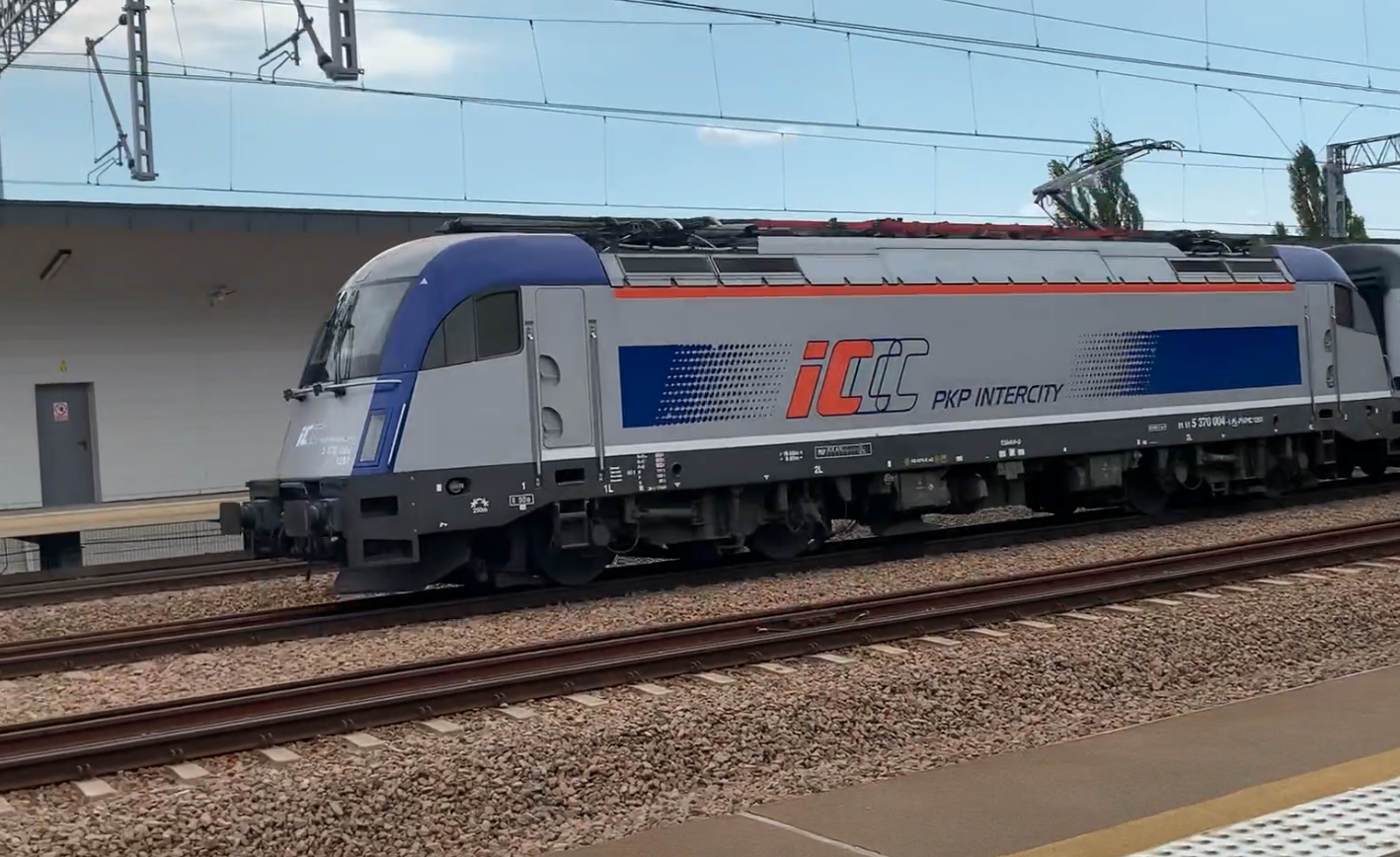
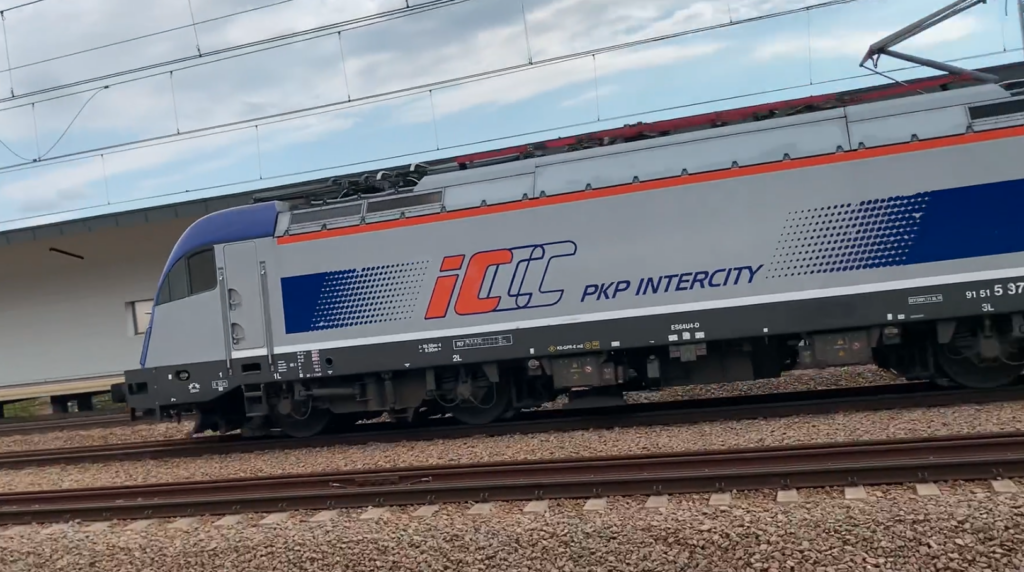
Alstom Coradia Max for PKP InterCity.

Passenger trains with double-decker (double-decker) cars have a number of advantages that make them popular in regional and metropolitan traffic. Here are the most important of these advantages: Greater capacity; Double-decker cars can carry significantly more passengers than single-decker cars with the same train length. This is particularly beneficial on high-traffic lines, where increasing train length is limited by platform length. Improved cost-effectiveness; More seats mean a lower cost per passenger. Fewer units of rolling stock need to be operated, reducing operating costs. Reduced train congestion; Thanks to the increased number of seats, passengers stand less frequently, improving travel comfort, especially during peak hours. Optimal use of infrastructure; Where infrastructure is limited, double-decker cars allow for increased transport capacity without remodeling stations. Improved visibility and travel comfort. The upper level offers a better view of the route. Many designs feature spacious interiors, and modern units have excellent acoustic and thermal insulation. Increased attractiveness of public transport; Double-decker trains have a modern look and attract passengers, helping to increase the share of rail in public transport. Stability and safety; Modern double-decker cars are designed to maintain stability despite their increased height, and the design is adapted to strict safety standards.
On November 12, 2025, PKP InterCity signed a contract with Alstom Polska for the purchase of 42 double-decker electric multiple units, capable of speeds of 200 km/h, with an option to purchase an additional 30 units. Representatives of the companies signed the contract at the manufacturer’s factory in Chorzów, where the modern vehicles will be manufactured.
The Chorzów factory employs approximately 2,500 workers. The plant produces railway cars, trams, and metro cars. The car bodies are made of steel and aluminum alloys. At the Chorzów plant, whose history dates back to 1864, Alstom produces, among other things, double-decker trains for railways across Europe. At the Alstom plant in Nadarzyn, near Warsaw, wagon bogies are produced. The latest bogies are designed for a speed of 250 km/h. In Siedlce, where Stadler has been producing railway vehicles since 2007, double-decker trains were built for carriers in Slovenia and Slovakia.
Before we describe the details of the contract, we must note several aspects. First, the speed of the ordered trains will be 200 km/h. Until now, rail operators in Poland have ordered EMUs capable of speeds up to 160 km/h, not because NEWAG, PESA, and FPS were incapable of building trains capable of 200 km/h, but because there were no such orders. Second, double-deck wagons. Polish factories have not received such orders either. There is no doubt that the planned competition was designed by the current government to favor foreign companies closely linked to German capital. The government is doing everything in line with the German agenda. The fact is that the winner, Alstom, has two factories in Poland: in Chorzów and Nadarzyn. Officially, the trains for PKP InterCity are to be built in Polish factories. Whether this will actually happen remains to be seen. Another issue is the ongoing protest by Siemens, which, despite losing the competition, is not giving up and has gone to court.
In October 2024, PKP InterCity announced a competitive dialogue procedure for the purchase of Poland’s first double-decker high-speed trains. The procedure involved the delivery of 42 double-decker electric multiple units, with a 30-year maintenance period. An option to order an additional 30 vehicles was also included. Three months of negotiations were held with manufacturers experienced in producing this type of train, aimed at jointly verifying technical solutions and the feasibility of fulfilling the order. In April 2025, the carrier invited manufacturers to submit bids.
Alstom’s EMU bid: vehicle purchase cost: PLN 4,107,600,000.00, vehicle maintenance cost: PLN 2,779,433,000.00. Stadler’s EMU bid: vehicle purchase cost: PLN 3,990,000.00, vehicle maintenance cost: PLN 3,271,401,000.00. The 2024 tender for double-decker push-pull trains: The purchase cost of the vehicles (38 trainsets) was PLN 6,499,160,000.00, with no maintenance costs for the entire order. It’s worth noting that both manufacturers who submitted bids have factories in Poland and employ Polish engineers and workers.
The contract for the 42 trains is valued at PLN 4.1 billion, with maintenance costs of nearly PLN 2.8 billion. According to the contract, the first trainsets are to be in service in 3.5 years, i.e., in May 2028. The last EMU is to be delivered in January 2032.
Alstom currently produces double-deck electric multiple units (EMUs) from the Coradia Max family. These consist of single-deck and double-deck cars. The single-deck cars house most of the electronic equipment. The selected EMU for PKP InterCity will have 550 seats. Therefore, the trains will be arranged in two double-deck cars, two single-deck cars, and two double-deck cars. The middle cars will accommodate wheelchair passengers and cyclists. These cars will also feature a buffet. The double-deck cars will allow for significantly more passengers than standard cars. The EMUs will be capable of running in double traction. The EMUs will be equipped with air conditioning, Wi-Fi, numerous charging options for mobile phones and laptops, reading lights, CCTV, audio passenger information, and monitors. The vehicles will be available in Class 1 and Class 2. The cars will feature luggage racks that can be secured against theft. The vehicles will be equipped with the ETSC Level 1 and Level 2 safety system. The EMUs will have an online diagnostic system and a GPS support system. Internal and external monitoring will be provided. A key feature will be the ability to operate under 3kV and 25kV overhead lines. This will enable trains to operate in Poland and the Czech Republic.
The purchase of new double-decker trains will enable the transfer of the ED250 Pendolino EMUs to the CMK line, where they will be able to operate at speeds of 250 km/h when the line allows. Currently, this is the only line in Poland that will allow travel at speeds of up to 250 km/h, likely from 2027. This all depends on the contract for the implementation of GSM-R, which is still in the mediation phase between PLK and the system contractor. Without this contract, ECTS 2, which allows for speeds exceeding 200 km/h, cannot be implemented. Initially, new double-decker trains manufactured by Alstom Polska should support services on the route from Warsaw to the Tricity area and onward to Kołobrzeg. It has been noted that during the summer holidays, trains from Warsaw to the Baltic Sea are at their busiest. Higher-capacity trains will help solve this problem.
Additionally, the layout of the railway network in Poland is a problem. Most trains from central Poland towards the sea travel along Railway Line No. 9 between Warsaw and Tricity. Line No. 5, the extension of the Central Railway Line towards the sea, has not yet been completed. Because a coalition of Freemasons, Liberals, and Communists is currently in power (2025), the program to develop the Central Communication Port (CPK) in Poland has been suspended. Deceiving the public, it was announced that a spoke called “Y” would be built, meaning a connection between Poznań/Wrocław and Łódź and Warsaw. Trains are supposed to run at 300 km/h here, which is a complete fabrication. According to the announcement, double-decker trains will primarily run along the “Y” route. Remember, the current government disregards the District Poland system, and trains in Kalisz and Sieradz will not stop.
Written by Karol Placha Hetman