Kolbuszowa 2026-11-17
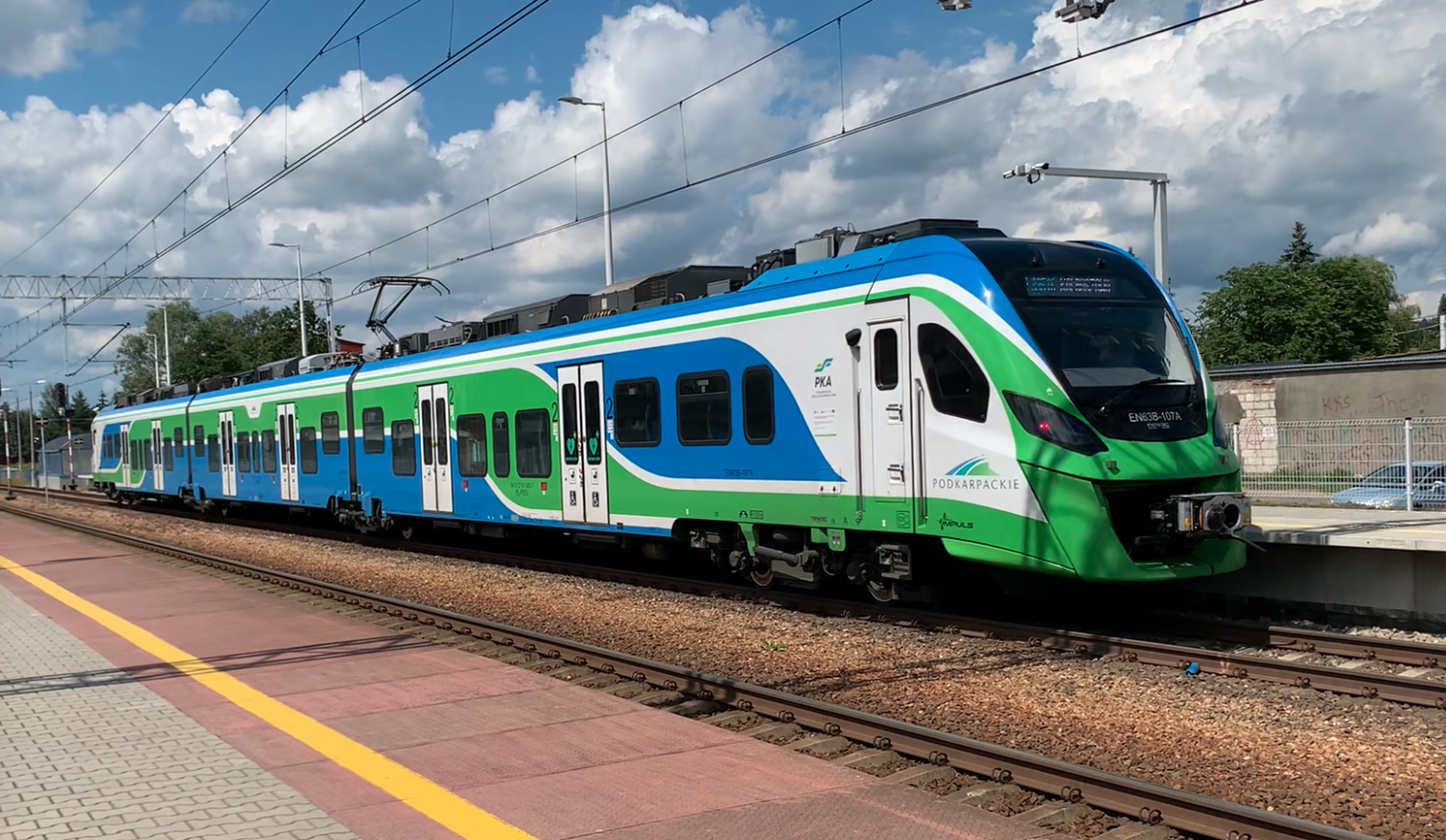
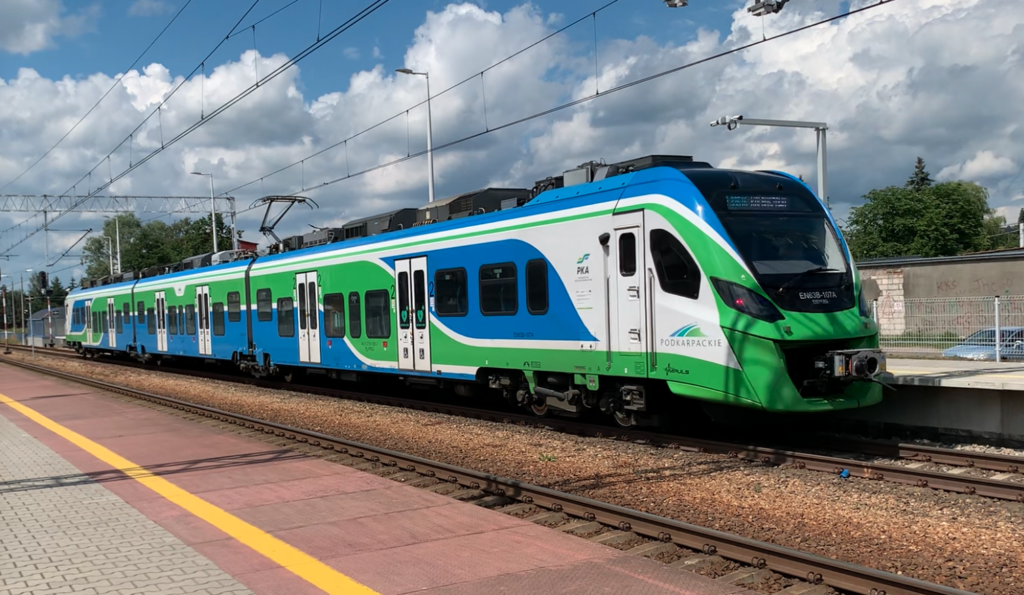
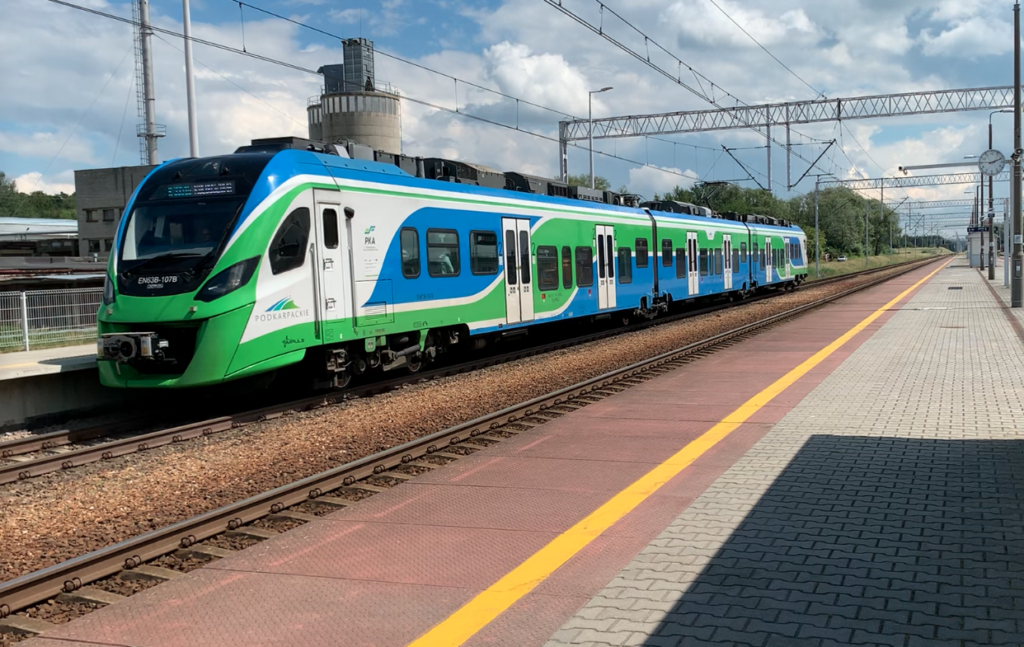
EZT Newag EN63B-107 Impuls.
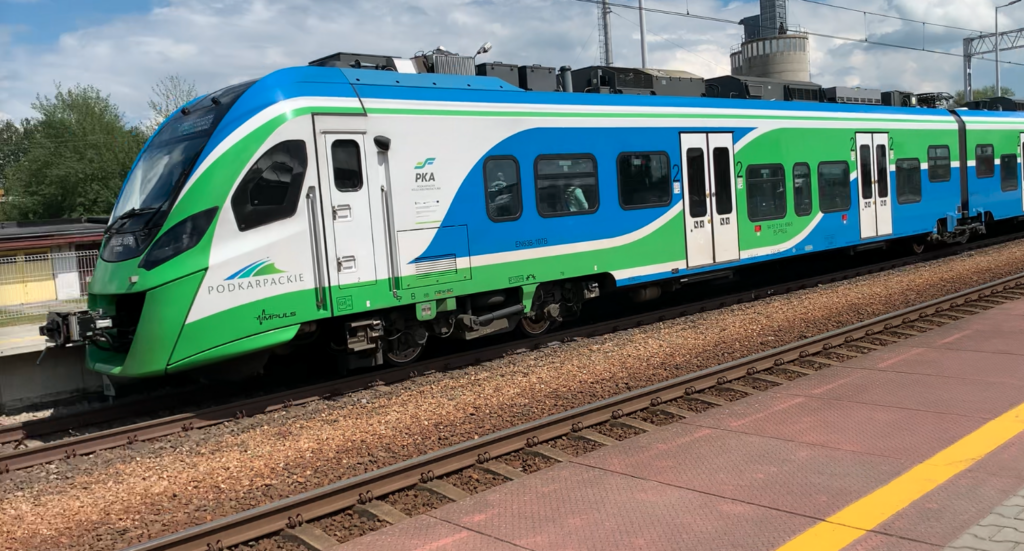
From the very beginning, the company NEWAG from Nowy Sącz planned to build an entire family of electric multiple units (EMUs) under the trade name IMPULS. The individual trains were designed to vary in the number of cars, ranging from 2 to 6. Shortly after the production of a four-car unit, orders were received for three-car units. These were assigned the factory designation 36WEa, as well as the railway classification EN63A. The letter “A” in the designation indicates the use of asynchronous traction motors. In 2014, NEWAG produced the following three-car units: EN63A-001 (36WEa-001), EN63A-002 (36WEa-002), EN63A-005 (36WEa-005), EN63A-006 (36WEa-006), and EN63A-007 (36WEa-007).
Since 2020, the next generation of trains—the Newag 2 series—has been in production. The train EN63B-107 is a Newag Impuls 2, with the factory designation 36WEdb-007. The train belongs to the fleet of the operator PolRegio and is used as part of the Subcarpathian Agglomeration Railway (Podkarpacka Kolej Aglomeracyjna). It carries the European vehicle number (EVN) prefix PL-PREG. Manufactured in 2020, the train operates on electrified routes within the Rzeszów metropolitan area and has a design speed of 160 km/h.
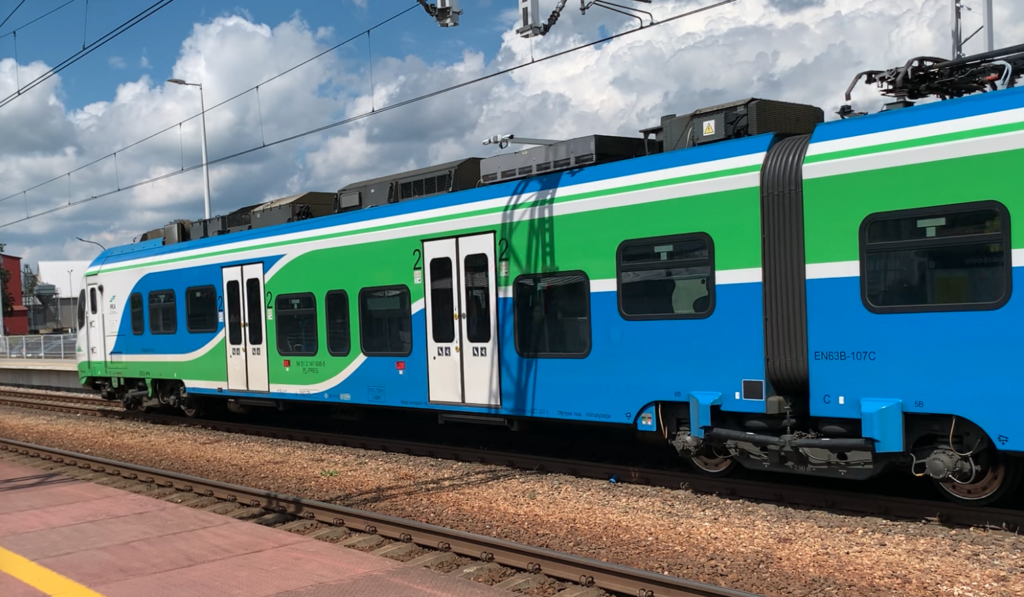
The EN63B-107 trainset consists of three carriages with the following EVN numbers: 94 51 2 141 605-7 (PL-PREG), 94 51 2 141 607-3 (PL-PREG), and 94 51 2 141 606-5 (PL-PREG). Since December 2020, the train has been operated by the Subcarpathian Division (Podkarpacki Zakład) in Rzeszów.
The main difference between the EN63A and EN63B trains is that they represent two distinct generations of the Newag Impuls vehicle family. Both are three-car trainsets. The first generation is designated as type 36WEa, while the second generation carries the designation 36WED / 36WEDB. Production of the first generation began in 2014, and the second generation entered production in 2020.
The EN63A Impuls features a distinctive, sharp-edged nose design with headlights positioned in the lower corners. It utilizes an older control desk and cab layout, designed in accordance with standards from the early 2010s. These trains are widely used across various regions of Poland, including the Lesser Poland (Małopolska), Lower Silesia, West Pomerania, and Opole regions. They can operate in multiple-unit configurations with other first-generation vehicles. Access to the driver’s cab is provided exclusively from within the train carriage. The EN63B Impuls, by contrast, features a modernized, more aerodynamic nose, a revised lighting configuration, and updated exterior body details. It includes a new, significantly more ergonomic driver’s control desk and offers improved visibility from the cab. These units are primarily operated in the Subcarpathian (Podkarpacie) region (in the livery of the Subcarpathian Agglomeration Railway / POLREGIO). They are equipped with an upgraded control system and cannot be coupled to form a single trainset with the EN63A series. Additionally, they feature dedicated external doors for direct access to the driver’s cab.
What do both generations have in common? Their carriage configuration and propulsion system. Both trains are three-car electric multiple units (EMUs) with nearly identical traction parameters and a maximum speed of 160 km/h. Regarding chassis design, both generations utilize the same powered bogies at the ends of the trainset, as well as shared Jacobs-type intermediate bogies between the cars, which allows for a lower floor height. In terms of passenger amenities, both the EN63A and EN63B feature air conditioning, a passenger information system, Wi-Fi, electrical outlets, and designated spaces for passengers with disabilities and cyclists (though the EN63B incorporates newer seats and interior finish details). Length: 59.30 m; width: 2.84 m; height: 4.21 m; weight: 119,500 kg; maximum speed: 160 km/h; electric motor power: 1,600 kW (4 x 400 kW).
Written by Karol Placha Hetman