Leńcze, 2026-11-12
Leńcze
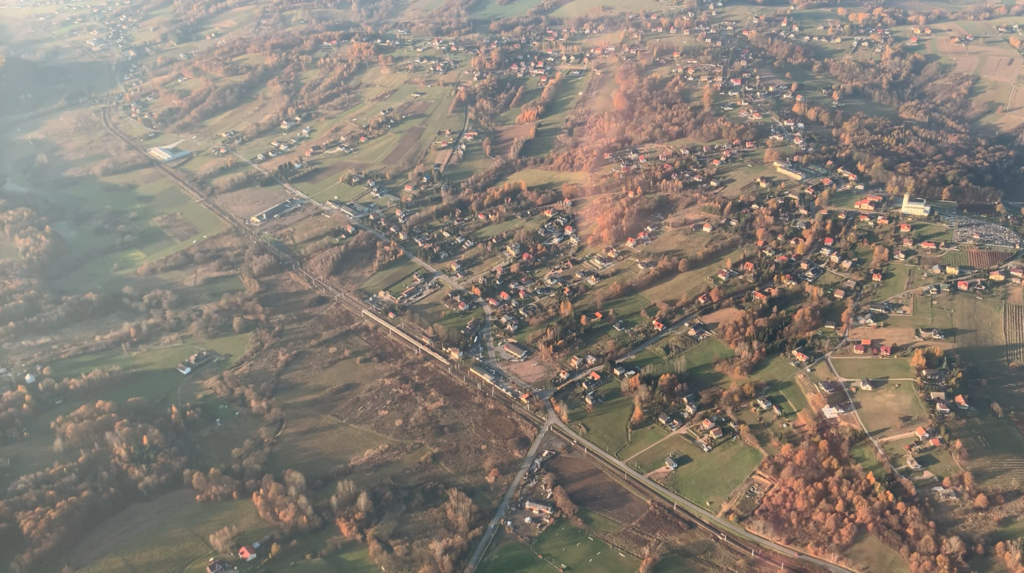
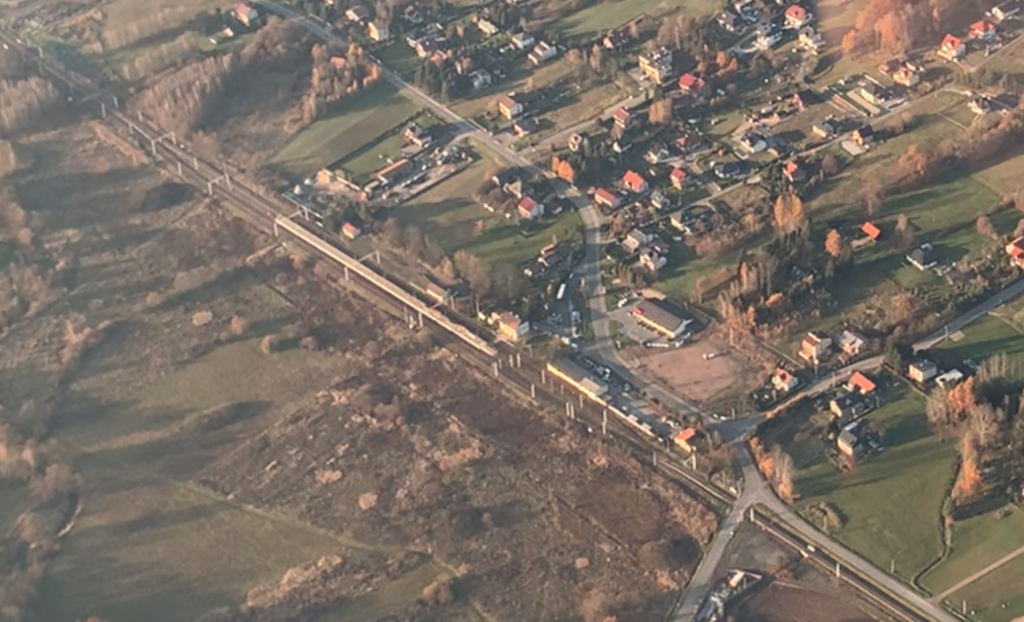
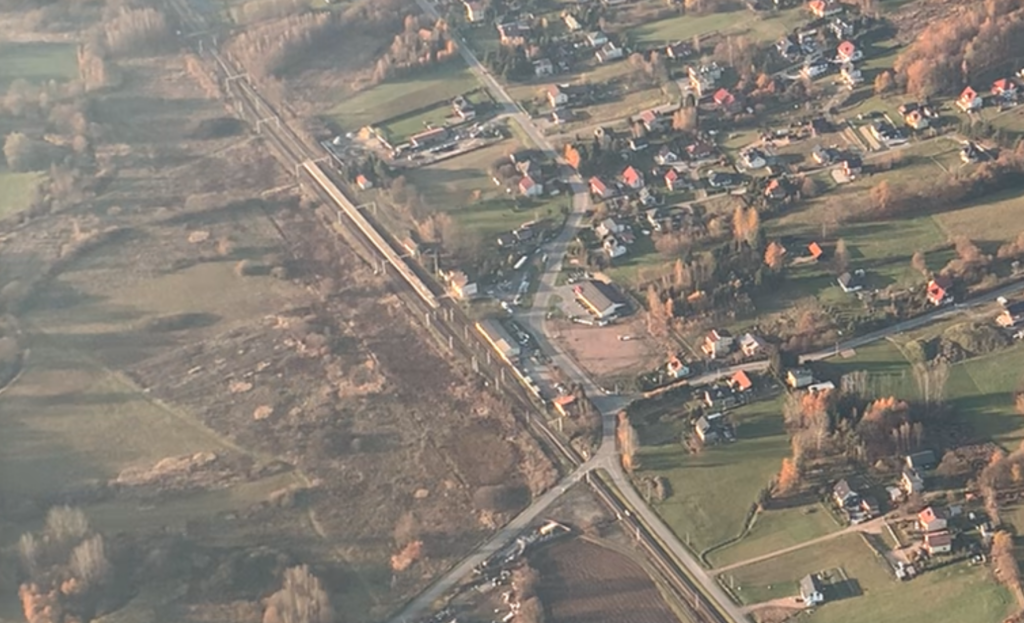
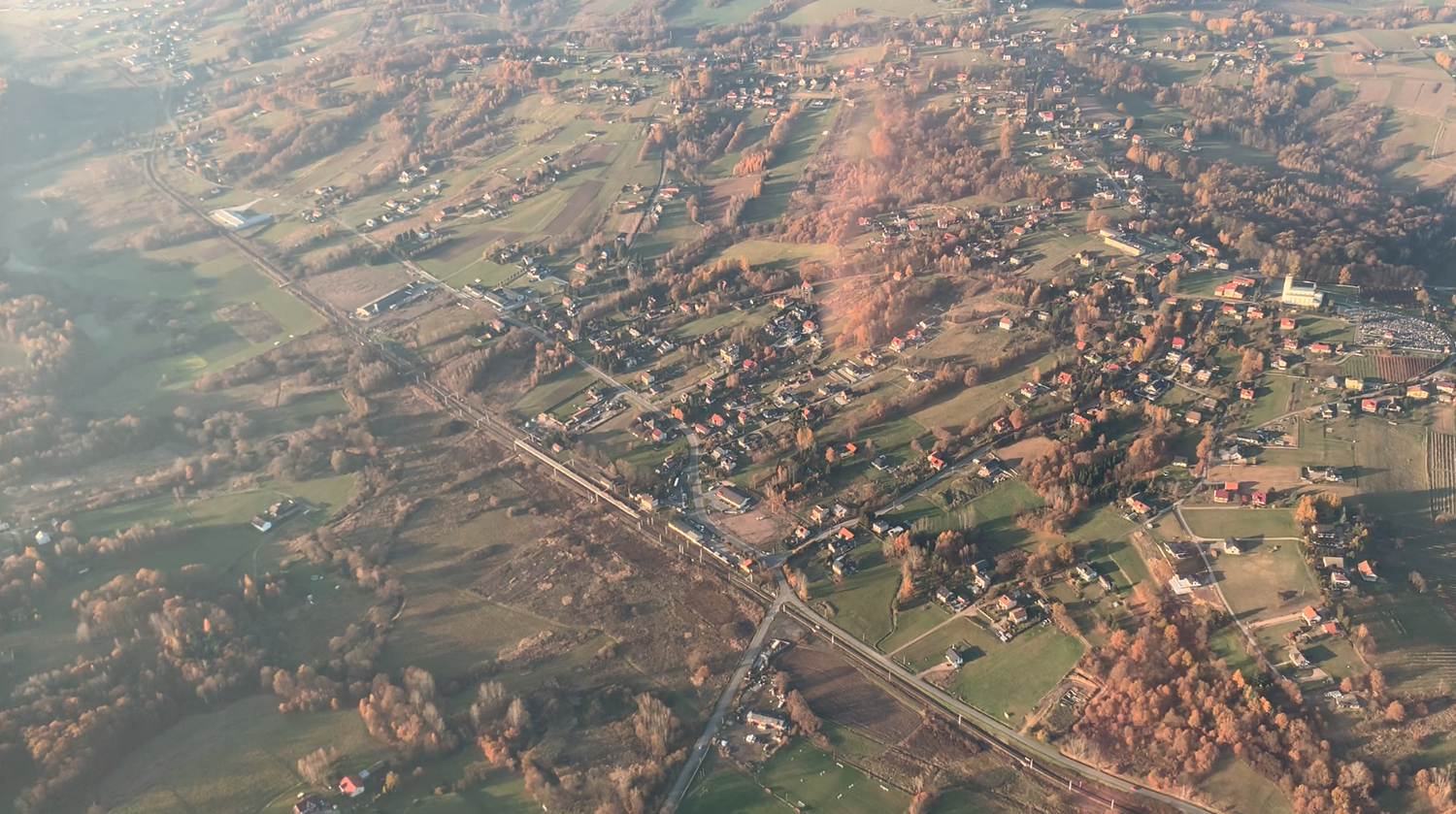
Leńcze is a picturesque village located in the Lesser Poland Voivodeship (Małopolskie Voivodeship), in Wadowice County, within the municipality of Kalwaria Zebrzydowska. It is a village with an agricultural and tourism-oriented character, set amidst a hilly landscape typical of the Wieliczka Foothills (Pogórze Wielickie). Its primary assets are its scenery and natural environment, characterized by an abundance of greenery. Individual single-family homes are scattered throughout the area, and the boundaries between neighboring localities are not clearly defined. Leńcze lies within the Wieliczka Foothills, in a scenic, undulating region. The village is notable for its attractive, panoramic location. From the surrounding hills, one can admire the valley of the Skawinka (Cedron) River, the area around Kalwaria Zebrzydowska, and the hills near Lanckorona; in good weather, the Beskid Mountains and the Tatra Mountains are also visible. A railway line runs through the village, providing connections to other towns in the region and across Poland.
Leńcze has a very long history, dating back to the 13th century. The oldest surviving written record of the village dates to May 15, 1287. In the past, the locality was divided into three parts: Leńcze Górne (Upper Leńcze), Leńcze Dolne (Lower Leńcze), and Leńcze Średnie (Middle Leńcze). Over time, parts of the original village emerged as separate localities or hamlets, including Podolany and Zarzyce. Nearby lie Kalwaria Zebrzydowska and Lanckorona. Local noble families and manorial estates played an important role in the history of Leńcze.
A significant landmark in the village of Leńcze is the Church of Saints Peter and Paul the Apostles. The parish boasts centuries-old traditions, and a parish cemetery is located nearby. The village also features historic wayside shrines, which were erected in the wake of plagues or fires. Additionally, there is a 19th-century manor house associated with the Brandys family, along with preserved remnants of its former outbuildings. The village is home to a primary school, several grocery and general stores, a few local businesses, and an equestrian center. Today, Leńcze is a village where traditional rural architecture is complemented by new single-family housing. According to the 2021 National Census, the village had a population of 1,593.
The Leńcze railway station is located in the village of Leńcze, within the Kalwaria Zebrzydowska municipality in Wadowice County. It serves as an important transport hub for the residents of Leńcze and the surrounding villages. The station was established during the era of the partitions, when the Lesser Poland region was under Austrian rule. It opened on December 22, 1884, as part of the railway line between Skawina and Kalwaria. At that time, the route was part of the Austro-Hungarian railway system, developed as part of the expansion of the rail network in Galicia. Today, it is designated as railway line No. 97, connecting Skawina and Żywiec. From its inception, the line has handled both freight and passenger traffic, with varying levels of intensity depending on the prevailing economic and political conditions.
The station features a single island platform with two faces. Initially, the platform was earthen; it was later paved, with sections surfaced using concrete sidewalk tiles. The platform was equipped with two shelters that provided protection from rain and snow; these featured corrugated metal roofs supported by a steel structure resting on two pillars. The platform was illuminated by street-style lamps. It underwent renovation in 2019, during which it was raised and fitted with a modern surface and standard railway infrastructure. There are now four glass-enclosed shelters equipped with benches. Other amenities include additional benches, lighting, waste bins, information boards, and display cases. The platform surface incorporates 2 m x 1 m grey, anti-slip edge paving slabs, complete with a yellow warning line and tactile studs.
The station includes both main tracks and auxiliary station tracks; currently, there are four through tracks. The station is equipped with light signals. The “Le” signal box was located within the station building. A restroom building was situated nearby, along with several warehouses. One warehouse building remains in use, as does the loading ramp. A second building, which once served as a fuel depot, now operates as a scrap metal collection point. In 2020, a container and a new structure—a railway control center—were installed between the station building and the restroom building. The station, like the railway line itself, is electrified using a 3 kV DC system.
Leńcze station never featured a water tower, railway workshops, a pedestrian underpass, or a footbridge over the tracks—though some sources suggest a water tower once existed (it is no longer standing). A DINO supermarket is located near the station. At the eastern end of the station, there is a level crossing for a local road, equipped with automatic barriers and light signals.
The station building is a typical Austrian-style structure: two stories high with a basement, featuring a half-hipped roof covered in roof tiles. There is a projecting section (risalit) on the side facing the station forecourt. The building’s facade is divided into three bays. Historically, it housed a ticket and luggage office, a waiting room, a signal box, telegraph and telephone facilities, and the station master’s living quarters. As of 2026, the building remains in good condition. The waiting room is still open, though the ticket office is no longer in operation. Notably, the waiting room and the entire building are heated by traditional tiled stoves.
Address: Leńcze 171A, 34-142 Leńcze. Geographic coordinates: 49.891N 19.730E. Elevation: 251 m. The station is situated at kilometer 14.638 of the Skawina–Żywiec railway line. According to PKP (Polish State Railways) classification, it is categorized as a local station. Currently, the station serves up to 200 passengers per day—a ridership level that has remained consistent since 2017. On November 12, 2026, 35 trains departed. It was possible to travel to the following stations: Bielsko-Biała Główna, Kraków Główny, Rabka Zaryte, Sucha Beskidzka, and Zakopane.
Written by Karol Placha Hetman