Puławy 2026-07-22
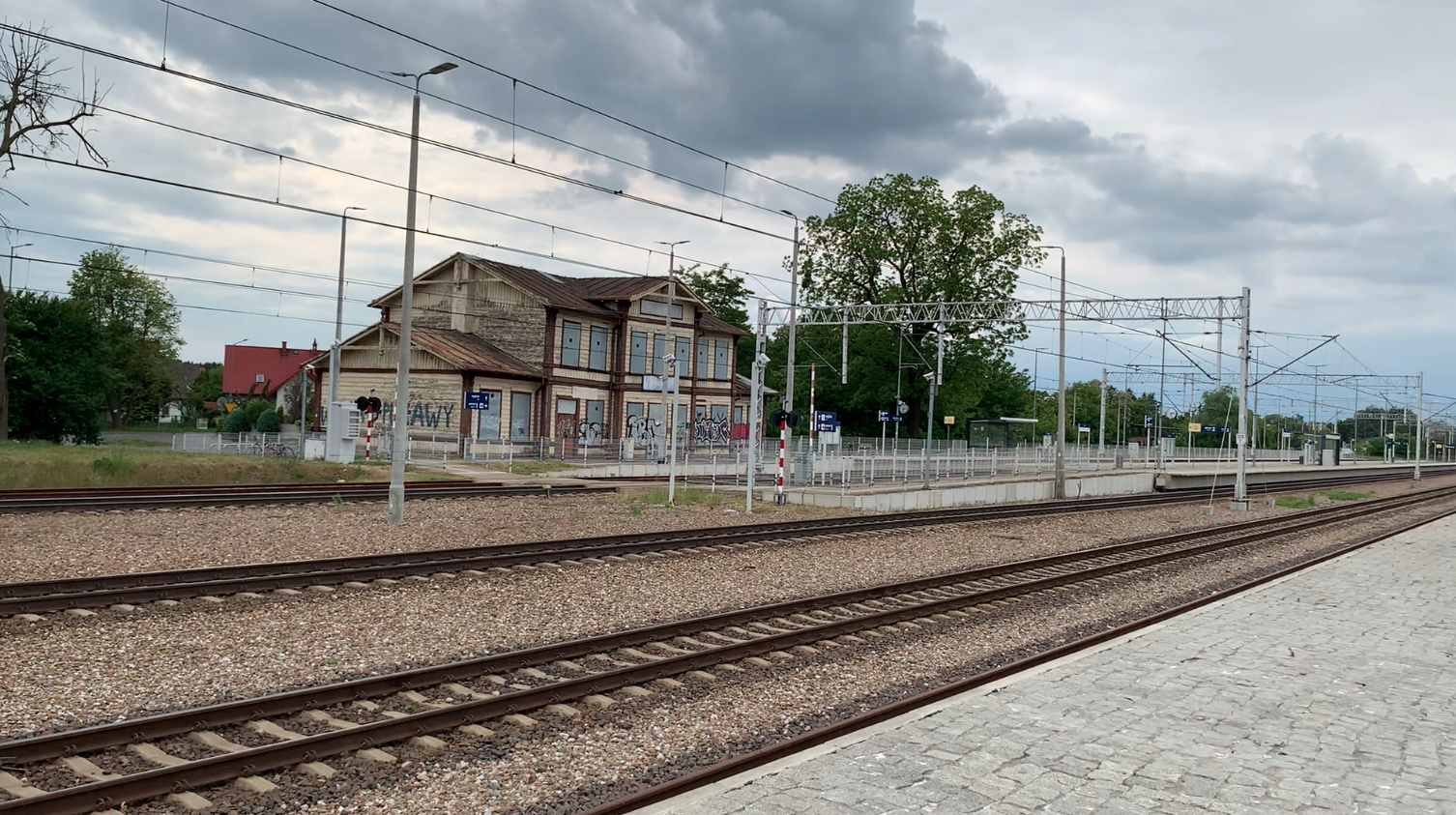
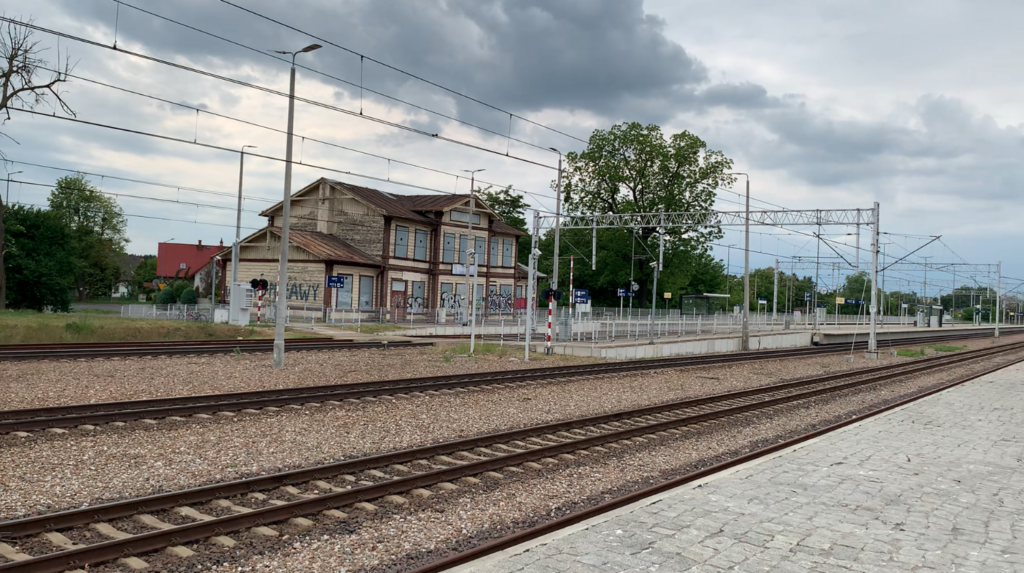
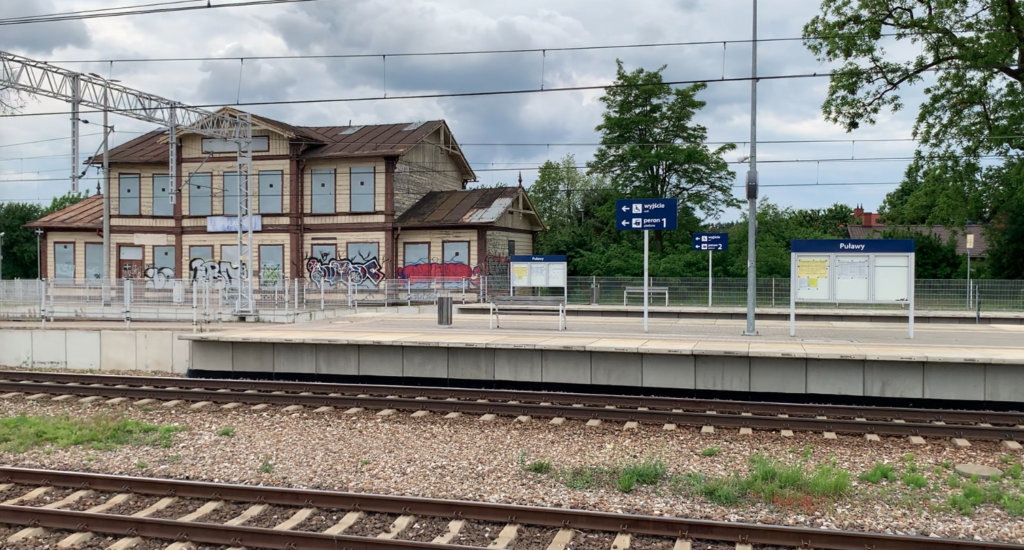
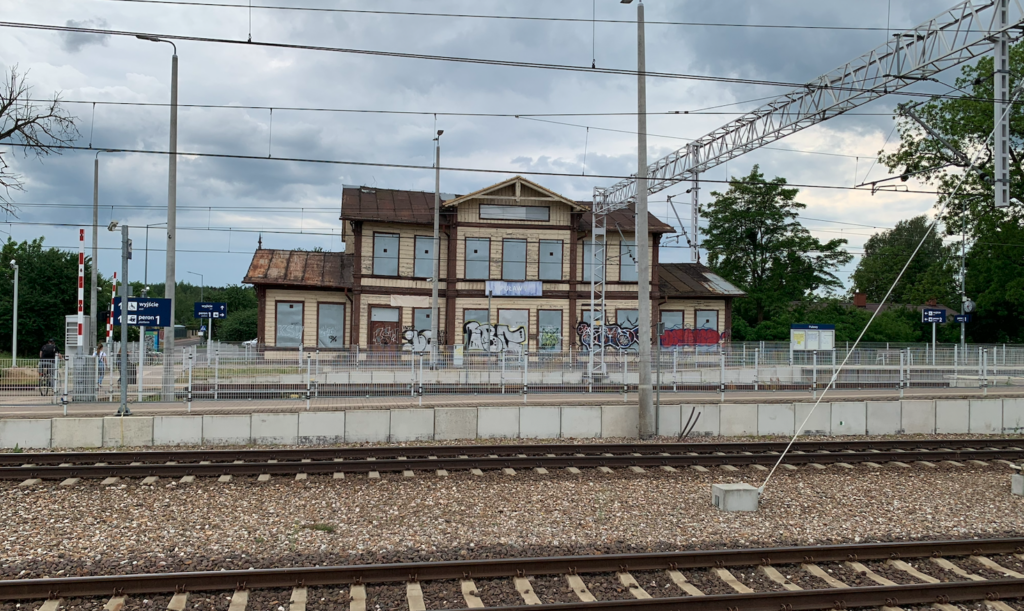
Puławy Railway Station.
The City of Puławy.
The city of Puławy was founded at the beginning of the 16th century, making it a relatively young city. The city is best known for its chemical factory, Zakłady Azotowe Puławy SA, and the beautiful Czartoryski Palace with its adjacent park. The city of Puławy is located in Puławy County, Lublin Voivodeship, Poland. The city lies in the western part of the Lublin Voivodeship, near the border of the Masovian Voivodeship. It has both city and commune status. City rights were granted in 1906, just 120 years ago. The city’s area is 50.49 square kilometers. In 2021, the city’s population was 45,267. In 2022, the city’s population was 44,504. Vehicle license plates are LPU.
Puławy is located in the western part of the Lublin Voivodeship, on the Vistula River, approximately 50 km west of Lublin and 15 km southeast of Kazimierz Dolny. The city’s elevation ranges from 115 m to 170 m. The physical and geographical region comprises the western part of the Nałęczów Plateau, bordering the Lesser Poland Vistula River Gorge. Puławy lies at the junction of two distinct landscapes: the broad Vistula River valley, with its sandy floodplains, and the loess Lublin Upland, with its rolling hills and gorges. This location gives the city a diverse terrain. The elevation difference between the Vistula riverbank and the city’s highest points exceeds 50 meters. The Vistula River has guided Puławy’s development for centuries. It served as an important trade route and, later, a transportation route. Today, a road bridge and a railway bridge on the No. 7 Warsaw-Lublin railway line are located near the city. Near Puławy are Kazimierz Dolny (approximately 15 km), Nałęczów (approximately 25 km), Janowiec on the other side of the Vistula, and Lublin (approximately 50 km). Puławy’s location on the Vistula River and on important road routes has led to its development as a research center (the Institute of Soil Science and Plant Cultivation and other agricultural institutes), a large industrial center (the Nitrogen Plant), and a major road and railway junction. Its location on the edge of the Małopolska Vistula Gorge also makes Puławy a good base for exploring Kazimierz Dolny, Janowiec, and the western part of the Lublin Upland. Puławy is the largest city on the Vistula River, between Kraków and Warsaw. The Kurówka River flows into the Vistula within the city limits.
Puławy is an industrial center, with chemical, construction, pharmaceutical, and food industries. It is a research center with six research institutes. It houses higher education, a tourist and cultural center, and is Poland’s first museum center, hosting the first museum in Poland, as well as the oldest museum in Central Europe. Within the city of Puławy lies a subzone of the Starachowice Special Economic Zone, covering an area of 106.7 hectares.
In the 16th century, Puławy was a noble village that had previously belonged to the Sandomierz Region, and by then to the Lublin Region. In 1622, the village and its farm were owned by the Opaliński family, and later by the Lubomirski family. Between 1676 and 1679, the Lubomirskis built their residence here. In 1731, following their marriage, the residence became the property of the Czartoryski family, which remained in their possession for over 100 years. This was a golden age for Puławy. Puławy became one of the centers of cultural and political life of the Polish nation. The town was nicknamed the Polish Athens. The period of the partitions of the Polish-Lithuanian Commonwealth brought devastation to Puławy. In exchange for helping Tadeusz Kościuszko, Muscovites robbed and destroyed the palace and neighboring villages. In 1796, Princess Izabela Czartoryska began rebuilding the castle. She not only rebuilt the palace but also erected a number of structures in the park in the English style. In 1801, the Duchess founded the first Polish museum in Poland, collecting national memorabilia. On March 2, 1831, the Battle of Puławy, victorious in the November Uprising, took place. When the November Uprising collapsed, the Czartoryski family was forced to emigrate, and the estate was taken over by the Muscovites. In 1842, the Muscovites renamed the town New Alexandria, in honor of one of their foolish tsars. The educational institutions and schools opened here fostered Polishness, angering the occupiers. After the January Uprising, all such centers were closed. In April 1905, an unsuccessful uprising against the Muscovites took place. In 1906, the town received city rights. During the Great World War, in 1915, the Muscovites abandoned Puławy. Their place was taken by Austrians, who left Poland in the autumn of 1918. The war wreaked great destruction on the city.
In August 1920, Marshal Józef Piłsudski received a Polish Army parade in Puławy. This was just before the “Miracle on the Vistula,” when the Polish Army was fighting the Muscovite invasion. After the war, industry began to develop in Puławy. The State Scientific Institute of Rural Economy was established on the site of the former Agricultural Institute. Education flourished, and more factories were founded.
On September 1, 1939, the Germans unleashed World War II. During the defensive war and occupation, one-third of the city’s population perished. In 1944, the Soviets entered Puławy, supporting the Home Army. The 8th Guards Army and the 2nd Tank Army of the Soviet Army entered Puławy. Subsequently, Home Army soldiers were arrested and murdered. On April 24, 1945, a group of the Freedom and Independence Association (Zrzeszenie Wolność i Niezawisłość), under the command of Marian Bernaciak, codename “Orlik,” destroyed the local District Public Security Office. In 1948, communists completely took over all state and public institutions in Poland. The same was true in Puławy.
The subsequent history of the city was dominated by the construction of the Nitrogen Plant. Construction began in 1960. A large influx of people found employment at the large plant. From a small town, Puławy became a large industrial city. The city’s boundaries were significantly expanded, incorporating nearby villages of the Gołąb district, covering an area of 976 hectares. Housing estates, shops, schools, kindergartens, and medical clinics were built. Puławy boasts numerous historical monuments, all located within the palace and park complex. The Czartoryski Palace is the seat of the Institute of Cultivation, Fertilization and Soil Science – National Research Institute, and houses a museum. The park covers an area of 30 hectares.
Research institutes flourished in the city, including the National Veterinary Institute – National Research Institute (PIWet-PIB), established in 1945. It conducts research in veterinary medicine, with particular emphasis on the diagnosis and prevention of infectious diseases, including zoonoses, as well as the hygiene and toxicology of food of animal origin. Since 2003, it has been a National Research Institute. Next comes the Center for Diagnostics and Combating Biological Threats of the Military Institute of Hygiene and Epidemiology. Next comes the Institute of New Chemical Syntheses, formerly the Fertilizer Institute, which was relocated from Tarnów in 1968. Its research supports the chemical industry and has also initiated activities in the processing of hops into hop extract. Next comes the Institute of Pomology and Floriculture in Skierniewice, as a branch of Apiculture in Puławy. Next comes the “TechPAN” Experimental Station of the Institute of Fundamental Technological Research of the Polish Academy of Sciences, which operated from 1973 to 1992. The next institution is the National Institute of Rural Culture and Heritage (NIKiDW), Puławy Branch, established by Regulation No. 76/2019 of the Minister of Agriculture and Rural Development of October 17, 2019. The nitrogen plant has also become a research center. In 2013, an agreement was signed between Maria Curie-Skłodowska University in Lublin and the Nitrogen Plant to establish a university unit and to organize a program in Technical Chemistry.
Part of the investment areas in Puławy, located within the Zakłady Azotowe “Puławy” S.A., have been incorporated into the Starachowice Special Economic Zone. The Puławy Nitrogen Plant was established in 1966. “Azoty” is the largest industrial plant located within the city limits and the largest producer of artificial fertilizers in Poland. In the 1970s, the plant employed nearly 10,000 workers. In 2019, the plant employed nearly 5,000 workers and remains the largest employer in the region. The Mostostal Puławy plant is also a significant employer.
Puławy Railway.
The city has train stops and stations: Puławy, Puławy Azoty, Puławy Chemia, and Puławy Miasto.
Railway line no. 82 Bąkowiec – Puławy Azoty.
In Puławy, there is a disused, unusual military railway line, No. 82. Railway line No. 82 connected the Bąkowiec station with the Puławy Azoty station. The line was built in the 1960s as an extension of the existing line to Wysokie Koło, which dates back to 1915. The construction of this railway line was related to ensuring a crossing of the Vistula River in the event of the destruction of the railway bridge over the Vistula in Dęblin.
Recall that in 1963, the Soviets, together with the Polish People’s Army, conducted exercises aimed at testing how quickly nuclear (atomic) weapons could be transported from bases in Moscow to Polish units that would use them in a war against Western Europe. As a result of these exercises, Moscow decided to build three nuclear weapons storage facilities. These were built as part of the “Vistula” program. It also turned out that at that time, the Polish railway system was already geared towards north-south transport. This was militarily unfavorable to Moscow’s interests.
The idea of building LK No. 82 and a railway crossing over the Vistula River originated at the Soviet headquarters in Moscow. In 1975, the 12th Railway Regiment from Tarnowskie Góry constructed railway access roads to both banks of the Vistula. A siding was built from Wysokie Koło station on the PKP Bąkowiec-Wysokie Koło line to the western bank of the Vistula. A siding was also built from the PKP Puławy Azoty station to the eastern bank of the Vistula. The Vistula River crossing was probably constructed twice. The first time was as part of Operation Wisła 75, and the second time under the codename Wisła 85. The numbers indicate the year in which the exercises were conducted. In 1975, a tank echelon led by a Ty2-1089 steam locomotive from the Dęblin Railway Station completed the crossing. In 1986, a tank train also passed through, but with an ST44 diesel locomotive at the head and a second ST44 locomotive at the rear. The crossing was preceded by a trial run of the train without tanks. According to various sources, such exercises also took place in 1989.
The pontoon bridge components were stored in several locations, including at the DW No. 801 Puławy-Dęblin railway-road crossing in Wólka Gołębska. The second storage location was the Gołąb station. The storage areas were fenced. In the 1990s, the bridge components were removed by the military.
The Bąkowiec-Puławy Azoty line was 24.635 km long. The rail gauge was 1435 mm. The line was single-track and non-electrified. Maximum speed was 20 km/h. The maximum speed on the pontoon bridge was 10 km/h. Near DW No. 801, the only passing loop on the line was built. Most of the line was built on an embankment. In addition to the pontoon bridge, three steel bridges were built over small rivers. Twelve level crossings were constructed. In the 1990s, the level crossings were removed, and the rail gaps were filled with asphalt. The tracks and railway infrastructure are slowly being dismantled. On October 14, 2000, scenes for the film “The Coming Spring” were filmed on this line.
The history of LK No. 82. The opening of service on the Bąkowiec – Wysokie Koło line took place on August 15, 1916, during the Great War. After 1918, passenger trains appeared in timetables. For 50 years, four pairs of trains ran on the route, and in the year of its closure, two pairs. The line also had a connection with the railway line to Kozienice, where six pairs of passenger trains ran. The passenger trains mainly transported workers to Dęblin (Remontowe Zakłady Wojskowe) and Pionki (Pronit Factory). There was no large PKS bus network yet. The first restrictions on passenger traffic occurred in 1969, as passengers transferred to PKS buses, which ran more frequently. Passenger service on LK No. 82 was suspended on February 28, 1970. Freight trains mainly transported agricultural produce and bricks from Sarnów. A narrow-gauge railway ran to the brickyard itself. Coal was transported to the Kozienice Power Plant from Silesia. However, after the opening of the Bogdanka coal mine in the Lublin region, Kozienice became the main recipient of hard coal, but this transport was completely bypassed by Line No. 82. Freight traffic on this line was suspended in 2000. The Wysokie Koło – Puławy Azoty section was built in 1974. The section was closed in 1990. Rebuilding Line No. 82 would be relatively expensive. Both bridge abutments were damaged by the Vistula River, particularly during the 1997 flood. From an economic perspective, this investment would be unprofitable. Building a permanent single-track bridge over the Vistula River currently (2026) costs 180-300 million złoty.
The Bąkowiec–Puławy Azoty railway line was intended to be a strategically important route providing an alternative crossing of the Vistula River, primarily for the needs of the Muscovite state. The situation changed significantly after the construction of the LHS railway line. Line No. 82 was considered a military line. This line is now effectively being phased out. The line was not even drawn on railway maps from 1988. The plots of land on which the line was located are owned entirely by PKP PLK. There are no plans to sell these lands. While the vast majority of permanently closed railway lines remain under the management of PKP SA, the aforementioned section is managed by another company, which is generally responsible for the active lines. According to PKP, the last trains ran along this section in 1985, which is 40 years after the line was effectively decommissioned. Currently, there are no plans to modernize or reactivate the line, according to PKP. During the crossing’s existence, military trains crossed it only a few times.
Route of LK No. 82. Bąkowiec station (0.00 km, elevation 120 m) other railway lines No. 26, 76. The line leaves Bąkowiec station towards the southwest and turns to the southeast. It crosses DW No. 738. Bąkowiec switch (1.32 km, elevation 118 m) LK No. 578. This is a connecting line from LK No. 26. This ensures grade-separated access to LK No. 82 from both directions of LK No. 26. Line No. 82 runs on the southwest side of DW No. 738. Then the line crosses DW No. 691. The line passes fish ponds. Then turns south. The line crosses DW No. 788. Sarnów near Wysokie Koło loading bay (6.34 km, elevation 124 m). Then the line turns east. The line intersects DW No. 788. The line crosses Marii Konopnickiej Street. Wysokie Koło interchange (11.08 km, elevation 125 m) LK No. 82a. The line in a curve bypasses the town of Wysokie Koło from the north and crosses DW No. 738. Mazowieckie – Lublin province border (14.07 km). The line crosses the Klikawka River and heads north. The line crosses DW No. 741 and runs along this road. Approximately 100 m before the Vistula floodplain, the line is no longer passable. Vistula River. After crossing the Vistula, the line crosses DW No. 801. Gołębiów (Wólka Głębska) passing point (19.59 km, elevation 123 m). The line in a nearly 180-degree curve changes direction from north to south. Puławy Azoty station (23.04 km, elevation 123 m) LK No. 7.
Railway pontoon bridge.
A railway pontoon bridge is a temporary crossing in which railway tracks are laid on floating pontoons or barges. The pontoons and barges are anchored firmly to the riverbed. Bridges of this type are built during military operations and are more difficult to maintain than wooden bridges. The pontoons or barges are arranged in a single line across the river. Steel or wooden crossbeams rest on the pontoons. Sleepers and rails are placed on the beams. The entire structure is connected and anchored with ropes and chains to prevent the crossing from being carried away by the river current. Railway bridges of this type were built for low speeds. Trains typically passed at 5–10 km/h, with a limited number of wagons and train weight. As a train passes, the bridge visibly sags and rocks in the water. The entire train passage is monitored. During World War II, both the German and Muscovite armies used such crossings across major rivers, including the Vistula, Oder, Dnieper, and Danube. Military rail crossings were also constructed in the Tarnobrzeg and Sandomierz areas between 1944 and 1945. However, sources indicate that these were wooden bridges on stilts, not pontoon bridges. The pontoon bridge near Puławy was likely the only pontoon bridge in Poland across the Vistula.
In 2006, the General Directorate for National Roads and Motorways (GDDKiA) began construction of a new road bridge over the Vistula River, which forms the S12 motorway and also serves as the Puławy bypass. On July 12, 2008, the John Paul II Bridge in Puławy opened. In 2018, the bypass was connected to the S17 motorway. In the city itself, there is a bridge over the Vistula River named after President Ignacy Mościcki, along national road no. 874. This bridge was built in 1934.
Puławy Railway Station.
Address: Puławy Railway Station, Kolejowa Street 1, 24-100 Puławy. Geographic coordinates: 51.410 N, 22.010 E. Elevation: 132 m. It is 126 km of railway line No. 7.
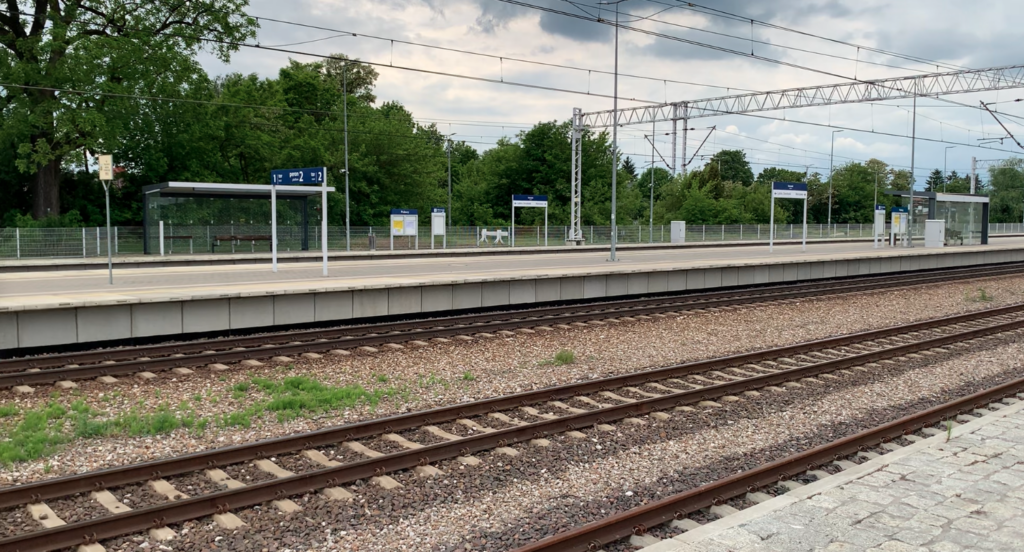
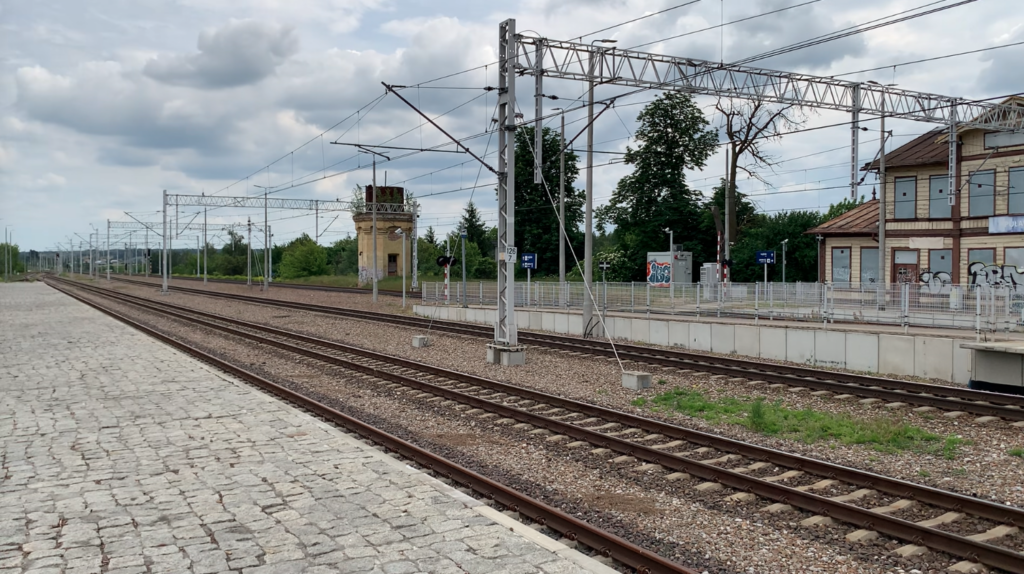
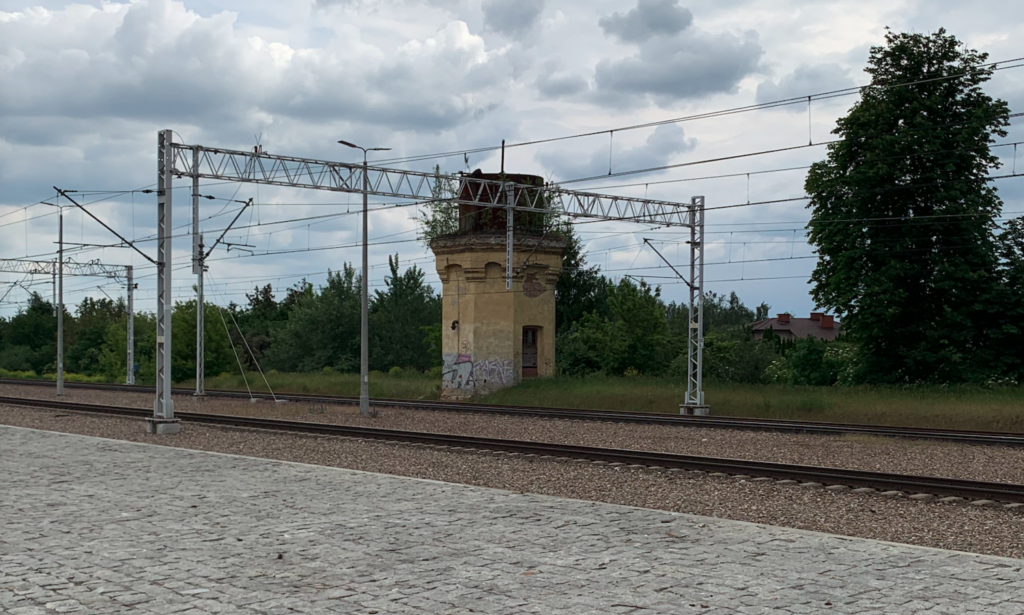
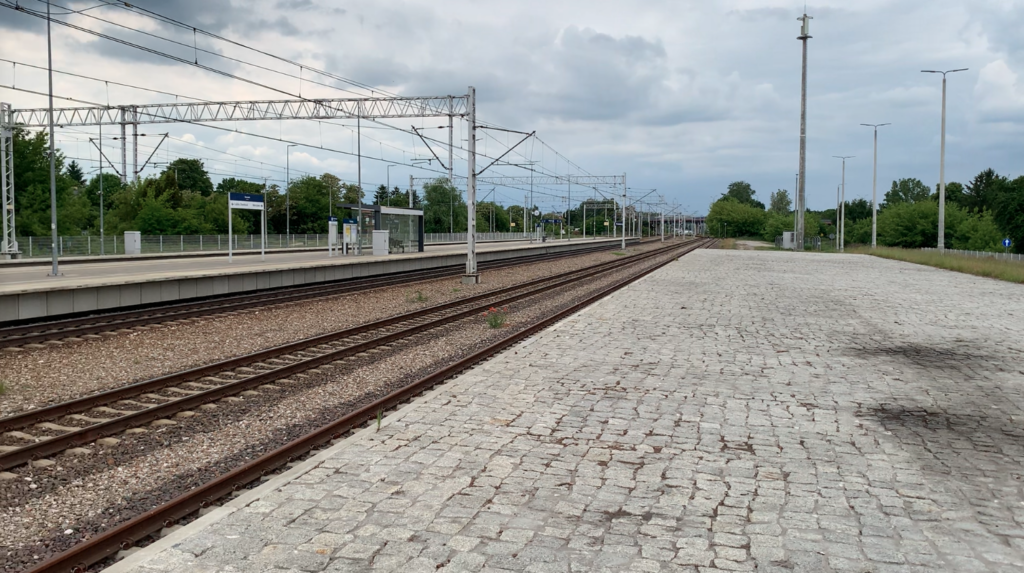
Puławy railway station was opened in 1877, on the railway line currently designated No. 7 Warszawa Wschodnia Osobowa – Dorohusk. The station is located at km 126 of the route. The station was located east of the city center, on the road leading towards Lublin. Currently, it is DW No. 851, Lubelska Street. A railway-road crossing was once located here, and now a road viaduct. The station has been within the city limits since November 17, 1933. On the western side is a housing estate of single-family homes, on the eastern side are agricultural fields, and on the northern side are industrial plants.
The station has two platforms and three platform edges. Only regional passenger trains stop here. Up to 50 passengers use the station daily. On July 21, 2026, 22 PolRegio trains departed from the station. Trains served Chełm, Dęblin, Lublin Główny, Łuków, Terespol, and Warszawa Zachodnia stations. All trains stop at Platform 2. Following the station’s recent renovation, the storage yard and loading ramp, both front and side, were renovated.
The station building was built between 1876 and 1877. It is currently decommissioned. At that time, the station was called New Alexandria. It is a typical station built by the Vistula Railway: simple, functional, and inexpensive to build. The station was constructed of wood and had features characteristic of late 19th-century Moscow railway architecture: a two-story building, built on a brick foundation, covered with a shallow gable roof, the facades were finished with horizontal formwork, and the windows were relatively numerous and large. Inside, it housed a ticket office, a waiting room, the stationmaster’s office, a telegraph room, a baggage storage room, and apartments for railway employees. Structurally, it was similar to the surviving wooden stations of the Vistula Railway, such as those at Gołąb and Minkowice. The wooden stations of the Vistula Railway were built according to several recurring designs, giving many of them a very similar appearance.
Long-distance trains stop at Puławy Miasto station. On July 10, 2026, 76 passenger trains stopped at this stop. It was possible to travel to the following stations: Bydgoszcz Główna, Chełm, Dęblin, Frankfurt/Oder, Gliwice, Gorzów Wielkopolski, Hrubieszów Miasto, Jagodin, Katowice, Kołobrzeg, Krakow Główny, Lublin Główny, Łuków, Piła Główna, Poznań Główny, Rava Ruskaia I, Rzeszów Główny, Szczecin Główny, Świnoujście, Terespol, Warsaw Zachodnia, Wroclaw Główny, Zielona Góra Główna.
Written by Karol Placha Hetman