Dębica 2026-05-07
Austria-Hungary.
The railway became one of the factors that united the culturally and economically diverse country of Austria-Hungary. According to the Imperial-Royal authorities, the railway, which was to be punctual, efficient, and reliable in transport, was to be a testament to the strength of the Habsburg monarchy. The railway was a crucial element of technical and economic development, even in the empire’s remotest regions. However, this empire was a colossus with feet of clay. Corruption was rampant, official positions were traded, the rich became increasingly wealthy, and the poor fell into abject poverty. The state simultaneously attempted to modernize and struggled with serious crises. However, reforms were only partially implemented. The Habsburgs managed to maintain a large state throughout the turbulent 19th century. However, the Habsburgs failed to keep pace with political and national changes. The state was bureaucratic. National conflicts continued, including the revolution of 1848. In 1867, the Austro-Hungarian Empire was established, granting greater autonomy to the Hungarians. The empire was multinational: Poles, Czechs, Hungarians, Croats, and others. National issues were not properly resolved. Ultimately, the Habsburgs lost the competition to the Prussians. The Habsburgs’ commitment to the Roman Catholic faith was a positive development. They actively supported the Counter-Reformation, which combated Protestantism and other sects. Religion was an important element of power, and the emperor was seen as a defender of Christianity, especially against the Ottoman Empire. But only for a time.
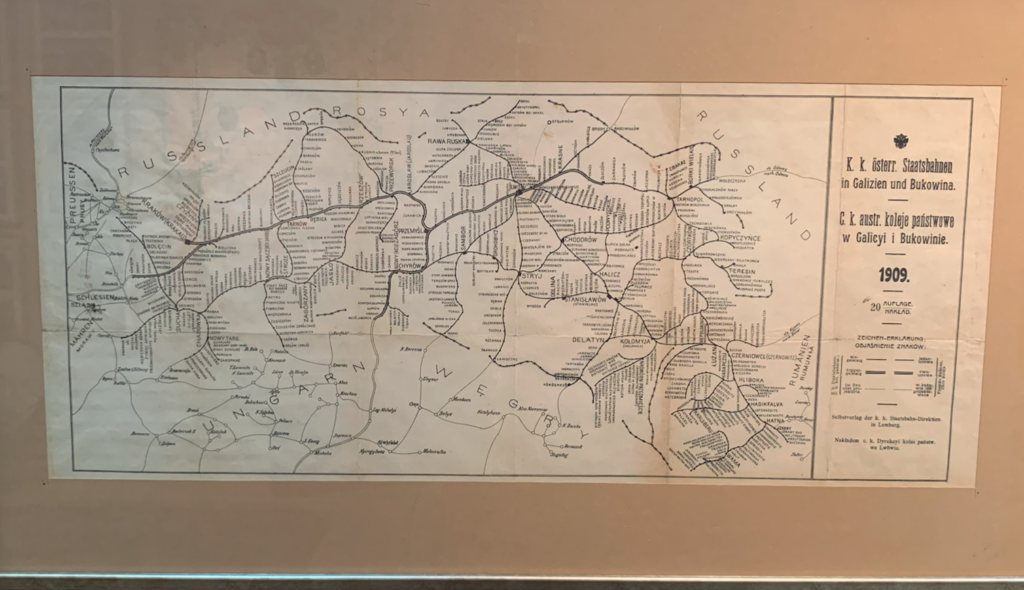
The Austrian government quickly became interested in railway construction. By 1848, a network of state-owned railways had been established, extending from Vienna, Buda, and Pest. The first railway in Lesser Poland was the Kraków-Upper Silesian Railway (Krakau-Oberschlesische Eisenbahn), built by Germans. In 1847, this railway connected Mysłowice, Szczakowa, and Kraków. In Mysłowice, it connected with the Prussian Upper Silesian Railway, and at Granica station (now Maczki), with the Warsaw-Vienna Railway. After the Spring of Nations (1848), when the balance of power in Europe remained unchanged, the young Emperor Franz Joseph I decided to expand the railway network in Galicia. He was guided by both military and economic goals.
Efforts to build a railway from Kraków via Dębica to Lviv began as early as 1837. Lack of funding hindered this.
In 1851, a set of regulations was issued that normalized railway traffic. After the Crimean War (1853–1856), during which Austria remained on the sidelines, it was decided to focus on developing the railway in Galicia, towards the Muscovite state. Relations between Austria and the Muscovite empire deteriorated. However, it quickly became clear that the state could not afford such large investments. Privatization became necessary. The Jewish Rothschild family (red shield), with Jakob Rothschild as its main shareholder, took over the railway. This family originated from Germanic origins. To conceal the fact, the “Staatsbahn” (Staatsisenbahn) part of the name was retained.
In 1850, preparations began for this privatization and subsequent investments. By 1853, the Bochnia–Dębica section had been built. The Kraków–Bochnia connection did not yet exist. Specifically; There were embankments and cuttings, but no tracks. In 1855, the single-track Kraków-Dębica line opened for service. Engineer Kajetan Kob designed this line. He also designed all the bridge crossings. The first train from Kraków to Dębica arrived on October 5, 1855. The line was 110.517 km long. The official opening of the line took place on February 20, 1856. Two trains ran daily. The journey from Dębica to Kraków took 4 hours 10 minutes, and to Vienna 19 hours 10 minutes.
Between 1858 and 1861, the Dębica-Przemyśl-Lviv section was built. In 1861, the line became the property of the Galizische Carl-Ludwig-Bahn (CLB Karol Ludwig Railway) private company. The agreement was signed on April 7, 1857. The company took over the entire railway infrastructure: tracks, stations, locomotive sheds, and rolling stock. Archduke Karl Ludwig was the brother of Emperor Franz Joseph. The company operated the Kraków-Lviv line from 1858 to 1892. On January 1, 1892, the line was nationalized again. However, in 1884, a state railway was re-established: the kkStB (Kaiserlich-Königlich Staatsbahnen). In Austria-Hungary, there were two systems: the kkStB—the Austrian section, and the MÁV—the Hungarian section. The kkStB—the Imperial-Royal State Railways of Austria. By the Great World War, the kkStB had taken over most of the railway lines and rolling stock.
The town of Dębica.
The town of Dębica currently has both city and commune status. It is located in the Podkarpackie Voivodeship, in Dębica County. It received city rights in 1372. These rights were revoked in 1785. They were re-granted in 1912. Before 1945, Dębica belonged to the Kraków Voivodeship, and after the end of World War II, it became part of the newly established Rzeszów Voivodeship. From 1975 to 1998, the town was administratively part of the Tarnów Voivodeship.
The town’s area is 33.83 square kilometers. In 2024, the population was 42,600. License plates: RDE, YDE. The town lies on the A4 motorway and national road no. 94. Dębica is located in southeastern Poland and has a very interesting location, at the junction of two distinct geographical regions. Dębica lies on the border of the geographical regions of Sandomierz Basin and the Carpathian Foothills. The city lies on the Wisłoka River. The northern part of the city is gently undulating, with elevations up to 200 meters. The south, however, is distinctly hilly, with elevations exceeding 300 meters.
The monument to Casimir the Great and Świętosław Gryfita standing in front of the Town Hall, near the Regional Museum, serves as a reminder of the city’s history.
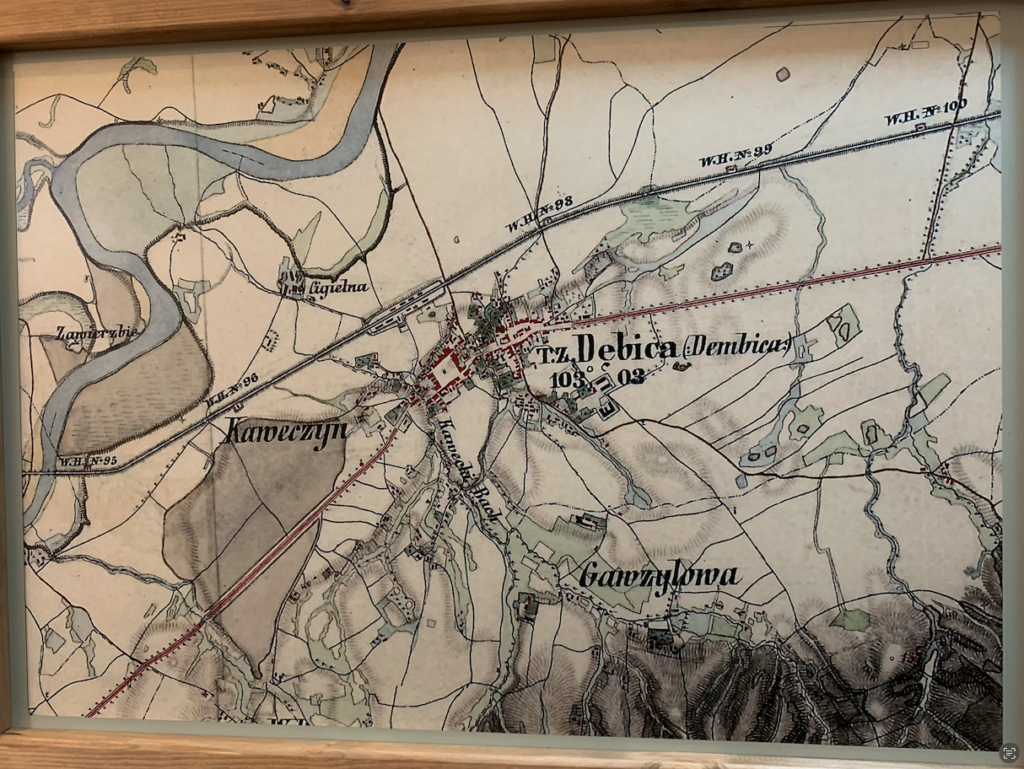
Dębica lies in historic Lesser Poland, in the former Sandomierz region. The exact date of the settlement’s founding is unknown. The first written mention appears in 1293. The settlement, named “Dambicha,” was granted by Duke Leszek the Black and passed into the hands of the House of Gryfit. In 1305, the settlement was destroyed by a Tatar invasion. The invaders also burned down the wooden church, which was rebuilt in 1318. In 1358, the town’s location charter was renewed under Środa law, and at the same time, it was granted the privilege of holding markets on Wednesdays. The town lay on the route from Kraków to Lviv and had to compete with the larger cities of the time, Pilzno and Ropczyce. The town was plagued by plagues, fires, and invasions by Hungarians and Tatars. The Tatars completely burned the town in 1502. To revitalize the town, the owners exempted its residents from all fees for 14 years and allowed free felling of trees. As a result, the town quickly recovered, and numerous new craftsmen arrived. There were tailors, furriers, blacksmiths, wheelwrights, and carpenters. By the end of the 16th century, Dębica had approximately 700 inhabitants. After the Swedish Deluge, only 30 houses and approximately 200 residents survived. After subsequent wars, the town became a town of poor farmers. After the First Partition, by decision of the Austrian authorities, Dębica was completely stripped of its town rights. Only the market square and a few wooden houses remained. In 1831, a cholera epidemic decimated the population. In 1846, riots broke out related to the Galician Slaughter, cleverly incited by the occupying powers. Ten people were murdered. Unexpectedly, the addition of a railway line brought a new life to the town. On October 5, 1855, the first train arrived from Kraków to Dębica. Other sources cite October 15, 1855. The railway line officially opened on February 25, 1856. The Kraków-Dębica railway line was extended to Rzeszów in 1858. In 1887, a line to Rozwadów, now a district of Stalowa Wola, via Mielec was also built, making Dębica an important railway junction. In 1887, permission was obtained from the Austrian government to build a railway line from Dębica to Jasło, but unfortunately, this line was never built. In 1888, a second track to Kraków was opened, and soon a second track to Rzeszów was built. In 1892, the railways belonging to the Charles Ludwig Privileged Galician Railway Company became state property, and the station in Dębica was subordinated to the Kraków district of the Imperial-Royal Austrian State Railways until 1918.
The railway made the Dębica area attractive for establishing new industrial plants. Trade flourished. Dębica became a center for the sale of cattle, pigs, and horses, which were transported by rail to Silesia. In 1858, another fire destroyed half of the town’s buildings. But this did not halt the development. By 1860, the town had approximately 40 companies, warehouses, and shops. There were two inns that provided accommodation and horse changes. There was a steam mill and approximately 15 craft workshops. There was a printing house, a post office with a telegraph, a police station, and the district courthouse. Gendarmes could also be seen on the streets. In 1900, a junior high school was founded, housed in a three-story building. By 1881, the town had 2,759 residents, 286 residential houses, and over 50 other buildings. The market square was now only brick houses, although it was not paved.
In 1918, the Republic of Poland was reborn, and Dębica became part of it. The war caused significant destruction. As a result, social relations collapsed and unemployment was extremely high. Fortunately, the town was rebuilding. A new Polish population arrived. In 1925, a slaughterhouse was established, today’s Dębica Meat Plant, which provided employment to 150 people. Brickyards and sawmills were established. Due to the construction of the Central Industrial Region, a synthetic rubber factory was located in Dębica, followed by the Dębica Chemical Plant and a sodium butadiene rubber plant. Later, Polifarb Dębica. And currently, Tikkurilla Beckers-Polifarb Dębica, a paint manufacturer with Swedish and Finnish capital. This is how Polish factories were sold under the rule of communists, Freemasons, and Volksdeutsche. A similar situation occurred with the car tire company, founded in 1939. Currently, the plant belongs to the Goodyear Group. It produces tires for passenger cars and trucks. The “Dębica” brand is still used and well-known, even though the company belongs to the global Goodyear group. In 1939, Dębica’s population exceeded 10,000.
In 1939, Germans, Muscovites, Slovaks, and Ukrainians invaded the Polish-Lithuanian Commonwealth in Eastern Lesser Poland. Dębica came under German occupation. Machinery and equipment from factories were taken westward. Terror began. People were deported to concentration camps and forced labor. Residents were forced to perform forced labor for the occupiers. Many residents were murdered in the Pustków camp or other camps. Approximately 15,000 people were murdered in the Pustków camp. In 1941, the Germans established a ghetto in the town. 12,000 Jews, all Polish citizens, were gathered there. Between July 1942 and April 1943, Polish Jews were deported to the Bełżec extermination camp and murdered there. Polish partisans operated in the district. Throughout the occupation, Poles hid entire Jewish families. Hundreds of Jews who survived the German occupation were hidden.
During World War II, the Dębica junction was rebuilt. The Dębica and Dębica Towarowa stations were expanded, a new Dębica Wschodnia branch station was built, with a connecting road bypassing Dębica from the east, and a new locomotive shed.
On August 23, 1944, the Soviets entered Dębica. Forty percent of the town was destroyed in the fighting. After the war, many soldiers of the Polish underground fell victim to repression by the communist authorities. In 1946, communists murdered more than a dozen WiN soldiers. On November 7, 1953, a false monument of gratitude to the Soviet liberators was unveiled in Victory Square. Former employees who survived the war returned to their plants and quickly resumed production. In 1975, the Igloopol Agricultural and Industrial Plant was established, but it went bankrupt in 1992.
Dębica is an important industrial center in southeastern Poland. It boasts a well-developed rubber and chemical industry. Among the companies operating here are Tire Company “Dębica” SA, Tikkurilla Beckers-Polifarb Dębica, the “Śnieżka” Paint and Varnish Factory, and food companies such as the Dębica Meat Plant, Iglomeat-Sokołów, Animex Południe, and Olimp Laboratories. The city is home to the renowned bicycle manufacturer Romet. The “PZL Dębica” S.A. Refrigeration Equipment Plant, operating since 1938, is also located here. Furthermore, the city is home to the Industrial Area of the “Euro-Park” Mielec Special Economic Zone. The trade and transport sector accounts for a significant part of the economy.
Electrification was also a significant milestone for the station. Officially, on May 25, 1963, the first electric train entered Dębica.
In 2011, modernization of LK No. 91 on the Kraków-Rzeszów section began. The scope of work also included a thorough reconstruction of the Dębica station. Modern rail traffic control equipment was installed. A new track layout and platforms were constructed. One platform, the single-edge one next to the station building, was removed. New underpasses were constructed. In 2016, the renovated station building opened, giving it a completely new look. The City Hall opened an information point there. On March 1, 2019, renovation work began on LK No. 25 on the Mielec-Dębica section. Following the completion of renovations on LK No. 25, freight train service resumed on September 1, 2020, on the Mielec-Kochanówka Pustków section, and on June 13, 2021, on the Kochanówka Pustków-Dębica section. On September 1, 2021, passenger train service resumed on the Dębica-Mielec railway line after a 12-year hiatus. In September 2024, PKP InterCity announced the return of long-distance passenger rail services on LK No. 25 on the Dębica-Mielec-Tarnobrzeg section, in the form of the InterCity “Hetman” train on the Kraków Główny-Hrubieszów Miasto route, which took place, as announced, on December 15, 2024.
Dębica Railway Station.
Address: Kolejowa Street 1, 39-200 Dębica. Geographic coordinates: 50.051N 21.411E, elevation 195 m.
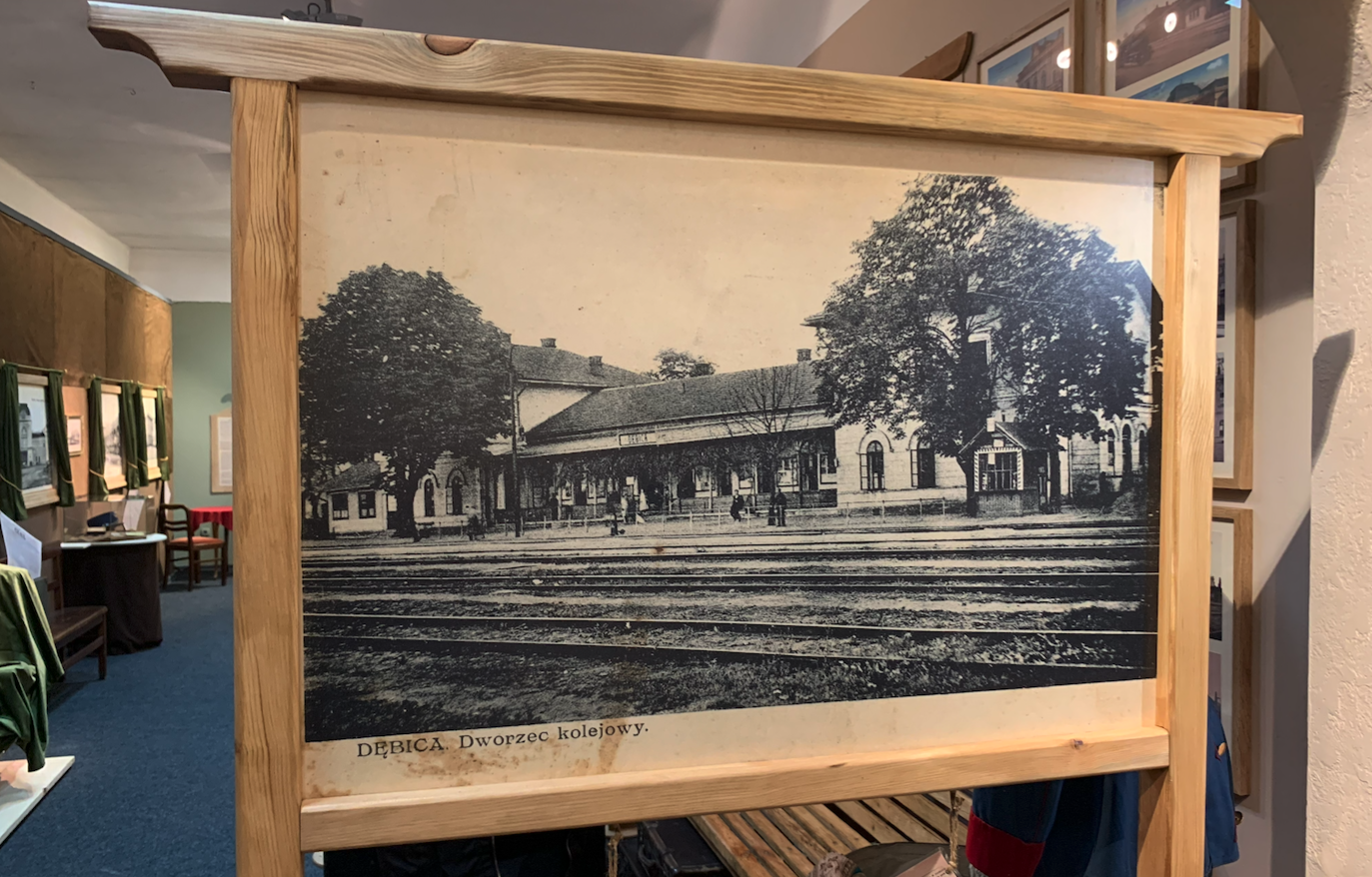
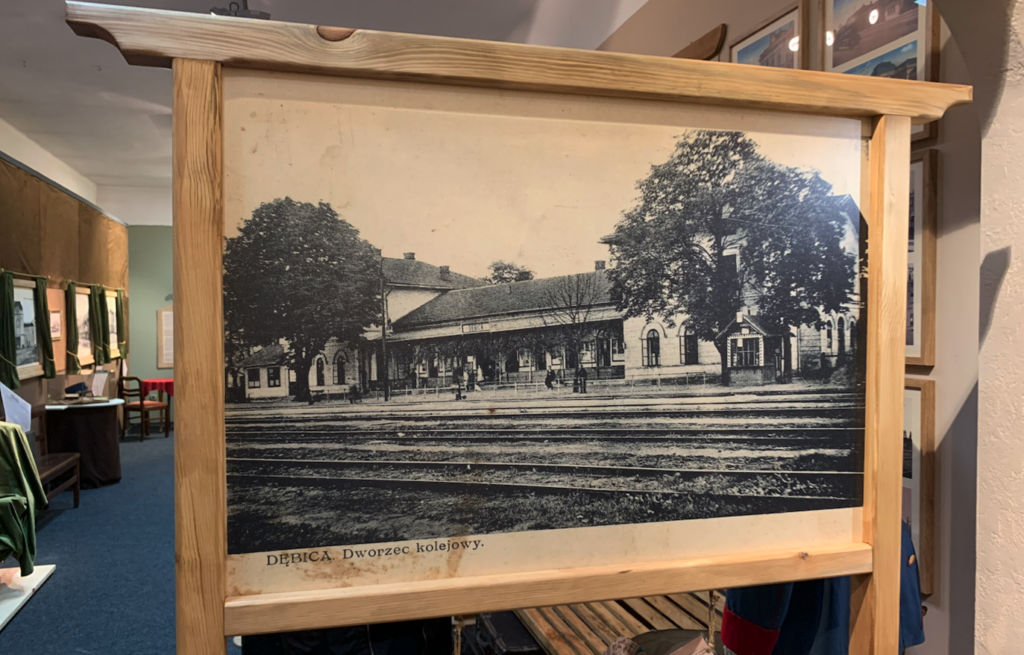
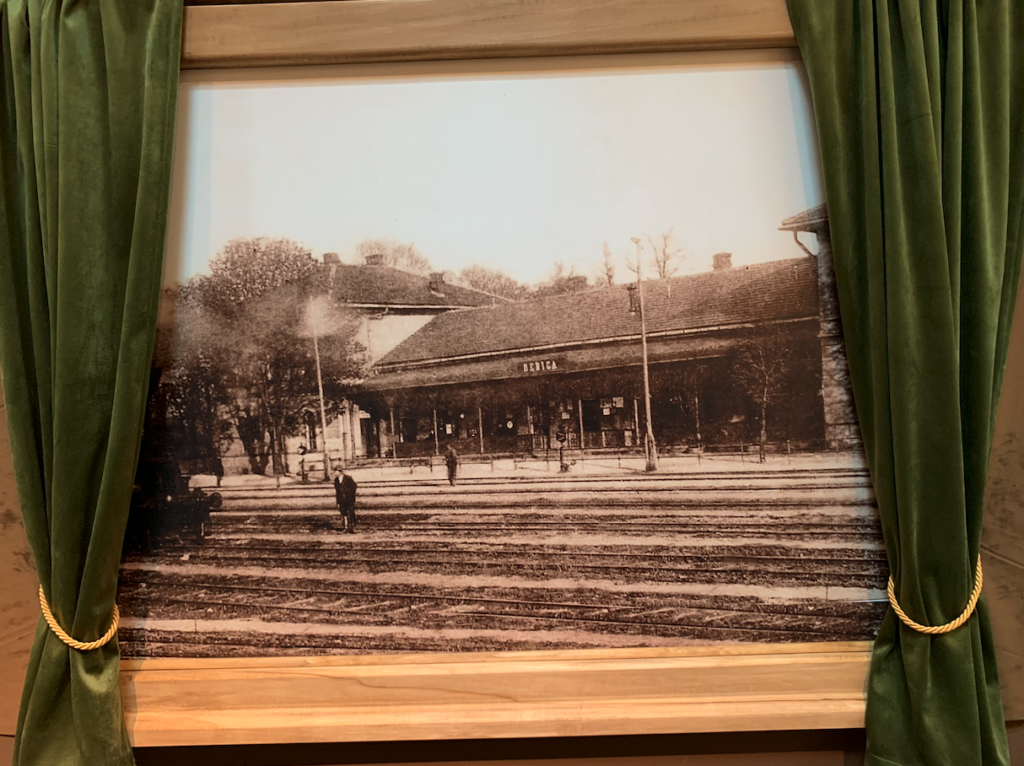
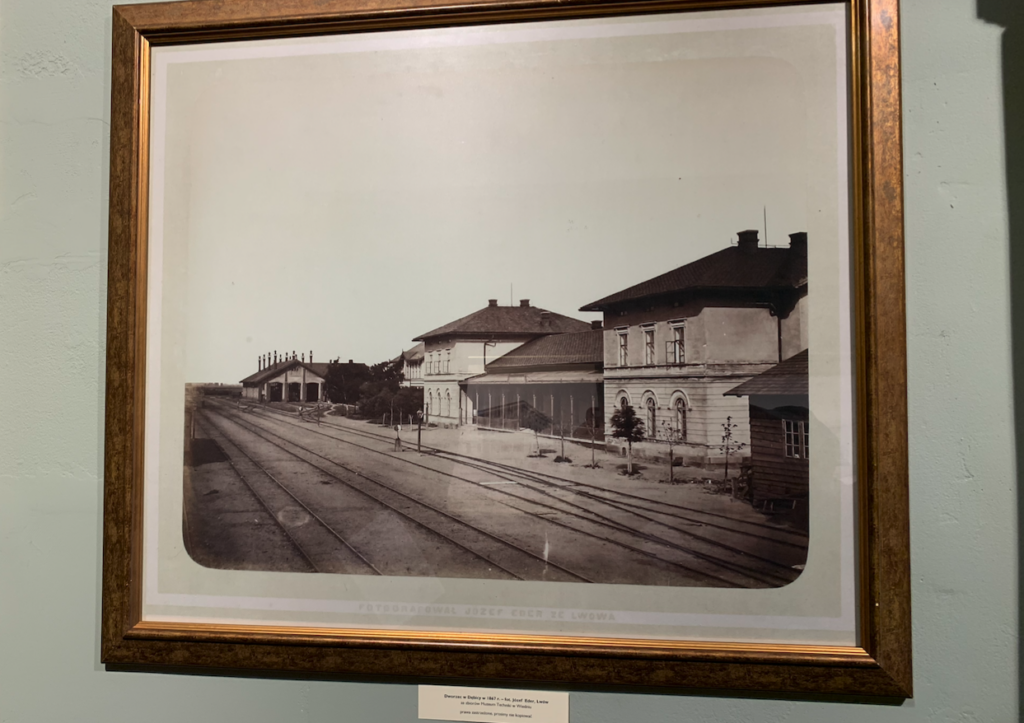
The station opened in 1856. Initially, the station buildings were wooden. A brick station was built between 1863 and 1867. In the following years, additional railway buildings were constructed. A rectangular brick water tower with two reservoirs was built in the northern part of the station level. It is a classic 19th-century tower, typical of Austrian railways. The building still stands today (2026).
Around 1965, the historic station was rebuilt, completely losing its original architectural appearance. In January 2015, a major renovation of the main station building began. The work primarily covered the interior. New restrooms, ticket offices, and service and catering areas were installed next to the waiting room. Windows, doors, internal installations, roofing, and ceilings in the building’s wings were also replaced. The building’s façade was renovated, constructed of sandstone slabs. The passage between the building and the pavilion housing the restrooms was covered. The entire area around the station was cleaned up. In December 2015, the passenger section reopened to the public.
The station building houses two ticket offices, a city ticket sales point, the Anatolia bar, the WAGABUNDA travel agency (offering flights, ferry tickets, bus tickets, vacations, summer camps, and summer camps), a newsstand, a shop, an express bar, an ice cream parlor, and a hairdressing salon. A digital clock is located above the main entrance, and an illuminated “PKP DWORZEC KOLEJOWY” (PKP RAILWAY STATION) sign is located on the roof. Signs reading “PKP DĘBICA” and an identical digital clock are located on the platform side.
The station square in front of the station has been rebuilt. A roundabout named after the Sybiraków (Sybiraks) has been constructed, along with a monument to the Sybiraków (Sybiraks). There are parking lots, including an undeveloped parking lot on undeveloped land. There are bus stops with a long shelter on Głowckiego Street and a taxi rank. A little further on Głowackiego Street is the Polish Post Office building. In front of the station are numerous kiosks and service points, as well as the Jubilatka department store.
The station currently serves as a regional station. Rail traffic is managed by the “Db” signal box, using computerized equipment. The track system of the passenger and freight stations is extensive. There are numerous railway sidings leading to the following plants: Tire Company Dębica, the former military siding of the 33rd Light Infantry Battalion of the Territorial Defence Forces (WOT), the Furniture Services Plant, the Municipal Heating Company, and the Dębica Industrial Park. In the eastern part of the city, there is the Dębica Wschodnia passenger stop, which has two single-edge platforms.
Dębica station has two island platforms and four platform edges. The old platforms were shifted eastward. They were low-rise, with a paving stone surface. They had canopies approximately 30 meters long. They were equipped with lighting, benches, and a sound system. The new platforms; Platforms 1 and 2 are identical. They have entrances at both ends. The platforms are 400 meters long, their length determined by the location of the platform entrances. Four bus shelters are located on each platform. The platform surface is paved with concrete blocks. The platform edges are lined with burgundy tiles, with yellow warning lines and buttons. There is lighting, an audio system, information boards, and displays with dynamic railway information.
On either side of the passenger station, Fabryczna Street (to the west) and Kościuszki Street (to the east) run beneath the tracks. In recent years, both viaducts have been renovated, providing roadways and sidewalks. Access to the Fabryczna Street tunnel has been provided by stairs and elevators from Platforms 1 and 2. The passenger tunnel has been renovated, connecting the station square, Platforms 1 and 2, and Słoneczna Street. On Słoneczna Street, next to the historic water tower, a new parking lot for 128 passenger cars, including 6 spaces for disabled persons, has been built. To the east, a bus stop area has been constructed. Previously, there was a level crossing along Fabryczna Street. A reinforced concrete pedestrian footbridge over the tracks was located nearby. The footbridge has been dismantled.
Two railway lines run through the station: LK No. 25 Łódź Kaliska – Dębica. Railway line No. 91 Kraków Główny – Medyka. Seven through tracks run through the passenger station.
Passenger traffic at Dębica station is steadily increasing, a phenomenon unique in Poland. Even the Chinese coronavirus pandemic did not halt its growth. In 2018, the station served 1,500 passengers per day. In 2022, the station served 2,300 passengers per day. In 2023, the station served 2,900 passengers per day. On May 5, 2026, 96 passenger trains departed from the station. The following stations were available: Bohumin, Frankfurt/Oder, Gdynia Główna, Horka, Hrubieszów Miasto, Kołobrzeg, Kraków Główny, Lublin Główny, Mielec, Padew, Poznań Główny, Przemyśl Główny, Rzeszów Główny, Sławno, Stalowa Wola-Rozwadów, Szczecin Główny, Świnoujście, Tarnów, Wrocław Główny, Zebrzydowice, and Zielona Góra Główna.
Next to the locomotive shed was the Px48-1921 technical monument.
Written by Karol Placha Hetman