Kępno 2026-04-21
The City of Kępno.
Kępno is a small town in the southern part of the Greater Poland Voivodeship, close to the border with Lower Silesia and the Opole region. The city is the southernmost city in Greater Poland. Poznań is 161 km away, Warsaw 260 km away, and Wrocław 76 km away. The S8 and S11 highways run nearby. The city has a population of approximately 13,800. It serves as the capital of Kępno County and is known as a furniture hub for the region. Several companies produce upholstered furniture, kitchen furniture, tableware, and interior design elements here. Worth seeing in the city are the market square, the town hall, historic churches, and the small-town architecture. The classic market square with its representative town hall is a beautiful sight. The Kępno region is gently rolling, typical of southern Greater Poland. There are no mountains here, but the terrain is more varied than in central Greater Poland. Kępno lies on the Wieruszów Upland, on the small rivers Samica and Niesób, in the western part of the Wieluń Region. Local residents lead a relaxed lifestyle. Living costs are lower than in larger Polish cities. Well-developed industry, trade, and services make it easy to find good jobs. Kępno operates under the status of a rural-urban commune.
During the Middle Ages, from the 13th to the 15th centuries, a fortified settlement existed between the marshy floodplains of the Samica and Niesób rivers, a remnant of which remains the so-called Mound, located northwest of the current town center. Kępno served as a princely stronghold, later becoming a royal estate, only to become a border guard post after passing into private hands.
The settlement received its charter before 1283; documents were lost or burned in a fire. Before 1500, the town was stripped of its city rights. Its city rights were renewed in 1661. The town’s area is 7.79 km². In 2021, the town’s population was 13,857. Vehicle license plates are PKE. The settlement was always called Kępno. Because Germans were unable to pronounce the word “Kępno,” they used the word Kempen. In the early Middle Ages, Kępno belonged to Silesia. The settlement belonged to the Wrocław Diocese. This relationship lasted until 1821. During the period of the Polish-Lithuanian Commonwealth’s fragmentation, Kępno was ruled by the Dukes of Greater Poland. Because Silesia was a melting pot and there were numerous family and state conflicts, the town was periodically ruled by the Duchy of Henry of Silesia. Subsequently, Kępno fell under the rule and part of the Wieluń Land, ruled by Władysław Opolczyk. During the reigns of Władysław the Elbow-high and Casimir the Great, Kępno was a royal town. However, by a document dated March 3, 1365, Casimir the Great transferred Kępno to private ownership. Ultimately, the town became part of the Crown during the reign of Władysław Jagiełło. The inhabitants of Kępno were Polish and felt Polish. The settlers assimilated easily and adopted the Polish language as their own. Kępno was initially a royal town, but became private property in 1365, when King Casimir the Great transferred it to the Starost General of Greater Poland, Wierzbięta of Paniwice. Neighboring villages were incorporated into the town, allowing it to exist independently.
Over the following years, Kępno changed hands; Jerzy Zaręba of Kalinowa, Spytek of Tarnów, and then his son Stanisław, who subsequently relinquished Kępno to Jan Tomicki. In 1602, his descendant, Łukasz Tomicki, sold the estate to Jan of Rudniki. The town gradually fell into crisis due to numerous border disputes, local wars, and the growing importance of other towns. The Reformation had a significant impact, bringing discontent among the residents. In the 17th century, the town experienced renewed development and was once again granted town rights. Along with these, the town also received a coat of arms.
Until 1793, Kępno was located in the Sieradz Voivodeship. As a result of the Second Partition of Poland, it found itself under German rule. The Germans incorporated Kępno into South Prussia, part of the Kalisz Department. As a result of the Napoleonic Wars, from 1807 to 1815, the town belonged to the Duchy of Warsaw, only to return to German rule. The Germans themselves have struggled, and still do, with who they are? Prussians (whom they completely destroyed) or Germans (although they have nothing in common with Germans), or perhaps they should continue to call themselves Nazis. Prussian-Germanic rule (in 1871, they cleverly called themselves Germans) brought a policy of harsh Germanization, coupled with hatred. It is not true that Kępno was multinational. The churches of various denominations do not attest to this. Instead, they testify to the chaos that came from the broader West. Besides Poles, Kępno had a small Jewish population. Remember that for a nation to exist, four axioms must prevail: the same language, the same history, the same culture, and the same religion. The absence of any of these elements results in a functioning society.
In the 19th century, economic development was not as dynamic as it is portrayed. Several public buildings were constructed to facilitate the process of Germanization. By 1910, 85% of the population spoke Polish.
After the Great World War, unleashed by the Germans, Kępno returned to Poland on January 17, 1920, under the terms of the Treaty of Versailles. But let’s be honest. Kępno’s return to the Motherland wasn’t so straightforward. The residents themselves, with their tireless and unwavering stance, certainly decided on its national identity. The Poles knew that organizing a plebiscite would be a failure. The town was garrisoned by a Grenzschutz unit of over 500 men and Selbstschutz volunteers. At any moment, aid could arrive by rail from Namysłów, Oleśnica, Wrocław, or Kluczbork. In such a situation, one must admire the Polish commanders who prepared plans for the offensive on Kępno. Units of Greater Poland insurgents moved towards Kępno. The Germans launched their counterattack from Kępno. The Poles were forced to retreat to Ostrzeszów. The insurgents were reinforced by companies from Pleszew, Skalmierzyce, and Mikstat, and on January 15, 1919, at 7:00 a.m., the attack was renewed. The village of Ligota was captured by the Poles. Eight heavy machine guns, a significant amount of ammunition, and 18 horses and oxen were captured, along with 45 soldiers and an officer. All were sent to the prisoner-of-war camp in Szczypiorno. Three insurgents were killed and nine wounded. Smaller skirmishes continued until February 19, 1919. The initiative now rested with the insurgents. The Polish offensive slowly but steadily yielded territorial gains. By February 3, 1919, the front had shifted to the Kobyla Góra–Kochłowy–Torzeniec line. By February 13, 1919, the insurgents were 5 km from Kępno. Further villages were captured to the east and west. The villages of Kliny and Korzeń were captured. An attack on Kępno was planned for the night of February 17–18, 1919. These plans were betrayed to the Germans, and the attack was abandoned because it would lack the element of surprise. Further offensive plans were ended by the ceasefire. However, information about the ceasefire reached the combatants late.
Meanwhile, behind the scenes, organizational efforts intensified and plans for the takeover of Kępno were being developed. Piotr Psikus was elected mayor of Kępno by acclamation, delivering a patriotic speech. The Poles mobilized rapidly, and the Germans were forced to resign, even though there were still 500 German soldiers in the city. They were about to engage in fighting, and the Poles sensed their opportunity, which was seized. Germanic emblems were removed from buildings and offices. White-and-red flags and white eagles were displayed. Peasant councils, or social self-governments, were organized. The inscription “People’s Bank” was placed on the bank building. The Germanic soldiers were stripped of their weapons, given food for the journey, certificates of free passage to the West, and directed to the railway station. Within a week, all Germanic inscriptions disappeared from all buildings. Returning Poles, soldiers forcibly conscripted into the occupying armies, were solemnly welcomed. The last Germans left Kępno and Ostrzeszów on January 17, 1920.
Less than 20 years later, the Germans began World War II. Their army entered Kępno on September 1, 1939. Around 12:45 PM, the first military units were already in the Market Square. A massive extermination of the Polish population began. The Volksdeutsche (Volksdeutsche) revealed themselves. The Polish population was sent to the General Government, forced labor camps, or concentration camps. A Germanic settlement operation, codenamed “Heim ins Reich,” began. Polish property was plundered. The occupiers stole, among other things, church bells, which were sent to steel mills and then to armaments factories.
The Muscovite army approached Kępno at the end of January 1945. The Germans offered little resistance. They hoped that after the war, the 1938 border would be restored. On January 21, 1945, the city was occupied by the Muscovites. The communist occupation began, which, even after 1989, continued unabated. Fortunately, Kępno escaped significant destruction. New housing estates, schools, health centers, retail outlets, and cultural centers were built around the Old Town. From 1975 to 1998, the city administratively belonged to the Kalisz Voivodeship. Kępno County was restored on January 1, 1999.
Kępno is the seat of local government: the Kępno Commune (Kępno Town and Commune Office) and the District Office. Numerous local institutions operate here: the District Court, the District Labor Office, the Social Insurance Institution, the Agricultural Social Insurance Fund, the District Sanitary and Epidemiological Station, the Tax Office, the Independent Public Healthcare Facility in Kępno, the Kępno Waterworks, and the Energy Company. The dominant sectors of the Kępno commune’s economy are trade, services, motor vehicle repair, industrial processing, construction, and agriculture. The furniture industry plays a particularly important role in the region, with approximately 600 companies operating in this sector.
Kępno Railway.
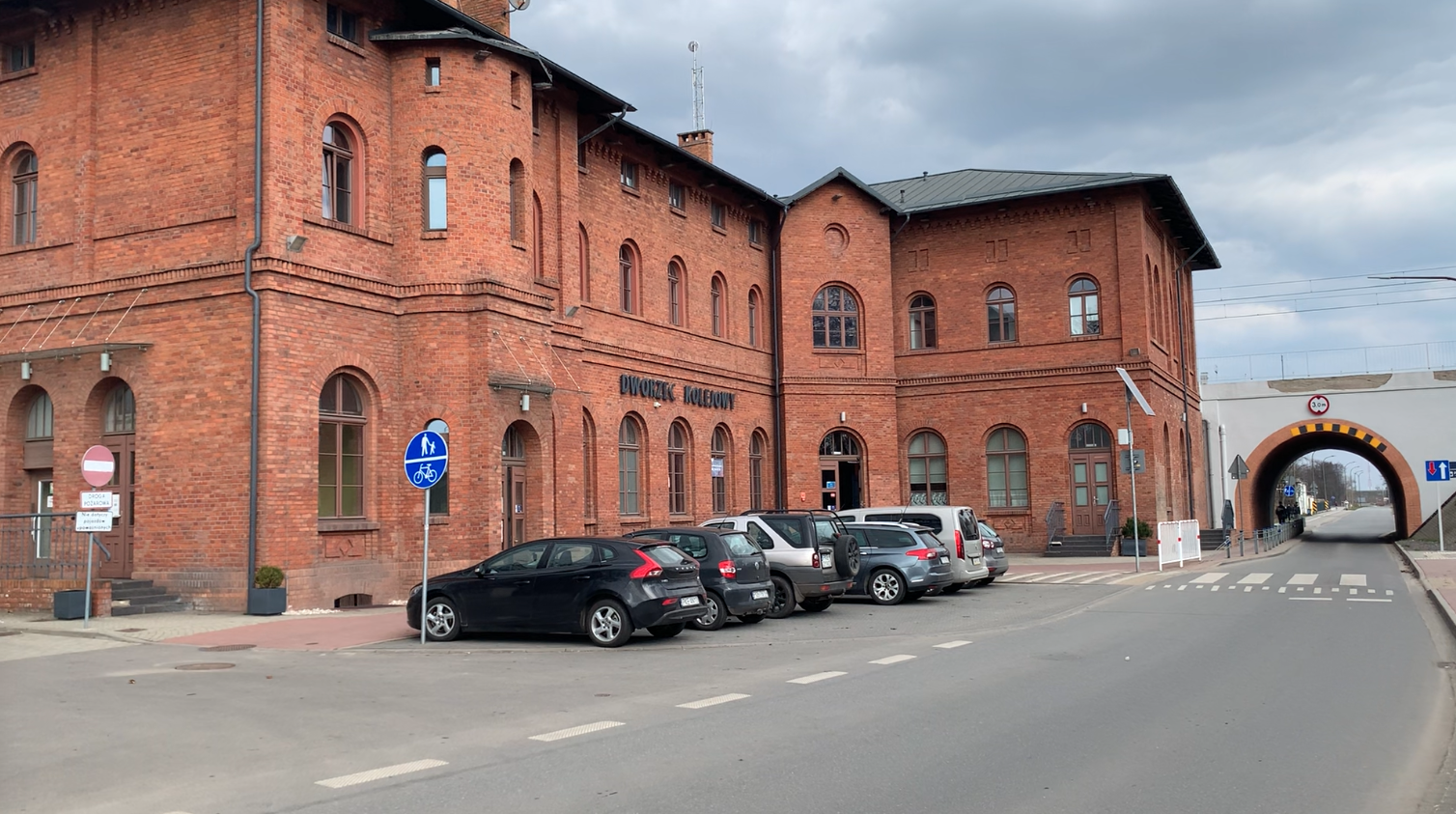
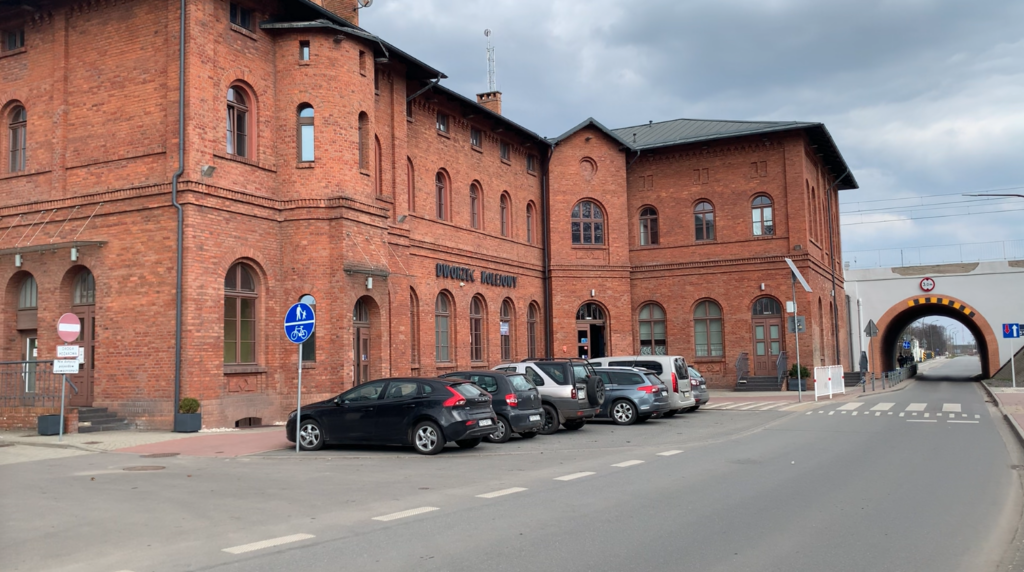
Address: Dworcowa Street 11, 63-600 Kępno, Poland. Geographic coordinates: 51.291N 18.000E. Kępno is a railway junction station in Kępno, in the Greater Poland Voivodeship, Poland. According to the Polish State Railways (PKP), it is classified as a local station. The station is one of two railway stations in Poland with two levels. One is Kępno, the other is Kostrzyn nad Odrą. Both stations were built during the partition period, and both stations were under German rule. Kępno railway station is located north of the city center, 1,900 meters away.
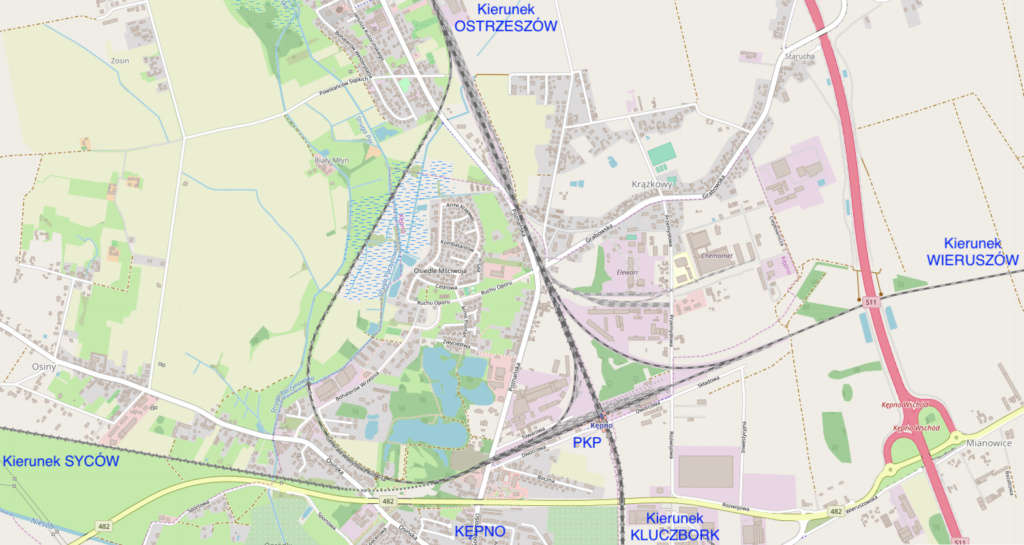
Kępno is a railway junction, where railway lines No. 272 Poznań Główny – Kępno – Kluczbork, No. 181 Herby Nowe – Oleśnica, and No. 307 Kępno – Namysłów (temporarily closed) intersect. The city has a functioning railway station, as well as the closed Kępno Zachodnie station, located on LK No. 307.
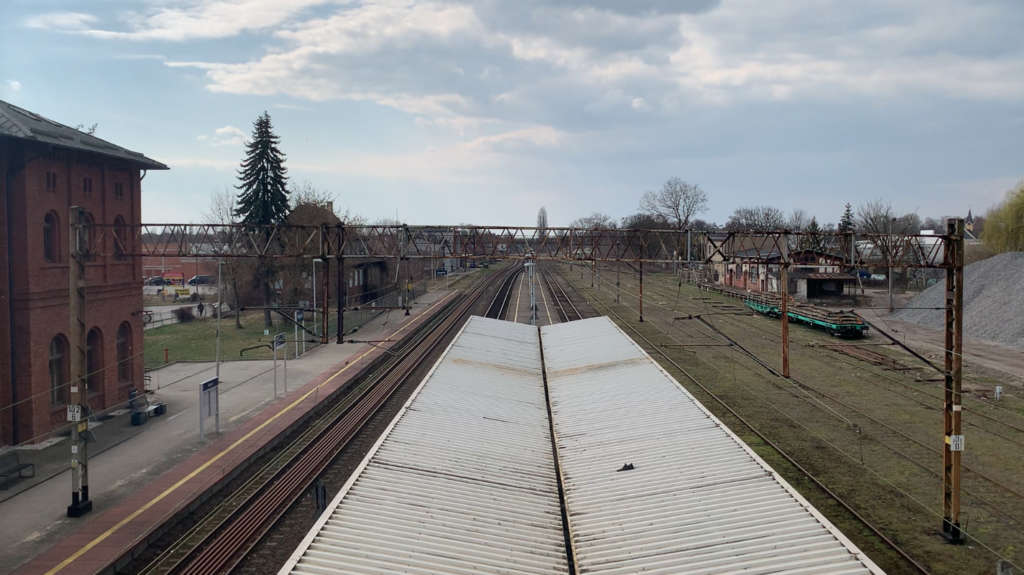
Kępno was one of the last places in Poland where steam locomotives ceased service only in the early 1990s. The last steam locomotives were the TKt48 series. Passenger trains with steam locomotives ran on the Kępno-Namysłów and Kępno-Oleśnica routes. The fan-shaped locomotive shed, located on Przemysłowa Street, has now been demolished. The TKt48-130 locomotive stands as a monument at Kępno station, near the PKP (Polish State Railways) repair hall. The station retains its coal entanglements, a steam locomotive cleaning pit, warehouses, ramps, and storage yards. A historic water tower stands at Hanulin station. Part of the tracks are currently unused.
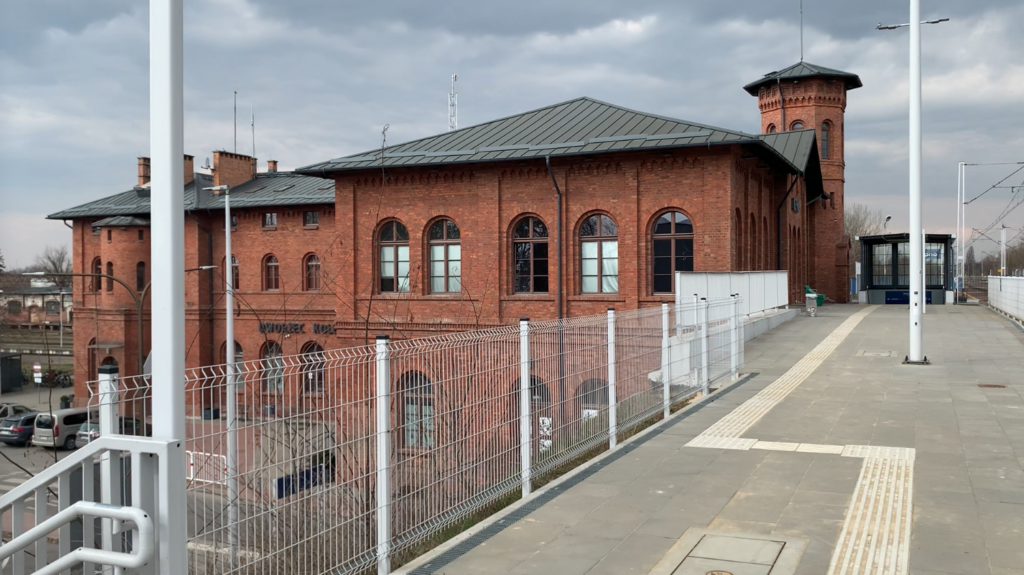
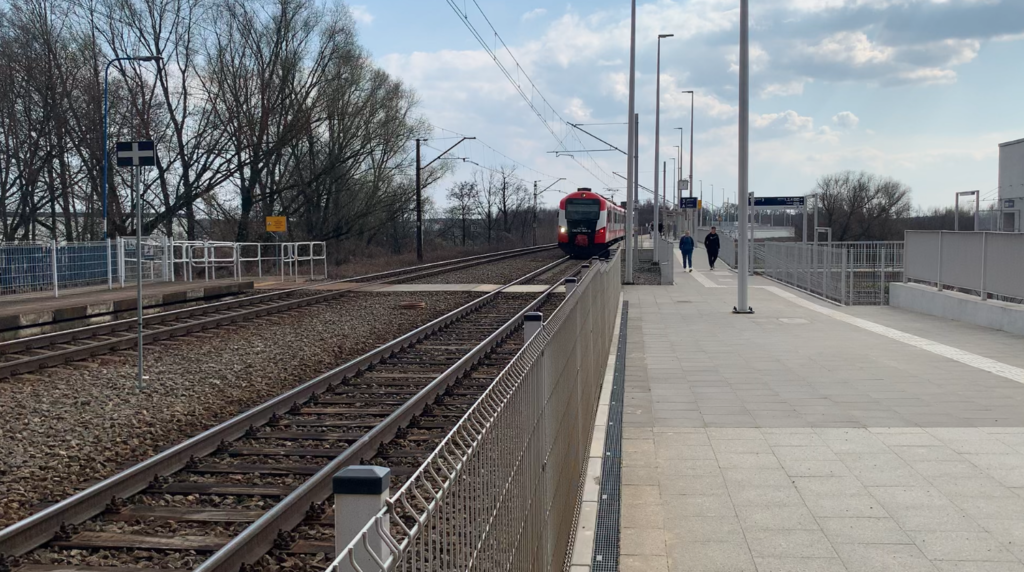
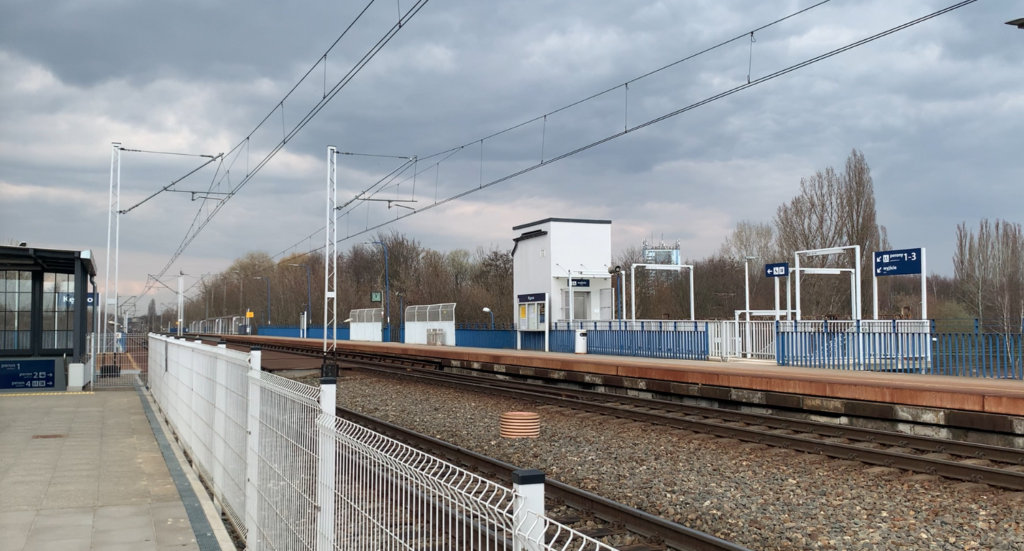
In 2017, the station served up to 500 passengers per day. In 2024, the station served up to 1,000 passengers per day. On April 20, 2026, 29 passenger trains departed from the station. They served the following stations: Kluczbork, Konin, Kraków Główny, Łęka Opatowska, Ostrów Wielkopolski, Poznań Główny, Szczecin Główny, and Zakopane. Currently, the station has four platforms and five platform edges. Platform 1 is located at the bottom of the station building, has one platform edge, and is 200 meters long. Platform 2 is an island platform and is 385 meters long. It has a roof covering the 30-meter section. Platforms 3 and 4 are at the top and have been renovated. They are each 306 meters long.
The station building is one of the most interesting. It is attractive both inside and out. The ticket offices are closed. There is no food service, but a McDonald’s restaurant is located nearby. The building contains waiting rooms and restrooms. The restroom is pay-to-use, with a coin-operated machine. SOK staff ensure the safety of passengers and property. Employees of this service have office and staff rooms in the building. A beautiful staircase provides access between the lower and upper levels. There are also stairs outside, as well as elevators for passengers in wheelchairs, with small children, or large luggage. Dworcowa Street runs in front of the station building, crossing LK No. 272 on a narrow brick viaduct under the tracks, with a single lane in each direction. A parking lot for passenger cars is located on the street’s south side.
The railway line to Kępno was built in conjunction with the project to build the Wrocław-Warsaw railway line, another line of friendship between Germans and Muscovites. The Germans built the Oleśnica-Podzamcze (Wieruszów) section. On the other hand, the Muscovites did not build the line from Wieluń to Warsaw. The Germans built their section in 1872. In 1875, the Kluczbork-Poznań railway line was opened. The two lines intersected at right angles (one at the bottom, the other at the top) in the center of the station. The first station at Kępno was wooden. In 1890, the decision was made to build a new brick station. The station was designed as a two-wing, two-story building, each wing parallel to a railway line. Virtually every facade is representative. On October 2, 1911, the Kępno-Rychtal line, 28 kilometers long, opened. Already in the times of the reborn Polish-Lithuanian Commonwealth (1926), the Herby-Podzamcze railway line was built. The construction of this railway line was a result of Poland’s customs war with the Germans. Thanks to the Herby-Wieluń-Wieruszów-Kępno-Ostrów Wielkopolski railway route, coal wagons from Silesia bypassed Germanic territories.
During World War II, Germans at the Kępno station implemented the “Otto” program. The “Otto” program was a Germanic program to expand and modernize railway infrastructure, adapted to the needs of the ongoing war. It was implemented after 1939, but prepared as early as 1938. Its goals were to increase the capacity of railway lines and stations, to improve troop transport, supplies, and the looting of Eastern Europe, and to streamline logistics in all these activities. The Kępno station was included in this program. In practice, this meant expanding the railway infrastructure, modernizing rail traffic management facilities, and constructing new technical facilities. Among other things, new transformer stations, pumping stations, a telephone exchange building, and social facilities were constructed, and the number of tracks in the freight section was increased. The Germans treated the station as a crucial logistics hub.
After World War II, Poland’s borders shifted. The western border of Poland was shifted to the Oder and Lusatian Neisse rivers. Kępno is now 228 km from the border. Kępno remained a junction station, handling local and long-distance passenger traffic, and primarily north-south freight traffic.
At the turn of the 1950s and 1960s, trains departed from the station in five directions: to Wrocław (via Syców and Oleśnica) and Namysłów (via Rychtal), from the lower platforms. To Poznań (via Ostrów Wielkopolski), Herby (via Wieruszów and Wieluń), and Kluczbork, from the upper platforms.
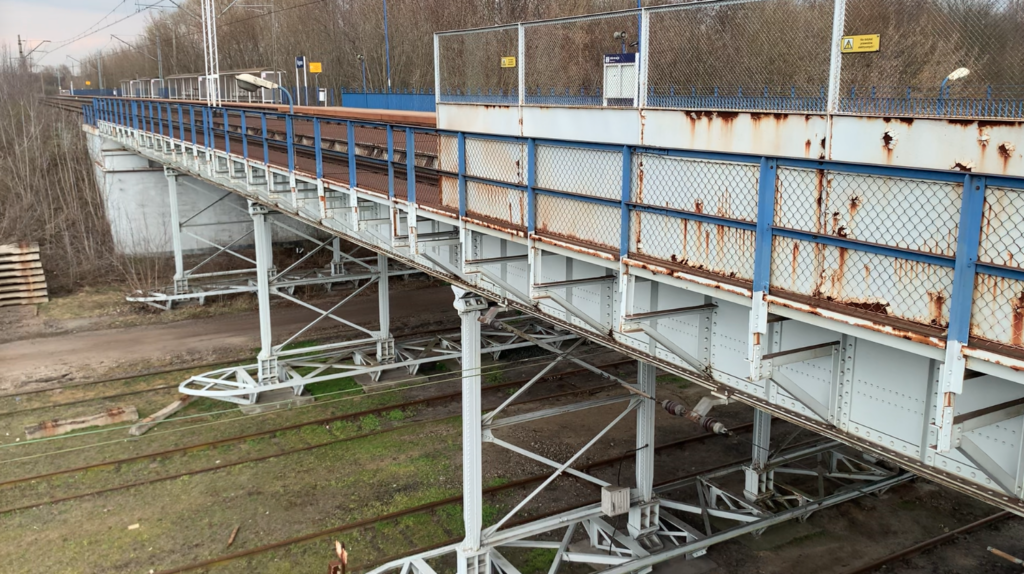
The railway viaduct above the tracks was constructed of steel using riveting. The supports are steel, and the abutments are brick and concrete. The steel supports are covered with steel fenders to protect the bridge structure. The tracks on the viaduct have wooden sleepers. Most of the tracks below the station are laid on wooden sleepers. The remaining tracks are on reinforced concrete sleepers. Currently (2026), the station contains a large pile of ballast for new tracks. Old reinforced concrete sleepers and worn rails are also stored.
In the 1960s, plans were made to expand the station and the station building. The following were planned: Extending the western wing westward, remodeling the rooms, changing the window openings, and plastering the entire building. The plans were not implemented.
During In 2012-2013, a general renovation of the station was carried out, which included the renovation of the brick facade and interior. The facility was adapted to the needs of disabled people. In 2022, the upper station platform was renovated.
The Kępno railway station building is one of the most architecturally interesting railway buildings in Poland, both in terms of its structure and details. It was built between 1890 and 1894. It represents the so-called brick architecture (Rundbogenstil). Unplastered red ceramic bricks were used in the construction. The style does not refer to any particular era. The building was intended primarily to be functional. The Kępno railway station building is built in an L-shaped plan. The central element is a hexagonal hall with ticket offices at the junction of the two wings. The northern facade is 37 meters long, while the eastern facade is 27 meters long. The height of the lower level was adjusted to the distance between the upper and lower tracks. This resulted in a very representative staircase. The building is not symmetrical, and the northern front is noticeably longer. Several projections were used to reinforce the wall structure. There are numerous cornices and pilasters. Almost all the windows are topped with semicircular shapes. The roof is essentially a gabled structure, with a slight slope, covered with gray sheet metal. A distinctive feature of the building is the octagonal corner tower, which is covered by a low roof.
Interesting interior details include cast iron columns, commonly used in the second half of the 19th century. It was a modern and fashionable material at the time. The passages between rooms are topped with arches. Following renovations, the walls are colorful. The floors are tiled with multicolored terracotta.
Railway lines:
LK No. 181 Herby Nowe – Oleśnica is a railway line in southwestern Poland. It lies within five voivodeships: Silesia, Opole, Łódź, Greater Poland, and Lower Silesia. The newest section, Herby Nowe – Wieluń Dąbrowa – Podzamcze, was built in 1926. Passenger service on the Kępno – Oleśnica section has been suspended since 2002. The line is 149.428 km long and has a maximum speed of 100 km/h.
LK No. 272 Kluczbork – Poznań Główny is a railway line running through the Opole and Greater Poland voivodeships. This is a national, double-track, electrified main line with a track gauge of 1435 mm. The line is 201.868 km long and has a maximum speed of 120 km/h.
LK No. 307 Namysłów – Kępno is a former railway line that began at Namysłów station in the Opole Voivodeship and terminated at Kępno station in the Greater Poland Voivodeship. It was a single-track line with a track gauge of 1435 mm and was not electrified. Currently, the line is closed, and its tracks have been completely dismantled. The line was 41.364 km long.
LK Nos. 812, 813, and 814 Kępno – Hanulin are three connecting lines that connect the Kluczbork – Poznań Główny railway line with the railway lines towards Wieruszów and Syców. Line No. 812 opened in May 1928 and was electrified on October 24, 1981. Length: 3,775 km. Speed: 60 km/h.
Written by Karol Placha Hetman