Środa Wielkopolska 2026-04-08
Środa Wielkopolska is a city in central Greater Poland, located just 35 km from Poznań. The city is the county seat and an important local administrative and service center. Środa County. Środa Wielkopolska is a municipality in Wielkopolska. The town has a long history dating back to the Middle Ages. The settlement was known for its markets held on Wednesdays, hence the name. The market square layout and historic buildings have been preserved. Today, the town combines traditional character with developing infrastructure and good connections to Poznań. The town has an area of 17.98 km². The town’s population was 24,339 as of 2023. Vehicle license plates are PSR. The town is located in the Wielkopolska Lowland, on flat, agricultural lands. It lies in the historical region of Wielkopolska, in the Warta River basin. A small river, the Moskawa, a tributary of the Warta River, flows through the town. There are also small streams in the area, typical of agricultural areas. There are no lakes in this area. In 1972, an artificial retention reservoir was created on the Maskava River, covering 47 hectares.
History
The town of Środa Wielkopolska was called Środa until February 14, 1968. The settlement was a royal town of the Crown of the Kingdom of Poland. In the 16th century, the town was located in the Pyzdry County of the Kalisz Voivodeship. The town served as the meeting place for the regional assemblies of the Poznań Voivodeship and the Kalisz Voivodeship until the 18th century.
A settlement called Sroda is mentioned in a Latin document issued in Poznań in 1281, signed by King Przemysław II of Poland. Part of a larger group of strongholds, the settlement specialized in trade. The market was located at the intersection of present-day Dąbrowskiego and Lipowa Streets. In the 11th century, a stone church dedicated to St. Giles was probably built in the settlement, although it has not survived. At that time, Giecz, the seat of the castellany, was a more important center. However, Środa Wielkopolska gradually gained an advantage thanks to the growing importance of trade. Communication routes changed slightly. The date of Środa Wielkopolska’s founding is unknown, as the documents were lost, likely during a fire. It is assumed that it occurred sometime between 1253 and 1281. The most likely date is 1261. It is assumed that the foundation was established on the so-called “root” of the site, meaning that there was no previous settlement there. The existing settlement was located approximately 550 meters to the west. This allowed for the spatial layout of the city to be planned. The city center was a square measuring 70 meters by 70 meters. North of the square, a wooden Catholic church was built. On the opposite side of the square, the starost’s castle was built. The city was surrounded by a wooden and earth rampart, and later by a wall. The city received three gates on the main routes. The Dominican Order was brought to the city. A monastery and a church dedicated to the Holy Cross were built. The Polish King, Władysław Jagiełło, funded a new parish church, which was built between 1423 and 1428. The parish church was elevated to the rank of collegiate church, and in 1422, a school was founded at the collegiate church. The city was attacked and destroyed several times by the Teutonic Knights, who confused the tasks for which they had been brought to the Polish-Lithuanian Commonwealth. In the 15th century, the city was one of the wealthiest in all of Greater Poland.
In 1587, the regional assemblies of the Poznań and Kalisz voivodeships in Środa Wielkopolska approved the election of Sigismund III as King of Poland. Regional assemblies were held in Środa Wielkopolska from 1378 until the partitions of the Polish-Lithuanian Commonwealth. In 1622, the city had suburbs, the Pólko farm, and six villages. At that time, the city’s population reached 2,000. There were 98 craftsmen and 50 burghers engaged in agriculture. There were shoemakers, weavers, butchers, innkeepers, bakers, brewers, and millers. The mills were equipped with horse-powered treadmills. In the mid-16th century, windmills were erected in the suburbs.
The city’s development was halted by the Swedish Deluge and subsequent wars. The Swedes destroyed 65% of the houses within the city limits and 90% outside the walls. Approximately 50% of the city’s population was murdered. Probably on February 15, 1793, after the Second Partition of Poland, a German army entered the city, and Greater Poland was incorporated into the German Partition. South Prussia was then established. In 1796, the city walls, which no longer served a defensive purpose, were finally demolished. A period of intense Germanization ensued. Germanic became the official language. This new policy led to the liquidation of Catholic churches. In 1815, the monastery was secularized. The monastery school was closed. Catholic priests were persecuted. Poverty in the countryside led to an influx of rural people into cities and towns. Germanic settlement also occurred. The settlers caused religious chaos, bringing novelties and calling themselves Protestants. To humiliate the Polish population, the Jewish population was granted greater rights. By 1900, the city had 6,000 inhabitants, most of them poor.
As a result, the Greater Poland Uprisings broke out in 1794 and 1806. As a result of the second uprising, Greater Poland was incorporated into the Duchy of Warsaw. The Duchy of Warsaw existed only from 1807 to 1815. The most prominent figure of the Napoleonic period was General Jan Henryk Dąbrowski (1755–1818), founder of the Polish Legions in Italy and hero of the Polish national anthem. In 1815, Greater Poland once again became a Germanic partition. Środa Wielkopolska became the seat of the Landrat. The Landrat was the head of a district, with extensive powers. He managed administration, taxes, the gendarmerie, the local court, and the recruitment of recruits for the Germanic army.
In 1848, the third Greater Poland Uprising took place. It was associated with the Spring of Nations. In Środa Wielkopolska, there was an insurgent camp with 9,000 soldiers. The insurgents fought battles near the towns of Książ, Miłosław, and Sokołów. Ultimately, Polish troops surrendered on May 10, 1848, in the Środa County. The Spring of Nations did not lead to political changes in Europe, nor did it even lead to a single border change. The great powers of Europe retained their unlimited rights, influence, and wealth.
In 1863, the January Uprising took place. Many Środa residents also actively participated in the fighting within the Kingdom of Poland. Despite numerous Germanic harassment, Poles clung to the Catholic religion, the Polish language, and the Polish land. Catholic priests, teachers, former military personnel, and former landowners were at the forefront.
The railway undoubtedly contributed to the improvement of the city’s economic condition. The railway in Środa Wielkopolska arrived on October 1, 1875. At that time, a railway line was opened as part of the Poznań-Kluczbork Railway Company: Poznań – Środa Wielkopolska – Jarocin – Kluczbork.
In the second half of the 19th century, the city had approximately 300 craftsmen. But the industrial revolution was slowly arriving. A decision was made to build a large sugar refinery, which opened on October 7, 1880. Between 1926 and 1930, the plant was expanded. The sugar refinery remains in operation to this day, in 2026. In 1885, the first dairy was established in Środa Wielkopolska. Two brickyards, three oil mills, and an agricultural machinery factory also operated there. In 1902-1903, a municipal gasworks was opened. In 1911, a water tower and municipal waterworks were opened.
A narrow-gauge railway was built in 1902. Its purpose was to efficiently deliver agricultural produce. The total length of the railway line was 50 km. During the interwar period, the length of the line increased to 119 km.
The military operations of the Great War had no significant impact on the town. Residents of Środa Wielkopolska participated in the victorious Greater Poland Uprising of 1918-1919. In 1919, Greater Poland became part of the reborn Polish-Lithuanian Commonwealth. In 1921, a slaughterhouse and a weaving mill also appeared on the Środa business map. Between 1926 and 1928, a sewage system was built. From 1919, education was conducted in a seven-grade Catholic primary school. In 1920, an agricultural school was established. Scouting was an important form of education, with approximately 500 children and youth participating. Sports clubs were active. During the interwar period, the population grew to 10,000. The city had approximately 700 residential homes.
On September 1, 1939, Germans, along with their Muscovite brethren, invaded the Polish-Lithuanian Commonwealth. After bombing the railway station and sugar factory, the city was occupied by a German army on September 9, 1939. Greater Poland became the Warthegau. Germanic settlers were brought in, while Poles were deported to the General Government or to forced labor and camps. The Catholic clergy and intelligentsia were particularly harassed. Between September 17, 1939, and October 20, 1939, Germans murdered 50 people. According to postwar estimates, 482 people were deported to the General Government. Resistance against the German plague grew. Clandestine teaching was already underway by October 1939. By January 1942, a district inspectorate of the Union of Armed Struggle and the Home Army was already operational.
On January 23, 1945, the first Muscovite patrol entered the city, and the communist occupation began. Most Home Army soldiers remained underground. After World War II, Środa, as the district capital, became part of the Poznań Voivodeship. In 1949, the narrow-gauge railway was nationalized and incorporated into the Polish State Railways (PKP). The sugar refinery remained a leading industrial enterprise. Destroyed during the war, the plant was repeatedly modernized and expanded. Municipal housing developed. New schools, kindergartens, and health centers were built. The agricultural school became a technical school. In the 1960s, the railway station underwent a thorough renovation. In 1972, an artificial reservoir was built on the Maskava River, which also serves as a recreational facility. In 1949, the city’s population once again reached its 1939 population. In 1968, the city’s population exceeded 15,000, and in 1985, it reached 19,000.
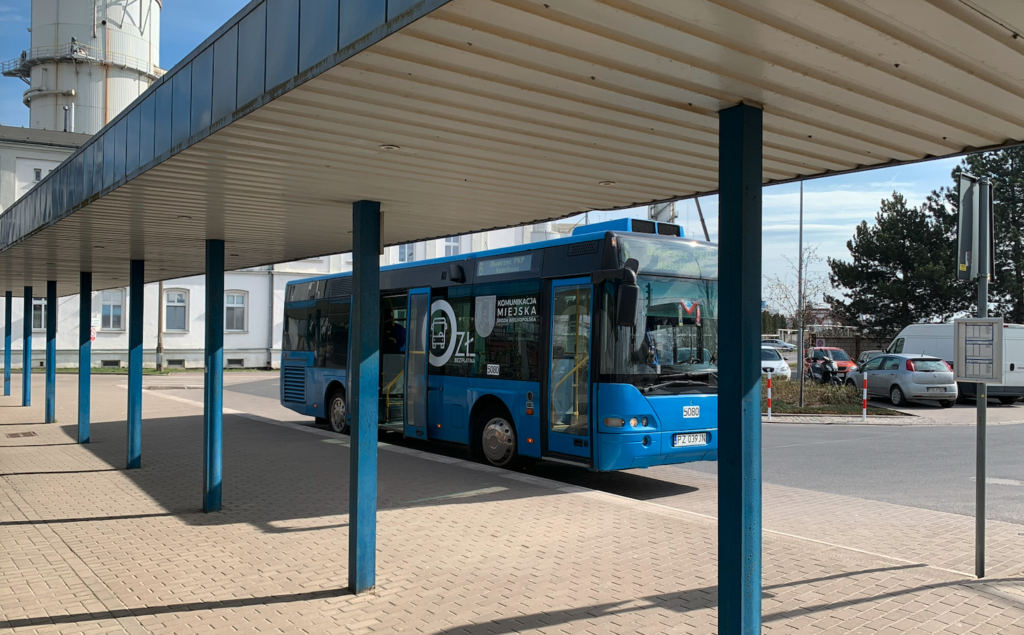
Supposedly, 1989 marked the end of communism in Poland. In reality, the communists transformed themselves into businessmen, and a rampant privatization began. Several businesses, without government support, went bankrupt. Currently, over 260 enterprises are headquartered in the city. The following companies currently operate in the city: Solaris Bus & Coach bus and trolleybus frame factory in Środa Wielkopolska. Środa’s most important historical monument is the late Gothic collegiate church of the Assumption of the Blessed Virgin Mary, dating from 1423–1428, which was rebuilt in the late 15th century. Another interesting religious building is the neo-Romanesque former evangelical church of the Sacred Heart of Jesus, dating from 1883–1888. The Old Town, within the former fortifications, retains its original street grid to this day. Środa Wielkopolska boasts Poland’s first equestrian statue of Jan Henryk Dąbrowski. The monument was unveiled in 1997, on the 200th anniversary of the national anthem. Środa Wielkopolska has free bus transportation, with buses running on six city lines and 12 suburban lines.
Railway in Środa Wielkopolska.
Address: PKP Środa Wielkopolska, ul. Dworcowa 3, 63-000 Środa Wielkopolska. Geographic coordinates: 52.217 N, 17.275 E. Elevation: 75 m.
The history of the railway in Środa Wielkopolska encompasses both standard-gauge lines and an extensive narrow-gauge railway. The narrow-gauge railway is known as the Środa County Railway. Established in 1898, it currently operates as a tourist attraction on the Środa Wielkopolska–Zaniemyśl route. The Środa County Railway is discussed in a separate chapter.
A standard-gauge railway was established before the narrow-gauge railway. The history of the railway in Środa Wielkopolska began in 1875, when the railway line was opened. On October 1, 1875, the Poznań-Kluczbork Railway Company opened its line: Poznań – Środa Wielkopolska – Jarocin – Kluczbork. On October 7, 1872, a concession was issued to the Poznań-Kluczbork Railway Company, with its headquarters in Poznań, for the construction of the Kluczbork-Poznań railway. Designs for the route had been in development since 1867.
Construction began, but poor financing caused work to be interrupted. Corruption was rampant, and workers were not paid on time and frequently abandoned the construction site. The situation improved with contributions from defeated France. Construction was not completed until December 1875. On December 10, 1875, the first train ran between Poznań and Kluczbork. Not all of the engineering structures were completed. Initially, three pairs of trains ran on the Poznań-Kluczbork route: two passenger trains and one freight train. In reality, passenger trains were composed of freight cars. There were four classes of passenger cars. A passenger train’s stop at the Środa Wielkopolska station lasted five minutes. The train covered the Jarocin–Poznań route in 1 hour and 55 minutes, covering a distance of 70 km.
The development of the railway contributed to economic recovery. The railway facilitated the transport of goods, primarily agricultural products, and increased the city’s importance in the region. Railway infrastructure was built: a station, sidings, warehouses, a storage yard, and technical facilities.
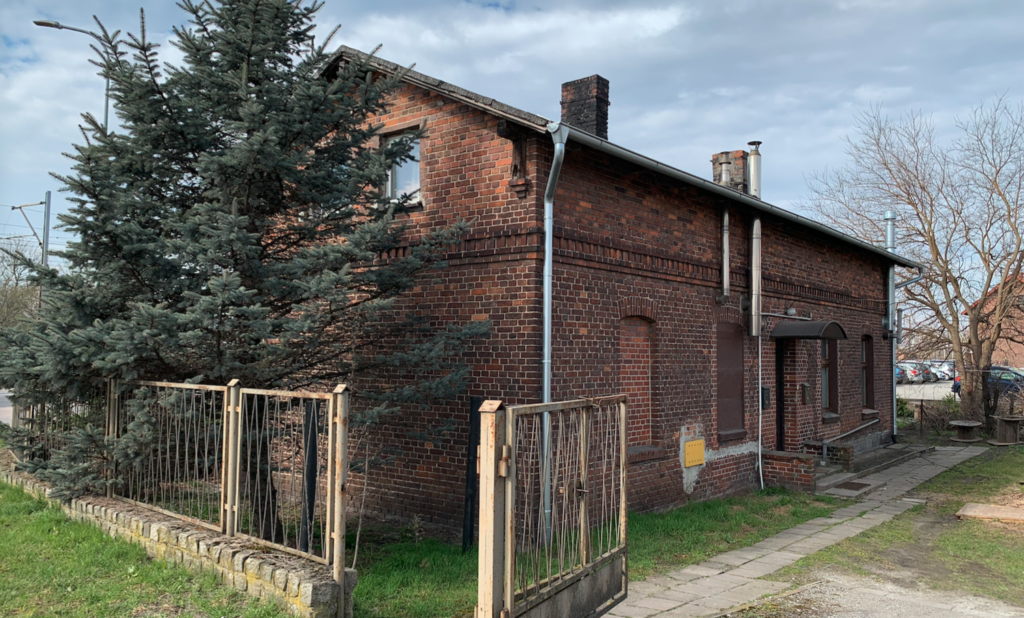
The process of nationalizing the railways in the German state did not take place in a single year, but in stages. The most important period was 1879–1884. This was when the Prussian state purchased most of the private railway lines. This was beneficial for passengers, as they purchased tickets from the starting station to the destination. In 1879, a law was passed nationalizing the previously private railway lines. Thus, in 1884, the state authorities purchased the Poznań-Kluczbórz railway. Following the nationalization of the railways, administrative reorganization took place, and offices for traffic, tariffs, rolling stock, routes, and workshops were established. Individual offices sent reports to the management, and based on these reports, orders were issued and tasks were financed. Subsequent railway lines were built with state funds. As the railway junction expanded (standard-gauge and narrow-gauge railways), residential buildings for the growing social group of railway workers also increased. Around 1920, a new water tower was built. It is located 150 meters northwest of the station.
In 1987, the Środa Wielkopolska station, along with railway line No. 272 Kluczbork – Poznań, was electrified.
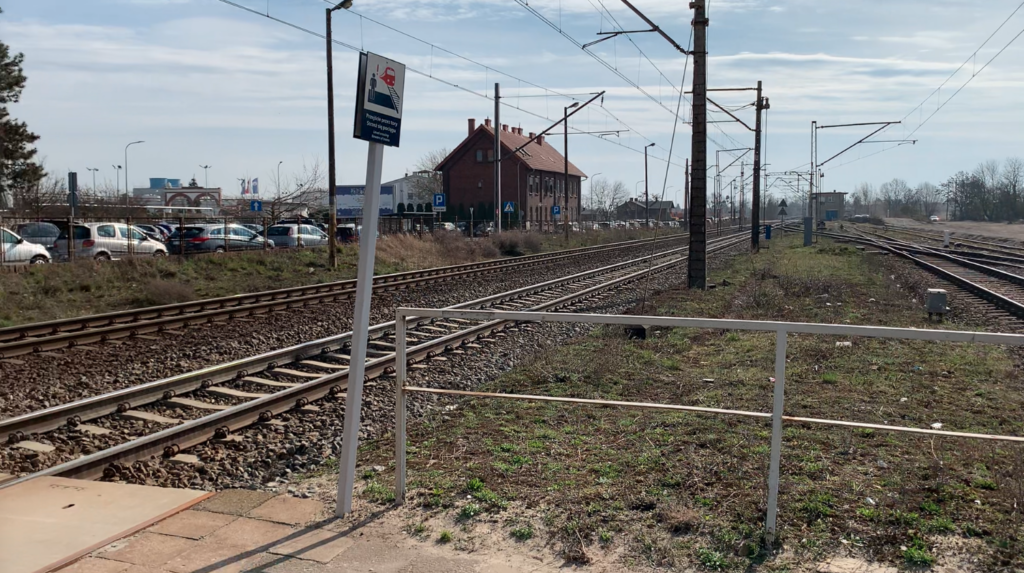
The main signal box is located on Łąkowa Street, the railway crossing along Tadeusza Kościuszki Street, at the northwest end of the station. The signal box is in the shape of a square (cube) mushroom.
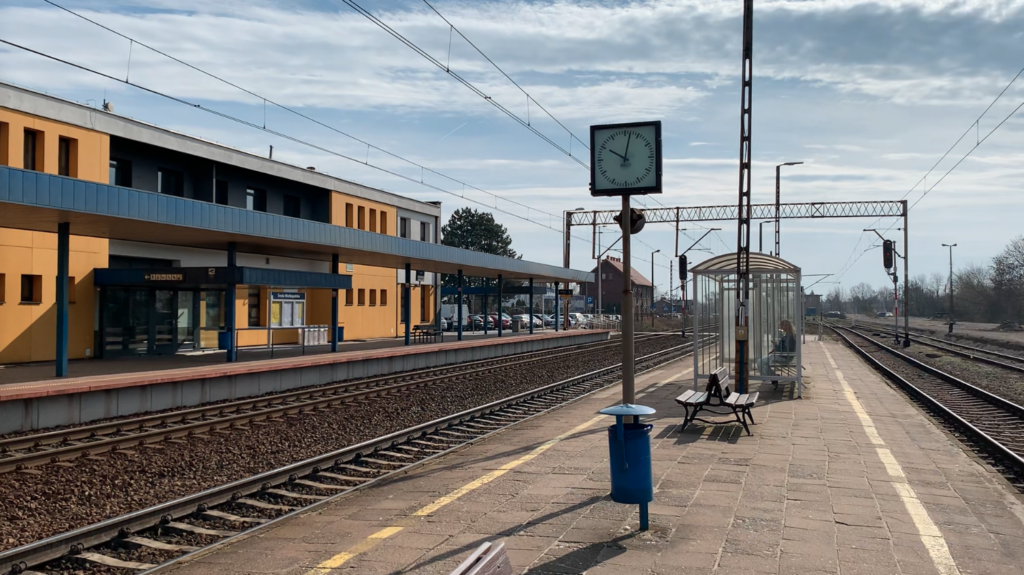
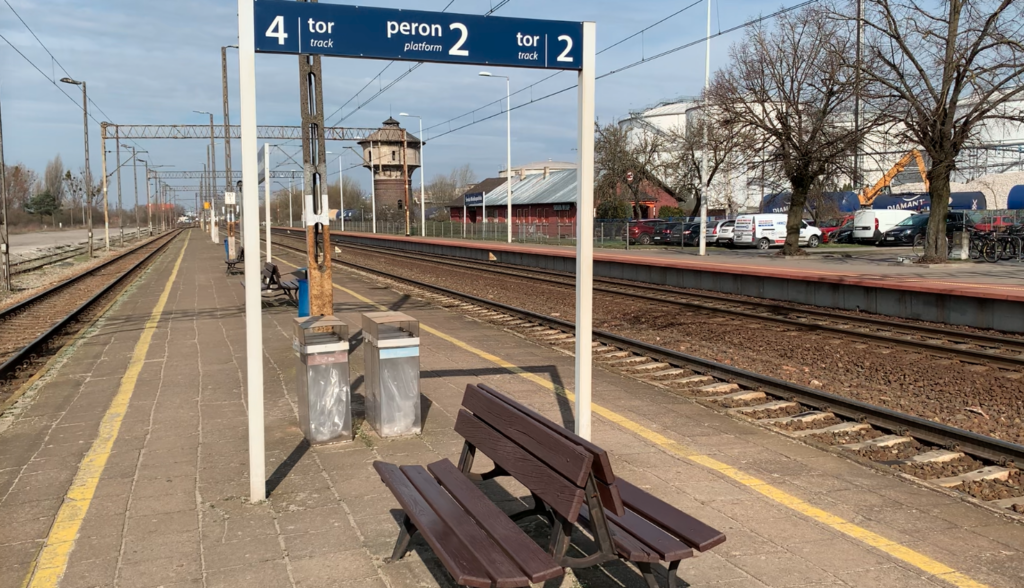
In 2014, the station was renovated. Platform 1 was rebuilt and the track adjacent to it was replaced. The platform received burgundy edge slabs with a white warning line and buttons, measuring 1 m x 2 m. The rest of the platform was paved with concrete paving stones. Opposite the station, behind the tracks, stood an old railway warehouse, which was demolished in 2016. In 2020, Platform 2 was partially renovated. The surface remained unchanged, consisting of paving slabs. A new bus shelter, new signs, display cases, and garbage cans were installed. A new track, No. 2 (LK No. 272), was also laid. The station has two platforms and three platform edges. Platform 1 has a single edge and is located next to the station building. The platform is 250 meters long and has a roof covering a length of 66 meters. Track No. 1 (LK No. 272) runs alongside the platform. Platform 2 has two platform edges. It is 250 meters long and is flanked by tracks No. 2 and No. 4. Another track, No. 6, runs through the passenger section of the station. The freight section has six through tracks and sidings. A railway siding to the sugar factory begins near the water tower. A narrow-gauge railway line is located a little further on.
On April 7, 2026, 80 passenger trains departed from Środa Wielkopolska station. You could go to the following stations: Chełm, Frankfurt/Oder, Gorzów Wielkopolski, Jarocin, Kalisz, Kłodawa, Konin, Kraków Główny, Krotoszyn, Krzyż, Lublin Główny, Łęka Opatowska, Łódź Fabryczna, Łódź Kaliska, Odolanów, Ostrów Wielkopolski, Poznań Główny, Szczecin Główny, Świnoujście, Warsaw Wschodnia, Zakopane. Former InterCity trains: No. 82170 “Uznam” Chełm – Frankfurt/Oder, No. 7324 “Wybicki” Krakow Główny – Poznań Główny, No. 7320 “Cegielski” Krakow Główny – Poznań Główny, No. 73104 “Kozica” Krakow Główny – Poznań Główny, No. 73102 “Pułaski” Krakow Główny – Poznań Główny, No. 73100 “Spodek” Krakow Główny – Poznań Główny, No. 8220 “Koziołek” Lublin Główny – Szczecin Główny, No. 8120 “Włókniarz” Łódź Fabryczna – Szczecin Główny, No. 38106 “Osterwa” Szczecin Główny – Zakopane. Other connections were operated by PolRegio and Koleje Wielkopolskie.
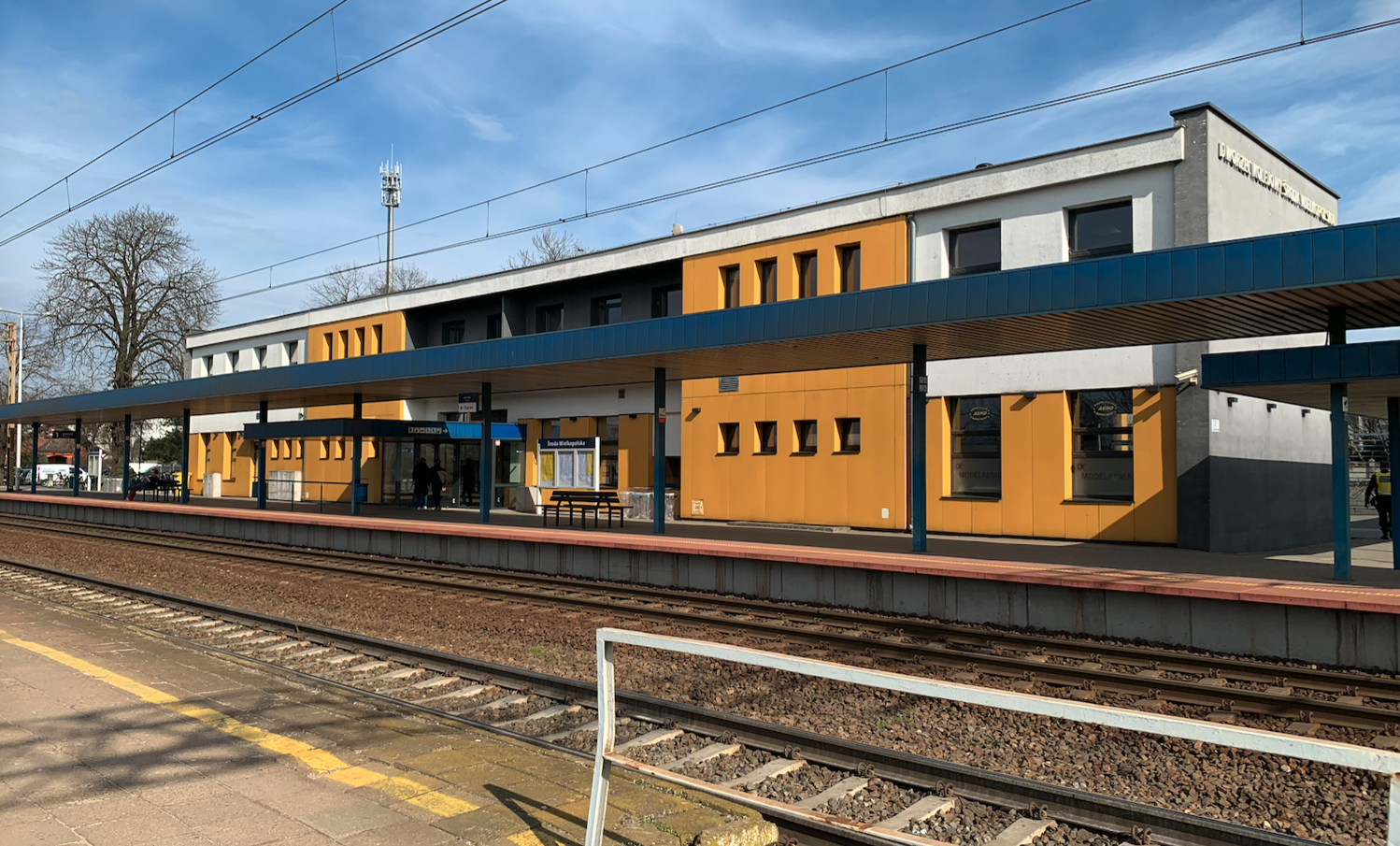
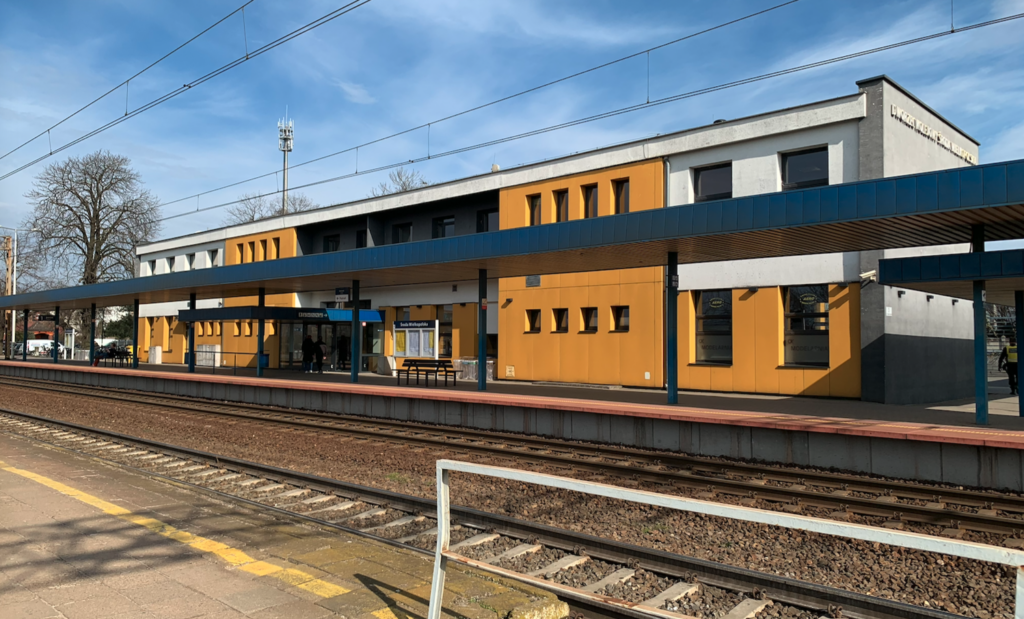
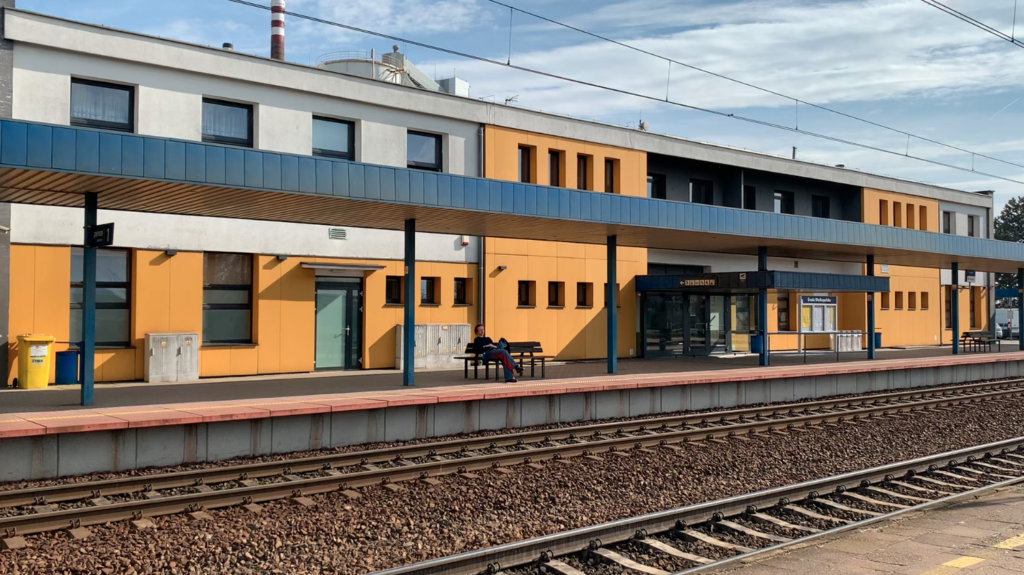
The station building.
The station building itself was not a representative structure. It was a three-story, nine-bay structure with two side projections, built of brick. The lower windows were larger, all topped with an arch. The attic was usable and equipped with small windows. The entire building was covered with a low-pitched gable roof. The inscription “SCHRODA” was inscribed on the building, because Germans cannot pronounce the letter “Ś.” A clock was mounted on the station square. Single-story annexes were added to the building. Entrances to the building were located not centrally, but in the side projections.
The station building quickly proved too small. Around 1920, another five-bay segment was built in place of the northwestern extension. The station survived the Great War and World War II. In the following years, the station underwent modernization and reconstruction. Today, the station bears no resemblance to its original appearance. But to call the building historic is an exaggeration.
Currently, the building has a modernist style, functional but lacking in beauty. It has 18 axes. On the southeast side, above the roof, the inscription “ŚRODA WLKP” is placed. There is a canopy on the platform next to the building, as well as a canopy near the main entrance. There is also a canopy at the bus stops. Access to the island platform is at track level. Inside the station, there is a concourse, which serves as a waiting room. The concourse contains a single ticket office. In the second half of 2013, an investment began involving the reconstruction and comprehensive modernization of the railway station building in Środa Wielkopolska, including the development of the square adjacent to the station, aimed at increasing public space and improving passenger traffic. After the most recent renovation, the building serves as a station and cultural center. The inscriptions “Środa Wielkopolska Railway Station” and “Środa Wielkopolska Cultural Center” are displayed on the building. The building’s facade is multicolored: graphite, white, and orange. The edges of the shelters were painted blue. The interior features a ticket window, benches, and restrooms. A vending machine for medicines, snacks, and other items is also located inside. Simultaneously, in 2014, Platform 1 was renovated.
Written by Karol Placha Hetman