Olsztyn 2026-03-03
Olsztyn
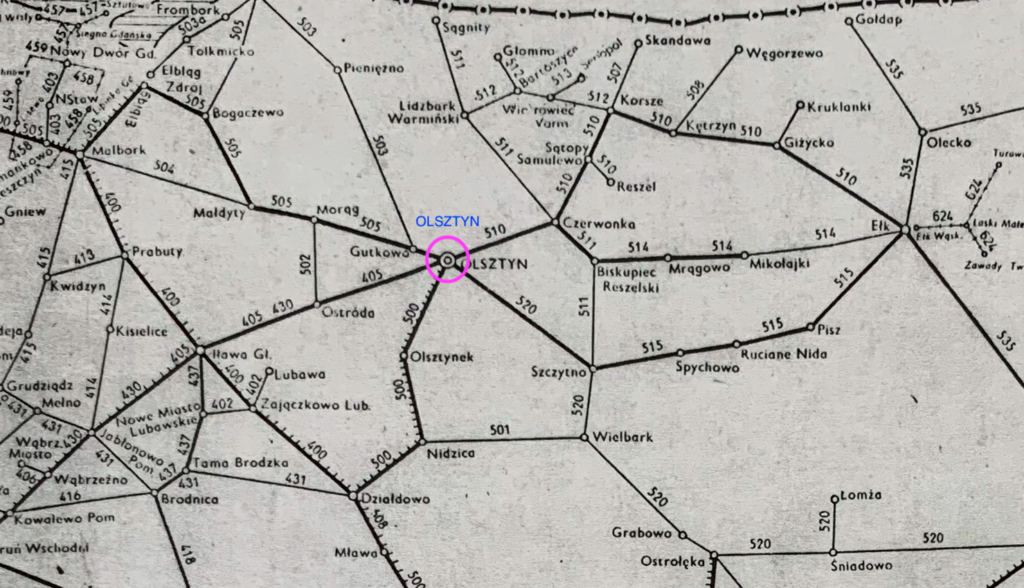
Olsztyn is the capital of Warmia and Mazury and one of the most important cities in the historical Warmia region. Although Warmia and Mazury are always mentioned together, they are two distinct regions of northeastern Poland. Warmia is Catholic, loyal to the Warmia bishops. There are strong Polish traditions here. Warmia, as the dominion of the Warmia bishops, had its own administration and a network of roads connecting the chapter towns. Here, the landscape is different and there are fewer lakes. Warmia is a region with a strong sense of identity. Many associations cultivating Warmia traditions, dialect, and customs remain active to this day. The population has a higher level of education, and the cities are better developed. Masuria is Protestant, primarily in culture. A strong attachment to the Prussian princes is evident here, and Germanic influences are stronger. There is less attachment to religion, culture, and history. Cities are underdeveloped and were founded primarily as tenement villages. Masuria was more vulnerable to invasions by Lithuanians, Belarusians, and Muscovites. Masuria is primarily the Land of the Great Lakes; it is known for its tourism and recreation.
Location of Olsztyn: Olsztyn is located in northeastern Poland, in the historical Warmia region, and is the capital of the Warmian-Masurian Voivodeship. This region is distinguished by its landscape shaped during the last glaciation. The city lies within the Olsztyn Lake District. The terrain is hilly and morainic, with numerous lakes. Elevations in the region range between 120 and 180 meters. There are 15 lakes within the city limits, including Lake Ukiel (the largest), Lake Długie, and Lake Kortowskie. Thirteen lakes each have an area of over 1 hectare. The region’s main river is the Łyna, which flows through the center of Olsztyn, creating a picturesque valley. The region is surrounded by extensive forest complexes: mixed and coniferous forests (pine, spruce, and oak). Olsztyn’s forests cover over 1,800 hectares, or 21.2% of the city’s area. The region is a mosaic of fields, meadows, and forests. There are protected landscape areas and nature reserves, and Natura 2000 sites are nearby. Olsztyn has a high percentage of green spaces. The region’s soils are moderately fertile. The region has a temperate, transitional climate: winters are cooler than in southwestern Poland. Spring and summer are moderately warm. The average annual temperature is around 7-8 degrees Celsius. There is a relatively high number of rainy days. Annual rainfall is around 600-700 mm.
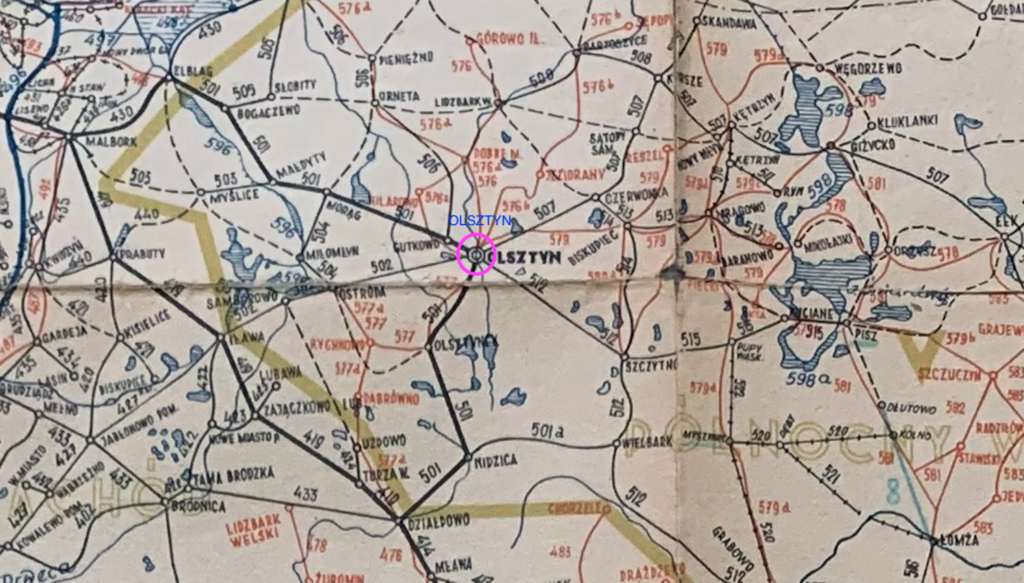
The settlement received city rights on October 31, 1353. The city’s area is 88.32 km². The city’s elevation ranges from 87 to 154 m². The city’s population as of 2024 is 166,392. Car license plates are the letters NO. In addition to the district authorities, the curia of the Archdiocese of Warmia is located here. Olsztyn is an important road and rail junction. Distances from Olsztyn to the border with Moscow are 89 km, Elbląg 93 km, Gdańsk 160 km, Warsaw 198 km, Bydgoszcz 206 km, and Białystok 216 km. The first post-war change to Olsztyn’s borders occurred in 1965. The next border change occurred in 1977. The current city boundaries have been in effect since January 1, 1988, and cover an area of 88.33 km².
The Germanic name Allenstein literally means “stone on the Łyna River, Łyński stone,” and figuratively “castle on the Łyna River.” The Polish name Olsztyn is a Polonization of the original Germanic name and was used as early as the Middle Ages. As early as the 15th century, Jan Długosz records Polish equivalents of the name: Holsten and Olsten. From the 17th century, the name Olsztyn became common in documents.
In recent years, there has been a strong tendency to argue that the Warmia region was first inhabited by Goths, who then migrated south. A culture of the Olsztyn group has been invented. In short, this is a preparation for the Germanic narrative that Warmia and Masuria have always been Germanic lands. This is another wave of Germanic attack on Poland, Poles, and the Catholic faith. The Germanic tribe is the last in line to lecture others about history. The tribe that started two world wars, invented eugenics, and concentration camps has the right only to remain silent about history. Olsztyn’s coat of arms is the figure of Saint James the Greater, the Apostle, in white robes on a blue field. The saint holds a pilgrim’s staff and a scallop shell, traditional attributes of the Camino de Santiago. Saint James is the patron saint of the parish church and has appeared on the city’s seal since the Middle Ages. From the beginning, the city also used the coat of arms of the Warmia Chapter, which depicted a city gate and a half-cross. Until 1960, a coat of arms combining both of these elements was used. The current coat of arms was approved in 1982.
The history of Warmia combines Teutonic, episcopal, Polish, and Prussian influences. In 1334, the Warmia Chapter began construction of a castle. In 1353, the settlement received city rights under Chełmno Law. But Warmia had more than one center of political and economic life. These included Frombork, Braniewo, and Orneta, with the most important being Lidzbark, now Lidzbark Warmiński. Olsztyn, known in German as Allenstein, was established as the administrative center of the Warmia Chapter’s estate. The center of political and economic life was the Chapter’s castle, now known as the Castle of the Warmia Chapter in Olsztyn.
Because the Teutonic Order failed to fulfill its role, frequent wars broke out, first between the Teutonic Knights and Prussians, and then between Poland and the Teutonic Knights and Lithuania. Because the Prussian tribes failed to develop their own statehood, they were exterminated by the Teutonic Knights. The Prussians were exterminated, died in battle, were expelled, or were Germanized. By the 16th century, the Prussians were gone. The Prussian tribes were not defenseless. Wooden outposts were established along trade routes. These tribes engaged in hunting, trapping, animal husbandry, and plundering expeditions, especially to Lithuania and Masovia. This led Duke Konrad of Masovia to bring the Teutonic Order to Poland in 1226. Unfortunately, the order failed to fulfill its mission. By the 16th century, the Teutonic Knights had exterminated the Prussians and, in addition, adopted their name. The Prussians were murdered, expelled, or Germanized. Prussian uprisings were of no avail.
In the region of our interest, there were three Prussian tribes: the Gudikus, the Bering, and the Gunelauke. In the west, the Pasłęka River formed the border. To the southeast was the Galindia Forest, now the Napiwodzko-Ramucka Forest. The main river in the region was the Łyna River. Between 1230 and 1283, the Teutonic Order conquered the entire Prussian lands, and to the east, the Yotvingians. It is estimated that by the end of the 13th century, the Galindia lands were significantly depopulated. The last Prussians were Germanized in the 16th century.
In 1243, the Warmia diocese was established, with the Warmia bishop at its head. The bishopric received a significant portion of land for its maintenance. A little later (1274), the Warmia chapter was founded, which received several centers of Catholic administration: Lidzbark, Orneta, Frombork, and Olsztyn. Castles were built in these towns, which served as administrative and economic centers. Warmia systematically freed itself from the Teutonic Order. The chapter sided with the Pope and exposed the Order’s unCatholic conduct; Murders, looting, and a lack of evangelization. Settlers, both Polish and German, arrived in Warmia, even from distant Silesia. Tenement villages were established, the first of which were established in 1335.
Construction of a brick castle in Olsztyn began around 1345. It was located in a new, more favorable location, approximately 9 km north of the wooden castle. The castle was built on a defensively advantageous bend of the Łyna River, in the northern part of the Bertingen Land, near its border with the Gudikus Land. A new town began to develop near the castle. The town of Olsztyn was founded on what was known as a “raw root,” meaning there had been no previous settlement there. The town received 178 lans of land (2,990.4 hectares), including a vast urban forest and the adjacent tenement village of Sędyty. The town’s convenient location and a large, defensive brick castle with a permanent garrison provided the new town with secure conditions for development.
In 1348, another war broke out between the Teutonic Order and Lithuania. The Teutonic Knights once again invaded Lithuania and won the Battle of Strava. Nevertheless, this was the Order’s last major expedition into Lithuania. Lithuania joined forces with the Polish-Lithuanian Commonwealth.
In 1378, Olsztyn was third in size after Braniewo and Orneta. At that time, Olsztyn was directly subordinate to the chapter in Frombork and was a sister city to the town of Melzak, now Pieniężno. The two towns cooperated economically and supported each other militarily. Higher jurisdiction was exercised in Frombork. Frombork also housed the main treasury of the entire Warmia chapter. Power in Olsztyn was exercised by a clerical canon. By the beginning of the 15th century, the canon was assisted by a town council of 24-25 members.
During the height of the Polish-Teutonic Wars (1409-1411), Olsztyn and Pieniężno fielded a banner of approximately 300 warriors. In total, the towns and villages of Warmia fielded three banners. These banners were defeated at the Battle of Grunwald. A few days later, the Polish Army approached Olsztyn. The city surrendered without a fight, sparing its inhabitants and buildings. The city’s garrison was replaced by a Polish garrison. Peace talks and agreements between the Polish and Teutonic Orders were concluded. The Polish garrison left Olsztyn Castle at the end of September 1410. The First Peace of Toruń, signed in 1411, returned the lands to the Teutonic Order. Unfortunately, the Order did not honor the truce. Another Polish-Lithuanian-Teutonic War broke out. Olsztyn was occupied by force of arms by the Polish Army, and after a few months, the Polish Army withdrew from Warmia. However, the Warmia residents changed their minds. The towns joined the Prussian Confederation, and the inhabitants turned against the Teutonic Order. The Thirteen Years’ War (1454-1466) began. In 1463, Polish forces occupied the city, but they failed to capture the castle. The city was burned again. However, on November 4, 1464, the Bishop of Warmia surrendered Warmia to King Casimir IV Jagiellon.
From 1466 to 1772, Warmia was part of the Kingdom of Poland. After the Second Peace of Toruń (1466), Warmia was incorporated into the Crown of the Kingdom of Poland as an autonomous episcopal dominion. The chapter’s administration and economic system remained in place. A period of peace and prosperity ensued for the city. Warmia was made famous by the bishops of Warmia and Nicolaus Copernicus, who from 1516 to 1521 served as administrator of the chapter’s castle in Olsztyn. In 1521, Nicolaus Copernicus organized the defense of Olsztyn against the invasion of the Teutonic Order. Therefore, Germans should not assume that Nicolaus Copernicus was supposedly Germanic.
The bishops of Warmia began the process of resettling abandoned villages. Approximately 40% of the colonists were Poles, primarily from Masovia and eastern Masuria. They laid the foundation for the Polish character of Warmia and the subsequent Warmia people.
During the period of the Polish Crown, trade and crafts flourished in Olsztyn. Residential houses, workshops, and churches were built. Warmia’s Catholic character was consolidated. In 1500, the city council purchased the office of village head, which had previously been hereditary. The city council could now elect a mayor. This did not mean, however, that the chapter lost its influence in Olsztyn. The chapter had to approve the appointed mayor. The chapter then transferred lower judicial authority to the city council.
At the beginning of the 16th century, brick residential buildings began to be built in Olsztyn. A new town hall and the mayor’s house were built. A market square and additional plots were laid out for development. The presence of a trade route fostered the city’s prosperity. The town and castle were connected by walls and surrounded by a wide moat connected to the river. The chapter and city council oversaw the shared forests and rivers. In 1370, construction began on the church of St. James the Apostle, in the brick Gothic style. The structure was completed in 1569, after the addition of a tower.
The development of Olsztyn and Warmia was halted by the Great Northern Wars and the Great Plague of 1709–1712.
The period from 1772 to 1918 was the Prussian period. As a result of the First Partition of Poland (1772), Olsztyn fell under the rule of the Kingdom of Prussia. The Catholic faith and the Polish language were suppressed. The administrative division was completely changed, and counties were introduced. Germans were brought to Olsztyn. Secularization took place and the previous administrative system was abolished. The estates of the Warmia Chapter were secularized, so the city of Olsztyn and Olsztyn Castle also became the property of the Prussian king. Development of the city began outside the city walls. A military garrison, a field hospital, and other military-related facilities were established. In 1872, a railway line from Tczew to Königsberg was built through Warmia.
After the partitions of the Polish-Lithuanian Commonwealth, as part of the Prussian state reforms of 1806–1807, a new municipal ordinance was implemented. Legislative power rested with the city council, elected by citizens in direct voting. In Olsztyn, 24 council members were elected at that time. Executive power rested with the city council, elected by the city council and approved by the regency government.
During the Napoleonic Wars, Warmia was conquered by Napoleon. However, the large Muscovite army and its loyal Prussian troops were still maneuvering in East Prussia. A battle took place near Olsztyn, and the Muscovite army was defeated. The French caught up with the fleeing soldiers and routed them once again. The Napoleonic Wars were not kind to Warmia. Further secularization ensued, and the beginnings of communism emerged.
In 1818, Olsztyn County was established. In 1867, a hospital was founded. In 1872, a railway line was built in Olsztyn, connecting Toruń-Iława-Ostróda-Olsztyn-Korsze-Czerniakhovsk. In 1877, a junior high school was founded. During this time, Olsztyn’s population grew rapidly, from 4,000 inhabitants in 1846 to 25,000 inhabitants in 1895. Thirty percent of the residents were Poles, who had a significant impact on the city’s life. In 1890, the city received a gas line. In 1892, a municipal telephone exchange was established. In 1898, construction of the municipal water and sewage system began. In 1907, construction of the electrical system began, and around this time, municipal trams were introduced. By 1914, there were already around 60 industrial plants in Olsztyn, including: two dairies, two mills, three printing houses, a mustard factory, four breweries, seven sawmills, nine furniture workshops, seven brickyards, two stove tile workshops, three horse-drawn wagon factories, two saddlery workshops, a whip factory, a glove factory, a basket factory, two comb factories, several bakeries, seven dry cleaners and dye houses, and several inns.
In 1914, the Germans began the Great World War. In August 1914, the Muscovites briefly occupied Olsztyn but withdrew after their defeat at the Battle of Tannenberg. The city was unharmed.
Plebiscite of 1920 in Olsztyn. The plebiscite in Warmia, Masuria, and Powiśle took place on July 11, 1920, under the supervision of the Inter-Allied Commission, which included France, Great Britain, and Italy. Voters voted on Polish or Germanic affiliation. The result in the city of Olsztyn (Allenstein): 16,742 votes for Germans, 342 votes for Poland. This means that over 98% of voters in Olsztyn voted in favor of remaining with the Germans. The plebiscite took place during the Polish-Muscovite War, which weakened Poland’s position. The administration and most of the city’s elites were Germanic. Propaganda and social pressure from the Germanic side were also strong. Years of Germanization had their effect. As a result, both Olsztyn and most of the plebiscite area remained within Germanic borders until 1945.
Construction continued to flourish between 1918 and 1939. Many tenement houses were built. The idea of a garden city, with large park areas, was implemented. In 1939, Olsztyn had a population of 50,000.
But the Germans started World War II and ultimately suffered significant losses. They attacked their Muscovite brothers because they refused to share the oil. On January 22, 1945, Olsztyn was occupied by the Soviet army. A cavalry unit, which had been 60 km from Olsztyn the day before, entered the city. The Germans were completely surprised and surrendered virtually without a fight. After several days of rape and pillage, the Soviets began burning the city and firing cannons at the empty buildings. Approximately 40% of the buildings were destroyed. Only on March 21, 1945, did the Soviets hand over administration to the Polish side. The world’s greats decided that Warmia and Masuria were within Polish borders.
During World War II, the Pomeranian District of the Home Army operated in Olsztyn. Underground press in Polish was distributed, providing accurate information about the situation on the war fronts and in occupied Poland. False documents were printed. Warnings were given of planned arrests.
After World War II, a population exchange took place. Germans fled to the West. The Old Town was rebuilt. Olsztyn’s importance grew, becoming the capital of the voivodeship. The remaining Germanic population was expelled, and Polish settlers gradually moved in. In 1946, the city had 23,000 inhabitants, and by 1950, it had already grown to 45,000.
Currently, since 1999, Olsztyn has been the capital of the Warmian-Masurian Voivodeship. The city has district status. The city is an educational center. Among other institutions, the University of Warmia and Mazury in Olsztyn operates here. The city is an important administrative and cultural center for the region. The seat of the episcopal curia was moved from Frombork to Olsztyn as a diocese, which was transformed into an archdiocese in 1992. The point was that Poland’s northern land border had not yet been approved by the Muscovites.
In 1967, a rubber industry plant was founded in Olsztyn: the Olsztyńskie Zakłady Opon Samochodowych (Olsztyńskie Automotive Tire Plant). This was the second car tire plant after the one in Dębica. The food, timber, construction materials, machinery, and other industries developed. By 1969, the city’s population reached 70,000. Further settlers arrived, and by 1973, Olsztyn had already reached 100,000 residents. Construction began on further housing estates, kindergartens, schools, and health centers. New Olsztyn neighborhoods were built east and southeast of the city center. In 1965, trams were eliminated, and in 1971, trolleybuses were also removed, introducing a uniform bus service throughout the city. The reasons for this decision are unknown.
A major event in Olsztyn’s history was the founding of the Solidarity trade union in 1980. During martial law, arrests and internments occurred. Only after 1989 was local government reestablished, and a city council and city council were elected. In 1990, Olsztyn’s population exceeded 163,000.
From 1945 to 1989, Olsztyn was an important military garrison. It housed land forces units, an armored forces school, logistical support units, and the Military Recruitment Headquarters. Military barracks, equipment warehouses, training grounds, and technical facilities were all located here. The military had its own loading dock at the Olsztyn Główny railway station.
Olsztyn is one of the few cities with a positive natural increase rate and a positive migration balance. This is because all other cities in Warmia and Mazury stagnated. In 2000, Olsztyn exceeded 172,000 inhabitants. Olsztyn’s population peaked in 2009, when the city had 176,457 residents.
After 50 years, on December 19, 2015, trams returned to Olsztyn. Initially, three tram lines were launched, and at the end of 2023, two more lines were opened.
Key landmarks: Warmian Chapter Castle in Olsztyn. St. James’s Co-Cathedral Basilica. Wysoka Brama (Upper Gate). Old Town. It is worth mentioning that the Virgin Mary is enshrined in Wysoka Brama. Just like in the gate in Lublin, this was a common practice in the Middle Ages.
PKP Olsztyn.
The first train in Olsztyn. On Sunday morning, December 1, 1872, many Olsztyn residents gathered at the new railway station. Representatives of the city authorities, the mayor, soldiers, and members of various associations and guilds were present. A local orchestra was present. The city was decorated with flags and city coats of arms. Around 9:03 a.m., a train arrived from the northeast, from the direction of Czerwonka. The riflemen’s fraternity gave an honorary salute. The train stopped, and schoolchildren decorated the train with flowers and colorful ribbons. Special speeches were made. Important guests were welcomed with breakfast in the station restaurant. Two hours later, with new passengers, the train departed for Czerwonka.
But railways in East Prussia had arrived earlier, in the form of the Ostbahn, on the Tczew-Braniewo-Königsberg route. This was a section of the main line connecting Berlin and Königsberg. Olsztyn then began construction of the first road, which ran to Dobre Miasto, the first section of the road to Braniewo. The road served as a connection to the distant railway.
Initially, the German authorities did not plan to build a railway line through Olsztyn. Despite this, in 1863, the Ostbahn management in Bydgoszcz sent technicians and surveyors to Olsztyn to conduct appropriate field measurements. A proposal was made to establish a route not through Olsztyn but further north: Elbląg – Orneta – Lidzbark – Korsze, or Pasłęk – Miłakowo – Dobre Miasto – Lidzbark – Bartoszyce. The reason for the changes was the population density of the individual towns.
The decisions made in Bydgoszcz, unfavorable for Olsztyn, led to a meeting of the authorities and entrepreneurs of southern Warmia in Biskupiec. The Committee of the Central Prussian Railway Toruń – Wystruć was established. The authorities of Olsztyn, Ostróda, and Iława played a significant role in the committee. The councilors made it a point of honor to ensure the railway didn’t bypass these cities. Lectures and exhibitions were held, brochures were published, and newspaper articles were published. Petitions were sent to Berlin, bypassing the Bydgoszcz management. These efforts proved effective. In 1867, the Berlin ministry approved the route of a major new main line. On April 6, 1868, a symbolic groundbreaking ceremony was held, marking the commencement of work.
Initially, the railway station was planned to be built near the intersection of the current 1 Maja and Partyzantów streets. However, this location fell through, and the stations were planned 1 km further east. The new land was further removed from the city center, but was cheaper to purchase and allowed for future station expansion.
The railway line to Olsztyn arrived in 1872. Olsztyn soon became a railway hub. The development of the railway played a key role in Olsztyn’s transformation from a small town in Warmia into a major administrative and economic center in the region. On December 1, 1872, the Olsztyn Główny – Czerwonka line opened, forming part of a major railway line between the Prussian and Muscovite brothers. Just seven months later, on August 15, 1873, the southwestern section, Ostróda – Olsztyn Główny, was opened. This was a crucial main line that connected Prussian Toruń with Wystruć (Insterburg), now Chernyakhovsk. Currently, there is no regular, regular rail traffic between Poland and Moscow via the border crossing at Mikhalkovo/Skandawa station, or across the Polish-Muscovite border (Kaliningrad Oblast).
Allenstein railway station, now Olsztyn Główny, was established. In May 1937, the station’s name was changed to Allenstein Hbf, meaning Olsztyn Główny. The city was incorporated into the East Prussian Railway network. In the 1880s, further connections were established: Szczytno, Olsztynek, Elbląg, Orneta, and further on to Braniewo. This resulted in six railway lines from Olsztyn. The railway contributed to industrial development, population growth, and the expansion of the city beyond the old city walls.
The first station building was built in 1872. It was a large brick structure. Architecturally, it resembles a palace, with large, elegant windows and low, envelope-shaped roofs. The station entrance, with three doors, was located in a projection. Above the entrance was a balcony with a brick balustrade. A large clock was placed at the top of the facade. The building was decorated with numerous ornaments, particularly cornices and pilasters. The building was not plastered. Within the building was a hall with ticket and luggage offices. To the left of the hall was a waiting room/restaurant.
The station square was paved. A circular square with a lamppost and six gas lamps was centrally located. Gas lamps were also placed on the station’s exterior walls. The gas lamps were installed after 1890, when the gasworks was opened in Olsztyn. A garden and flower beds were established at the station square.
Platform roofs were installed in 1902-1903, along with the construction of an underground passenger tunnel. Previously, only platform one, adjacent to the station, had a roof. These roofs, or more precisely, their riveted steel structure, survive to this day. The passenger tunnel was excavated using mining methods. It was shuttered and lined with stone blocks.
In 1907, electric trams began to arrive at the station square. There is no record of horse-drawn trams operating in Olsztyn before then. The electric trams were single, two-axle, and the pantograph was a lyre-type. The trams were bidirectional. The city’s coat of arms was placed on the sides of the trams.
At 23 Partyzantów Street stands the former Railway Authority (Eisenbahn-Betriebsamt), currently the Municipal Police Headquarters at 23 Partyzantów Street. The building has been in use since 1870. But there is also a second building. In Olsztyn, on Emilii Plater Street, stands the building of the former Regierungsbezirk and railway management. It is one of the most representative buildings in Olsztyn. The building was constructed in 1910-1911 and served as the Olsztyn Regierungsbezirk and railway management office from 1911-1945. After the end of World War II, until 2004, the building housed the management and other institutions of the Polish State Railways.
After the Great War, Olsztyn remained within German-occupied borders. The railway played an important military and economic role in East Prussia. In the 1930s, during a renovation, some of the decorative ornamentation was removed, particularly on the roof edges. The clock at the roof edge was removed. A new, double clock was placed above the main door. The station walls were overgrown with vines.
In January and February 1945, part of the railway infrastructure was destroyed. The station was burned down by the Muscovites on the night of February 17-18, 1945. The walls remained. After the Soviet invasion, the track gauge was changed to broad gauge for a period. It was not until the spring of 1945 that reconstruction of the railway network began, now under the Polish State Railways (PKP). On February 19, 1945, the first group of Polish Railwaymen raised the Polish flag at Olsztyn Główny station after 173 years of partition. This event is commemorated by a granite plaque.
Reconstruction of the station began in 1947. At that time, the station took on a somewhat futuristic appearance. The new station was designed by architect Stanisław Bernhardt. The building featured a 25-meter-high clock tower. The building was plastered, concealing the red Prussian brickwork. The entire structure was covered with high, sloping roofs. The size and shape of the original windows were preserved. The new station opened on January 24, 1948. This station survived until mid-1967. In 1967, the station was demolished to make way for the new station. Its function was taken over by temporary barracks for several years.
At this time, a rolling stock repair facility was opened in Olsztyn. Routine repairs and minor overhauls were performed. A training center for railway workers of various specialties was established in Olsztyn. Trainees were trained for drivers, conductors, track supervisors, crossing guards, and signal box workers.
A viaduct over the station was probably built in the 1930s along (now) Limanowskiego Street. The viaduct was made of steel trusses, and the roof was made of wooden beams. This viaduct was replaced by a concrete viaduct, which was built in the 1960s in a slightly different location.
The new concrete and glass station building opened on December 30, 1971. The design for the new railway and bus station was created by a team from the Railway Design Office in Poznań, led by Zygmunt Kłopocki, M.A., architect. Interestingly, the station square remained paved, but without trams. The building received a large hall with a full glass wall. Entrance to the hall was provided by two entrances with a canopy. On the side of the glass wall, the roof was supported by 10 pillars placed in the hall. The large hall and the glass side wall gave the interior a modern look. Over time, the sense of space was eroded by the commercial kiosks, which were lined up side by side along the glass side wall. Ticket offices were located in the hall. The floor was stone. Dozens of square fluorescent lamps were mounted in the ceiling. A board listing train arrivals and departures, as well as clocks, hung from the ceiling. From the hall, an entrance led to a tunnel and the platforms. The railway station hall was connected to the smaller part of the bus station via a mezzanine. The station building was built in an “L” shape, and a 10-story PKP office building was built next to it. The bus station was located in the other part of the station building. Signs reading “Railway Station,” “Bus Station” were placed on the building’s roof. Near the station building was an old Germanic signal box, and on the other side of the tracks, a water tower from 1910. In the 1970s, pragotron-type information boards were installed at Olsztyn station.
In the 1970s, Olsztyn Główny station handled up to 400 passenger and freight trains daily. Rail traffic was handled from a signal box known as “OLA,” which was built at the end of 1986 and commissioned in the spring of 1987. The building stood on Partyzantów Street, near the mill and granary, at the western end of the station, on the south side of the tracks. These were typical Polish signal boxes equipped with relaying devices. The “Grzybek” was demolished in late 2024. Opposite this signal box, on the other side of the tracks, stood an old rectangular signal box. The station had several such boxes, including “OL-21” and “Orh.” Nearby stands an old water tower with a red brick shaft and a half-timbered mushroom. The building has since been used as a restaurant. In the 21st century, Olsztyn remained the main railway hub of Warmia and a key transportation point in northeastern Poland, especially to the east. The most important rail destinations from Olsztyn were Warsaw, Gdańsk, Elbląg, Ełk, Szczytno, and Braniewo. However, the real development began under the United Right government, which succeeded the incompetent rule of the Volksdeutsche communists and Freemasons. A revitalization program, LK No. 353 Poznań East – Skandawa, was launched.
In mid-2022, demolition of the old Olsztyn Główny railway station began to facilitate the construction of a new station and the creation of a transportation hub. The total cost of reconstructing the station and building the new station was PLN 423 million. The official opening of the new station building took place on the morning of February 21, 2025. On June 23, 2025, the newly constructed railway station was named after Nicolaus Copernicus. During construction, a temporary container station operated. Inside, there were five ticket offices, a waiting room, and restrooms. The station was accessible to people with disabilities.
Olsztyn station was scheduled for a thorough modernization. It was to be adapted to the current needs of the Polish economy, passenger transport, and the tourist and recreational needs of the public. The plans included the construction of a new station, new platforms, a new passenger tunnel, a revised track layout, a new control system, and a modern safety system. The station’s first two new high platforms were constructed. A new passenger tunnel structure was installed. The previous tunnel, built between 1905 and 1907, was already structurally weakened. The new tunnel was extended to Zientary-Malewska Street. This allowed for convenient access to the station from Zatorze. While installing the new track layout with new turnouts, new poles and gates for the new electric traction were also installed. Rails manufactured by Huta Katowice (now ArcelorMittal Poland) in 2021 and 2022 were used to construct the tracks. The rails are type 60E1, 120 meters long. The rails are mounted on concrete string sleepers. Previously, wooden sleepers were used. The historic shelter structures on the platforms were retained. The shelters are made of steel and riveted. Escalators, benches, rest areas, garbage cans, information boards, an audio system, lighting, and numerous clocks were installed on the platforms. The platform surfaces were equipped with guide paths, yellow warning lines, warning lines with buttons, and linear rainwater drains. Line No. 219 Olsztyn Główny – Ełk begins at Platform 2. Currently, the station has four platforms and seven platform edges. The station cost PLN 97 million. The total cost of all work completed is approximately PLN 400 million. The work was completed in 2024.
The new station building features a modern design. The station square was demolished and a diagonal square was created, complete with stairs, a serpentine sidewalk for strollers, benches, and flower beds. The building’s facade bears the words “Railway Station” and a large white analog clock. The lower level has been adapted as part of the station. A hall with ticket offices opened to passengers on November 21, 2024. This hall is located on level -1 (minus one, of the underground passage). Among other things, the hall features seven ticket windows. On level 0, the hall is larger than the one in the old station. The floor is tiled with stoneware. Part of the floor is made of glass, allowing visibility to the lower level. Access paths were installed. The main entrance to level -1 and the tunnel is located in the center of the hall. Modern restrooms are located on level 0. A bicycle shelter is located next to the station. The station has modern electrical, water, sewage, fire, railway information, and public safety systems. Police and Railway Security Guard patrols can be found throughout the building. Photovoltaic panels have been installed on the station roof. Railway information is displayed on illuminated boards. Departures are displayed on blue backgrounds, while arrivals are displayed on green. The building also includes luggage lockers. There are elevators, escalators, standard stairs, lighting, and an audio system. From Level 0, you can exit directly onto Platform 1. It’s worth mentioning that a conflict arose between PKS on one side and PKP PLK and the Voivodeship Marshal’s Office on the other.
Currently (2026), rail traffic at Olsztyn Główny Station is managed by the Local Control Center (LCS), “Ol,” which has been equipped with computer equipment. The LCS is located in a new building on Lubelska Street, at the eastern end of Platform 1.
The freight track group is located in the northern part of Olsztyn Główny Station. This section currently has 13 through tracks. Between the freight and passenger tracks is the PolRegio S.A. rolling stock maintenance facility, which services electric and diesel passenger trains. To the east, behind the eastern station head, is a group of holding tracks for long-distance trains. There are five tracks, one of which is equipped with a service pit.
Within the city limits of Olsztyn are historic railway viaducts over the Łyna River. There are two viaducts, or rather bridges, which were identical. Each bridge has two tracks. Each bridge has three arches. The bridges are built of red brick and stone. They are approximately 20 meters high. The dates of construction are still visible: 1871 on the northern bridge and 1893 on the southern bridge.
The Olsztyn Railway Museum was located on the Olsztyn Główny station grounds. The museum was housed in a former water tower, near the former locomotive shed at Olsztyn Główny station, which stands between the tracks and was built between 1910 and 1914. The water reservoir held 300 cubic meters. Warmian-Masurian Railway Enthusiasts’ Society, Dworcowa Street 65/116, 10-437 Olsztyn. There are a total of three water towers on the Olsztyn Główny station grounds. This third tower, located on what is known as Zielona Górka, on Truskawkowa Street, is made of reinforced concrete and was built in the 1960s. Currently, the structure serves as a cell phone mast.
Next to the 1910 water tower is a railway workshop: PKP Cargo Group, PKP Freight Wagon Maintenance and Repair Section in Olsztyn. The station also housed two fan-shaped locomotive sheds with turntables. Both have been demolished. The station now houses a wagon wash facility, and a new loading ramp has been constructed.
In 1885, one of the city’s largest factories was established. It was a machine and boiler factory and an iron foundry. Behind the factory owner’s house, at 1 Lubelska Street, are red-brick shipping warehouses with a loading ramp. The road leading to them is paved with period cobblestones.
Next to the railway station stands the massive Polish Post Office building, at 39 Partyzantów Street, which was built in a “C” shape. Currently, the building is covered with a navy blue roof. Next to the building is a railway ramp, no longer used, as the railways no longer transport letters and parcels.
As a reminder, the following lines have already been modernized in the Warmian-Masurian Voivodeship: Olsztyn-Ddziałdowo, Szczytno-Pisz-Ełk, Olsztyn-Iława, Olsztyn-Gutkowo-Braniewo, and Ełk-Giżycko. Access to the railway has improved thanks to the construction of new stops: Pisz Wschodni, Olsztyn Śródmieście, Olsztyn Dajtki, Olsztyn Jezioro Ukiel, Olsztyn Likusy, and Olsztyn Redykajny. Platforms have been rebuilt in over 40 locations, including Olsztynek, Nidzica, Pisz, Morąg, Pasłęk, Olsztyn Zachodni, Stare Jabłonki, Gągławki, Stawiguda, and Samborów. High platforms with modern surfaces and warning lines allow for comfortable boarding. There are benches, shelters, and clear passenger information. Ramps, guide paths, and tactile elements for people with limited mobility have been built for people with visual impairments. The city of Olsztyn has five railway stations, including three passenger railway stops with functioning stations and two new passenger stops: Olsztyn Dajtki – passenger railway stop (2 platforms opened in 2018). Olsztyn Główny – station, stop, and station. Olsztyn Gutkowo – station, stop, and station. Olsztyn Kortowo – station (track siding, previously a passing loop). Olsztyn Śródmieście – passenger railway stop (2 platforms). Olsztyn Zachodni – station, stop, and station. Olsztyn Redykajny – passenger railway stop (1 platform opened in 2021). Olsztyn Likusy – passenger railway stop, passing loop (1 double-edge loading platform opened in 2021). Olsztyn Jezioro Ukiel – passenger railway stop (1 platform opened in 2021). Over the past 10 years, Olsztyn Główny station has seen a steady increase in passenger numbers. In 2017, it served 2,883,500 passengers. A decline was recorded in the 2019-2010 period due to the Chinese coronavirus pandemic, when 1,825,000 passengers were transported. In 2024, the station served 3,513,600 passengers. On March 3, 2026, 70 trains departed from Olsztyn Główny station. You could go to the following stations: Białystok, Braniewo, Bydgoszcz Główna, Chorzele, Działdowo, Elbląg, Ełk, Gdynia Chylonia, Gdynia Główna, Iława Główna, Inowrocław, Jabłonowo Pomorskie, Korsze, Kraków Główny, Łódź Fabryczna, Malbork, Morąg, Ostrołęka, Pisz, Poznań Główny, Racibórz, Szczecin Główny, Szczytno, Toruń Główny, Wrocław Główny.
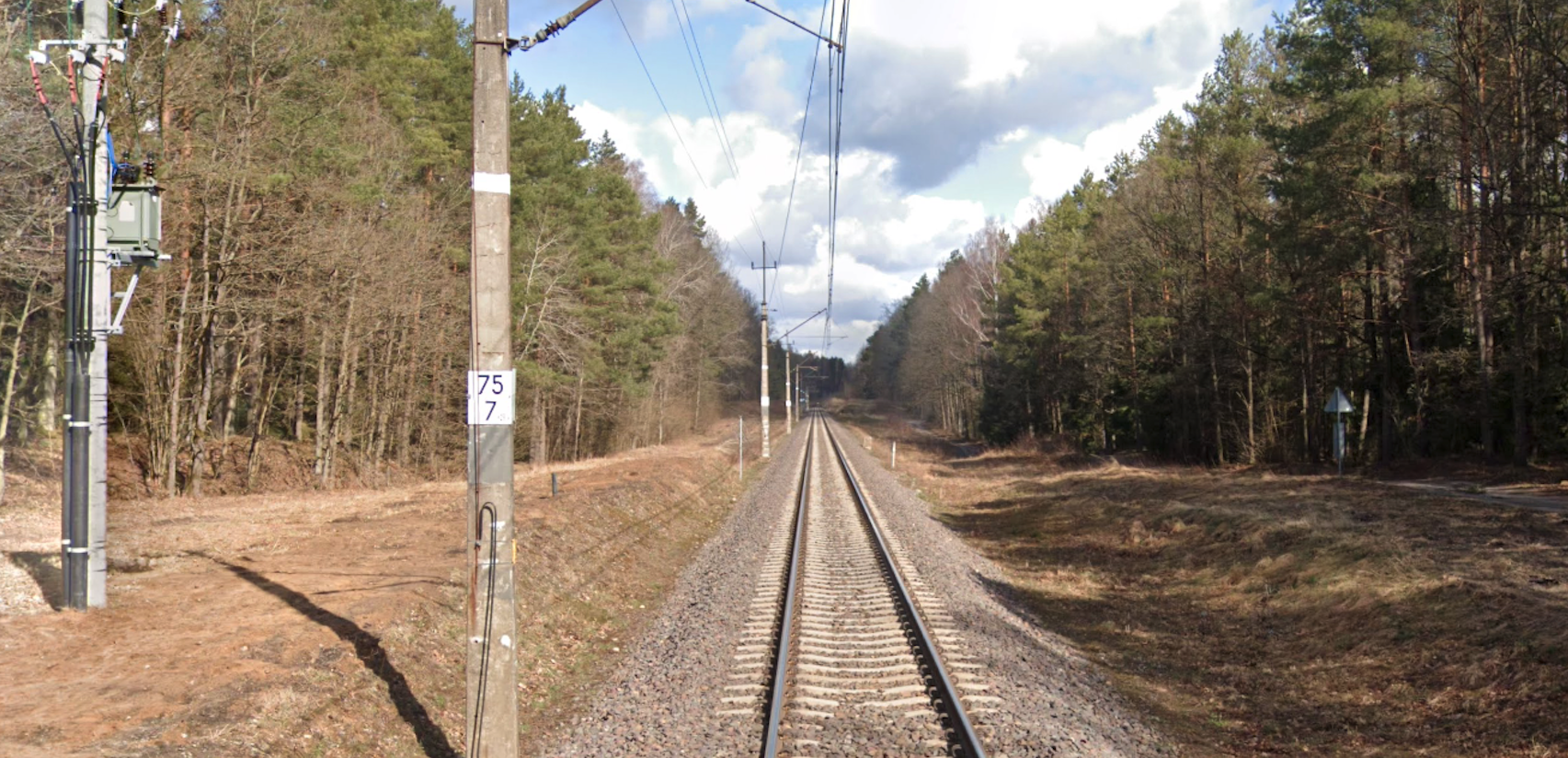
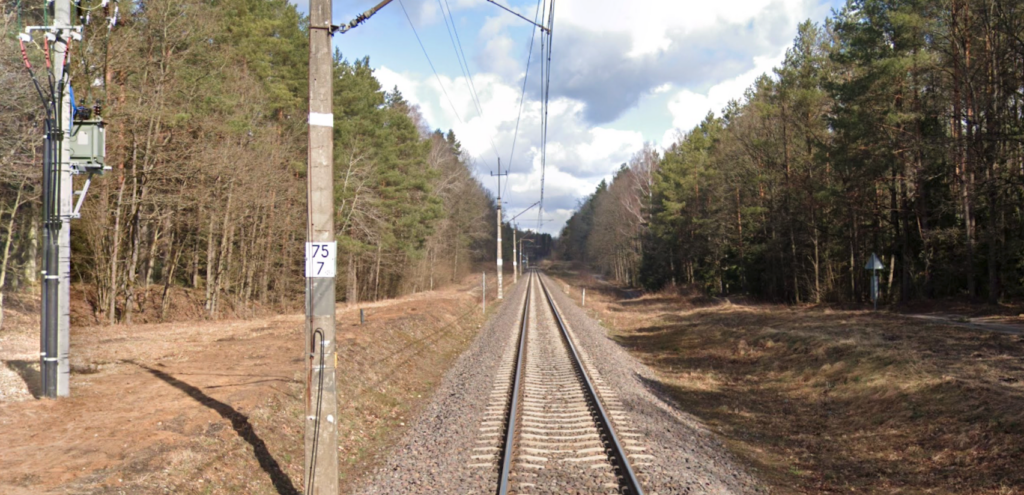
Railway line No. 216 Działdowo – Olsztyn Główny. The line was opened in two stages: on October 1, 1988, the Działdowo – Olsztynek section, and earlier on November 15, 1887. The line is 83.28 km long and single-track. The line was electrified on November 21, 1986. Maximum train speed is up to 140 km/h.
Railway line No. 219 Olsztyn Główny – Ełk. The line is single-track and non-electrified. The line was opened in stages: on November 1, 1883, Olsztyn Główny – Szczytno; on August 15, 1884, Szczytno – Pisz; and on November 16, 1885, Pisz – Ełk. The line is 157.50 km long. The maximum train speed is up to 120 km/h.
Railway line No. 220 Olsztyn Główny – Bogaczewo. The line was opened in stages: on August 15, 1882, from Olsztyn Główny to Morąg; and on November 10, 1882, from Morąg to Bogaczewo. Electrification took place on December 9, 1994. The line is 85.08 km long. The maximum train speed is up to 100 km/h.
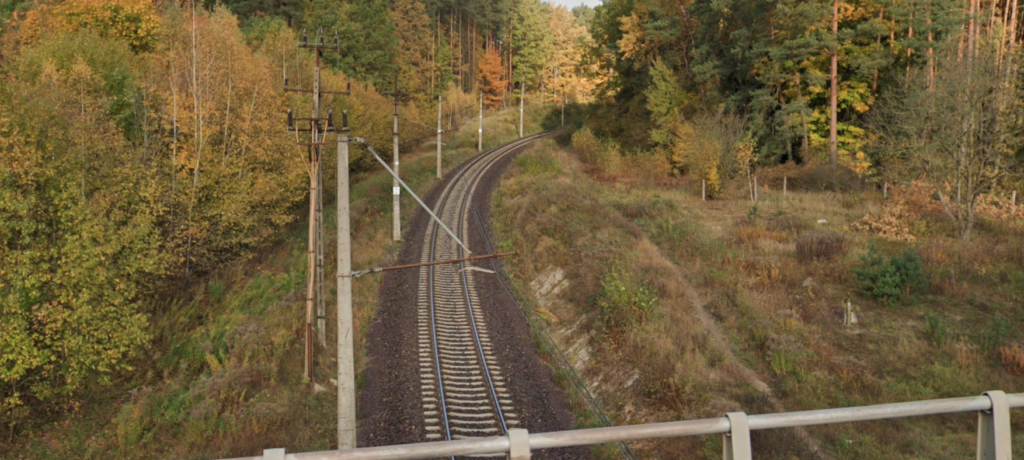
Railway line No. 353 Poznań Wschód – Skandawa is a primarily double-track line, mostly electrified. The line runs from Poznań in a northeasterly direction. It runs through the Greater Poland, Kuyavian-Pomeranian, and Warmian-Masurian Voivodeships. The line is 389.975 km long. Maximum speed is up to 160 km/h. Line launch: On May 26, 1872, Poznań East – Inowrocław. On March 25, 1873, Inowrocław – Toruń Główny. On August 15, 1873, Toruń Główny – Toruń Wschodni. On November 20, 1871, Toruń Wschodni – Jabłonowo Pomorskie. On December 1, 1872, Jabłonowo Pomorskie – Ostróda. On August 15, 1873, Ostróda – Olsztyn Główny. On December 1, 1872, Olsztyn Główny – Czerwonka. On November 27, 1871, Czerwonka – border of the Muscovite State. Launch of the second track: In 1910, Poznań East – Pobiedziska. In 1915, Poznań East – Toruń Miasto. In 1892, Toruń City R202 – Jabłonowo Pomorskie. In 1893, Jabłonowo Pomorskie – Korsze. Electrification: On December 14, 1976, Poznań Wschód – Inowrocław (PKP). On December 20, 1983, Inowrocław – Toruń Główny (PKP). On October 16, 1987, Toruń Główny – Iława Główna (PKP). On October 3, 1988, Iława Główna – Olsztyn Główny (PKP). On December 18, 1990, Olsztyn Główny – Korsze (PKP). The further line is not electrified and will not be.
Written by Karol Placha Hetman