Ostrów Wielkopolski 2022-12-28
Ostrów Wielkopolski is a town in Greater Poland, in the Greater Poland Voivodeship. The town has an area of 41.90 km². In 2020, Ostrów Wielkopolski had a population of 71,560, making it the 53rd most populous city in Poland. It received its town charter in 1404, and its status was confirmed in 1713. Its patron saint is St. Stanislaus of Szczepanów.
The town was first known as Ostrów, and then as Ostrów Kaliski (1919-1920). The name Ostrów Wielkopolski was given in 1920, when Greater Poland returned to Poland. Ostrów Wielkopolski is located near Kalisz, just 25 km away. Ostrów Wielkopolski is 120 km from Poznań, 100 km from Wrocław, 275 km from Warsaw, and 310 km from Kraków.
Geographically, Ostrów Wielkopolski lies in the South Greater Poland Lowland. Traces of settlement date back to the 11th century. In the 15th century, the stronghold had city rights, but as a result of numerous wars and fires, it fell into serious decline. Thanks to the efforts of Jan Jerzy Przebendowski, Ostrów was once again granted city rights under Magdeburg Law in 1713, accompanied by the issuance of numerous royal privileges. The area surrounding the town is one of the main natural gas production areas in Poland.
PKP Ostrów Wielkopolski.
Geographic coordinates 51.649N 17.805E. Elevation 133 m. Ostrów Wielkopolski – Dworcowa Street 1, 63-400 Ostrów Wielkopolski.
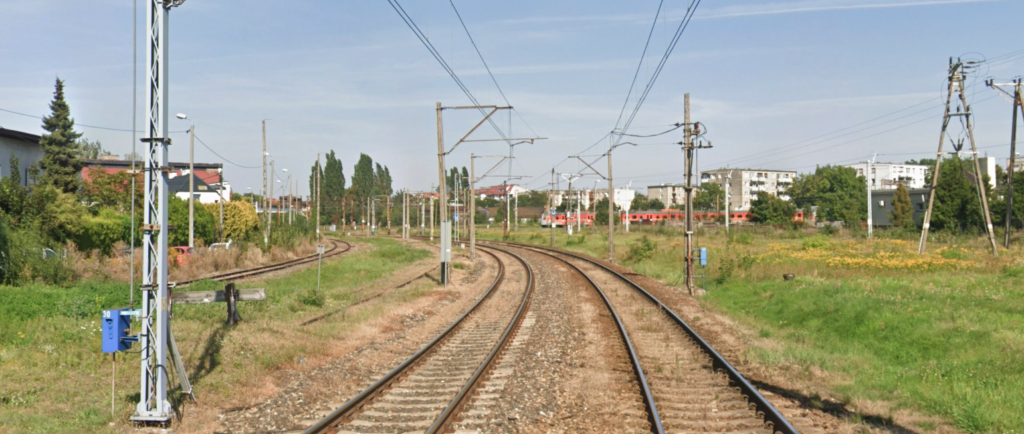
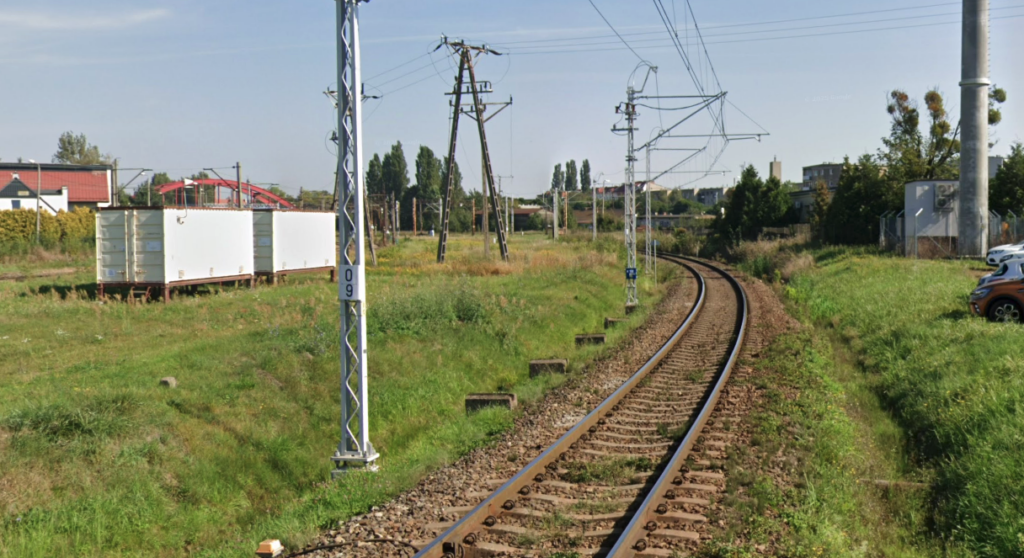
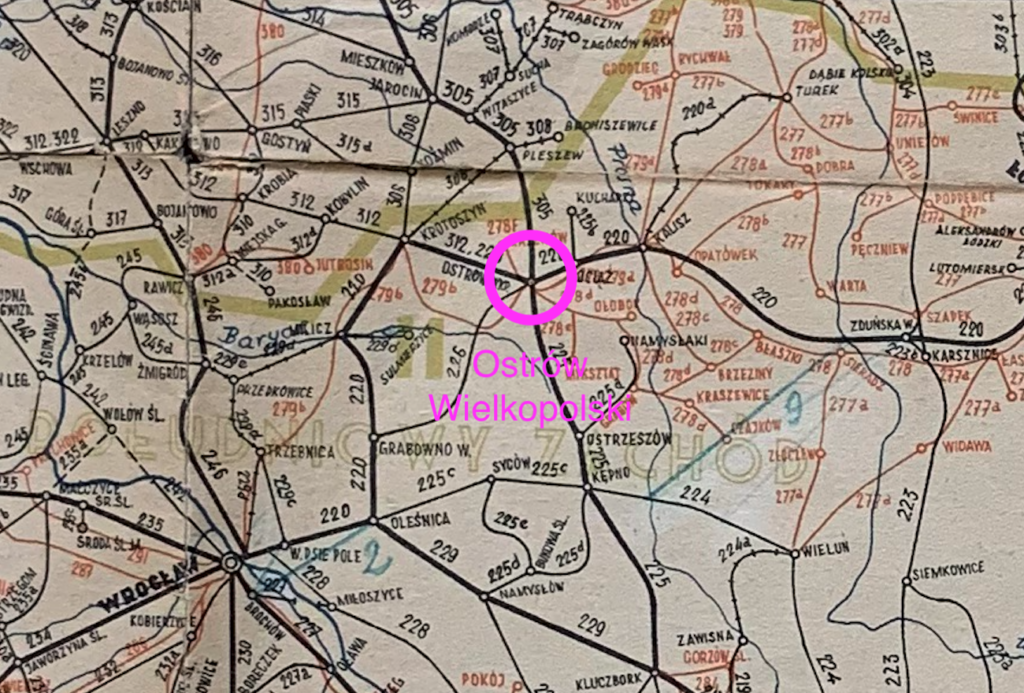
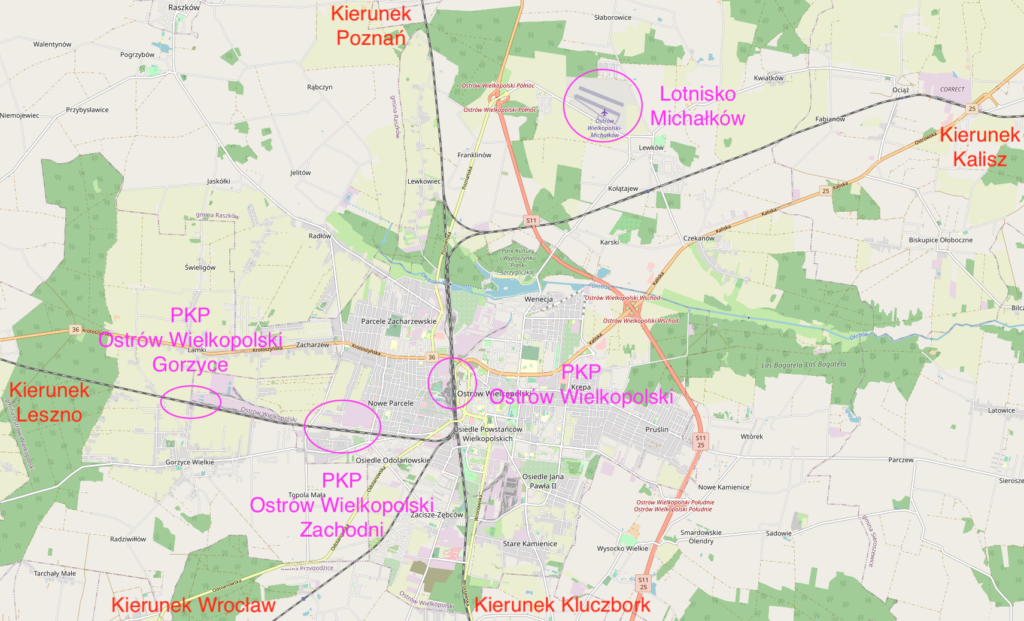
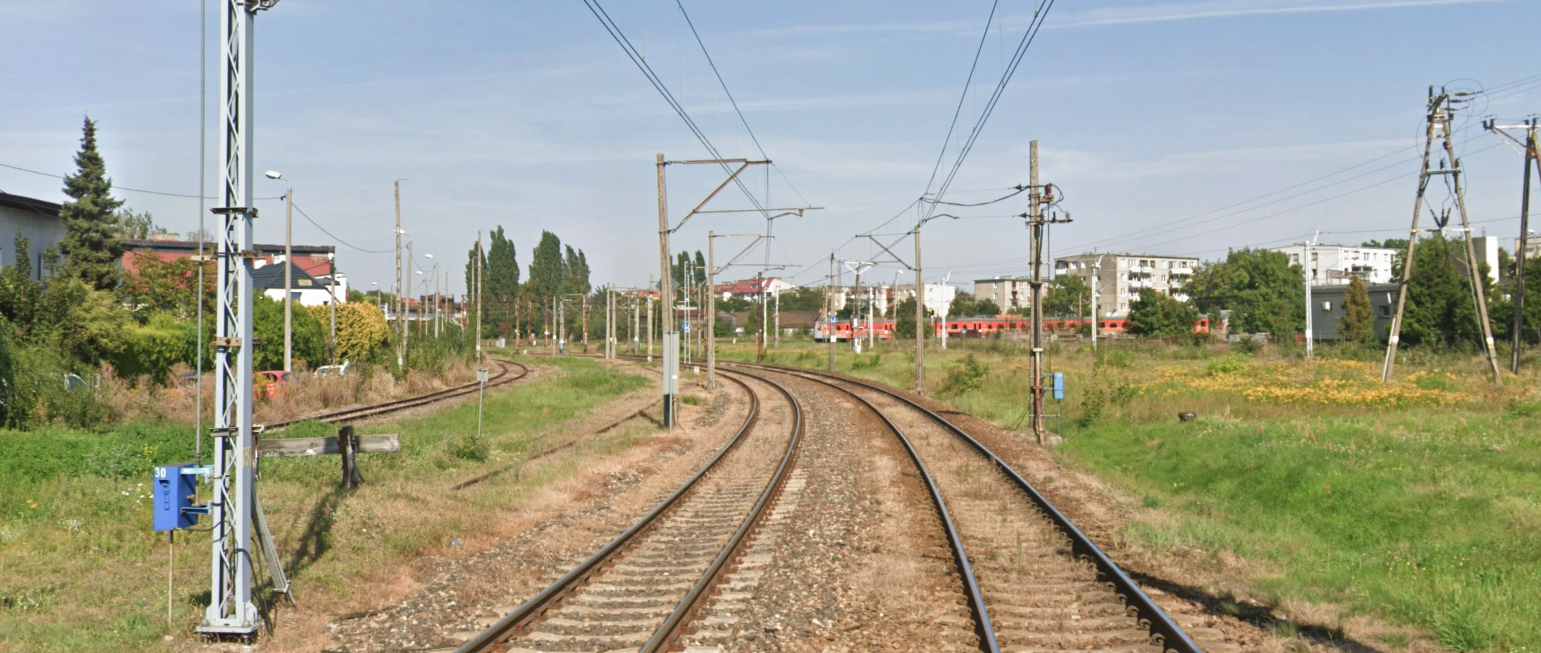
The railway provided the impetus for the town’s development. Around 1870, the Poznań-Kluszborsk Railway Company was established, with the Germanic name Posen-Kreuzburger Eisenbahn, or PKE. The company’s headquarters was in Poznań, and it operated only one line: Poznań-Jarocin-Ostrów Wielkopolski-Ostrzeszów-Kępno-Kluszbork. In Poznań, a new bridge was built over the Warta River, which is currently (2022) called the Dębiński Bridge. The line was 200.9 km long and opened on December 10, 1875. Initially, there was only one track. A second track was added in 1899. The company was nationalized in 1884. Due to the route’s location near the border between the Moscow and German partitions, the line was important for passenger and freight exchange. On the Germanic side, the border station was Nowe Skalmierzyce, and on the Moscow partition side, Kalisz Szczypiorno.
Ostrów Wielkopolski quickly became a junction station in five directions: Poznań, Kluczbork, Leszno (1888), Kalisz (1896 and onward to Łódź), and Oleśnica (1909 and onward to Wrocław). From 1906 to 1922, trains ran through the Ostrów Wielkopolski junction on the Warsaw-Poznań route, and from 1910, onward on the Warsaw-Wrocław route.
In November 1918, the indigenous inhabitants of Ostrów Wielkopolski (Poles) bloodlessly seized power from the Germans, and the Ostrów Republic was established. The city and surrounding area became part of Poland. In 1918, when Poland regained independence, the Poznań-Kluczbork line was divided between Poland and the Germans. On the Polish side, Lęka Opatowska became the border station, and on the German side, Kostów. In 1919, echelons of the “Blue Army” passed through Ostrów Wielkopolski.
In 1920, the cornerstone for a new factory was laid in Ostrów Wielkopolski. In 1921, the metal and machinery factory “Fabryka Wagonów” (Wagon Factory) was opened, as part of the Polskie Fabryki Maszyn i Wagonów L. Zieleniewski S.A. concern. The first new wagons were built in the second half of 1921. In the second, new hall, wagon renovations began. Subsequent investments included the construction of a power plant, a locomotive shed, a sawmill, and administrative buildings. In 1927, the factory was taken over by the state. In 1929, the Railway Workshops in Skalmierzyce were incorporated into the factory.
During the German occupation, the plant repaired wagons, and after World War II, in 1945, it was nationalized. In 1950, the State Railways Mechanical Workshop No. 11 was established. In 1952, the factory was incorporated into the Polish State Railways (PKP) and the “Ostrów” Railway Rolling Stock Repair Works were established. In 1961, the Central Wagon Design Office was established at the plant. In subsequent years, a combined heat and power plant, a forge, and a foundry were built. In 1999, the plant was renamed “Wagon Factory.” Since 2010, the factory has had a new owner, and further changes in ownership and product range have been made (Polski Tabor Szynowy Sp. z o.o.). In 1945, the entire Poznań-Kluczbork route was incorporated into Poland and assigned line number 272. The route was electrified between 1973 and 1974. Currently (2022), there are three railway stations within the city limits: Ostrów Wielkopolski (passenger and freight), Ostrów Wielkopolski Gorzyce (passenger stop), and Ostrów Wielkopolski Zachodni (freight station).
Ostrów Wielkopolski Railway Station.
The station opened on December 10, 1875. Also in 1875, the station building was opened and thoroughly rebuilt in 1966. The station building is located on the eastern side of the station level. In 1966, the station was completely rebuilt and significantly expanded. Inside, waiting rooms, a restaurant, restrooms, ticket offices, luggage storage, and railway service rooms were added. The building has a volume of 11,200 m3. The adjacent half-timbered buildings were demolished. A new building was constructed, housing the railway canteen and a dormitory. A new building was constructed for the Polish Post Office.
In 1966, during the station renovation, the passenger tunnel under the platforms and the platforms themselves, along with their shelters, were renovated. In 2016, the platforms and platform shelters were also renovated. The tunnel was also renovated. New lighting, a railway information system, and street furniture were installed. The square in front of the station was completely rebuilt and its circulation layout was changed. New lighting was installed.
Platform 1, located at the station, has a single-edge platform. The platform is 295 meters long. The platform has a roof covering the entire length of the station building. Platform 2 is an island platform with two edges. The platform is 280 meters long. The platform has a 115-meter-long roof. Platform 3 is an island platform with two edges. The platform is 280 meters long. The platform has a 115-meter-long roof.
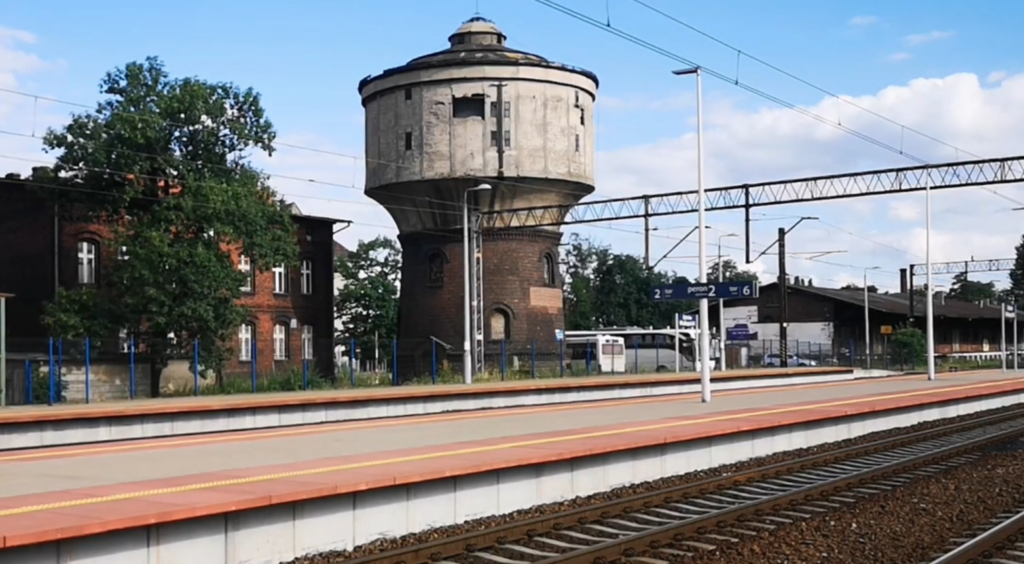
Two fan-shaped locomotive sheds were built on the western side of the station level. Turntables were installed in front of each locomotive shed. Coal entanglements and other railway buildings were also present. The station’s water tower dates back to 1912 and is currently unused. Two steam locomotives stand as monuments at the station. There is a Ty45 and a TKi3 steam locomotive.
In 2018, the station served up to 3,800 passengers. In 2022, 76 passenger trains departed from Ostrów Wielkopolski station daily, breaking all previous records. From Ostrów Wielkopolski, you can travel to: Białystok InterCity “Dąbrowska,” Ełk InterCity “Słowacki,” Kalisz Koleje Wielkopolskie, Katowice TLK “Spodek.” Kępno: 7 connections operated by Koleje Wielkopolskie and PolRegio. Kluczbork: 3 connections operated by PolRegio. Kołobrzeg InterCity “Zefir” or “Zamoyski”. Kraków Główny 4 InterCity “Wybicki”, “Osterwa”, “Zefir” or “Zamoyski” connections and TLK “Pułaski”. Leszno 6 connections operated by Koleje Wielkopolskie. Lublin Główny 5 InterCity “Konopnicka” connections, 3 PolRegio trains and 1 Koleje Wielkopolskie train. Łódź Kaliska. Odolanów 3 Koleje Wielkopolskie trains. Poznań Główny 21 trains including InterCity, TLK, PolRegio, Koleje Wielkopolskie. Szczecin Główny InterCity “Podhalanin” and InterCity “Osterwa”. Warsaw Gdańsk InterCity “Asnyk”. Warsaw Główna 3 PolRegio trains. Warsaw Wschodnia 2 InterCity “Łużyce” and “Baczyński” trains. Wrocław Główny 11 InterCity and PolRegio trains. Zakopane InterCity “Podhalanin”. Zgorzelec InterCity “Łużyce”.
On January 14, 2026, 93 passenger trains departed from Ostrów Wielkopolski station for the following stations: Białystok, Giżycko, Głogów, Gniezno, Kalisz, Kępno, Kluczbork, Konin, Kraków Główny, Krotoszyn, Krzyż, Leszno, Łęka Opatowska, Łódź Kaliska, Odolanów, Opatówek, Poznań Główny, Szczecin Główny, Szklarska Poręba Górna, Warsaw Wschodnia, Wrocław Główny, and Zakopane.
Railway lines.
Railway line No. 272 Kluczbork – Poznań Główny. The line was electrified in 1973-1974. Railway line No. 14 Łódź Kaliska – Tuplice is 388.578 km long. The line runs meridionally. The line belongs to freight corridor No. 8. The line is equipped with the SHP system along its entire length. Railway line No. 355, Ostrów Wielkopolski – Grabowno Wielkie (via Oleśnica, Wrocław), is 53 km long. The line is single-track and electrified. In 1987, electrification of the last line extending from Ostrów Wielkopolski was completed. At that time, the last shape semaphores were replaced with light signals.
The Wielkopolanin Train.
In the 1970s and 1980s, the popular express train “Wielkopolanin” ran through Ostrów Wielkopolski. Initially, the train served the Poznań-Katowice route, and later (in 1970) an extended route to Kraków. Because the entire route had not yet been electrified, the train used an SU45 diesel locomotive for part of the journey. Periodically, the train was referred to as the “Expres.” The train departed Poznań at 6:00 AM and arrived in Kraków at 12:00 PM, after covering 399 km. Its commercial speed was 66.5 km/h. The train stopped at the following stations: Środa Wielkopolska, Jarocin, Ostrów Wielkopolski, Kępno, Kluczbork, Lubliniec, Tarnowskie Góry, Bytom, Chorzów Stary, Chorzów Miasto, Chorzów Batory (currently 2022, there are no passenger trains on the Bytom – Chorzów Batory section), Katowice, Mysłowice, Jaworzno Szczakowa, Trzebinia, Krzeszowice, and Kraków. On the return journey from Kraków, the train departed at 4:00 PM and arrived in Poznań at 10:00 PM. The train had 6-8 carriages. One First Class carriage and a WARS buffet carriage, half of which were Second Class compartments, and the rest were a buffet with bar-style tables. The “Wielkopolanin” was one of the first PKP trains with reserved seats. Seats, priced at 10 PLN, could only be purchased at the departure station. At intermediate stations, passengers took vacant seats and purchased a seat from the conductor.
PKP Ostrów Wielkopolski Gorzyce.
The Ostrów Wielkopolski Gorzyce passenger stop is located on line No. 14 Łódź Kaliska – Tuplice, in the western part of the city. The stop has a single, double-edged island platform.
PKP Ostrów Wielkopolski Zachodni.
Ostrów Wielkopolski Zachodni railway station was opened in 1955, during a period of increased freight traffic to help rebuild the country devastated by war. The station is also located on the No. 14 Łódź Kaliska-Tuplice railway line, but closer to the city center. The station provides services to nearby businesses.
Written by Karol Placha Hetman