Ostrów Wielkopolski 2026-04-23
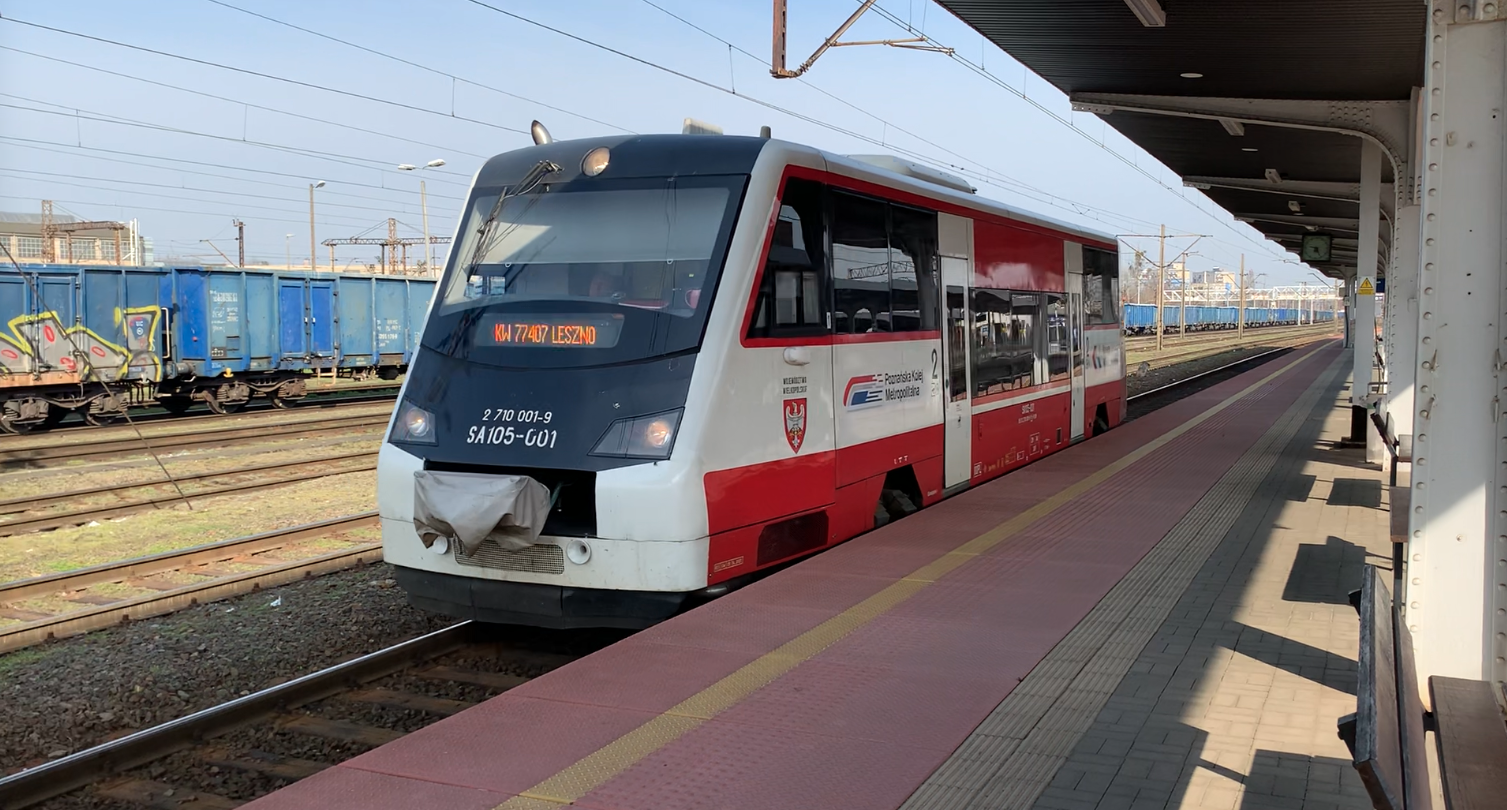
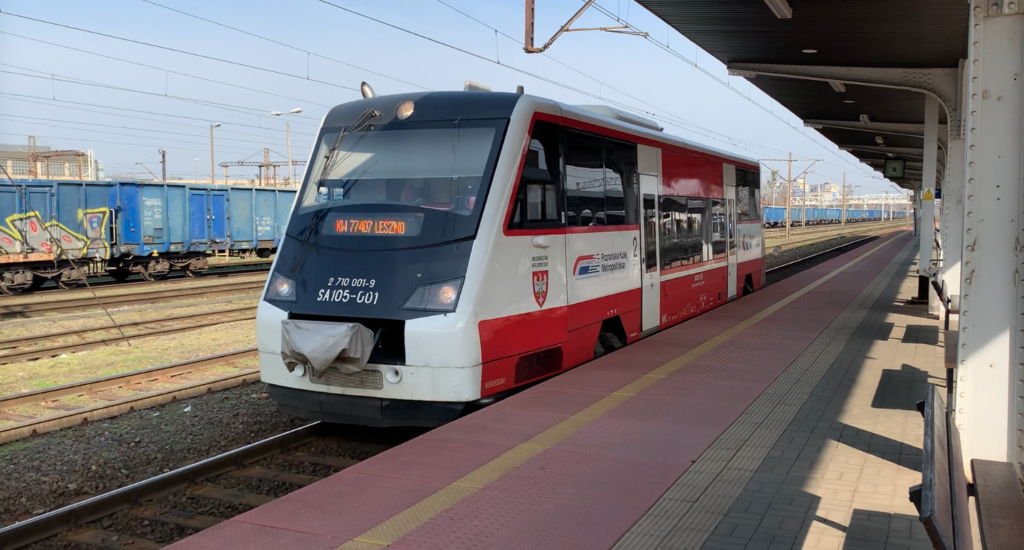
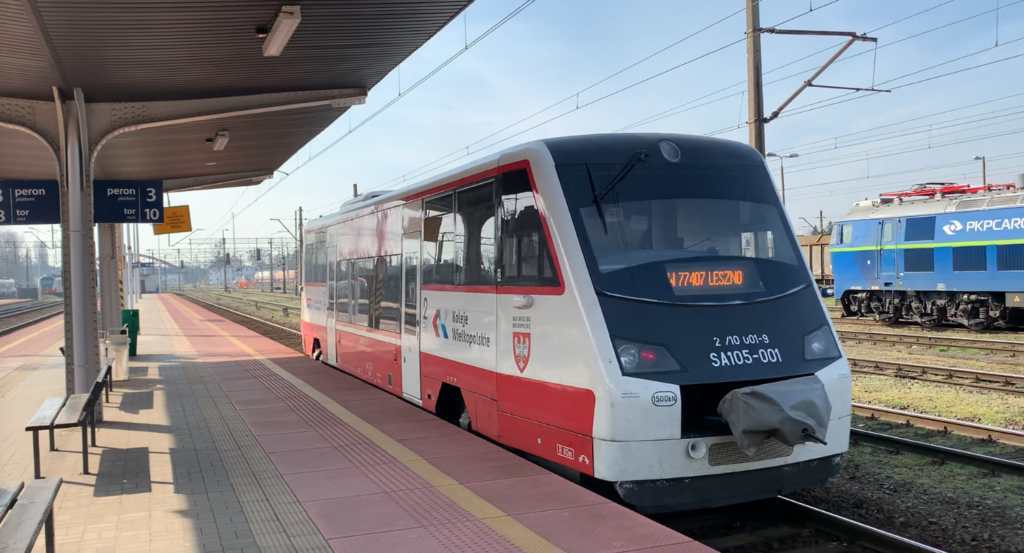
SZT ZNTK Poznań SA105-001.
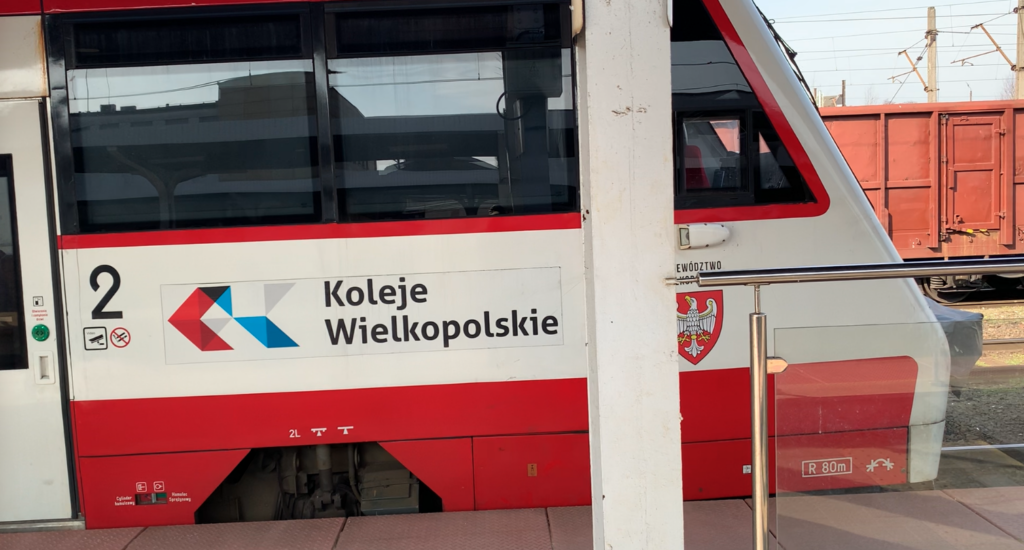
Despite the socio-economic changes initiated in 1989, the situation on Polish Railways (PKP) has not improved significantly. The problem was the lack of vetting and decommunization of the Polish elite. The communists of the time transformed into businessmen, and their descendants currently (2024) rule Poland. This is precisely how post-communists, Freemasons, and Volksdeutsche rule. In the 1990s, changes at PKP were extremely slow and often to the detriment of passengers. Rail connections, even stations and entire railway lines, were closed. This process continued until 2005. A major problem was the lack of economical, small railcars. Not because Polish Industry couldn’t produce them, but because carriers were uninterested in this type of rolling stock.
By 1995, PKP had six SN81 and SA104 railcars (known as railbuses), built by Kolzam – Kolejowe Zakłady Maszyn “Kolzam” Spółka Akcyjna (Kolzam Railway Machinery Company) – a rolling stock manufacturer from Racibórz. PKP also had six SA101 and SA102 railcars, built by Poznańskie Zakłady Naprawcze Taboru Kolejowego (ZNTK Poznań), a company in Poznań engaged in the production, modernization, and repair of rail vehicles.
Around 1996, PKP planned to purchase approximately 200 new railcars. Therefore, the only manufacturers of this type of vehicle in Poland at the time; Kolzam Racibórz and ZNTK Poznań made extensive preparations to begin production. However, in 2000, significant legal changes occurred due to the passage of the PKP restructuring act. The financing rules for agglomeration and regional transport were changed, and most importantly, PKP Przewozy Regionalne (PKP Regional Transport) was established. Local governments were obligated to finance the purchase of new rolling stock. ZNTK Poznań offered local governments the Regio Tramp DMU family, in 1-, 2-, and 3-carriage variants. Kolzam Racibórz offered Kolzam Regio Van rail vehicles. A third plant, PESA Bydgoszcz (just transformed from ZNTK Bydgoszcz), joined the tender process with a Partner vehicle, the PESA 214M prototype. Unfortunately, orders from local governments were for only a dozen or so units.
Regio Tramp DMUs
The Regio Tramp DMU design was developed in Krakow by EC Engineering (ECE). EC Engineering is a Krakow-based design firm operating in the railway, aviation, and automotive industries. The Regio Tramp DMU was developed in 2001-2002. Two Regio Tramp DMUs were ordered by the Marshal’s Office of the Wielkopolska Voivodeship. The first vehicle began testing at the Railway Institute in Warsaw in April 2002. The Regio Tramp DMUs were manufactured in single- and two-carriage versions. The single-carriage version is the 213M type, and the two-carriage version is the 215M type. The three-carriage version, the 216M type, was not built.
The vehicles are intended for service on routes with low passenger numbers, on non-electrified lines. The Regio Trampy vehicle has a self-supporting steel structure with a low floor near the entrance doors. The floor is 0.60 m above the railhead. This section of the car has a designated area for wheelchair passengers and a bicycle area. The rest of the car has a high floor and is accessed by three steps.
The car body has two-stage suspension. The first stage consists of metal-rubber springs. The second stage consists of pneumatic cushions and metal-rubber springs. Each car is equipped with a pair of double doors on both sides of the body, with a clear entrance of 1.30 m. The cars also have a toilet.
The cars are equipped with Scharfenberg automatic couplers, allowing them to be coupled with other vehicles of the same type. There are also type 213Ma cars equipped with buffers and screw couplers, allowing for the connection of regular passenger cars. The 215M wagons are equipped with buffers and screw couplings.
Each wagon has two single-axle bogies. The first is a 19MN driving bogie. The second is a 32AN trailing bogie. All wheelsets are equipped with disc brakes. The drive unit consists of a combustion engine integrated with a VOITH 863.3p torque converter, with a hydrodynamic brake located under the floor next to the driving bogie. The engine is a power pack, a MAN D2866 diesel engine with an output of 257 kW.
The vehicle is equipped with standard equipment: an active deadman’s switch, automatic train braking, and a radio stop. The 213M cars have cameras instead of rear-view mirrors. During the modernization, the vehicles were equipped with air conditioning. Further modernizations were carried out in subsequent years. A passenger counting system, ticket vending machines, USB ports, a new monitoring system, and a new passenger information system were installed. The vehicles are operated in the Wielkopolskie, Lubuskie, and Podlaskie Voivodeships.
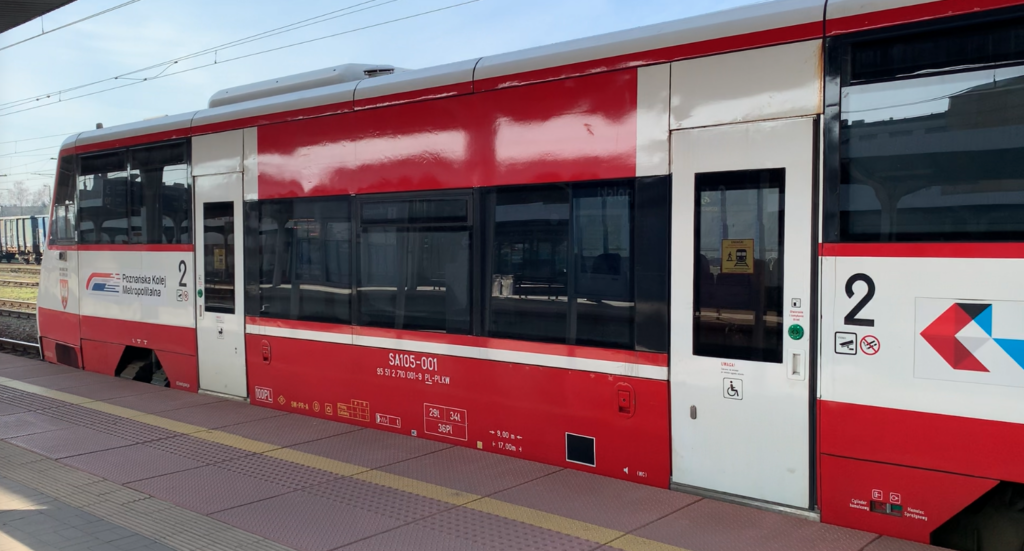
SA105-001
SA105-001 Serial number 213M-001/2002. Manufactured in 2002. EVN: 95 51 2 710 001-9 (PL-PLKW). The vehicle was delivered to the Marshal’s Office of the Wielkopolskie Voivodeship on August 1, 2002. The vehicle was painted red and white and remains so to date; 2026. The vehicle was accepted into service with PKP Przewozy Regionalne. In October 2007, the vehicle underwent a level R1 repair. In August 2009, the vehicle was modernized, installing a toilet, which was not originally present, and installing air conditioning. In 2011, the vehicle was added to the Wielkopolskie Railways inventory. In 2015, a level P5 repair was completed. As part of the P5 repair, combined with the modernization, the vehicle’s floors and skin were replaced, the driver’s desks were modernized, a new passenger information system, intercoms, and monitoring systems were installed, the air conditioning, ventilation, heating, door control system, and combustion engine cooling system were replaced, and new seats were installed in the passenger compartment and driver’s cab. On June 8, 2021, at a category C level crossing in Krzycko Wielki, a passenger car collided with scheduled train KW ROM 77214 on the Wolsztyn-Leszno route. One occupant of the car died, and another was seriously injured. The vehicle was quickly returned to service.
T-T 213M (SA105) data:
Single-carriage. Axle configuration A’1′. Weight 28,000 kg. Length 17.00 m. Seating capacity 36+7. Total passenger capacity 90. Drive system: single MAN D2866 engine, 257 kW. 7 units built. Width 2.90 m. Height 3.80 m. Wheel diameter 0.84 m. Maximum operating speed 100 km/h.
Written by Karol Placha Hetman