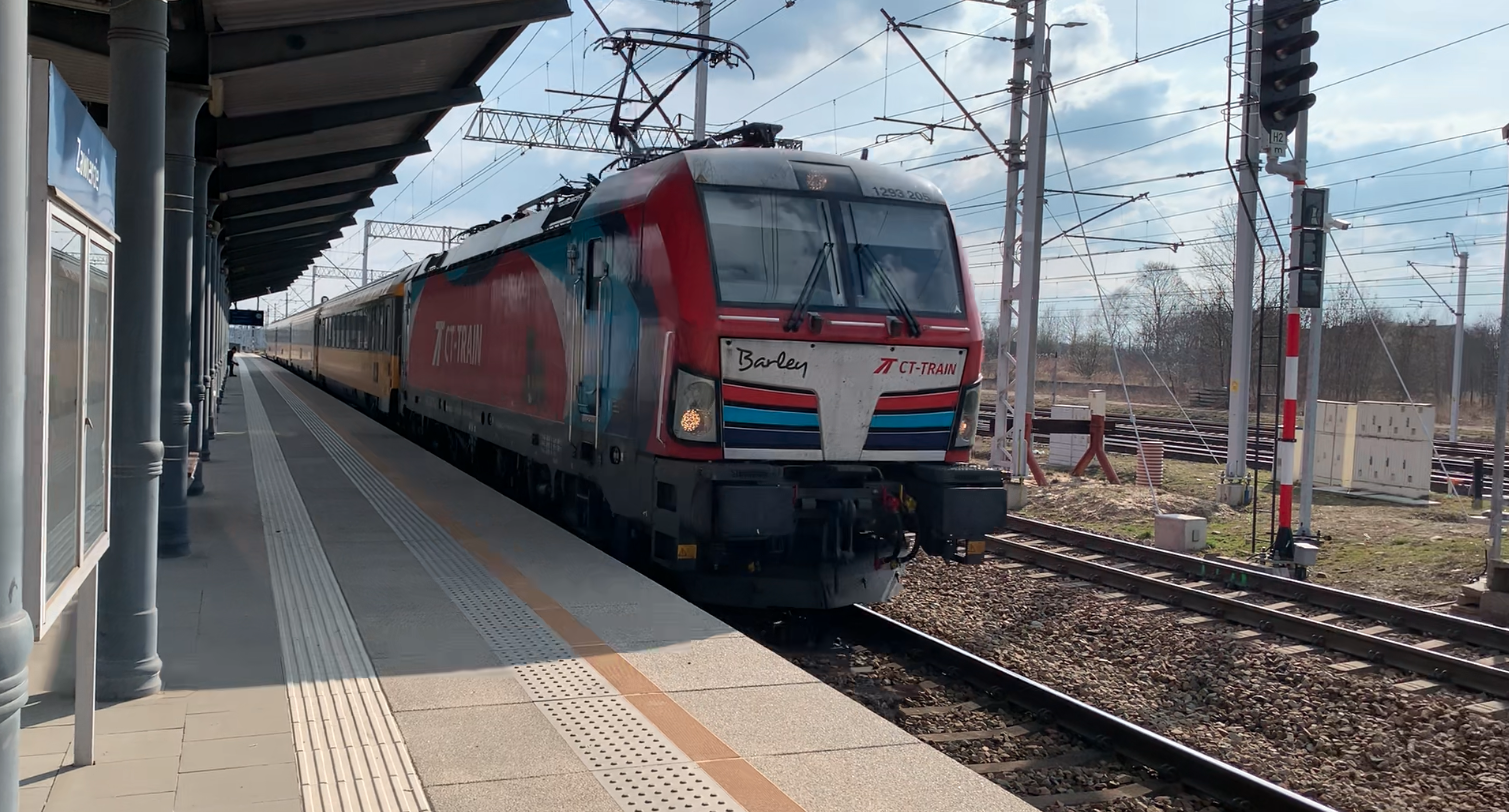
Zawiercie 2026-04-15
RegioJet Railway. 2026
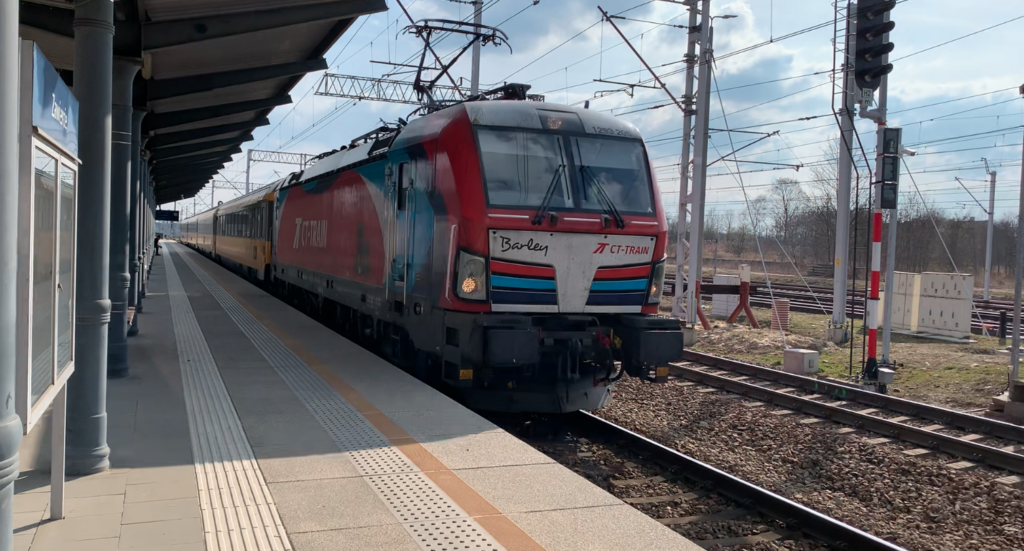
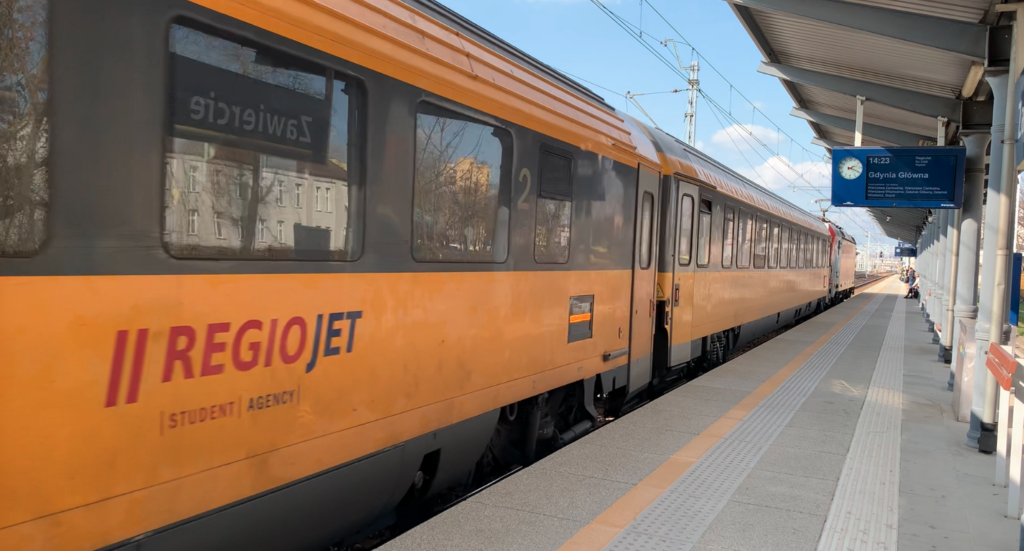
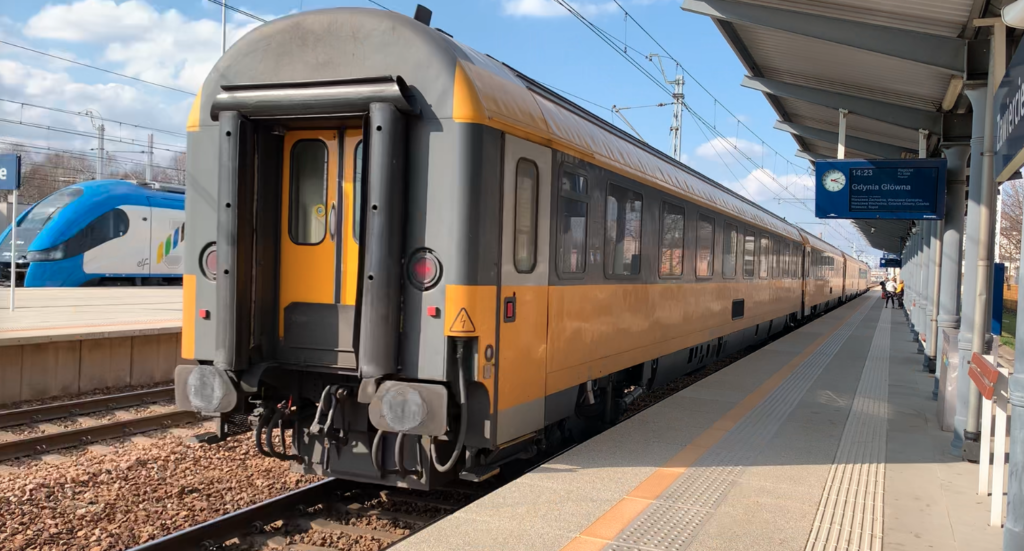
RegioJet is a railway operator founded in the Czech Republic in 2009. The company is headquartered in Brno. Legally, it is a joint-stock company, 100% owned by the travel agency Student Agency.
RegioJet operates passenger rail transport services in the Czech Republic, Poland, Austria, and Slovakia, including the following routes: Prague – Ostrava – Krakow – Przemyśl, Prague – Ostrava – Košice, and Prague – Brno – Bratislava/Vienna. It is the first private railway operator in the Czech Republic to begin operating InterCity trains. The company competes in the rail market with companies such as ČD and Leo Express. The company primarily uses classic trains, based on used Germanic wagons purchased from DB. The company planned to offer passengers eight classes of travel. In reality, four classes were used. Passenger services include coffee, tea, juice, newspapers, and brochures; these are at RegioJet’s discretion.
RegioJet locomotives: Series 162, Series 193, Series 386, Series 388, Series 703, Series 721, and Series 740. Most locomotives were leased or short-term rented. Passenger cars: ABmz, ABmpz, Bmz. Electric multiple units: Bombardier Talent, Siemens Desiro, PESA Elf.eu.
When entering Poland, RegioJet initially planned to establish a branch called “RegioJet PL.” However, the limited financial resources and Polish regulations hindered the company. The Office of Rail Transport was forced to deny open access to Polish routes. The carrier planned to launch connections on the following routes: Kraków Główny – Warszawa Wschodnia, Wrocław Główny – Warszawa Wschodnia, and Kraków Główny – Gdynia Główna. The carrier’s trains began operating in Poland on March 1, 2022. For the first three months, these were humanitarian services on the Przemyśl – Prague route, related to the Moscow invasion of Ukraine, which were then converted to commercial services based on a decision by the President of the Office of Rail Transport. The regulator granted open access based on an application in December 2020. At the turn of 2025/2026, the company began providing services on domestic routes in Poland: on September 18, 2025, on the Warsaw – Kraków route; on December 14, 2025, on the Kraków – Warsaw – Gdynia route; and on March 1, 2026, on the Warsaw – Poznań route.
Despite positive announcements, the carrier made numerous errors that caused significant stress for passengers. Trains were missing carriages for which tickets had been sold. Passengers were not informed of departure time changes. Connections were canceled at the last minute. There were problems with refunds for missed connections.
On April 7, 2026, the President of the Office of Rail Transport issued a decision confirming RegioJet’s unlawful practices, which violate the collective interests of passengers in rail transport. In its proceedings, the Office of Rail Transport confirmed that the case affected 23 trains, including seven operating on the Warsaw-Kraków route, four on the Gdynia-Kraków route, and 12 on the Poznań-Warsaw route. The carrier cited organizational difficulties as the reason for the cancellations, even though the operator had launched ticket sales. On April 9, 2026, RegioJet announced that it would completely cease domestic services, i.e., within Poland, on May 4, 2026. RegioJet announced that international services would continue. Two international connections to Prague will remain in the schedule. Independent experts cited the company’s poor preparation for entering the Polish market as the main reason. This included a lack of sufficient carriages, a lack of staff, a lack of technical support, a lack of physical ticket offices, and poor ticket pricing. The CEO of RegioJet said that “Poland is hell.” PKP pointed out that “RegioJet’s withdrawal from the Polish market is a purely business decision by this carrier, for which its management bears full responsibility. Attempting to blame the PKP Group for the failure in the Polish market is unfair to passengers and inconsistent with the facts.”
Written by Karol Placha Hetman