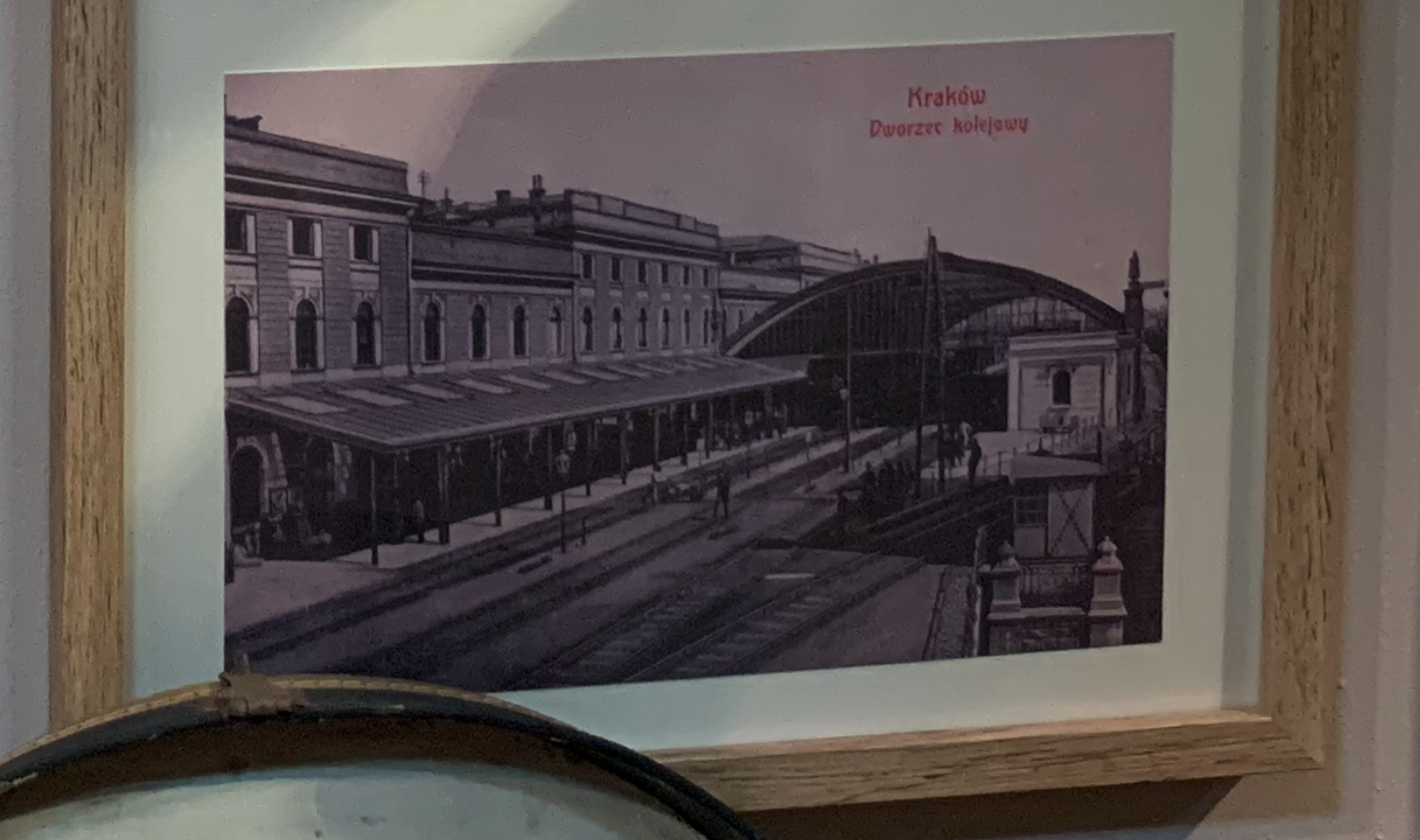
Kraków 2026-05-23
PKP Kraków – Lviv. 19th century.
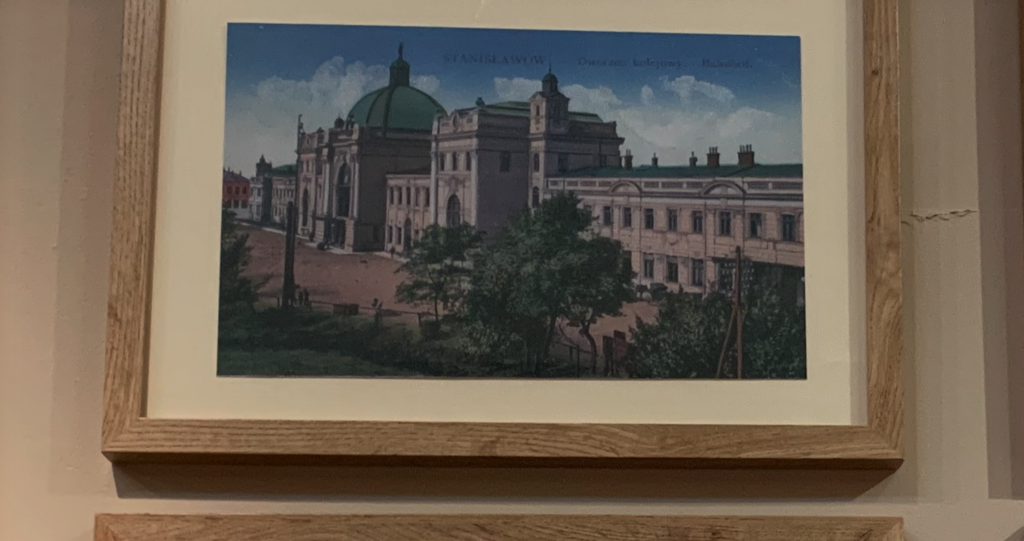
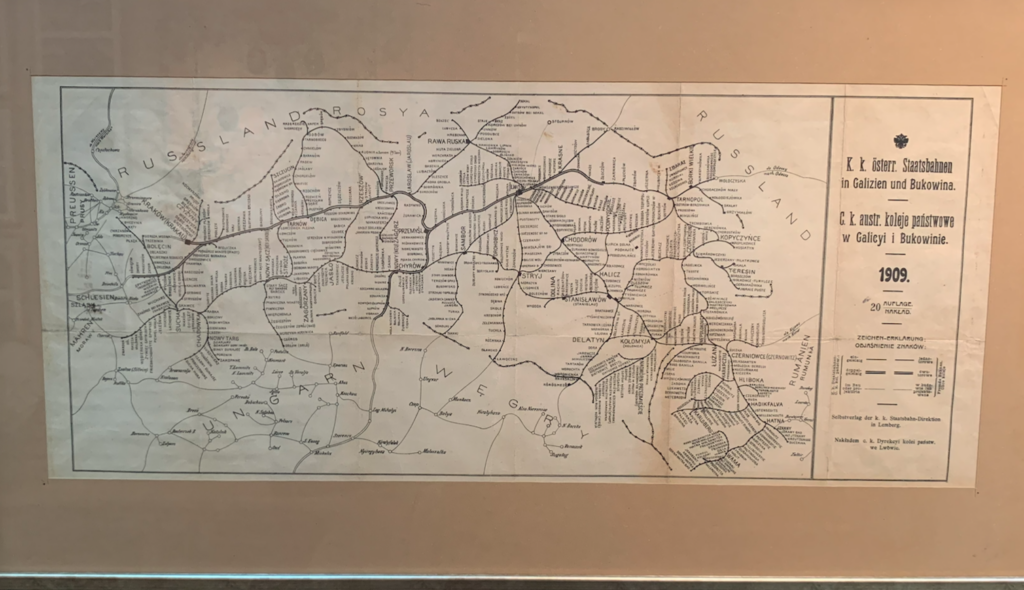
Austria-Hungary.
The railway became one of the unifying factors of the culturally and economically diverse country of Austria-Hungary. According to the Imperial-Royal authorities, the railway, which was to be punctual, efficient, and reliable in transport, was to testify to the strength of the Habsburg monarchy. The railway was an important element of technical and economic development, even in the empire’s remotest regions. However, this empire was a colossus with feet of clay. Corruption was rampant, official positions were traded, the rich were increasingly wealthy, and the poor fell into extreme poverty. The state simultaneously attempted to modernize and struggled with serious crises. However, reforms were only partially implemented. The Habsburgs managed to maintain a large country throughout the turbulent 19th century. However, the Habsburgs failed to keep pace with political and national changes. The state was bureaucratic, with ongoing national conflicts and the revolution of 1848. In 1867, the Austro-Hungarian Empire was established, granting greater autonomy to the Hungarians. The empire was multinational: Poles, Czechs, Hungarians, Croats, and others. National issues were not properly resolved. Ultimately, the Habsburgs lost the rivalry with the Prussians. The Habsburgs’ advantage was their adherence to the Roman Catholic faith. They actively supported the Counter-Reformation, which combated Protestantism and other sects. Religion was an important part of government, and the emperor was seen as the defender of Christianity, especially against the Ottoman Empire. But only for a time..
The Austrian government quickly became interested in railway construction. By 1848, a network of state-owned railways had been established, extending from Vienna, Buda, and Pest. The first railway in Lesser Poland was the Kraków-Upper Silesian Railway (Krakau-Oberschlesische Eisenbahn), built by Germans. In 1847, this railway connected Mysłowice, Szczakowa, and Kraków. At Mysłowice, it connected with the Prussian Upper Silesian Railway, and at Granica (now Maczki) station, with the Warsaw-Vienna Railway. After the Spring of Nations (1848), when the balance of power in Europe remained unchanged, the young Emperor Franz Joseph I decided to expand the railway network in Galicia. He was guided by military and economic objectives. Efforts to build an iron railway from Kraków via Dębica to Lviv began as early as 1837, but a lack of funding hindered this.
In 1851, a set of regulations was issued that normalized railway traffic. After the Crimean War (1853–1856), during which Austria remained on the sidelines, it was decided to focus on developing the railway in Galicia, towards the Muscovite state. Relations between Austria and the Muscovite empire deteriorated. However, it quickly became clear that the state could not afford such large investments. Privatization became necessary. The Jewish Rothschild family (red shield), with Jakob Rothschild as its main shareholder, took over the railway. This family originated from Germanic origins. To conceal the fact, the “Staatsbahn” (Staatsisenbahn) part of the name was retained.
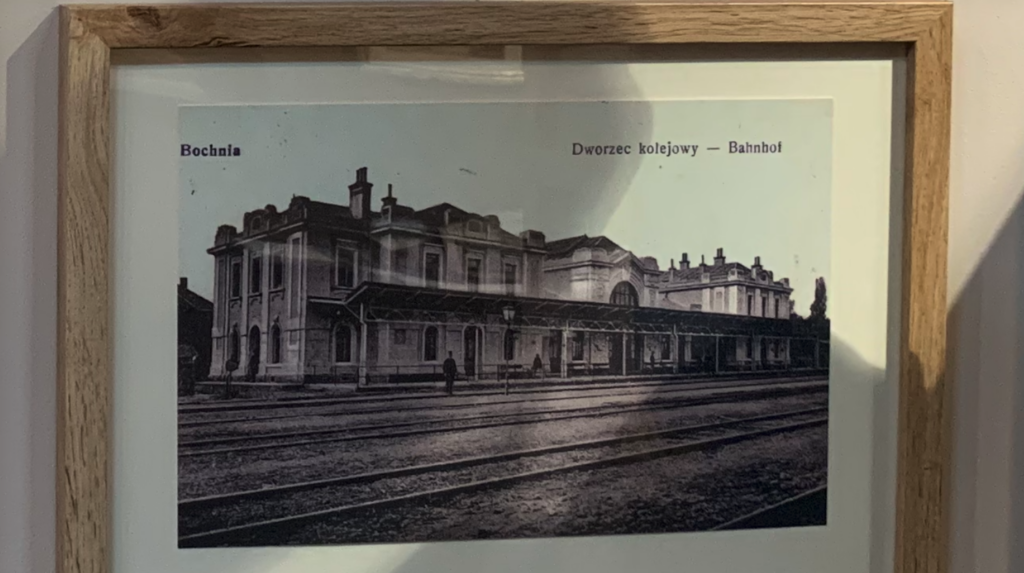
In 1850, preparations began for this privatization and subsequent investments. By 1853, the Bochnia–Dębica section had been built. The Kraków–Bochnia connection was not yet in place. Specifically, there were embankments and cuttings, but no tracks. In 1855, the single-track Kraków-Dębica line was opened. Engineer Kajetan Kob designed the line. He also designed all the bridge crossings. The first train from Kraków to Dębica arrived on October 5, 1855. The line was 110.517 km long. The official opening of the line took place on February 20, 1856, with two trains running daily. The journey from Dębica to Kraków took 4 hours and 10 minutes, and to Vienna 19 hours and 10 minutes.
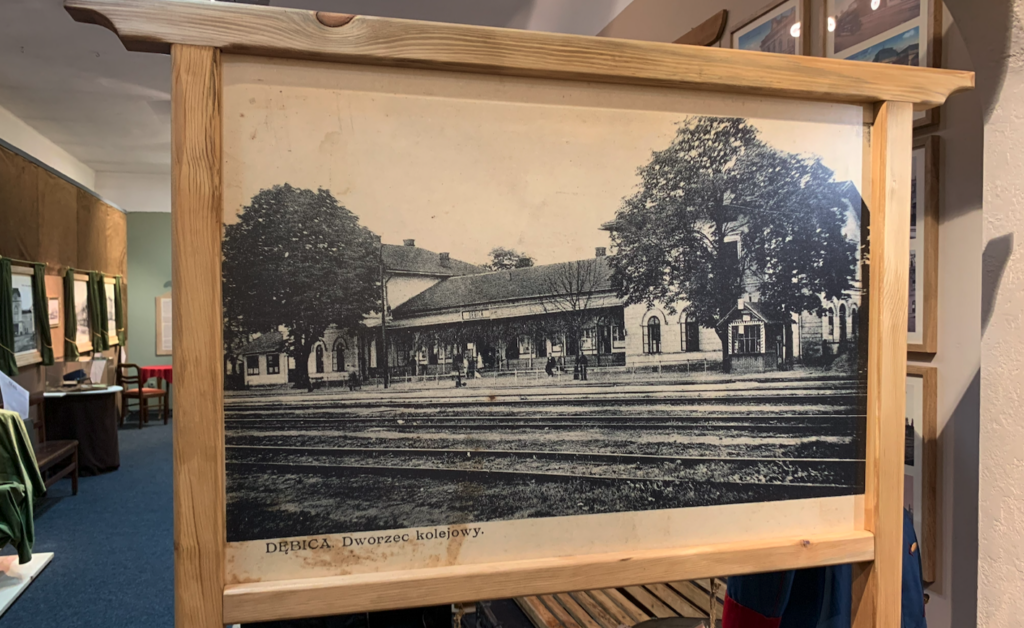
The extension of the railway line to Dębica brought about an economic revival for the town. On October 5, 1855, the first train arrived from Kraków. Other sources cite October 15, 1855. The official opening of the railway line took place on February 25, 1856. The Kraków-Dębica railway line was extended to Rzeszów in 1858. In 1887, a line to Rozwadów, now a district of Stalowa Wola, via Mielec was also built, making Dębica an important railway junction. In 1887, permission was obtained from the Austrian government to build a railway line from Dębica to Jasło, but unfortunately, this line was never built.
In 1888, a second track to Kraków was opened, and soon a second track towards Rzeszów was also built. In 1892, the railways belonging to the Society of the Privileged Galician Railway of Charles Louis became state property, and the station in Dębica fell under the Kraków district of the Imperial-Royal Austrian State Railways until 1918.
The railway made towns along this route attractive for founding new industrial plants. Trade flourished. Not only raw materials and semi-finished products were transported, but also livestock: cattle, pigs, and horses, which were transported by rail as far as Silesia. In the opposite direction, hard coal, metal ores, machinery, and equipment were transported. Rock salt was transported from Wieliczka and Bochnia.
Between 1858 and 1861, the Dębica-Przemyśl-Lviv section was built. In 1861, the line became the property of the Society of the Privileged Royal Austrian State Railways. The Galizische Carl-Ludwig-Bahn (CLB Charles-Ludwig Railway). The agreement was signed on April 7, 1857. The company took over the entire railway infrastructure: tracks, stations, locomotive sheds, and rolling stock. Archduke Karl Ludwig was the brother of Emperor Franz Joseph. The company operated the Kraków-Lviv line from 1858 to 1892. On January 1, 1892, the line was nationalized again. However, in 1884, a state railway was re-established: the kkStB (Kaiserlich-Königlich Staatsbahnen). In Austria-Hungary, there were two systems: the kkStB—the Austrian section, and the MÁV—the Hungarian section. The kkStB—the Imperial-Royal State Railways of Austria. By the Great World War, the kkStB had taken over most of the railway lines and rolling stock.
The Galician Charles Ludwig Railway (in German Galizische Carl Ludwig-Bahn, CLB) was built between 1856 and 1861 under the direction of Leon Sapieha. The concession for the railway construction was granted by Franz Joseph on April 7, 1858. The railway was expanded by the Imperial-Royal Privileged Joint-Stock Company of the Galician Charles Ludwig Railway until 1892. Subsequent concessions were issued in 1867, 1883, and 1886.
The line runs from west to east along the geographical line of the Carpathian Foothills. As a result, the elevation along the route ranges from 187 m to 231 m, which is practically imperceptible for a line 258.24 km long. However, the line required the construction of numerous river crossings; The Wisła, Podłężanka, Raba, Uszewka, Uszwica, Kisielina, Dunajec, Biała, Wisłoka, Wielopolka, Wisłok, Mleczka, San, Wiar, and, in Ukraine, Zielony Potok, Wiśnia, and Wiereszyca. The line connected important cities: Kraków, Bochnia, Tranów, Dębica, Rzeszów, Przemyśl, and Lviv. The line proved extremely profitable. In 1862, the company’s capital amounted to 73.7 million crowns, reaching an estimated 186 million crowns 30 years later, in 1891.
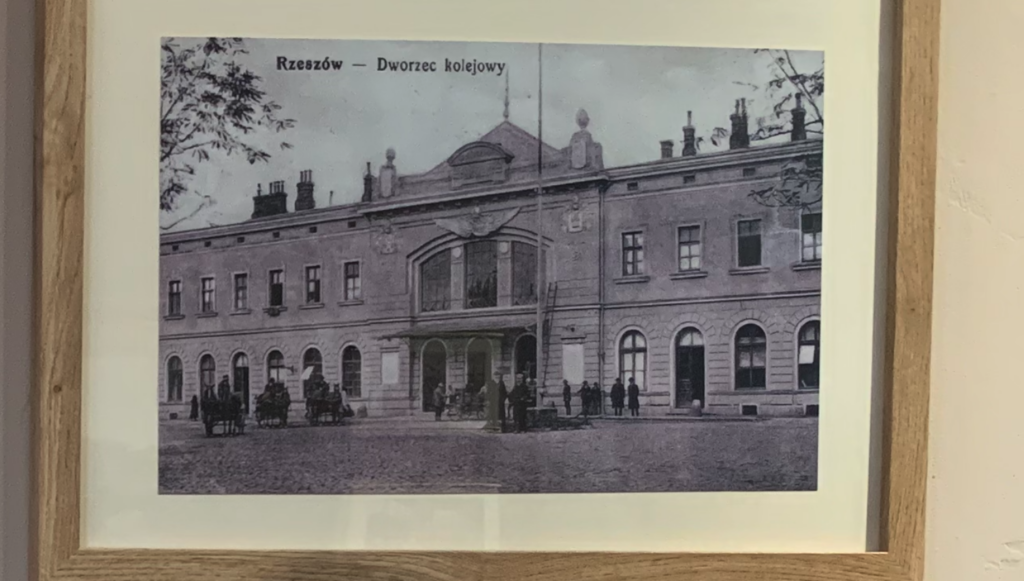
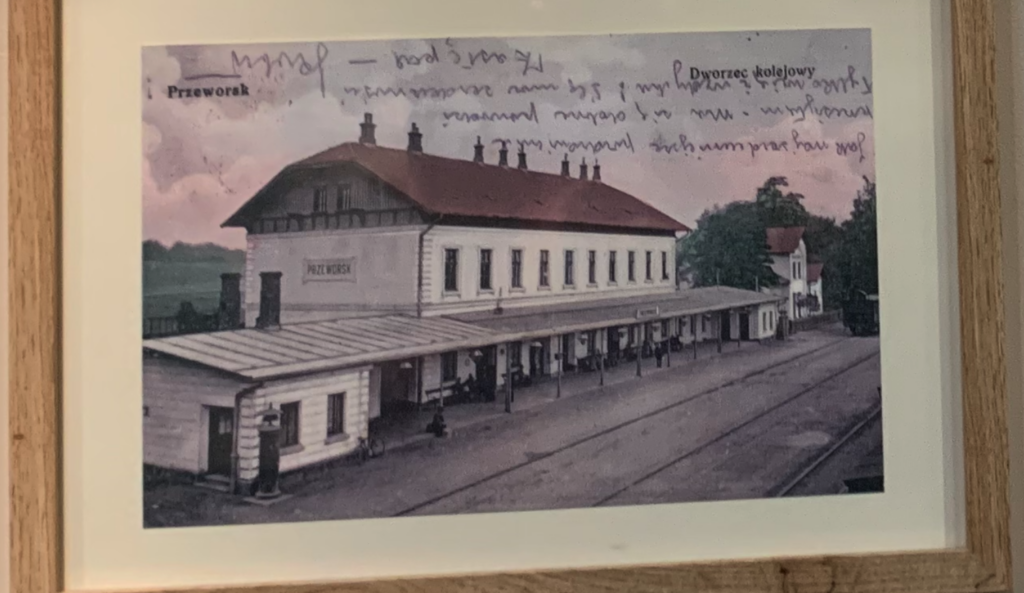
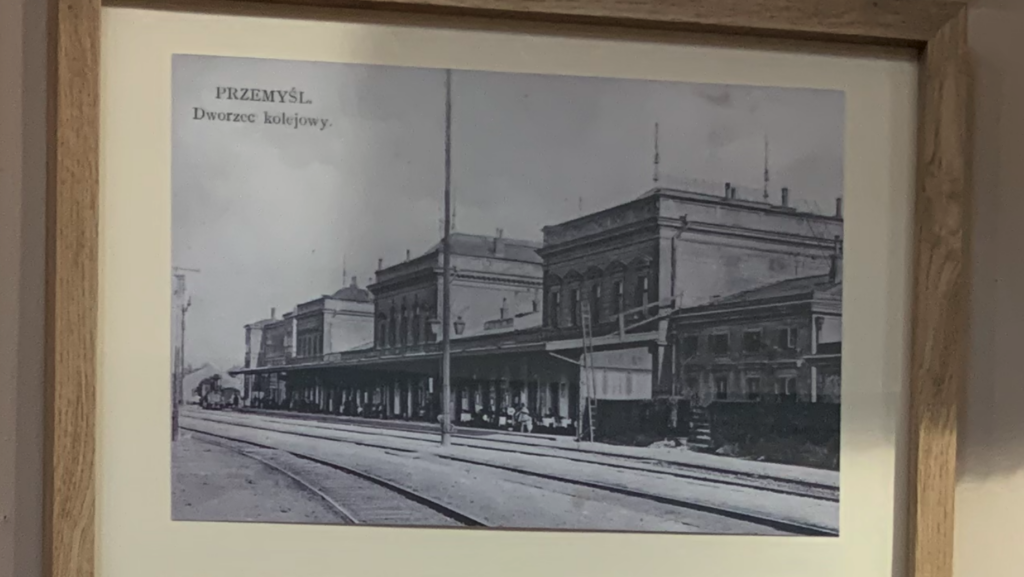
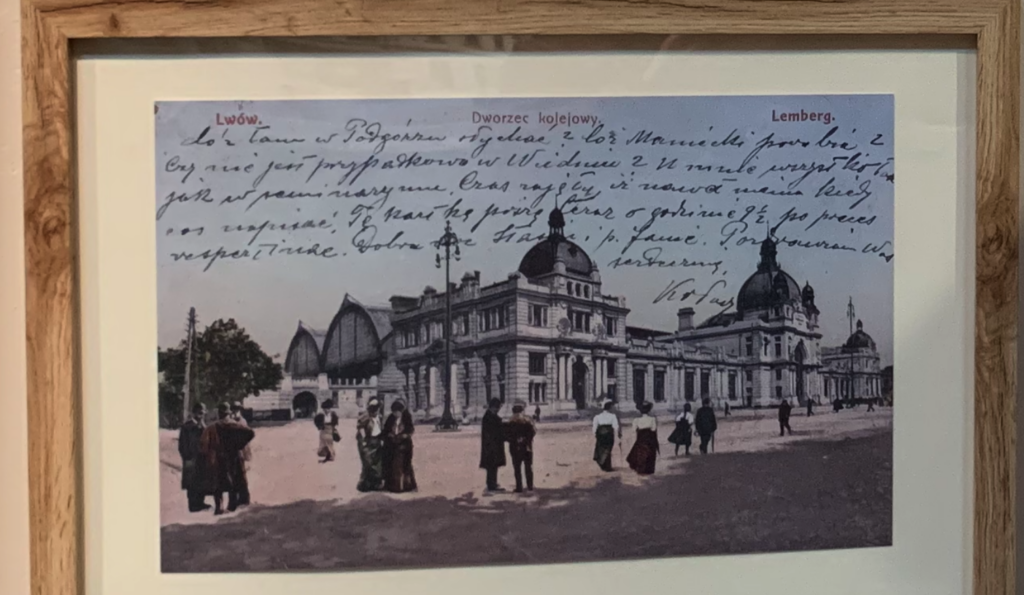
The line begins at Kraków railway station on the northeastern side of Kraków, in the Wesoła district. The line reached Dębica in 1855, Rzeszów on November 15, 1858, Przeworsk on November 15, 1859, Przemyśl on November 4, 1860, and Lviv on November 4, 1861. From Lviv the lines ran through Krasne to Brody (1869). From Krasne a connection towards Złoczów, Zborów, Tarnopol to Podwołoczyska (1871). On July 12, 1869, Lviv – Krasne – Złoczów, 75.29 km and on July 12, 1869, Krasne – Brody, 42.01 km. On August 1, 1871, Złoczów – Tarnopol, 64.04 km. On October 4, 1871, Tarnopol – Podwołoczyska, 52.85 km. On August 7, 1873, Brody – Radziwiłłów, 7.25 km. On July 6, 1884, Jarosław – Sokal, 146.94 km. On October 30, 1887, Dębica – Rozwadów – Nadbrzezie, 107.45 km.
Short connections were built from Kraków: Bieżanów to Wieliczka (January 26, 1857), from the Wisła station in Kraków to the port of Dąbie, from the Podłęże station to Niepołomice (September 16, 1858), and from the Grzegórzki station to Proszowice. In 1884, the Tarnów – Stróże – Jasło – Krosno – Sanok – Nowy Zagórz railway line was opened. The Transversal Railway is a separate topic. The length of railway lines belonging to the Galician Railway systematically increased: in 1858, it was 168 km. In 1861, it was 353 km. In 1871, it was 587 km. In 1887, it was 848 km.
According to data from the Vienna Museum, in 1862, the line operated 130 steam locomotives, 103 passenger cars, and 1,393 freight cars. In 1872, there were 128 steam locomotives, but these were significantly more powerful. The number of wagons increased: 233 passenger cars and 3,273 freight cars. In 1891, there were 175 locomotives, 345 passenger cars, and 3,755 freight cars. Almost all the rolling stock was Polish-made; the Zieleniewski Works in Kraków and Austria, with some German-made.
Year after year, the Galician Railway transported increasing numbers of passengers and goods. In 1860, 271,000 people were transported. In 1866, 422,000 passengers were transported. In 1870, 594,000 passengers were transported. In 1875, 945,000 passengers were transported. In 1885, 970,000 passengers were transported. In 1895, over 1.5 million people were transported. Initially, passengers could use 1st, 2nd, 3rd, and 4th Class carriages. However, 4th Class was quickly eliminated. As many as 80% of passengers chose 3rd Class. Only 1-2% chose 1st Class. In 1860, 248,000 tons of goods were transported. In 1865, 349,000 tons were transported, and in 1870, 543,000 tons were transported. From 1875, freight transport dynamics increased, and over 1 million tons of freight were transported. By the end of the 19th century, nearly 2 million tons of goods had been transported.
On January 1, 1892, the Imperial-Royal State Railways became the new owner of the railway, meaning it was nationalized. After Poland regained independence in 1918, the line became the property of the Polish State Railways. After World War II, the section east of Medyka was converted to broad gauge and taken over by the Soviet Railways. In 1991, following the dissolution of the CCCP, the eastern section of the routes found itself in Ukraine and became part of the Ukrainian Railways.
The Transversal Railway.
The Transversal Railway (full name: Galician Transversal Railway) was a railway line built in 1884–1885 in the Austro-Hungarian Partition of Galicia. The line ran latitudinally through southern Galicia, along the foothills of the Carpathian Mountains, connecting the western and eastern parts of the region. Its main objectives were: Military – to enable the rapid transport of troops to the border with the Muscovite Empire. Economic – to connect the less developed cities of Galicia. Communication – to create an alternative to existing railway routes. The route ran through Cieszyn – Żywiec – Sucha Beskidzka – Nowy Sącz – Jasło – Zagórz – and then on to eastern Galicia. Its total length, including branch lines, was approximately 760–770 km, making it one of the longest railway investments in the Austro-Hungarian Empire. After the Great War and border changes, part of the route ended up in Poland, and part outside of Poland. Today, many sections still operate as part of the Polish State Railways (PKP) network, although no longer as a single “Transversal Railway.” The line was important for the development of cities in southern Poland and for decades served both passenger traffic and the transport of timber, oil, and agricultural products.
First Hungarian-Galician Railway.
The First Hungarian-Galician Railway connects with the Galician Railway. It is 266.3 km long. The line was built between 1869 and 1872. It opened on December 25, 1872. The First Hungarian-Galician Railway (also known as the First Hungarian-Galician Railway, in Germanic Die Erste Ungarisch-Galizische Eisenbahn, EUGE, in Hungarian Első Magyar-Gácsországi Vasút, EMG) – the first trans-Carpathian double-track (length 266.3 km) railway line through the Łupków Pass of great strategic importance, connecting Galicia with Hungary, and ultimately Budapest with the Przemyśl Fortress and Lviv.
Written by Karol Placha Hetman