Karczmiska 2026-07-08
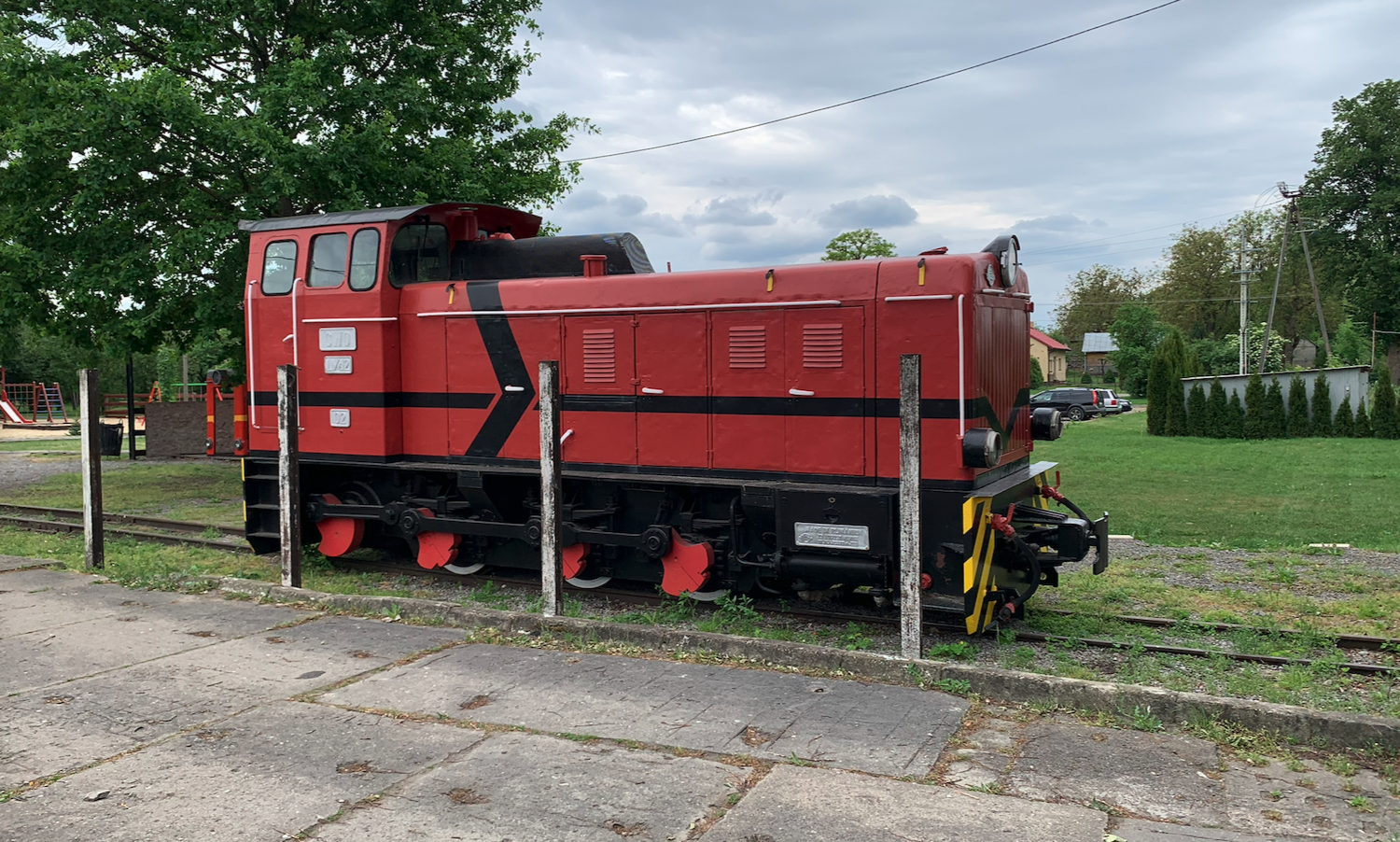
Narrow Gauge Diesel Locomotive CWO Lyd2-02.
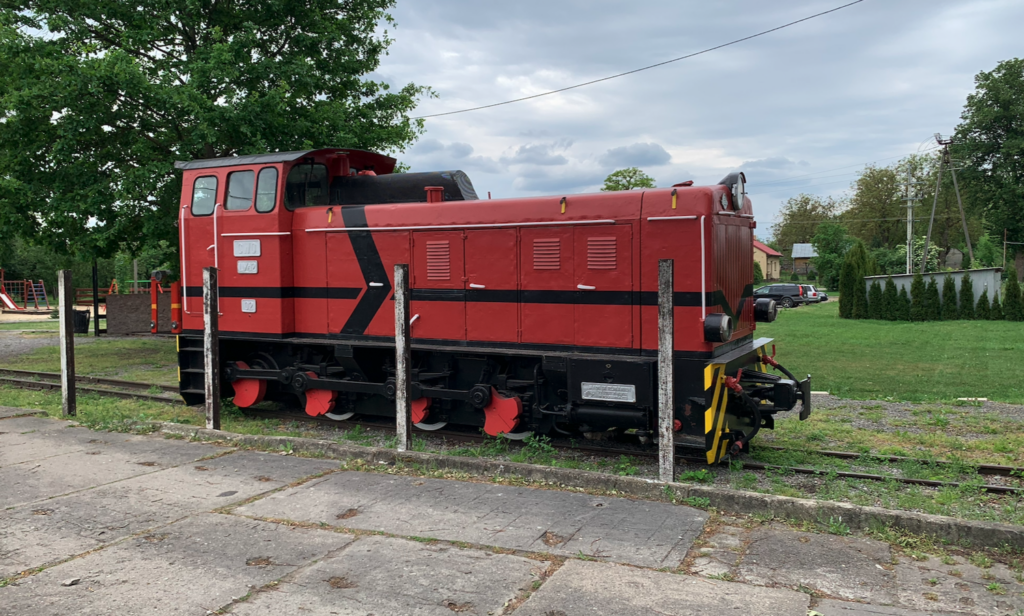
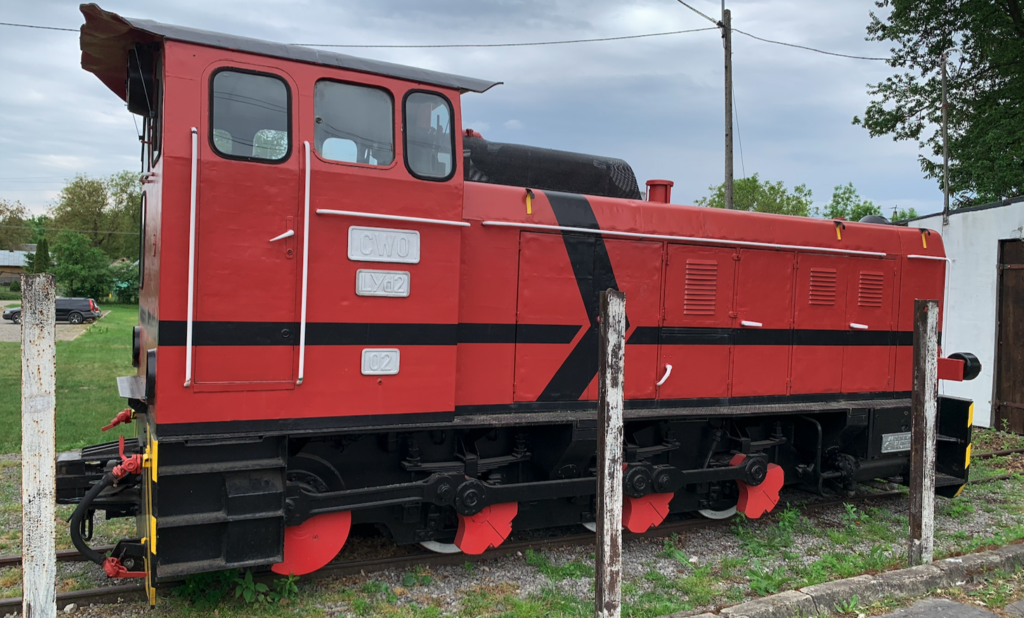
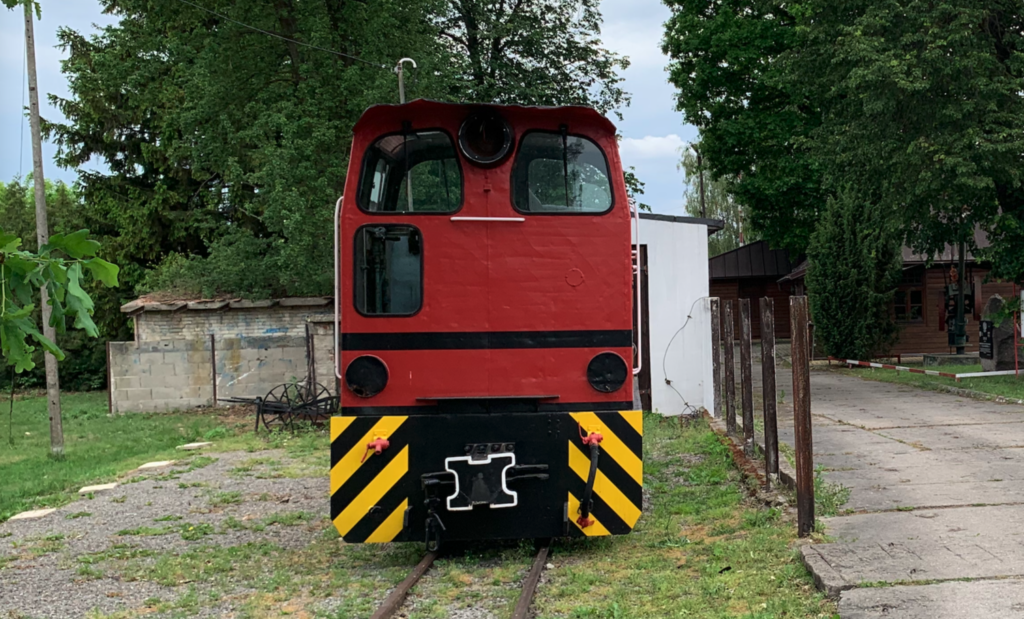
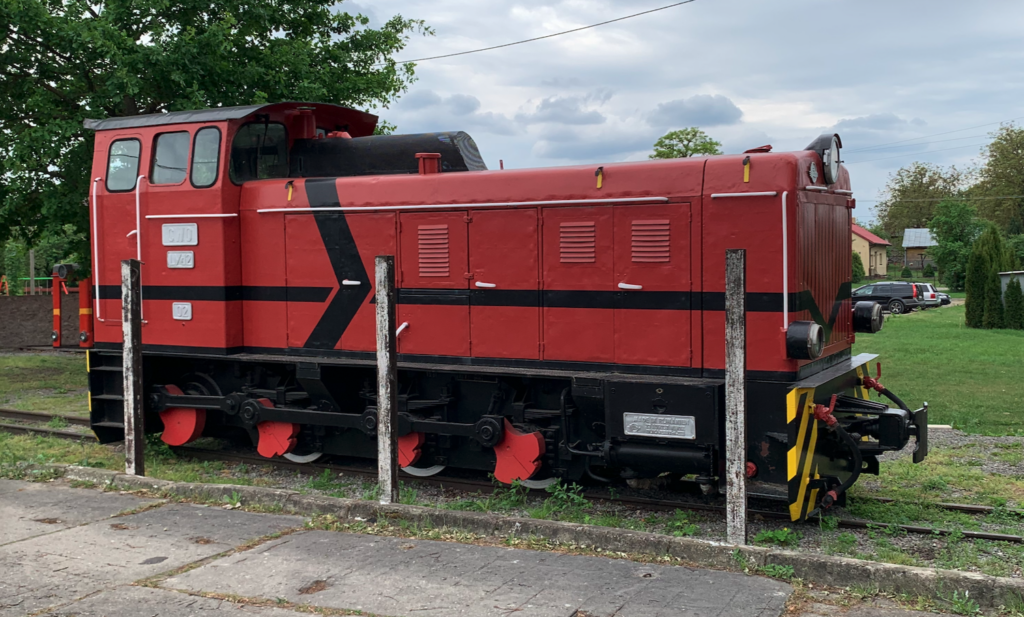
The locomotive designated CWO Lyd2-02 is a narrow-gauge locomotive of the FAUR L30H type, with a track gauge of 750 mm, manufactured in 1980 by the Romanian plant 23 Augusta (23 August) in Bucharest. The abbreviation CWO stands for Wydrzyska Sugar Factory (Opole Lubelskie). Currently (2026), the locomotive is parked at the Kramczyska station of the Vistula Narrow-Gauge Railway.
Lyd2 type FAUR L30H locomotives were produced from 1973 to 1983. The locomotive has a type C axle arrangement. Operating weight: 24,000 kg. Length: 7.10 m, width: 2.20 m, height: 3.25 m. Wheelbase: 2.40 m. Wheel diameter: 0.80 m. The engine is a German Maybach MB83B, 350 hp (257 kW). Hydraulic transmission. Fuel tank capacity: 530 liters. Design speed: 25 km/h. Axle load: 8,000 kg.
Lyd2 type FAUR L30H locomotives were manufactured for the following track gauges: 600 mm, 750 mm, 760 mm, 785 mm, and 1000 mm. The locomotives were produced primarily for export, with Poland being a major importer. The locomotives were purchased by the Polish State Railways (PKP), industrial railways, and forest railways. The Bucharest office developed this design at the request of the Comecon, as part of its specialization. The first recipient was Egypt, which at that time was moving closer to the communist countries. Sixty locomotives were exported to Egypt. Poland became the main recipient, purchasing approximately 80 locomotives between 1977 and 1982. A small number of locomotives were purchased by Czechoslovakia, Albania (3 locomotives), and Romania itself (4 locomotives).
The Lyd2 locomotive’s design. The vehicle has a C-type axle arrangement and a truss-type drive transmission from the dummy axle. The locomotive body consists of the engine compartment and the engineer’s cab. It is powered by a 350 hp (257 kW) MB83B diesel engine. The engine is a four-stroke, six-cylinder, in-line diesel engine, producing 350 hp (257 kW) at 1,500 rpm, with a cylinder bore of 175 mm and a piston stroke of 205 mm. A TH5R-V6 hydraulic transmission is used. The transmission automatically responds to speed changes depending on load. From the hydraulic transmission, power is transmitted to the main gear and the reverser, controlled electro-pneumatically from the control panel. Next comes the dummy shaft, to which trusses are mounted, transmitting power to all three axles. The locomotive is equipped with a compressed air system, with a two-stage piston compressor for the braking system of the locomotive and wagons, and for pneumatic control. The cab has two control stations, for both directions of travel. The locomotive is operated by a single engineer, with an optional assistant driver.
75 Lyd2 locomotives operated in Poland. They were designated the Lyd2 type by the Polish State Railways (PKP). The same designation was adopted for industrial railways. Most locomotives were used on industrial railways (track gauge 750–785 mm, occasionally 600 mm and 1000 mm). Twenty-four locomotives operated on PKP (PKP) with both 600 mm and 750 mm gauge. Seven locomotives operated on the Bieszczady Forest Railway, owned by the State Forests, on 750 mm gauge. PKP directly purchased 15 600 mm gauge locomotives and two 750 mm gauge locomotives. The remaining seven were acquired from the Polish Industrial Railways. Over time, locomotives were rotated between the industry and PKP. PKP operated Lyd2 locomotives, numbers 51-71, for the 600 mm gauge, and three locomotives (Nos. 101-103) for the 750 mm gauge. After 1990, approximately 30 locomotives were scrapped. The L30H locomotive had significantly inferior technical and operational parameters to the L45H (Lxd2) locomotives already in its possession, which influenced PKP’s decision to sell the locomotives. Several dozen locomotives were sold abroad, to the Czech Republic, the UK (Wales), the Caribbean, and elsewhere. There were instances of wheel gauge changes, for example, from 750 mm to 785 mm. In 2018, 11 locomotives were operational. Currently (2025), in Poland, locomotives of this type are operated on the Bieszczady Forest Railway (750 mm), the Żnin County Railway (600 mm), and the Upper Silesian Narrow Gauge Railway (785 mm). Additionally, the L30H has been preserved for museum purposes and for possible deployment on the Wydrzyska Railway (Nałęczowska, Nadwiślańska, 750 mm), Jędrzejowska Railway (750 mm, no engine), and the Środa County Railway (600 mm, to be converted to 750 mm).
Interestingly, the Lyd2 locomotives were the most powerful locomotives on 600 mm gauge. Another interesting piece of information is the name of the sugar refinery. Officially, it was the Opole Lubelskie Sugar Factory, but locals locally called it Wydrzyska, and for decades afterward.
The CWO Lyd2-02 locomotive, adapted for 750 mm gauge, was manufactured in 1980. Serial number 24600. In 1980, it had the number Lyd2-101, and in the same year, the number was changed to CWO Lyd2-02. The locomotive operated for the Opole Lubelskie Sugar Factory, where it was listed under the number CWN-2. Employees nicknamed the locomotive “Donald Duck” because of its duck-like gait and the snaking motion due to the heavy truss transmission. It is currently (2026) decommissioned. The locomotive ceased operation in 2005, following the last sugar harvesting season and the closure of the sugar factory.
Written by Karol Placha Hetman