Pińczów 2026-06-11
Świętokrzyska Commuter Railway.
Świętokrzyskie Narrow Gauge Railway, Ponidzie, ul. Dojazd 1/3, 28-300 Jędrzejów.
The history of narrow gauge railways in the Świętokrzyskie Land is unique, as one of the largest narrow gauge railway networks in Poland was established here. The birth of the Świętokrzyskie Narrow Gauge Railways is linked to the operations of the Austro-Hungarian army during the Great World War. After initial successes, the Muscovites began to retreat. In February 1915, the Austrians built the first military field line, with a 600 mm gauge, from Jędrzejów to Motkowice. Such lines were called Rollbahn, meaning “rolling road” in German. The first section, Jędrzejów – Motkowice, opened in February 1915. In May 1915, work began on the construction of temporary bridges over the Nida River, which remain in operation to this day. After the Muscovites withdrew from the Nida, construction continued towards Hajdaszek, Sędziejowice, and Chmielnik, and then through Raków Opatowski to Bogoria. This section opened in October 1916, at which time the total length of the line reached 86 km.
Simultaneously, further sections of the railway were built; Miechów – Węchadłów – Działoszyce, Kocmyrzów – Posądza, Kije – Pińczów – Wiślica – Opatowiec, and Staszów – Rytwiany – Pacanów – Szczucin. Part of the line was horse-drawn. In 1917, the following sections were already in operation: Kije – Pińczów – Michałów – Koniecmosty – Opatowiec and Staszów – Rytwiany – Pacanów/Szczucin.
After the Great War, some of the tracks were dismantled. However, because the benefits of the railway were recognized, permanent tracks were constructed in place of the temporary tracks, laid in accordance with railway practice. After Poland regained independence, the individual sections were connected into a larger network of commuter railways. During the interwar period, the narrow-gauge railway network in the southern part of the then Kielce Voivodeship was consolidated to form the Jędrzejów Commuter Railway.
In 1924, thanks to the efforts of the Pińczów District Office, the Hajdaszek – Erdmanówka – Pińczów section was opened. It was laid in serpentine lines through the Pińczów Ridge, bypassing the Pińczów Mountains, with peaks ranging from 250 to 291 meters in elevation. This connected the Jędrzejów Railway with the Pińczów Railway. In 1924, a locomotive shed was built in Pińczów. In 1925, a connection was opened from Pińczów via Wiślica to Cudzynowice (near Kazimierza Wielka), where the railway route split towards Działoszyce and Kazimierza Wielka. This established a connection with the existing section of the railway from Charsznica. In 1926, a connection was built with the section from Kocmyrzów, opening the route from Kazimierza Wielka via Proszowice to Posądzy. Thus, in 1927, a single, large narrow-gauge railway network was created from the existing railways in Miechów, Jędrzejów, Pińczów, and Kocmyrzów.
This extensive network served the agricultural areas known as Ponidzie. The Nida is one of the most interesting rivers in southern Poland and the main river in the Ponidzie region. The river is a left tributary of the Vistula River. It is approximately 151 km long. The river basin area is approximately 3,860 square kilometers. The Nida rises near the town of Brzegi and is formed by the confluence of two rivers: the Czarna Nida and the Biała Nida. The Nida flows into the Vistula near Nowy Korczyn. The Nida is a calm, slow-flowing, and strongly meandering river. It creates numerous meanders, oxbow lakes, floodplains, and wet meadows.
The railway network’s maximum length was 340 km. The railways primarily transported sugar beets, grain, timber, building stone, gypsum, hard coal, and passengers from smaller towns to district capitals. For many rural residents, it was the only year-round public transport. On January 1, 1930, the narrow-gauge railways came under the management of the Polish State Railways (PKP). The main reason for nationalization was the economic crisis, which could have led to the bankruptcy of the existing companies that operated the railways. At that time (1930), the total length of railway lines in the Świętokrzyskie Region was 308 km. The narrow-gauge railways’ management office operated in Jędrzejów. There were locomotive sheds in Jędrzejów, Pińczów, Kazimierza Wielka, Bogoria, and Kocmyrzów. The main repair workshops were also located in Jędrzejów.
When the Germans invaded Poland, fortunately, all Polish personnel were left on the narrow-gauge railway. During the occupation, the railway’s importance increased significantly. The Home Army and the National Armed Forces made extensive use of the railway. Individuals threatened with arrest were transported. Original documents were issued under fictitious names. The dislocations and movements of German military units were monitored. In 1944, Soviet troops built a connection from Bogoria to Koprzywnica, which was extended to Tarnobrzeg in 1945. A temporary wooden bridge over the Vistula River was built at that time. This connection operated for a relatively short time.
After World War II, the network was rebuilt. In 1950–1951, the tracks were rebuilt from 600 mm to 750 mm gauge, allowing for the use of larger, heavier rolling stock. This change was ordered from above, by the central authorities. During this time, the well-known steam locomotives appeared: the Px48 and Px49, mass-produced in Chrzanów. From the late 1960s and into the 1970s, they began to be replaced by Romanian diesel locomotives: the Lxd2 and Lyd2. The Lxd2 locomotives were manufactured by the FAUR factory. 165 units were purchased for PKP (Polish State Railways). The Lyd2 locomotive is a smaller diesel locomotive manufactured by the FAUR factory. There was also a Romanian locomotive, the Lxd1 series, which was significantly rarer than the Lxd2. The Lxd1 locomotive had four driving axles (x), a diesel engine (d), and a mechanical transmission (1). There were also three-axle diesel locomotives designated Lyd1 (y), made in Poland. This designation included the WLs150 Fablok and WLs180 Zastal locomotives. The locomotives differed in engine power and minor design differences.
During the track gauge change from 600 mm to 750 mm, the track alignment was adjusted, eliminating the hairpin bends through the Pińczów hump and constructing a new track from the west-south direction from Umianowice to Pińczów.
The highest rail transport volumes were recorded in 1966. Both large numbers of passengers and vast quantities of goods, primarily agricultural produce, were transported. At its peak, the Świętokrzyskie narrow-gauge railway network comprised several hundred kilometers of track, stretching from Jędrzejów, Pińczów, and Wiślica to Staszów, Pacanów, and Szczucin. It was one of the largest narrow-gauge railway networks in Central Europe. At that time, one could travel from Jędrzejów all the way to Szczucin, and along the way, see the typical, beautiful landscape of Ponidzie. The route of this unique vehicle passes through incredibly charming places, each with a diverse character. These include fields, forests, and meadows. During the ride, one can admire steppe vegetation and exceptional landscapes. One can also spot wildlife, accustomed to the clatter of train wheels and not at all frightened by its sound. In the 1960s, the Jędrzejów Commuter Railway was the third largest in Poland, covering hundreds of kilometers of track, approximately 340 km. However, remember that the average train speed was only 40 km/h.
In the 1960s, road transport steadily increased. Road transport became more flexible and faster. Buses and trucks gradually took over passengers and freight. The first restrictions on passenger traffic were introduced in the early 1960s on the Bogoria-Koprzywnica route. In the second half of the 1960s, the number of passenger trains was reduced. In 1971, passenger service was suspended on the section from Kocmyrzów to Kazimierza Wielka. In 1977, passenger transport on the Pińczów-Wiślica-Cudzynowice route was discontinued. Passenger trains were gradually phased out on the remaining sections between 1985 and 1987. As late as 1989, most of the narrow-gauge network was still operational. Locomotive sheds operated in Jędrzejów, Bogoria, Kazimierza Wielka, and Charsznica. This trend of closure continued into the 1980s. In 1987, regular passenger service was suspended. On February 1, 1993, regular service on the remaining portion of the network ceased. Connections with the standard-gauge railway operated in Jędrzejów, Charsznica, and Szczucin. Furthermore, in Kocmyrzów and Stawiany Pińczowskie, it was possible to reload standard-gauge wagons onto narrow-gauge transporters. In 1994, the first sections of the network began to be closed and decommissioned. Back in 1990, the Szczucin – Dobra Sztambergów section (near Staszów) was dismantled, and in 1992, the Charsznica – Działoszyce line.
As early as 1989, tourist trains were launched on the Jędrzejów-Umianowice-Pińczów-Wiślica route. The “Ciuchcia Express Ponidzie” operated on this section until 1997. In the 1990s, a section of the former network operated as the Świętokrzyska Commuter Railway, known to tourists as the “Ciuchcia Express Ponidzie.” Tourist trains ran from Jędrzejów through the picturesque Ponidzie region. Historic bridges over the Nida River from the Great War have also been preserved. Trains called the “Ciuchcia Ekspres Ponidzie” ran on the Jędrzejów-Pińczów-Wiślica route. However, after the railway embankment was washed away by heavy rains in 1996, service to Wiślica was suspended. The narrow-gauge railway suffered significant damage during the 1997 flood. The largest losses were recorded on the Pińczów-Wiślica section. In several places, the tracks were washed away, and in several others, water washed away the gravel beneath the tracks. This led to the suspension of rail traffic there.
In 1998, tourist traffic was reopened. In 2001, the Polish State Railways (PKP) suspended tourist traffic. In 2003, the local government took over the railway, and tourist traffic resumed.
The Świętokrzyska Commuter Railway was formerly known as the Jędrzejowska Commuter Railway. The main railway line ran from Jędrzejów, through Jasionna, Motkowice, and Umianowice, to Pińczów. There were also branch lines in Umianowice to Hajdaszki, Stawian Pińczowskie, and Sędziejowice.
In 2002, the railway was taken over by the Świętokrzyska Kolejka Dojazdowa “Ciuchcia Expres Ponidzie” Sp. z o.o., a local government company established specifically for this purpose. The company was formed by the local governments where the preserved line ran: Jędrzejów Commune, Pińczów Commune, Świętokrzyskie Voivodeship, Jędrzejów and Pińczów Counties, and the Imielno and Kije Communes. This company became the line’s operator.
The ŚKD railway line near the village of Wygoda intersects with the LHS broad-gauge line. This is at km 14.60 of the narrow-gauge line. Intersections also existed in the village of Przededworze and the town of Staszów. Narrow-gauge lines also intersect with standard-gauge lines in the villages of Stawiany Pińczowskie, Przededworze, and the town of Staszów. Historically, narrow-gauge lines crossed the Vistula River in Szczucin and before the Tarnobrzeg Wąskotorowy station in Dzików.
In 2026, the railway operated three Lxd2 locomotives and one Px48 steam locomotive. Their technical condition was unknown. Two Lxd2 locomotives were likely operational. In 2009, the Lxd1 locomotive was engineless. On August 21, 2015, the Lxd2-258 locomotive caught fire on the route to Umianowice, destroying the engine. The Px48 steam locomotive was operational. On June 12, 2007, the Px48-1724 steam locomotive of the Świętokrzyska Commuter Railway was inspected. The railway has three summer carriages and three glass-enclosed carriages. As of 2020, the rolling stock includes a historic 3Aw passenger car, historic freight wagons, retro carriages, summer (open-air) carriages, and three narrow-gauge locomotives: Lxd2, Lyd1, and Lyd2.
In the 1970s, bogies were introduced to transport standard-gauge carriages on narrow-gauge tracks. Such conversions took place, for example, at Kocmyrzów station. In Jędrzejów, the railway workshop specialized in the repair of narrow-gauge rolling stock. Repairs were also carried out at the request of other narrow-gauge railways. The workshop specialized in the repair of locomotive and wagon running gear. The rolling stock was transported by trucks.
For several years, tourist trains ran every Sunday during the summer season. They began at 10:00 a.m. on the Jędrzejów-Motkowice route. The return to Jędrzejów occurred around 6:00 p.m. Additionally, special-order services were provided, such as for companies and team-building trips. Freight and regular passenger traffic were no longer available on the route.
On the other hand, tourist traffic also operated from Pińczów station. Tourist trains ran on Sundays. Passenger transport was organized by bus from Busko-Zdrój and Kielce. At 12:00 p.m., the train departed for Umianowice station. In the town of Umianowice, a bonfire was organized with sausage roasting. Around 2:00 PM, the tourist train set off on its return journey. In Pińczów, tourists boarded coaches and returned to Kielce or Busko-Zdrój. The cable car employed a dozen or so workers. During the season, 12,000-15,000 people used this attraction, and in 2008, 21,000 tourists were transported. During that season (2008), 142 pairs of trains were dispatched. Despite this, reports indicate that the cable car was operating at a loss.
In 2003, rail service was restored to Hajdaszek station, east of Umianowice station. On July 7, 2006, a celebration of the 90th anniversary of the railway was held in Umianowice.
On October 10, 2007, the narrow-gauge railway viaduct over the standard-gauge line near Stawiny Pińczowskie station was renovated. Stawiny Pińczowskie station requires separate discussion, as it was the junction of the narrow-gauge railway (on the east-west Chmielnik-Jędrzejów line) and the standard-gauge railway (on the north-south Kielce-Busko-Zdrój line). The station features a transporter trapdoor and cargo holds. It was then that the first train passed through in 11 years, since 1996. On October 20, 2007, a special train, pulled by a Px48 steam locomotive, ran for railway enthusiasts, providing access to the Hajdaszek and Stawiany Pińczowskie stations.
In 2008, the railway line to the Sędziejowice station, east of the Skawiny Pińczowskie station, was reopened.
On September 11, 2009, the Minister of Culture and National Heritage, at the request of the owner, Polish State Railways, issued a decision to remove sections of the line from the Pińczów station to the Wiślica station in Koniecmosty and from the Sędziejowice station to the Raków Opatowski station, along with the associated engineering structures, from the register of historic monuments. This eliminated the possibility of reactivating the railway on further sections.
In 2014, a new railway stop, Wygoda, was built, funded by the owner of the “Sielsko na Wygodzie” recreation complex. It is located in front of Motkowice station, very close to the LHS line and its viaduct.
At the end of 2014, two sidings and the turnouts on the Wiślica side were dismantled at Pińczów station. This work was related to the construction of a road roundabout on 3 Maja Street. In 2015, the turnouts were moved north to extend the previously shortened platforms.
In 2015, at the initiative of the Świętokrzyskie and Nadnidziańskie Landscape Parks, work began on resuming train service on the 2.50 km Umianowice-Hajdaszek route. Financing was to be provided from the Regional Operational Program. The project was estimated at approximately PLN 3.5 million. The work included renovations to the station buildings, platforms, canopies, tracks, culverts, and level crossings. The plan included the purchase of a new diesel locomotive, tourist carriages, and bicycle trolleys. At Hajdaszek station, the station building was to house a ticket office, waiting room, buffet, warden’s room, and a memorial room (educational room). The buffet, or rather restaurant, was to be named “Gospoda dla Żołnierzy” (Soldiers’ Inn), modeled after the canteen operating there during the interwar period. The program was to end in 2019. According to historical records, the station building housed the guest room of Countess Karolina Lanckorońska, an art historian and heir to the local estate. Passenger trains through Hajdaszek ceased running in 1985, and freight trains in 1993. Currently (2026), the Świętokrzyskie Bicycle Trolleys operate on the Umianowice-Hajdaszek section.
The Świętokrzyska Railway also planned to expand its stops to include stations such as Centrum Jędrzejowa, Piaski, Borki, Wygoda (which was built), Holendry, Ptasznik, Suchowola, Podlesie, Wierzbie, Rudki, Kamienna Góra, Pągowiec, Skowronno Górne and Dolne, Kopernia, Pińczów opposite the PKS bus station, Skrzypiów, Wojsławice, Rudawa, and Biskupice.
There were plans to reactivate the line on the Pińczów-Wiślica section, southbound. Specifically, from the destroyed bridge over the Nida River’s oxbow lake in Skrzypiów, south of Pińczów. The bridge is a wooden and metal structure. The supports are wooden, the spans are made of metal beams, and the bridge trusses are made of wood. However, these plans are no longer valid, as the Pińczów station is now a terminus and the tracks towards Wiślica are no longer available. This occurred during the construction of the new 3 Maja Street roundabout in Pińczów. On November 16, 2014, reconstruction of the track layout at the Pińczów station began in conjunction with the construction of the roundabout. This completely prevented the future reactivation of the route to Wiślica.
In 2016, the Świętokrzyska Railway served 16,000 passengers, or rather tourists. However, in 2020, the railway was not operated during the flying season. This was due to the Chinese coronavirus epidemic, as well as the poor condition of the tracks and rolling stock, which required renovation work. Furthermore, the financial situation of the entities operating the railway was poor. A new formula for the railway’s operation was still being sought. The Świętokrzyska Commuter Railway “Ciuchcia Expres Ponidzie” company was put into liquidation in September 2020. Following ongoing negotiations, in October 2020, the railway was taken over by the provincial government. By decision of the provincial authorities, the railway was incorporated into the Complex of Świętokrzyskie and Nadnidziańskie Landscape Parks in Kielce. The railway was renamed “Świętokrzyska Narrow-Gauge Railway Ciuchcia Ponidzie.” According to available information, in 2017, there was a real threat of the railway’s complete closure.
In 2021, another season was lost, and there were no tourist transport services. Only in the 2022 season did tourist trains operate on the 9.00 km Jędrzejów-Jasionna route. The same situation occurred in 2023. In 2024, trains ran on the 17.00 km Jędrzejów-Motkowice route. Travel to Umianowice and Pińczów remained impossible, primarily due to the poor condition of the bridges over the Nida River.
In October 2024, contracts were signed with contractors for the railway’s revitalization, funded by the government’s “Polish Deal” fund. The renovation was divided into two sections: the first, Umianowice-Pińczów, and the second, Motkowice-railway bridge over the Nida River. The work is expected to be completed in 2027. The 30.00 km Jędrzejów-Pińczów line will then be operational. However, it turns out that the current work does not include the renovation of the bridge over the Nida River on the Motkowice-Umianowice section. Voivodeship authorities claimed that the renovation will be carried out in accordance with good construction practices.
On the Jędrzejów-Motkowice section, a complete renovation of not only the tracks but also the embankments and slopes was carried out. In Umianowice, the station tracks were dismantled, and the contractor prepared a new trackbed. A 200-meter stretch of track towards Pińczów was also renovated. New plans for the track layout at the Jędrzejów, Motkowice, Ulmanowice, and Pińczów stations were also submitted. Preparatory work was underway for the reconstruction of bridges and viaducts on this route.
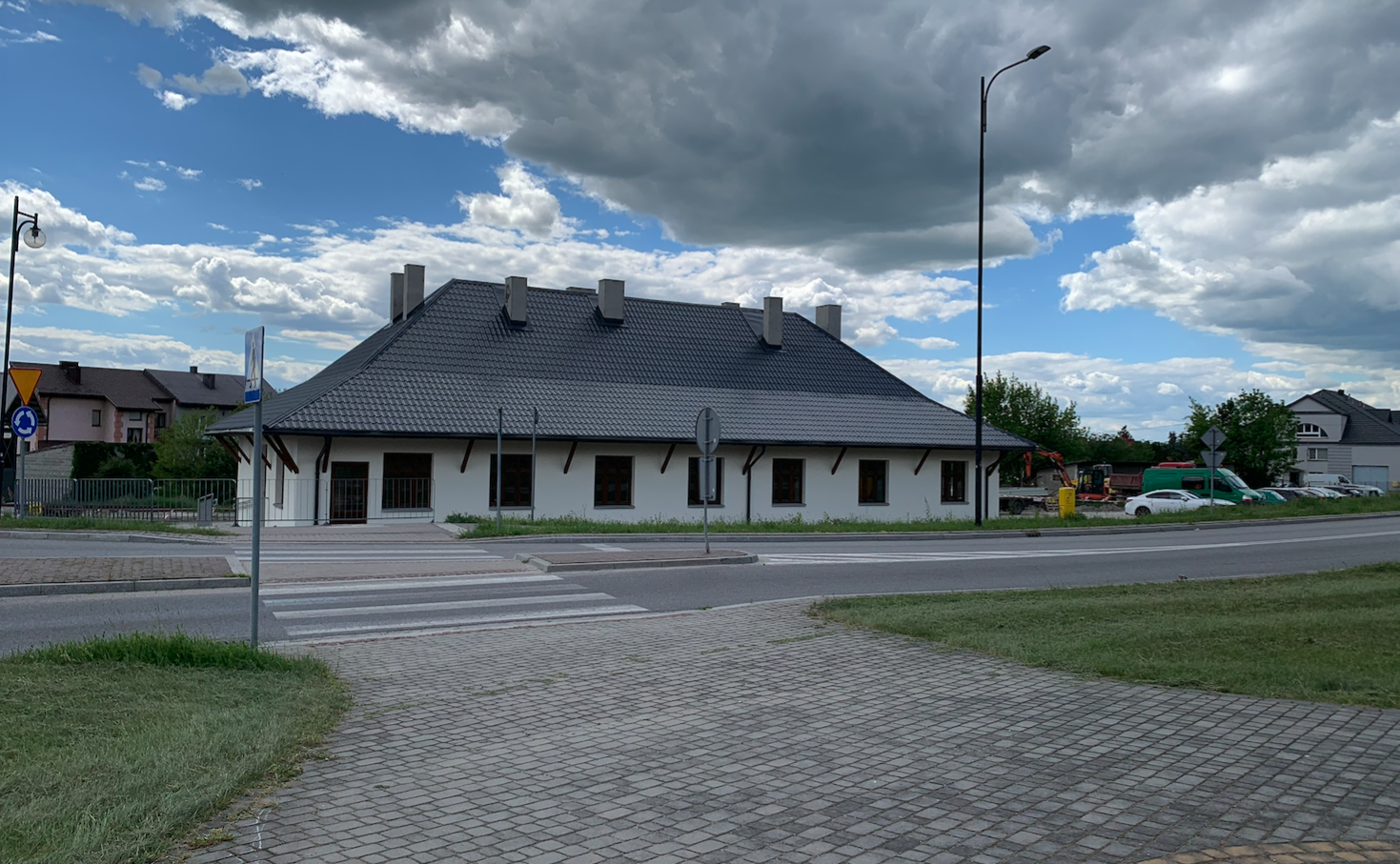
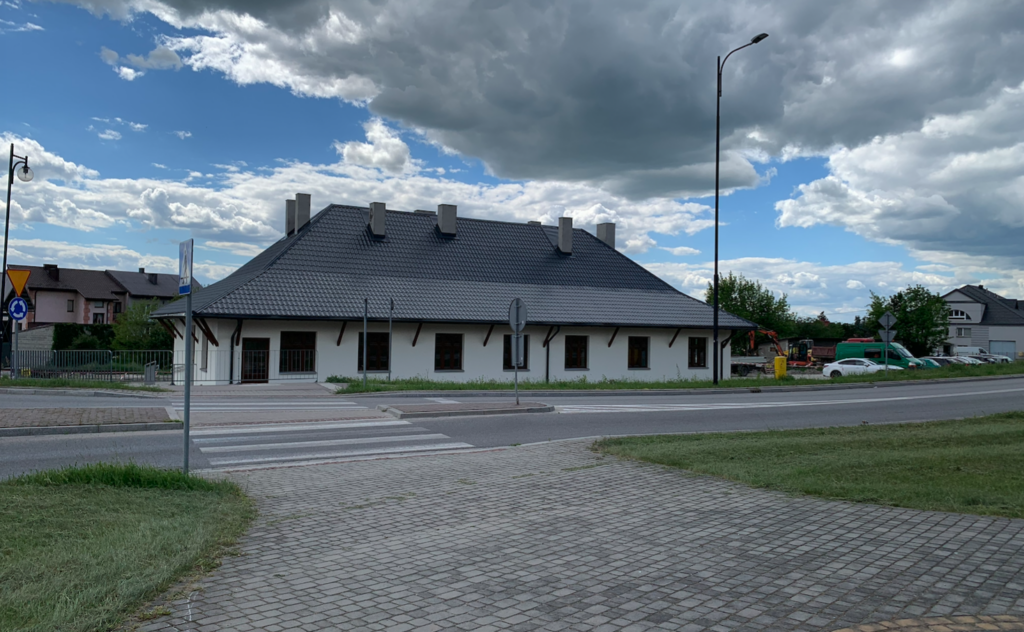
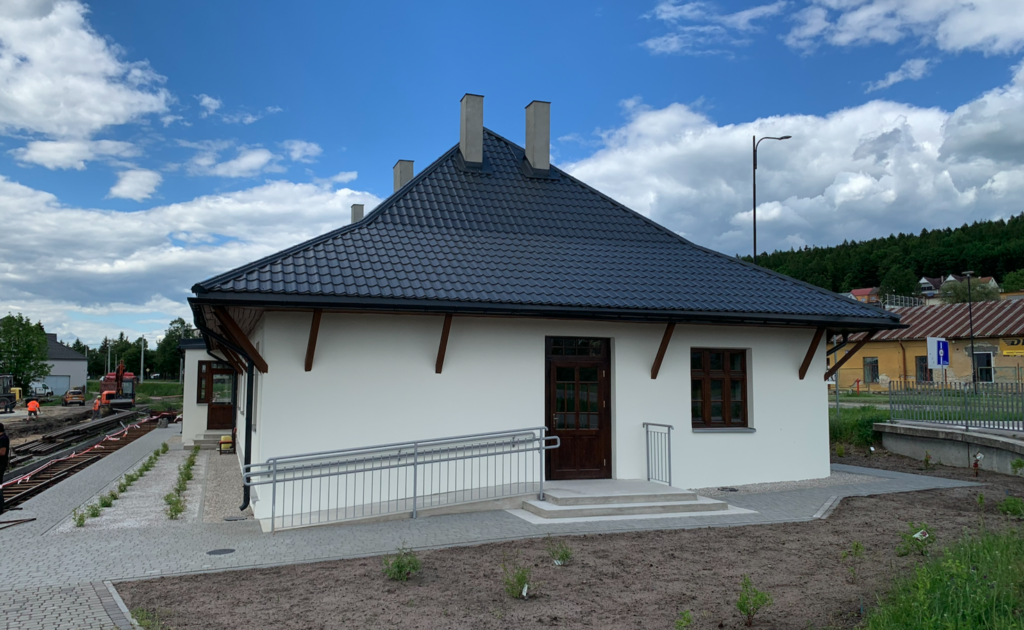
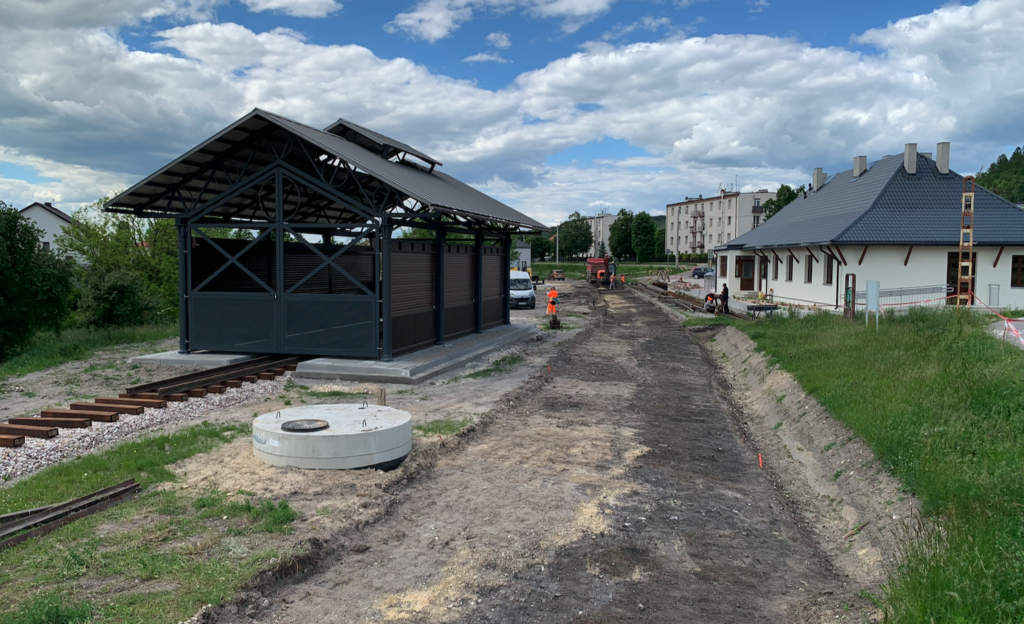
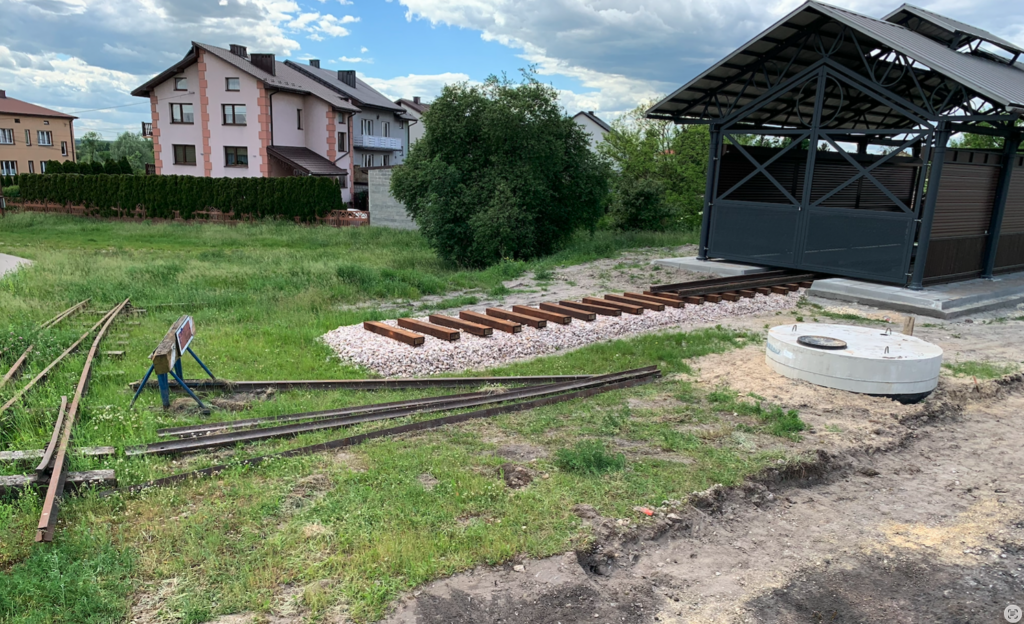
A decision was made to completely renovate Pińczów station. The station building was renovated. A waiting room, along with a ticket office and a crossing guard’s office, is now ready. A modular locomotive shed was built in Pińczów. In 2026, the track system on the station level was completely rebuilt. Authorities claim that due to the historic nature of the railway, reused materials are being used for its renovation. In reality, this is a marketing ploy, as only modern materials are being used in construction. New, well-impregnated wooden sleepers are being used. Standard, new railway rails are being used. This guarantees a long period of trouble-free operation of the routes. The date for the return of tourist trains to Pińczów is currently unknown. However, tourist trains are planned to operate on the Jędrzejów – Motkowice Wąskotorowe – Umianowice section in the 2026 season.
The long-term plans include restoring service on several sections; Pińczów – Młodzawy – Mozgawa – Chroberz – Nieprowice – Złota Pińczowska – Jurków – Wiślica. And Sędziejowice – Chmielnik – Strojnów – Drugnia – Potok Wąsk – Raków Opatowski.
Route route.
Jędrzejów has the Jędrzejów Wąskotorowy station, located east of the standard-gauge station. The trail runs eastward. The line passes under the S7 motorway and then under national road no. 768. The first station is Jasionna. On the southern side of the trail runs the Broad-Gauge Metallurgical Line (LHS). On the northern side runs national road no. 78. The line first turns northeast and then southeast. Then, at the bottom, the line passes under the LHS. Next comes the Wygoda station. Next, the line enters the Nadnidziański Landscape Park. There is the Motkowice station. The line crosses the Nida River, wetlands, and forests. There is the Umianowice station. Here, a triangular branch is located towards the town of Chmielnik to the east and Wiślica to the south. Umianowice station has been renovated, both the station and the station level. The area is adapted for tourist use. At the Umianowice station, there’s an observation tower utilizing a former 9-meter-high water tower with a square base. The entire station area is home to the Nature Education Center and the Świętokrzyskie Bicycle Trolleys.
The line then runs eastward to Hajdaszki. In Hajdaszki, the line forked. The southward branch ran through the Erdanówka stop to Pińczów. The eastward line reaches the Stawiany Pińczowskie Narrow-Gauge station. The line then runs eastward to Sędziejowice, then uphill, passing national road No. 78, the LHS lines, and the standard-gauge line. The line reached the town of Chmielnik, where the Chmielnik Narrow-Gauge station and the Chmielnik Miasto stop were located. Further along, narrow-gauge railways ran to the town of Bogoria, with routes to Kielce (northwest), eastward towards Tarnobrzeg, and southward. Szczucin near Tarnów, where the narrow-gauge railway crossed the Vistula River. Stations include Strojnów, Drugnia, Potok Wąskotorowy, Raków Opatowski, Rakówki, Arkuszów, Wola Malkowska, and Bogoria. Further routes from Bogoria station include Dobra Sztambergów, Staszów Wąskotorowy, Rytwiany, Sichów, Sierogi, Łubnice Buskie, Zborówek, Komorów Wąskotorowy, Rataje Wąskotorowe, and Szczucin near Tarnów Wąskotorowy. Further routes from Bogoria station include Józefów Kielecki, Nawodzice, Jachimowice, Koprzywnica, Ciszyca, and Tarnobrzeg Wąskotorowy. And another route from Bogoria includes Przyborowice, Gryzikamień, and Iwaniska.
Let’s return to Umianowice station. The main line southbound ran to Pińczów, where there was also a separate station at Pińczów Towarowy. Further on, the line reached stations at Młodzawy, Mozgawa, Chroberz, Nieprowice, Złota Pińczowska, Jurków, and Wiślica. Here, it connected with the narrow-gauge railway at Kazimierza Wielka toward Kraków and Skalbmierz toward Miechów. Stations included Brodek, Kolosy, Jadzinek, Bugaj, Broniszów, Broniszów, and Cudzynowice.
Cudzynowice Junction. In Cudzynowice, the railway route forked and ran in the following directions: Cudzynowice, Kazimierza Wielka, Donosy, Wielgus, Ksawerówka, Kościelec, Stogniowice, Szreniawa Miechowska, Proszowice, Posądza, Łyszkowice, Biórków, Zielona Wąsk, and Kocmyrzów Wąskotorowy. The next direction: Cudzynowice, Topola Pińczowska, Skalbmierz, Podgaje, Działoszyce, Słaboszów, Janowice n. Nidzica, Kalina Wielka, Kalina Mała, Miechów Wąsk, Chodów, and Charsznica.
It’s important to remember, however, that many branch lines were built and closed at different times. Interestingly, the bridges were built as temporary structures, but they survived to the present day, much longer than planned. The bridges were supported by wooden piles on which steel beams were placed. Wooden bridge trusses and tracks were laid on the steel beams. These are the longest wooden trestles in Europe, 600 meters long, with the entire railway line spanning 34 km (21.1 mi) from Jędrzejów to Pińczów.
We must also remember that the Świętokrzyskie Region is unique in terms of its railway routes. The standard-gauge railway line runs from Kielce to Busko-Zdrój, ending there. The line was supposed to reach the Vistula River and, after crossing it, connect with the Tarnów line at Szczucin station. A connection from Busko-Zdrój to Żabno was also possible. Recall that the United Right government planned to revitalize these lines and establish a connection across the Vistula River. Unfortunately, the subsequent government, composed of Freemasons, Communists, and Volksdeutsche, halted all plans.
Written by Karol Placha Hetman