Sandomierz 2026-06-06
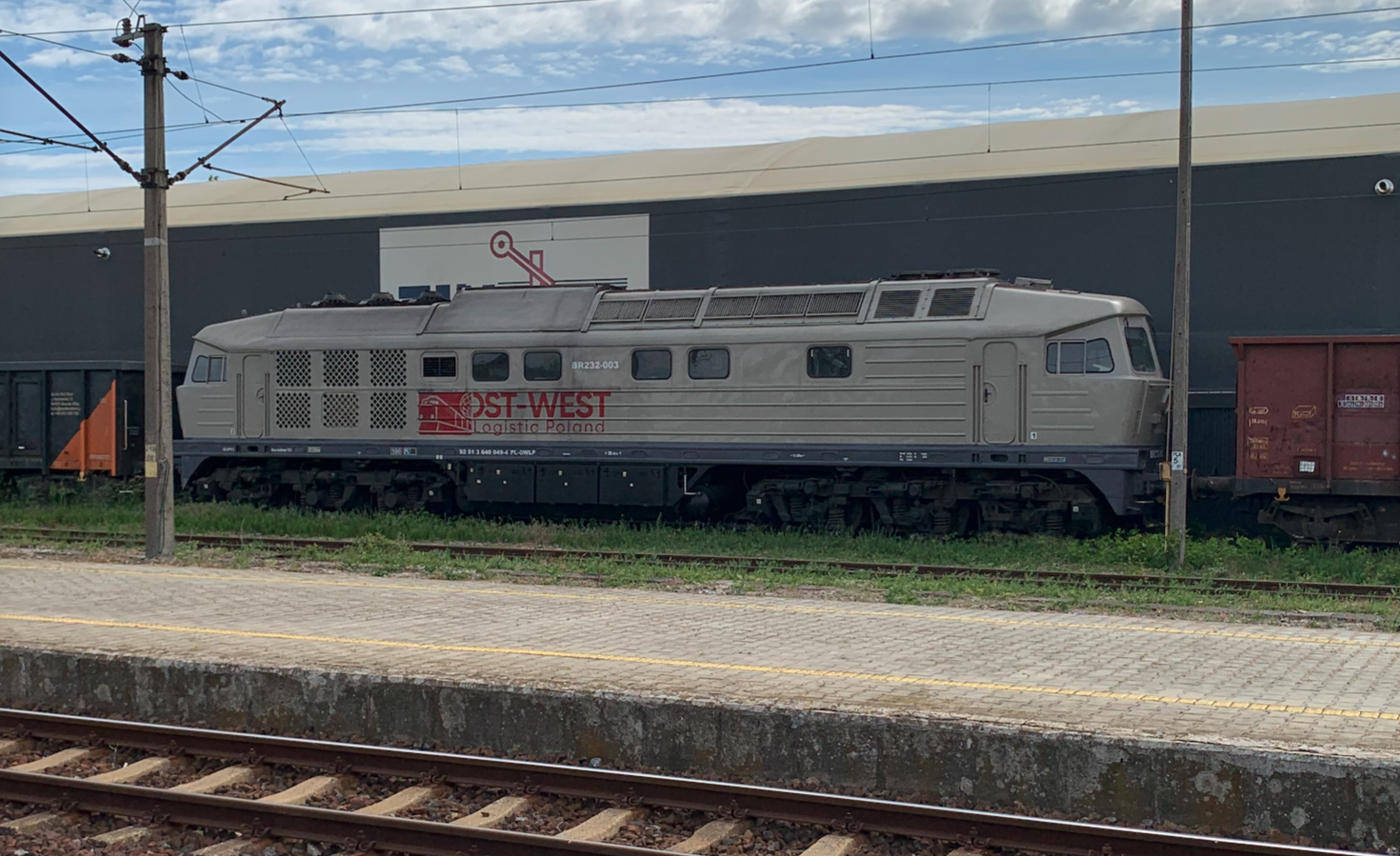
Diesel Locomotive ŁTZ BR232.
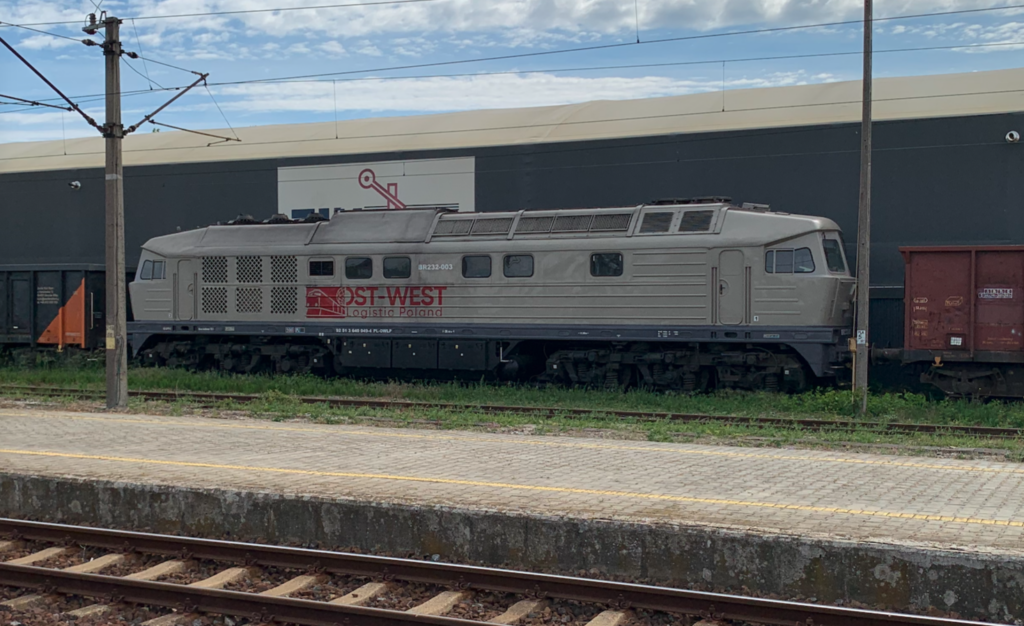
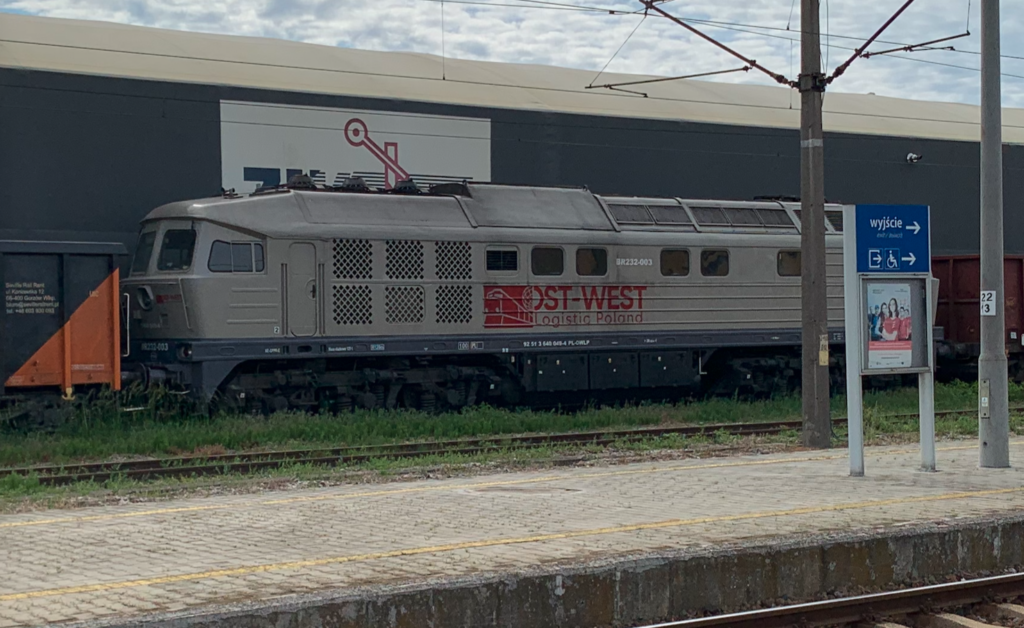
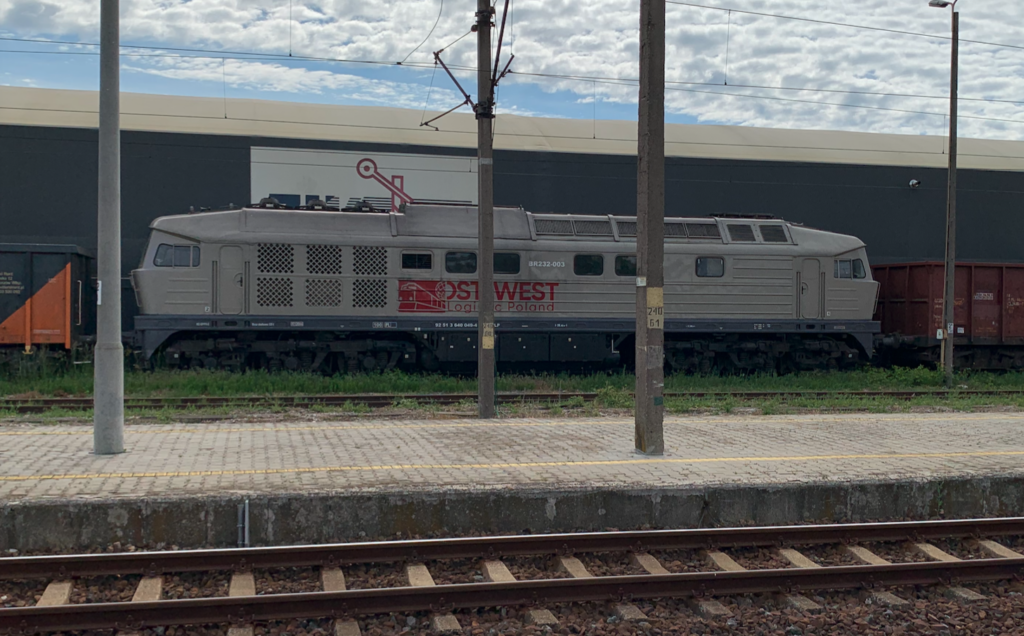
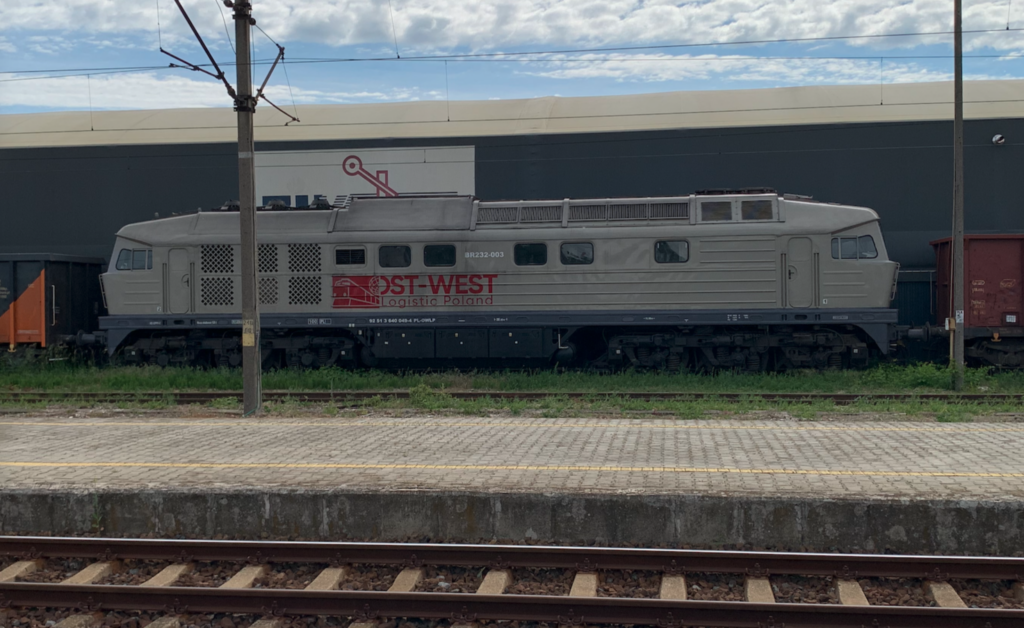
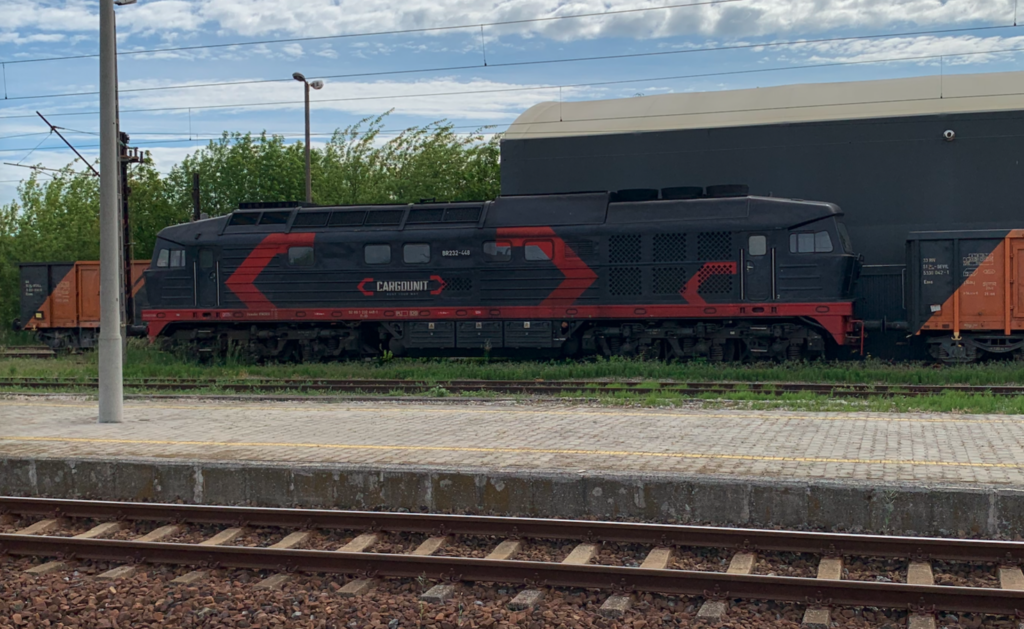
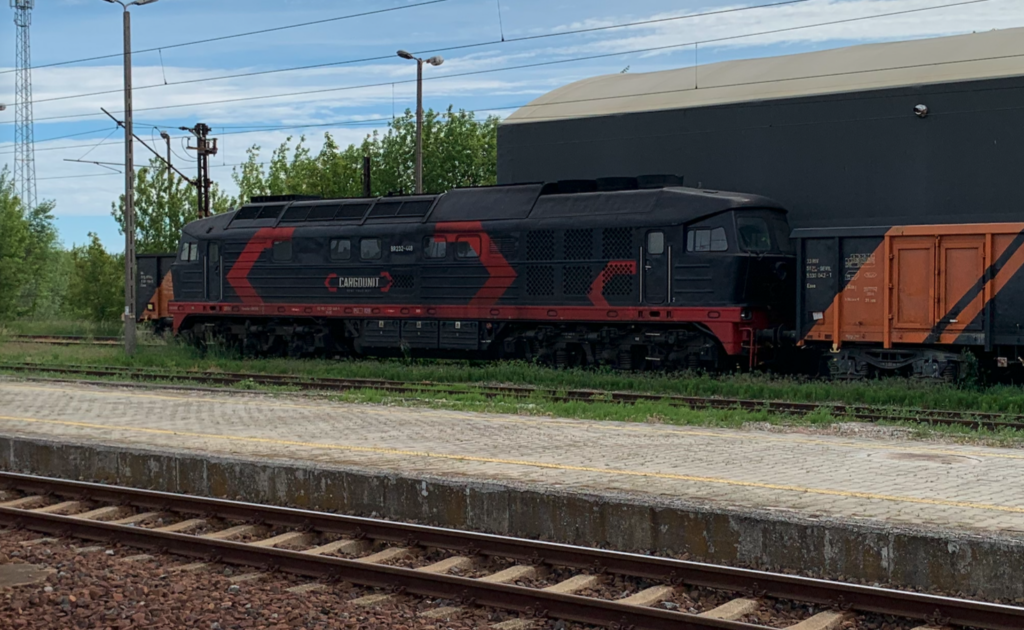
The ŁTZ BR232 diesel locomotive is very similar to the ŁTZ M62 diesel locomotive, which is designated ST44 by the Polish State Railways (PKP). Both locomotives were manufactured in the Moscow region, at the same factory. The LTZ M62 (ST44) locomotive is a Russian diesel locomotive manufactured by the Luhansk Railway Plant for the Soviet Union and other socialist countries of the Council for Mutual Economic Assistance, as well as for North Korea. The locomotive is popularly known as “Gagarin” or “Ivan.” M62 (ST44) locomotives were produced from 1965 to 1988. The LTZ BR232 locomotive was also produced at the Voroshilovgrad Plant, now Luhansk, in Ukraine. The locomotive is popularly known as “Lyudmila.” It was originally produced for the East German Railways. Production lasted from 1967 to 1982. During its production period, the plant was known as “October Revolution.” 709 BR232 locomotives were produced in the Moscow State at the Voroshilovgrad Locomotive Plant, as part of the TE109 (ТЭ109) family of locomotives.
The BR232 locomotive combined all the typical characteristics of locomotives from the Moscow State: high power, heavy weight, low-quality components, poor build quality, high failure rates, spartan working conditions for the engineer, and poor operating economy. The engineer’s cab was neither heated nor air-conditioned. Although the basic specifications were impressive, it had an output of 2,205 kW and a maximum speed of 120 km/h.
The BR232 locomotive is a family of systematically modified locomotives. Their origins lie in the Soviet ŁTZ TE109 locomotives. The first was the Baureihe BR130, produced for the East German Deutsche Reichsbahn. Subsequent designations included Baureihe 131, Baureihe 132, and Baureihe 142. Subsequent designations were introduced after the GDR’s takeover by the Federal Republic of Germany: Baureihe 230, Baureihe 231, Baureihe 232, Baureihe 233, Baureihe 241, and Baureihe 242. “BR” is an abbreviation for Baureihe, a Germanic word meaning “series” or “type” of railway vehicle. In the GDR, electrification of railway lines encountered significant difficulties. This led to a shortage of powerful diesel locomotives. German industry was unable to produce suitable locomotives on its own. The Muscovite government sought assistance and placed an order for 2,000 hp diesel locomotives with electric transmission. A prototype of the locomotive was unveiled in 1966, during the celebrations of the October Revolution. At that time, the locomotive bore the designation TE109. Between 1966 and 1975, 378 locomotives were produced, designated BR 120, later renamed BR 230. The first production run consisted of 80 locomotives. Negotiations between the Muscovites and the Germans must have been difficult, as the locomotives were delivered without an electric heating system for the passenger cars and without electrodynamic brakes. Therefore, the locomotives did not pull passenger trains and served only freight and military trains. The locomotives were equipped with transmissions that allowed them to reach speeds of 140 km/h, but at the cost of reduced tractive effort. These locomotives were not well-regarded, as they were decommissioned and scrapped in the early 1990s. Only one example remained, which is on display in a museum in Dresden. In 1971, two locomotives were produced for Czechoslovak Railways, designated T679.2. However, in 1975, they were sold to Bulgarian Railways.
Another batch of BR231 locomotives for the German Railways was produced between 1972 and 1973. 76 units were built. Tractive power increased, but top speed dropped to 100 km/h. Then, between 1973 and 1982, 709 BR232 locomotives were built. The transmission and engine were again modified. Top speed was 120 km/h. After the unification of the Germans, the locomotives were not modernized and were sent to the stockyards and offered for sale to other countries.
Six DB Baureihe 242 (DR Baureihe 142) locomotives were produced between 1976 and 1978. They were equipped with a 2-5D49 diesel engine, producing 2,940 kW, and 411 kW electric traction motors. Their maximum speed was 120 km/h. These locomotives were retired in 1995. Other locomotive versions were built in small numbers, ranging from 1 to 5 units. Attempts to modify these locomotives were unsuccessful. After the unification of the Germanic states, the BR232 and its derivatives were withdrawn from service by the end of the previous century and replaced by TRAXX locomotives. Between 2002 and 2003, 64 BR 233 locomotives were modernized at the Cottbus repair facility for DB Cargo. As part of the repair, a 2,206 kW engine was installed. Additionally, a new traction rectifier and a wheel flange lubrication system were installed.
BR 232 locomotives are operated in Poland by private rail operators. They are primarily used for heavy freight transport on electrified and non-electrified lines. Currently (2026), there are over a dozen BR 232 locomotives in Poland operated by private operators. These include operators such as Captrain Polska, CTL Logistics, OST-WEST Logistic Poland, and CARGOUNIT. These vehicles replace the aging ST 43 and ST 44 locomotives. These locomotives are being modernized and Polonized. Air conditioning, a GPS system, trail monitoring, and restrooms are being installed.
BR232 construction.
In the locomotive, a combustion engine drives a generator, which, via a rectifier, supplies direct current to the traction motors. The locomotive’s frame is constructed of cold-formed profiles and 8 mm thick sheet metal. The endcarriages are adapted for use with screw or automatic couplers. The locomotive body is divided into three sections. Engineers’ cabins are located at either end. Each cabin has two seats: the right one for the engineer, the left one for the assistant. Access to the engine room is possible by completely removing the roof. The side walls can also be removed. The locomotive uses a 16-cylinder, four-stroke 5D49 diesel engine, a significant improvement over the M62 locomotive, which has a less economical two-stroke engine. The engine’s power output is 2,205 kW. The crankshaft is made of cast iron. The friction points are reinforced by nitriding the metal surface. During engine overhauls, the Germans replaced their main shafts with forged shafts manufactured at the Cottbus factory. More powerful engines were equipped with more powerful turbochargers. The locomotive’s bogie journal spacing is 11.98 m. The bogie journals can be moved laterally by +/-40 mm. The outer axle spacing is 15.85 m. The bogie wheelbase is 1.85 m. The locomotives are equipped with ED 118 electric traction motors. The locomotive’s operating weight is 123,800 kg. Maximum speed is 120 km/h. Minimum track curve radius is 140 m. Braked weight: G 94 tons, P 108 tons, P2 128 tons, R 147 tons. Generator power: 1,675 kW. Continuous tractive effort: 255 kN. Starting tractive effort: 294 kN.
Traction data for the BR232 locomotive (various versions):
Production period 1967-1982. Co’Co’ axis system. Service weight depending on the version 116,200 – 127,000 kg. Length 20.82 m. Width 2.90-2.95 m. Height 4.60 m. Wheel diameter 1.05 m. Traction motor type 5D49. Fuel tank capacity 4,000 liters or 5,500 liters. Engine power depending on the version: 2,232 – 2,945 kW. Maximum pulling force, depending on the version: 195 – 300 kN. Electric transmission. Maximum speed, depending on the version, 100 – 140 km/h. Electric heating system. Knorr GPP2R brake system, where G,P,P2 are the brake settings (goods, passenger, passenger P2). Axle load up to 20.8 tons. The locomotives were produced for 1,435 mm standard track and 1,524 mm wide track. The power of the internal combustion engine in the BR233 locomotive is 2,190 kW (2,978 HP), and the power of the generator, i.e. the actual power of the locomotive, is 1,675 kW.
Knorr GPP2R brake system, where G,P,P2 are the brake settings (goods, passenger, passenger P2). The locomotive brake has several settings: G, P, P2, R, R+E3: G 94 t – braking mass for the freight brake (slow-acting brake, maximum pressure in the cylinders 3.7 bar). P 108 t – braking mass for the passenger brake (quick-acting brake, max pressure in the cylinders 3.7 bar). P2 128 t – braking mass for the P2 passenger brake (fast-acting brake, maximum pressure in the cylinders depending on the speed: up to 55 km/h – 3.7 bar, above 55 km/h – 5.5 bar). R 147 t – braking mass for the rapid brake (fast-acting brake, maximum pressure in the cylinders depends on the speed and changes from 8 bar to 5.5 bar and then from 5.5 bar to 3.7 bar). R+E 177 t braking mass for the rapid brake (quick-acting brake, settings as for the R rapid brake with the electrodynamic brake activated).
Written by Karol Placha Hetman