Kraków 2026-05-25
PKP LK No. 91 Kraków – Przemyśl – Medyka.
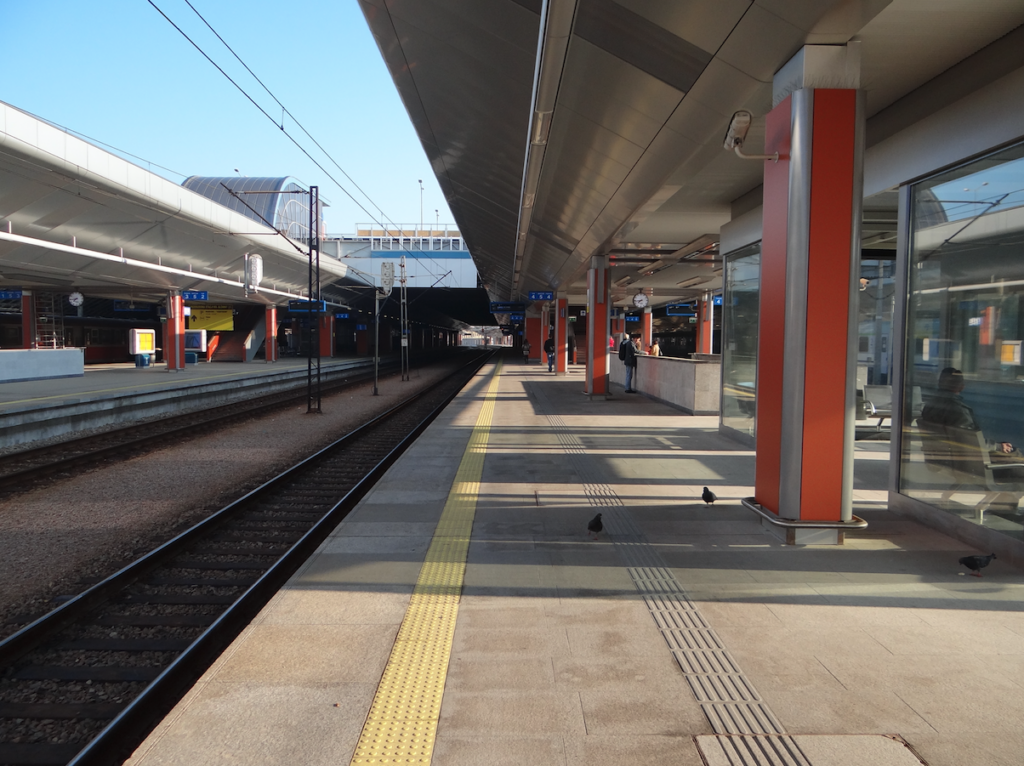
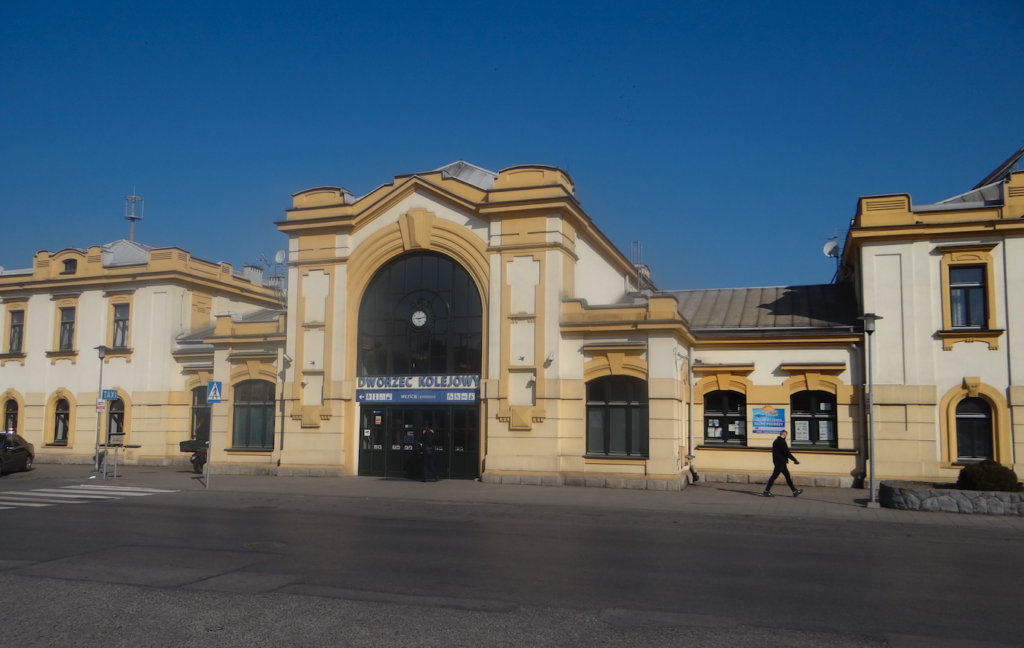
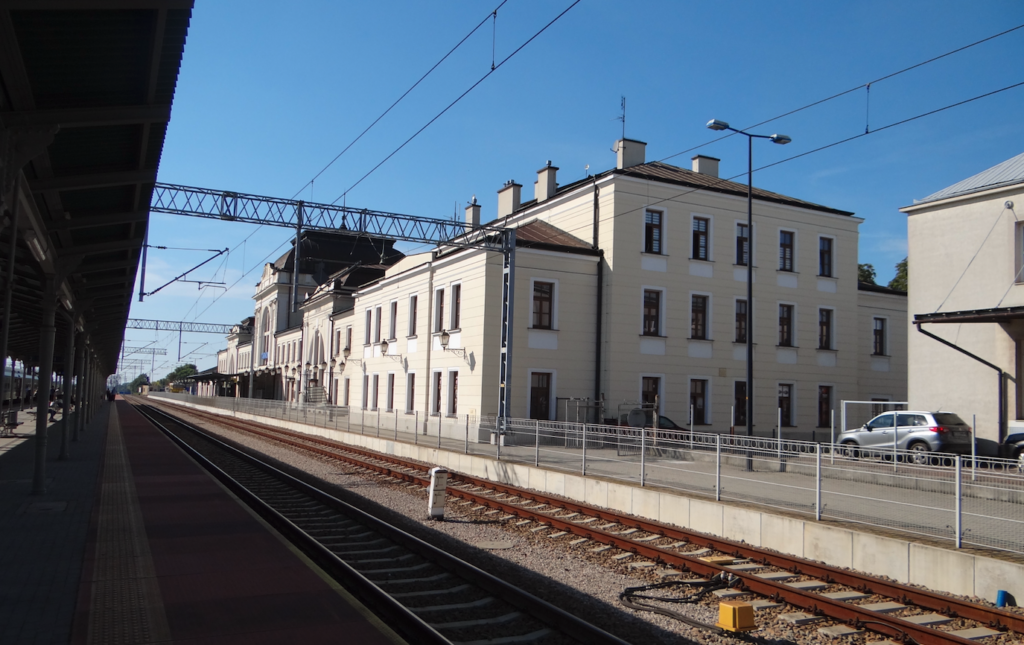
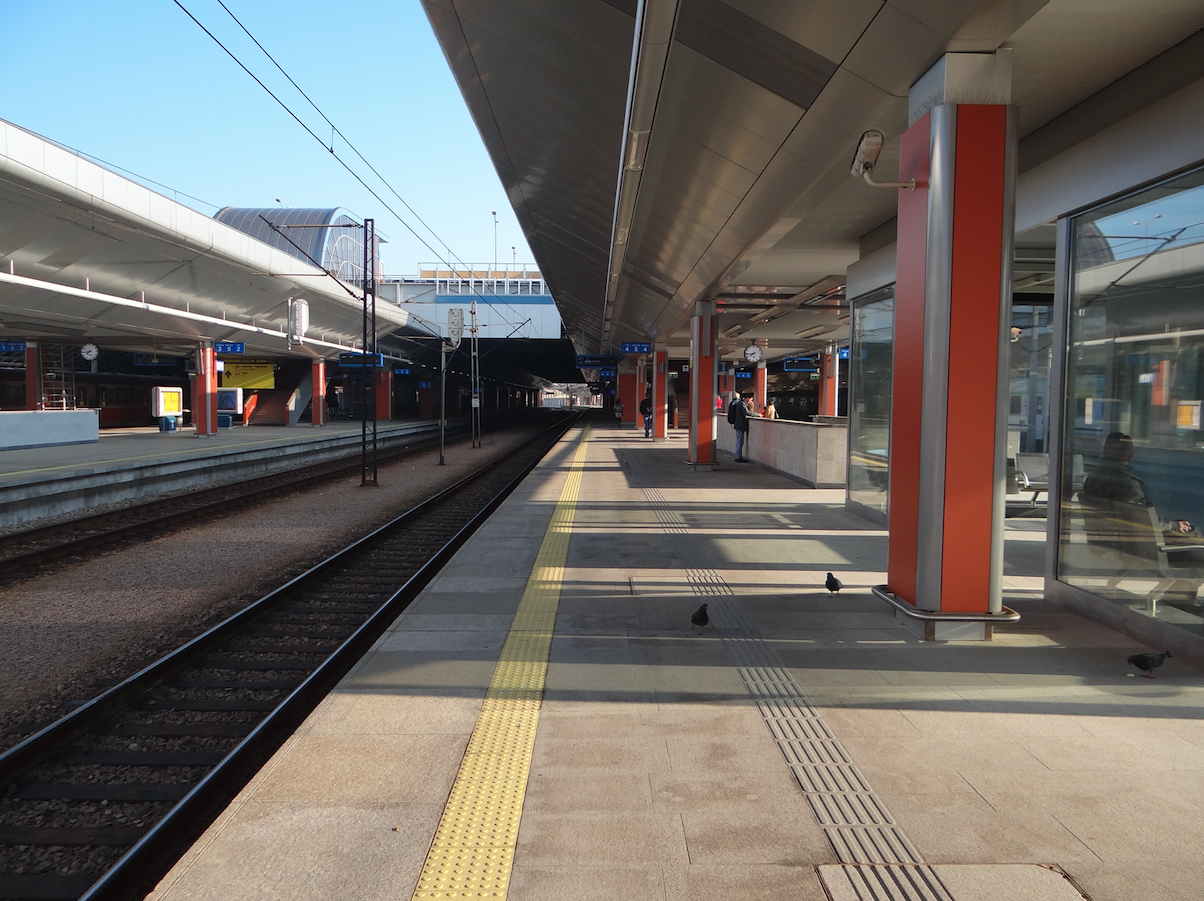
The construction of the Kraków-Przemyśl-Lviv railway line in the 19th century is described in detail in another article.
On January 1, 1892, the Imperial-Royal State Railways became the new owner of the railways in Galicia, meaning they were nationalized. After Poland regained independence in 1918, the line became the property of the Polish State Railways. This was a difficult period, as the railway lines of the three partitioning powers had to be consolidated. There were different rolling stock, different track gauges, different equipment, and different regulations and rules. The highest density of railway lines was in the areas of Leszno, Poznań, Bydgoszcz, Chojnice, and Tczew. The railway network in the former Austro-Hungarian partition was somewhat worse. However, here, railway lines connected all the most important urban and industrial centers. This also applied to the eastern territories and cities of Lviv, Stanisławów, and Tarnopol. Lviv clearly led the way, with a network extending in eight directions. The most important directions were Przemyśl, Stanisławów, Tarnopol, Rivne, and Kovel. The situation was worst in the former Moscow region. While Warsaw led the way, it lacked direct and easy connections with southern Poland; Kraków, Tarnów, Rzeszów, Przemyśl, and Lviv were the cities of the former Moscow region. Even connections westward and northward were unsatisfactory. All this was the result of constant disputes between the brothers: Muscovites, Germans, and Austrians. They always got along perfectly, and still do when they want to rob, exploit, or destroy someone together. But when it comes to building a good future together, this is no longer the case.
However, in a relatively short time, the task of connecting the railway lines in the reborn Poland was accomplished and actively supported the national economy.
The Kraków-Lviv railway line was one of the most important main lines of the Second Polish Republic during the interwar period (1918–1939). It connected the western part of the country with Lviv, which was then the third-largest city in Poland and a major administrative, academic, and military center. The main route ran through Kraków – Bochnia – Tarnów – Dębica – Rzeszów – Przeworsk – Jarosław – Przemyśl – Lviv. It was a section of the former Charles Louis Railway, built during the Austro-Hungarian Empire in the second half of the 19th century. Importantly, it was already a double-track line.
In the 1920s, Kraków-Lviv passenger trains traveled the route in 7 to 10 hours. This time depended on the passenger train class (long-distance express, express, regular passenger) and the number of stops. Long-distance connections from Lviv ran to Warsaw, Vienna, and Bucharest. The line had enormous strategic importance: transporting troops and supplies, as well as enabling possible mobilization during a military threat from Muscovy. It also had enormous economic significance. It transported crude oil from the Boryslav basin, timber from the Carpathians, agricultural products, and industrial goods. For the Second Polish Republic, it was one of the country’s transportation axes, comparable in importance to the Zagłębie Dąbrowskie-Gdynia or Warsaw-Gdynia main lines.
In the 1920s and 1930s, the rolling stock consisted of passenger steam locomotives: Ok1, Oi1, and later Pt31. There were heavy steam locomotives: Tr21, Ty23. Passenger cars were mostly sourced from the railways of the occupying powers, including those built by the Zieleniewski Plant in Kraków. Polish factories began producing their own passenger and freight cars. The Lilpop, Rau, and Loewenstein Factory in Warsaw. One of the largest industrial factories of the Second Polish Republic. It produced passenger cars, freight cars, steel structures, and later also buses and cars. The Sanok Wagon Factory (later Sanowag). It was a very important manufacturer of passenger cars, motor cars, special wagons, and export wagons. The H. Cegielski Factory in Poznań. It produced wagons, locomotives, rolling stock components, and industrial equipment. The first Locomotive Factory in Poland, Fablok, was known primarily for its locomotives, but also produced wagons, rolling stock modernizations, and railway structures. The Ostrowiec Works produced freight cars, railway accessories, and steel components.
Railway lines were mostly single-track. The rails were iron, but gradually steel rails were switched to, stronger and more durable. The rails were mounted on wooden sleepers. Various species of wood were used, from pine to oak. Oak was the most prized; it was very durable and resistant to loads. Pine was cheaper and more common, but it required good impregnation. Beech was used quite often, especially after impregnation. Larch was used locally due to its natural resistance. Fir or spruce were less frequently used. Creosote is an impregnating oil made from the processing of coal tar. To enhance the impregnation, autoclaves were used, where the oil penetrated deeper into the wood at higher temperatures and under greater pressure. Approximate lifespan of sleepers: impregnated oak: 25–40 years, impregnated pine: 15–30 years, impregnated beech: 20–30 years.
The rails were mounted on metal sleepers, and at the rail joints, the sleepers were wider and rested on two sleepers. Special wood screws with spring washers were used. The gravel in the trackbed (which was good, but washed out during heavy rainfall) was replaced with crushed stone.
Mechanical semaphores were standardized before entering and leaving stations. However, Austrian semaphores in Galicia remained in use for a long time. Austrian mechanical semaphores differed from Prussian ones primarily in the shape of the arm, the signaling method, and the appearance of the mast. The semaphore had a single arm. It sent only two signals: a horizontal arm meant “Stop.” A downward arm at a 45-degree angle meant “Pass.” In Germanic semaphores, the arm is raised at a 45-degree angle. The Austrian arm was narrower, perforated to reduce weight, and lacked a disc at the end of the arm. The arm’s outer colors were red, and the inner white. At night, oil lamps, and later kerosene lamps, were used. Red indicated a “Stop” signal. Green or white meant “Proceedings permitted.” The signal poles were lower than those later used by the Polish State Railways (PKP). The standard pole color was the current “red and white.” At larger stations in Galicia, such as Przemyśl, Lwów, and Tarnów, multi-armed semaphores could be found, indicating different routes. In Galicia after 1918, these devices often operated for decades on the Polish State Railways (PKP) before being replaced by more standardized designs.
On September 1, 1939, the Germanic and Muscovite brothers began World War II by attacking Poland. The Germans occupied a significant portion of Poland, and the railway served their war needs, and by the end of the war, the Muscovites. Because the West sold Poland to the Muscovites, Poland’s borders were significantly altered. Poland lost 180,000 square kilometers in the east, approximately 46% of the area of the Second Polish Republic. The Second Polish Republic had an area of 388,000 square kilometers, while after the war, it only decreased to 312,000 square kilometers. The western border gained 101,000 square kilometers: Silesia, Western Pomerania, Warmia and Masuria, and part of East Prussia.
After the war, the Polish-Muscovite border crossed the former Kraków-Lviv line, with the section to Lviv falling outside Poland. The railway lines from Medyka station eastward were converted to broad gauge. In 1991, after the dissolution of the CCCP, the eastern section of the lines became part of Ukrainian territory and became part of the Ukrainian Railways. The entire track layout, rolling stock, and regulations remained unchanged.
During the communist era, the line held significant strategic, economic, and passenger significance. It was one of the most important transport axes in southeastern Poland, at least until the launch of the LHS (Metallurgical Broad Gauge Line) on November 30, 1979. After 1945, LK No. 91 led to the most important railway crossing in Poland – the CCCP. International passenger trains between Lviv, Kyiv, Moscow, and Odessa ran through the Medyka crossing. The crossing also had enormous commercial significance. Vast quantities of goods were transported through the crossing; Metal ores, especially iron ore with a 40-60% iron content, hard coal, semi-finished steel, chemical products, machinery such as tracked tractors, ZIL trucks, grain, fertilizers, and agricultural commodities. After the launch of the Broad Gauge Metallurgical Line, some freight traffic was shifted, but the main line through Medyka remained important. Trains from Moscow to Warsaw, Krakow, Katowice, Wrocław, and even Legnica and Dresden passed through Medyka and Przemyśl stations. During the Cold War, the line was of strategic importance and was an integral part of the Warsaw Pact’s logistics system. It transported soldiers and military equipment. The line was used for logistics exercises to assess how efficiently and quickly soldiers, weapons, and supplies could be transported.
Rolling Stock: Until the mid-1970s, some trains were operated by steam locomotives, primarily the Ty2 and derivatives. The trains were primarily operated by electric locomotives. ET21, EU07 (derivatives), ET22. No diesel locomotives were used on the route.
Railway Line No. 91.
Currently, Railway Line No. 91 is located in Poland, while the remaining historical routes are in Ukraine. Railway Line No. 91 has a length of 258.974 km. The line is double-track, except for a short section near the national border. The line is electrified at 3 kV DC. The maximum speed is 160 km/h. The line is part of the pan-European railway route E30.
In the late 1950s, electrification of Railway Line No. 91 began. The first section was the Kraków Główny – Kraków Płaszów section, which was electrified on April 29, 1959. Subsequent sections were electrified in the following order: Kraków Płaszów – Kraków Bieżanów on March 29, 1960, and Kraków Bieżanów – Podłęże on May 28, 1960. On April 28, 1962, Podłęże – Bogumiłowice. On September 29, 1962, Bogumiłowice – Tarnów Mościce. On May 25, 1963, Tarnów Mościce – Dębica. On September 26, 1963, the Dębica – Rzeszów Główny section was electrified. The Rzeszów – Medyka section was electrified on April 28, 1964, and on August 5, 1972, the border crossing in Medyka was electrified. This completed the electrification of the line.
In 2003, passenger traffic on the Przemyśl Główny – state border section was suspended. On September 1, 2016, passenger traffic on the Przemyśl Główny – Medyka section was resumed.
In 2009, the decision was made to modernize Railway Line No. 91 Kraków Główny – Medyka and Railway Line No. 92 Przemyśl – Medyka. The project involved the complete replacement of the track surface and electric traction, the reconstruction of platforms and street furniture, and the replacement of railway traffic control equipment. Project value: PLN 124,401,221.59, with state funding of PLN 114,133,583.78. Implementation time: 2010-2023.
Between 2011 and 2015, the Kraków–Rzeszów railway line was modernized under the Infrastructure and Environment Operational Programme. The modernization aimed to increase the scheduled speed of the line from 120 to 160 km/h. During 2010–2011, the Rzeszów–Medyka section underwent renovations, including replacing the track surface and overhead lines.
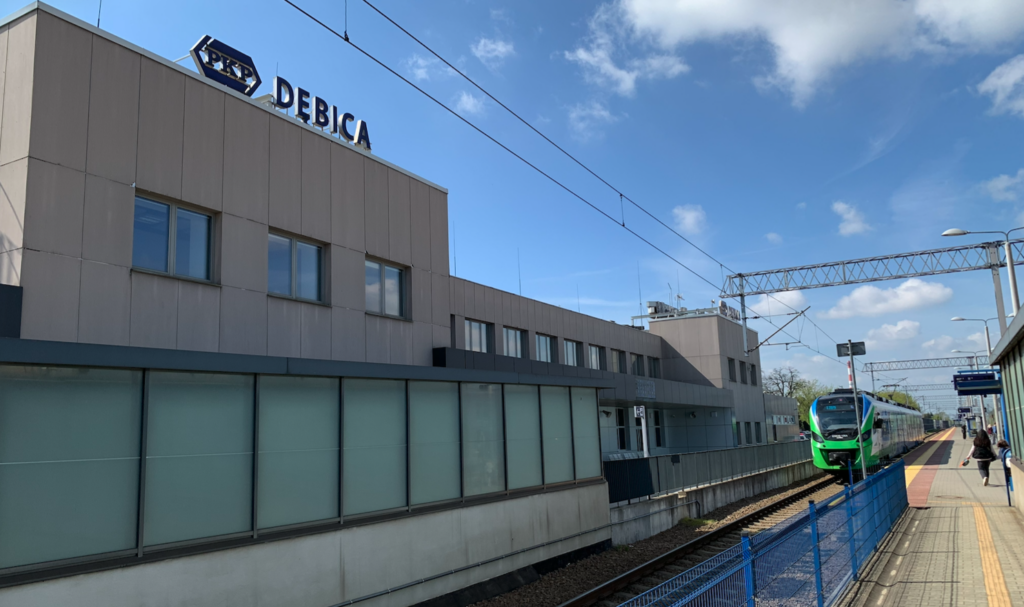
In 2011, modernization of LK No. 91 on the Kraków–Rzeszów section began. The scope of work also included a thorough reconstruction of the station in Dębica. Modern rail traffic control equipment was installed. A new track layout and platforms were constructed. One platform, the single-edge platform next to the station building, was removed. New underpasses were constructed. In 2016, the renovated station building opened, giving it a completely new look. The City Hall opened an information point inside. On March 1, 2019, renovations began on LK No. 25 on the Mielec-Dębica section. Following the completion of renovations on LK No. 25, freight train traffic resumed on September 1, 2020, on the Mielec-Kochanówka Pustków section, and on June 13, 2021, on the Kochanówka Pustków-Dębica section. On September 1, 2021, passenger train traffic resumed on the railway line from Dębica to Mielec after a 12-year hiatus. In September 2024, PKP InterCity announced the return of long-distance passenger rail services on LK No. 25 on the Dębica-Mielec-Tarnobrzeg section, in the form of the InterCity “Hetman” train on the Kraków Główny-Hrubieszów Miasto route, which took place, as announced, on December 15, 2024.
On April 18, 2017, PKP PLK signed an agreement with a consortium of Strabag and Krakowskie Zakłady Automatyki, which included the construction of two stops (Kraków Grzegórzki and Kraków Złocień) and, most importantly, the construction of two additional tracks on the section to Kraków Płaszów station and one additional track to Kraków Bieżanów station.
On January 25, 2018, PKP PLK signed an agreement with Thales to equip the Podłęże – Rzeszów section with the European Train Control System. On March 26, 2018, an agreement was signed with the Serso/Intop Warszawa consortium for work on the Munina – Żurawica section, including the reconstruction of seven viaducts and the reconstruction of platforms at three stops.
In August 2018, the modernization of Rzeszów Główny station began, including the construction of a new passenger stop at Rzeszów Zachodni, replacement of the tracks, viaducts, and traffic control devices, as well as the construction of new platforms and an underpass at the main station. At the same time, the existing footbridge over the tracks was removed. The contract value exceeds PLN 200 million.
In January 2019, a contract was signed for the modernization of Radymno station as part of the project “Design and execution of works at Radymno and Przeworsk stations and on the Przemyśl-Hurko route.” The renovation work included replacing the track surface and modernizing the platforms and traffic control devices. The work included the reconstruction of the bridge over the Mnich stream at Przeworsk station and the level crossings in Przemyśl and Radymno. The contractor was Transkol from Kielce.
In June 2025, PKP PLK announced the commissioning of design documentation for the modernization of the Rzeszów – Medyka section, increasing the maximum train speed from 120 to 160 km/h.
Passenger trains run along the entire Kraków Główny – Przemyśl Główny – Medyka line. Most trains run on the Kraków – Przemyśl line. However, some terminate at Tarnów or Rzeszów Główny stations. Some passenger trains from Tranów take LK No. 96 to Nowy Sącz and Krynica Zdrój. There are also trains running through the following stations: Dębica – Mielec – Tarnobrzeg and Przeworsk – Leżajsk – Nisko – Biłgoraj – Zamość. Since December 19, 2015, an EIP train has been running from Rzeszów Główny station via Kraków Główny to Gdynia, operated by EZT ED250 Pendolino. In addition to InterCity trains, PolRegio, Koleje Małopolskie and Koleje Podkarpackie trains run on the route.
According to press reports, only one pair of trains on the Kraków-Rzeszów route is utilizing the rail infrastructure capabilities gained through modernization worth several billion złoty. The trains were expected to reach speeds of up to 160 km/h, and according to them, only the ED250 Pendolino EMU train can operate at such speeds. However, this information was false. Newag Impuls EMUs and Pesa Elf EMUs can run at 160 km/h. Trains with wagon trains, including EP09 and EU160 locomotives, can also run at 160 km/h. The true top model is the EU200 electric locomotive, with a maximum speed of 200 km/h, which has been in service since 2024. In fact, Polish regulations stipulate that a train traveling at 130 km/h without additional cab signaling must be double-crewed.
On LK No. 91, there are 28 train stations, 41 passenger stops, and 92 various service points. The route includes 25 bridges over small and large rivers. There are 125 viaducts over and under roads and one viaduct. There are two wildlife crossings. There are 44 rail-road crossings along the route, with 39 of these crossings occurring on the Rzeszów-Medyka section.
LK No. 91 Route
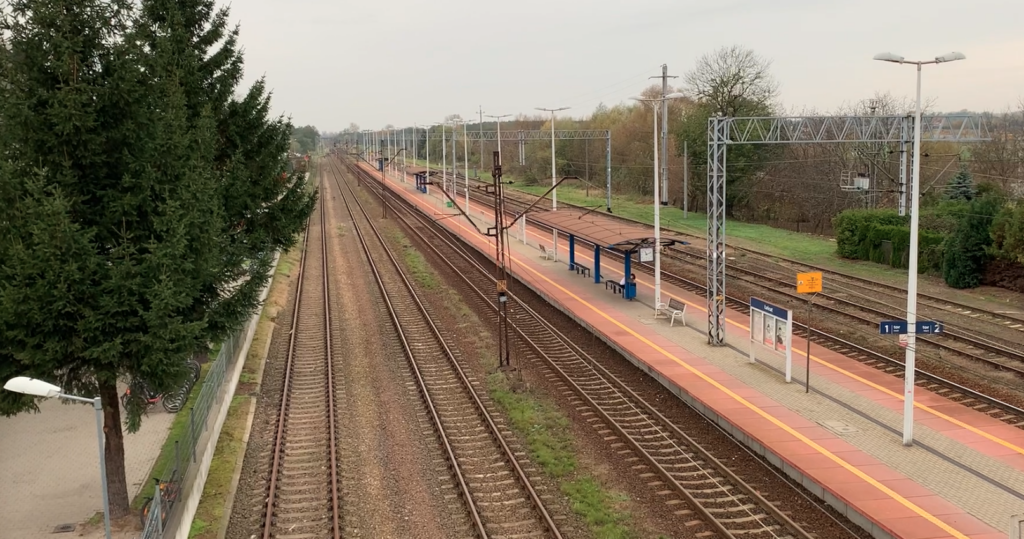
Kraków Główny passenger station (0.00 km, elevation 216 m). Railway lines 8, 118, 133, 133c, and 629 are located here. After leaving the station, the line enters a new four-track viaduct. Previously, there was an embankment with two tracks. The line crosses Grzegórzki Street over a historic bridge from 1863, which has been modernized and widened to four tracks. Kraków Grzegórzki passenger stop (1.00 km, elevation 212 m). The platforms are built in a structure supported by concrete pillars. The line then crosses the Vistula River on modern steel bridges, with four tracks, a pedestrian walkway, and a bicycle path. Kraków Zabłocie passenger stop (2.11 km, elevation 209 m). Connecting lines 624 and 629 are located here, leading towards Skawina. At the stop there are two platforms, four platform edges, and various service premises beneath the platforms. Further up, the line crosses Nowohucka Street and joins the tracks from the Kraków Podgórze (Skawina) passenger stop. Kraków Płaszów station (4.09 km, elevation 204 m). There are LCS and LK Nos. 94, 94a, 100, 112, 604, 605, and 629 here. The station was rebuilt a few years ago. Kraków Prokocim passenger stop (6.16 km, elevation 204 m). Kraków Bieżanów station (8.04 km, elevation 206 m). LCS. There are LK Nos. 109, 606, and 629 here. On the north side is the Kraków Prokocim Locomotive Depot. Kraków Złocień passenger stop (9.92 km, elevation 205 m). Next, the line passes under the S7 motorway (Krakow eastern bypass). Kokotów passenger stop (11.41 km, elevation 204 m). Then the line runs parallel to the A4 motorway for approximately 2 km. Węgrzce Wielkie passenger stop (13.93 km, elevation 203 m). Next is the railway junction of the Kraków freight bypass and Nowa Huta/steelworks. The tracks cross the Podłężanka River. Podłęże station (18.40 km, elevation 201 m). LK Nos. 95, 113, 608 are here. The line crosses DW No. 964 at the top. Staniątki passenger stop (21.40 km, elevation 209 m). Szarów passenger stop (24.98 km, elevation 212 m). The line crosses DK No. 75 at the bottom. Kłaj station (28.13 km, elevation 212 m). There is a siding here to the Kłaj military depot and Military Unit 4228. Stanisławice passenger stop (32.17 km, elevation 203 m). The A4 motorway passes at the top, and Leśna Street at the bottom. Cikowice passenger stop (34.37 km, elevation 203 m). Świętego Antoniego Street passes at the bottom. Then the line crosses the Raba River. Bochnia station (37.99 km, elevation 205 m). DW No. 965 passes at the top. Rzezawa passenger stop (44.06 km, elevation 208 m). Jasień Brzeski passenger stop (47.23 km, elevation 217 m). Brzesko Okocim station (50.59 km, elevation 217 m). Sterkowiec passenger stop (56.07 km, elevation 214 m). Biadoliny passenger stop (60.19 km, elevation 212 m). Bogumiłowice station (69.93 km, elevation 197 m). Tarnów Mościce station (73.89 km, elevation 196 m).
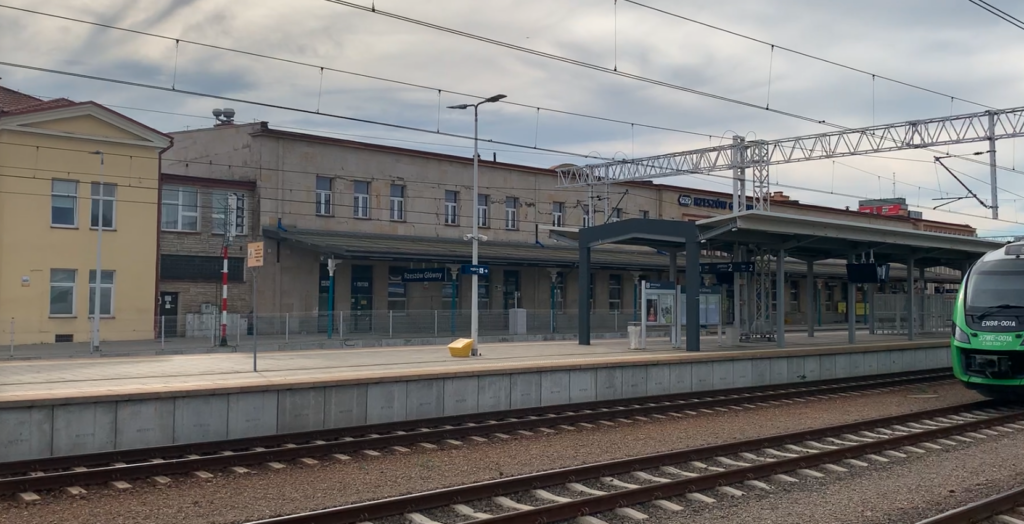
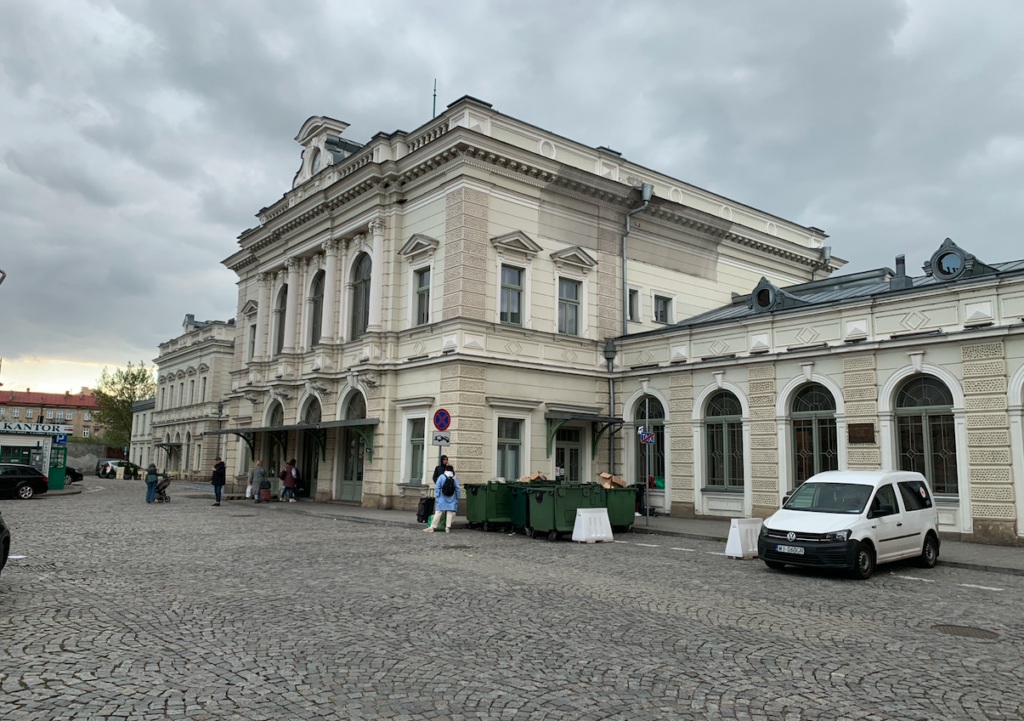
Tarnów station (77.43 km, elevation 205 m). LCS. LK No. 96, 115, 609, 987. Tarnów Wschodni station (79.41 km, elevation 210 m). Wola Rzędzińska station (85.43 km, elevation 231 m). Wałki passenger stop (90.85 km, elevation 220 m). Lesser Poland / Subcarpathian Voivodeship border (91.10 km). Czarna Tarnowska passenger stop (98.86 km, elevation 210 m). Grabiny passenger stop (105.25 km, elevation 197 m). Dębica station (110.65 km, elevation 196 m). LK No. 25, 91, 610. Dębica Wschodnia passenger stop (113.95 km, elevation 199 m). Lubzina passenger stop (119.72 km, elevation 201 m). Ropczyce station (123.70 km, elevation 206 m). Ropczyce Witkowice passenger stop (127.04 km, elevation 207 m). Sędziszów Małopolski station (131.88 km, elevation 209 m). Sędziszów Małopolski Wschodni passenger stop (134.33 km, elevation 217 m). Bliskomyśl passenger stop (138.04 km, elevation 231 m). Trzciana station (142.99 km, elevation 221 m). Świlcza passenger stop (147.31 km, elevation 220 m). Rudna Wielka passenger stop (150.32 km, elevation 219 m). Rzeszów Dworzysko passenger stop (152.27 km, elevation 219 m). Rzeszów Baranówka passenger stop (154.44 km, elevation 214 m). Rzeszów Zachodni station (156.12 km, elevation 208 m). LK No. 71, 611. Rzeszów Główny station (157.57 km, elevation 203 m). LCS, LK No. 71, 106. Rzeszów Pobitno passenger stop (159.77 km, elevation 201 m). Rzeszów Załęże passenger stop (162.55 km, elevation 197 m). Strażów station (166.16 km, elevation 196 m). Krzemienica passenger stop (171.59 km, elevation 195 m). Łańcut station (174.36 km, elevation 194 m). Głuchów passenger stop (178.10 km, elevation 194 m). Kosina passenger stop (181.28 km, elevation 190 m). Rogóżno near Łańcut station (184.09 km, elevation 191 m). Grzęska passenger stop (190.63 km, elevation 187 m). Przeworsk station (194.39 km, elevation 188 m). LK No. 68, 612, 988, 2011. Next to the Przeworsk railway station is the Przeworsk Wąskotorowy station to Dynów. Przeworsk Towarowy station (196.39 km, elevation 188 m). Pełkinie passenger stop (203.02 km, elevation 209 m). Jarosław station (209.31 km, elevation 212 m). Munina station (213.29 km, elevation 203 m). LK No. 101. Ostrów k/Radymno passenger stop (219.42 km, elevation 200 m). Radymno station (223.15 km, elevation 204 m). Sośnica Jarosławska passenger stop (227.83 km, elevation 204 m). Niziny passenger stop (230.27 km, elevation 205 m). Walawa passenger stop (232.33 km, elevation 206 m). Żurawica station (237.07 km, elevation 217 m). LK No. 119, 125, 613, 614, 661. Przemyśl Zasanie passenger stop (242.89 km, elevation 204 m). Przemyśl Główny station (244.33 km, elevation 203 m). LK No. 92,102, 615. Przemyśl Wschodni passenger stop (246.35 km, elevation 200 m). Hurko station (244.33 km, elevation 203 m). LK No. 91, 92, 123, 613, 614, 989. Medyka Towarowa passenger stop (252.12 km, elevation 197 m). Medyka Rozdzielowa passenger stop (254.30 km, elevation 197 m). Medyka station (257.09 km, elevation 206 m). State border (258.24 km).
Written by Karol Placha Hetman