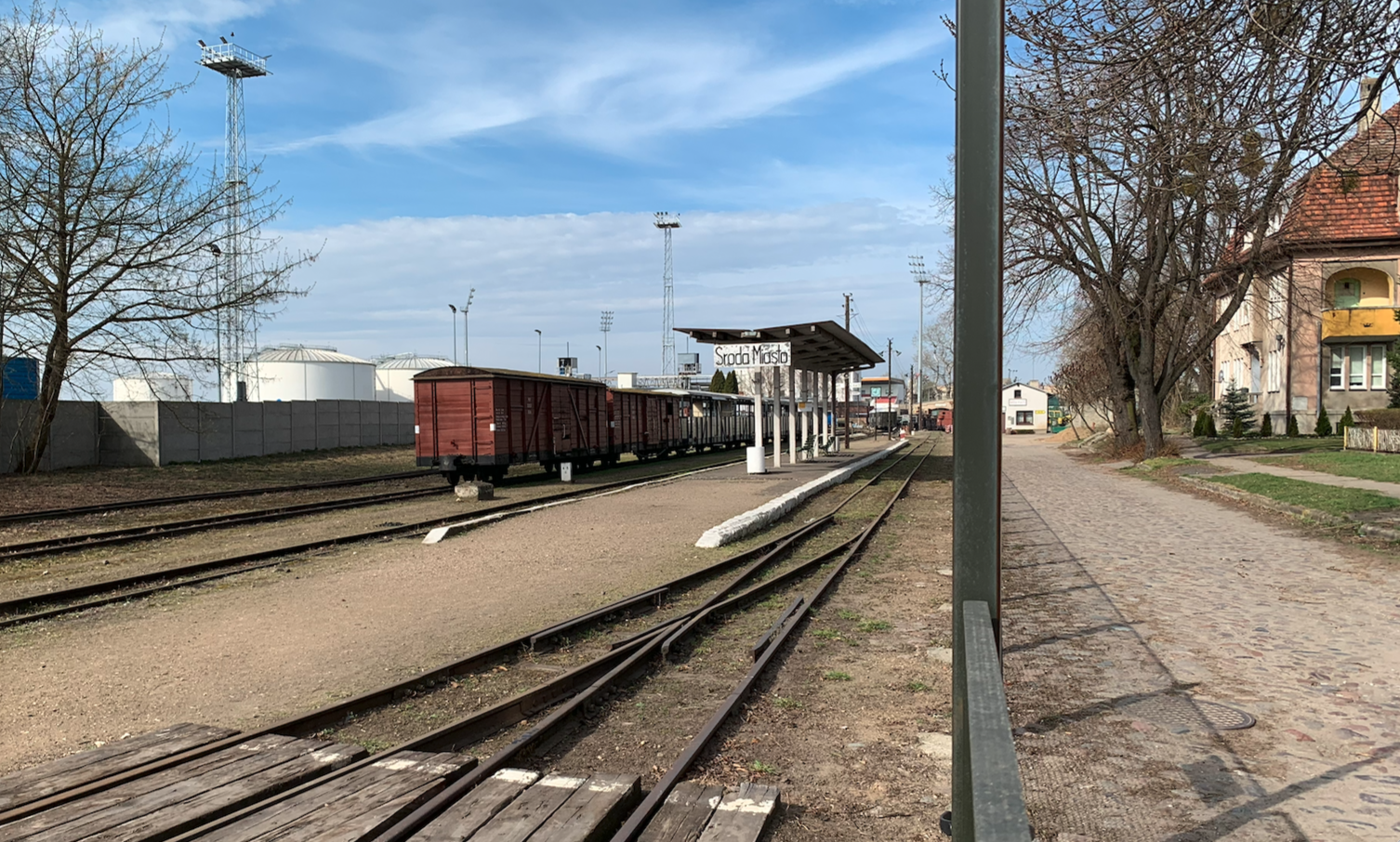
Środa Wielkopolska 2026-04-10
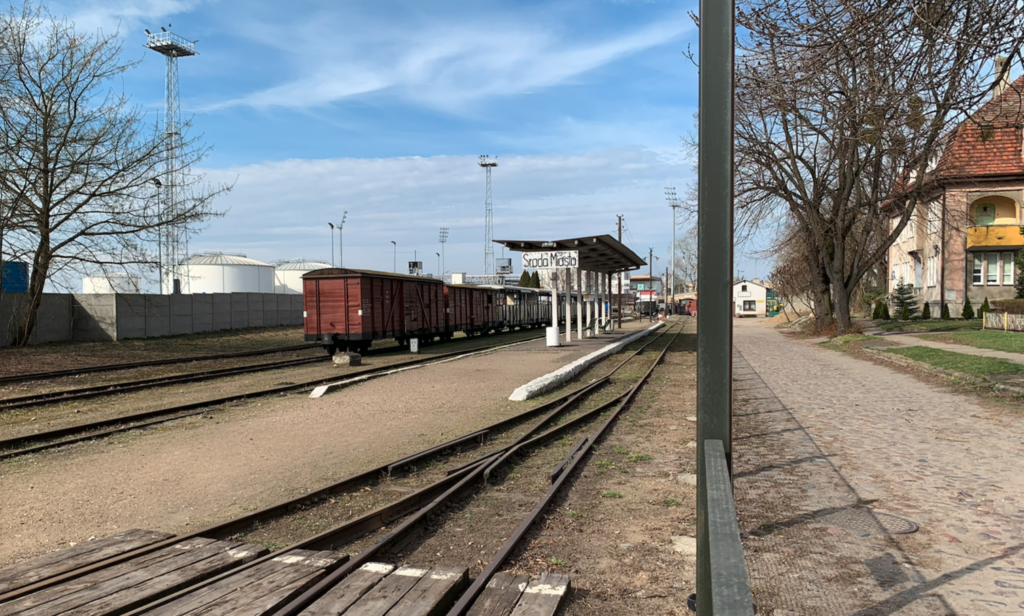
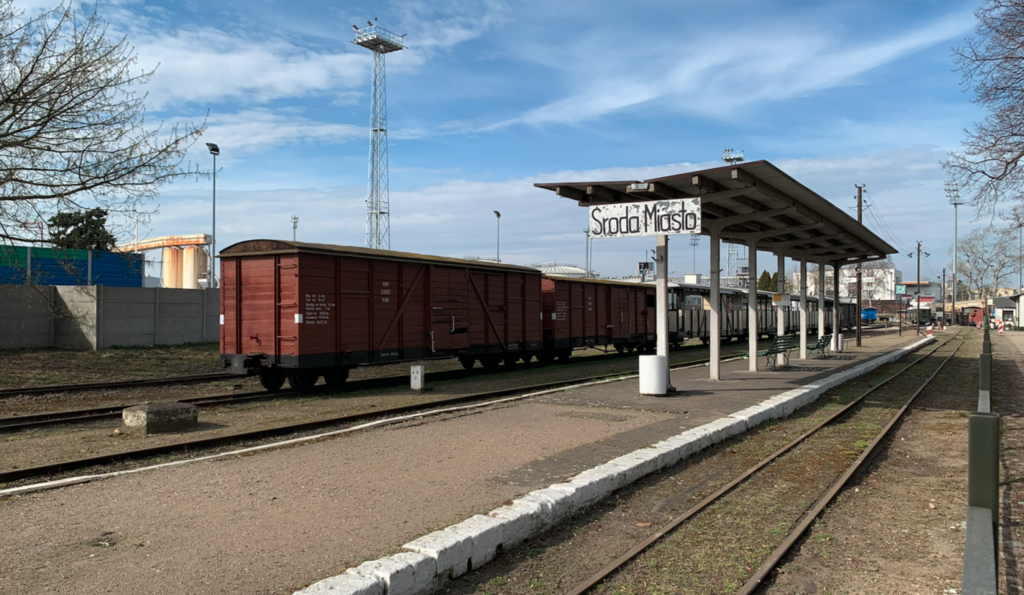
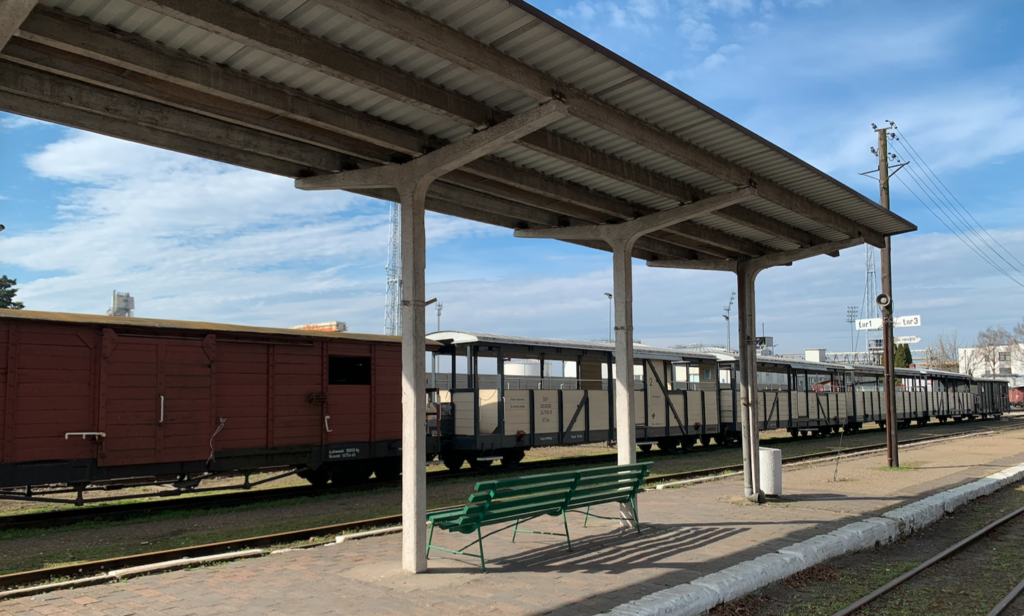

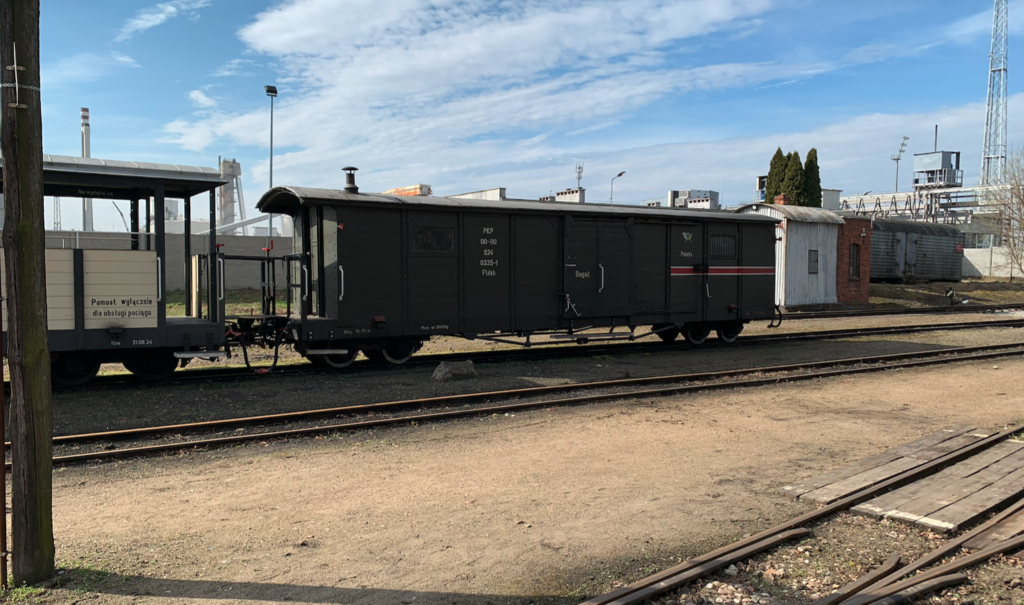
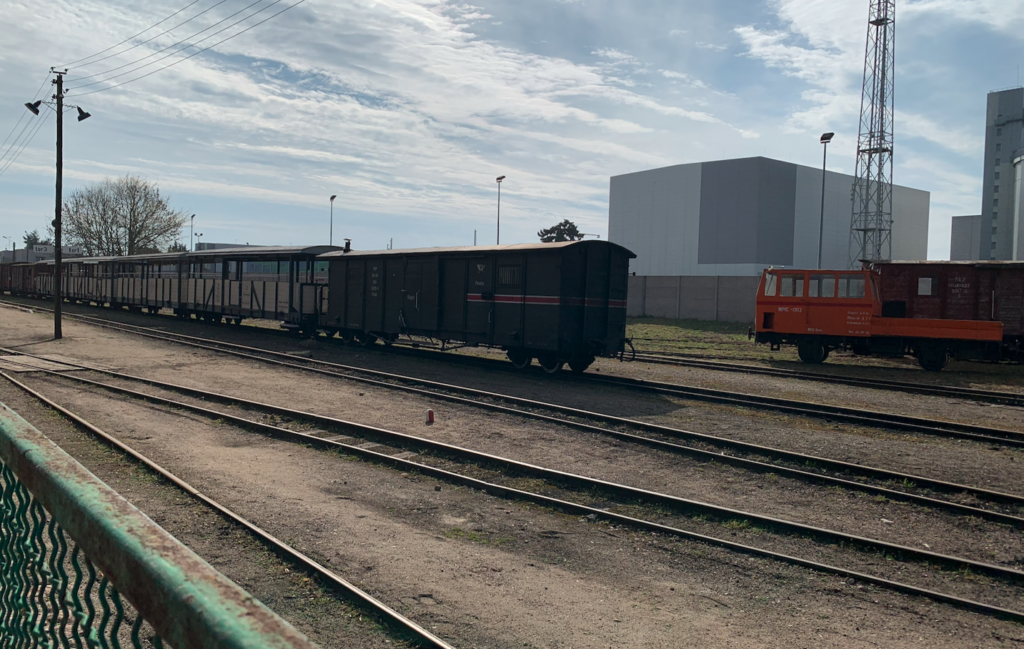
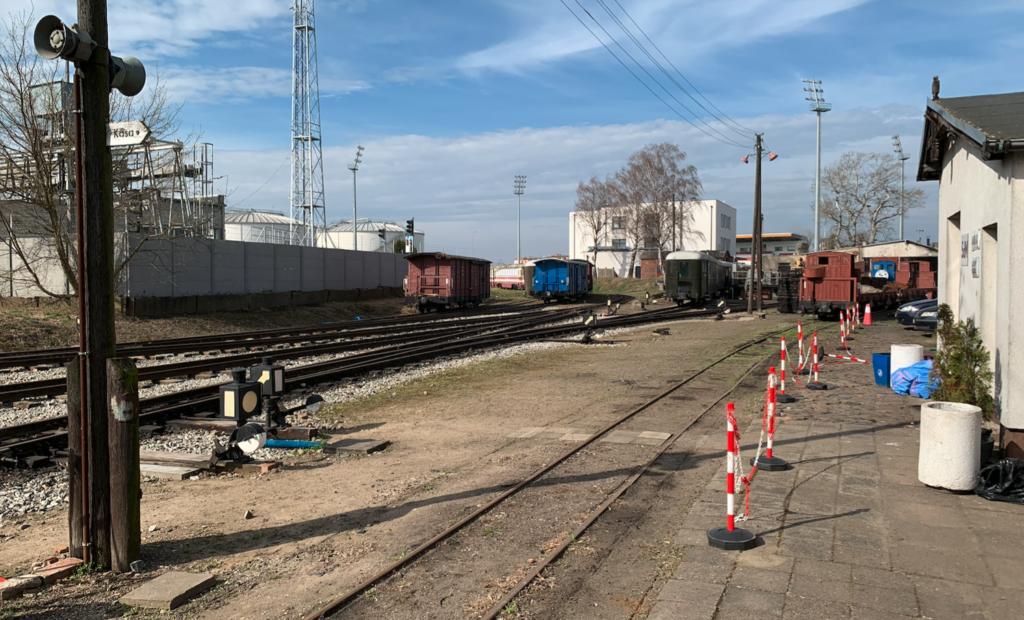
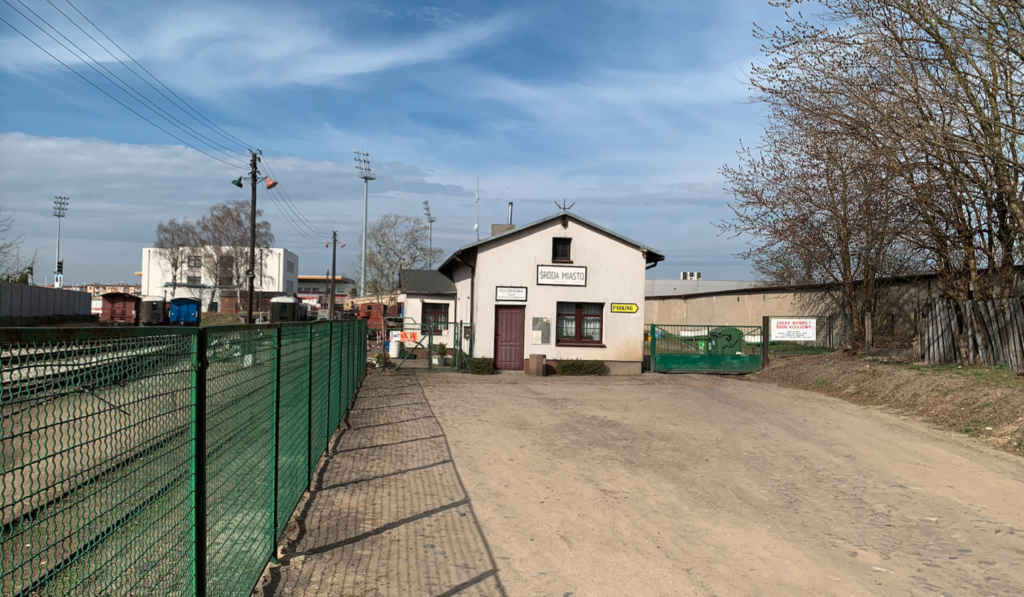
The history of Środa Wielkopolska is described in another chapter. It covers not only the history, current state, and standard-gauge railway. Railway line No. 272 Kluczbork – Poznań passes through the town. Środa Wielkopolska railway station was not a junction station. However, a narrow-gauge railway developed in the region, which at its peak had 150 km of railway lines. The core element of the narrow-gauge railway is the Środa County Railway. This railway was founded in 1898. Currently, it operates as a tourist attraction on the 14 km long Środa Wielkopolska – Zaniemyśl route.
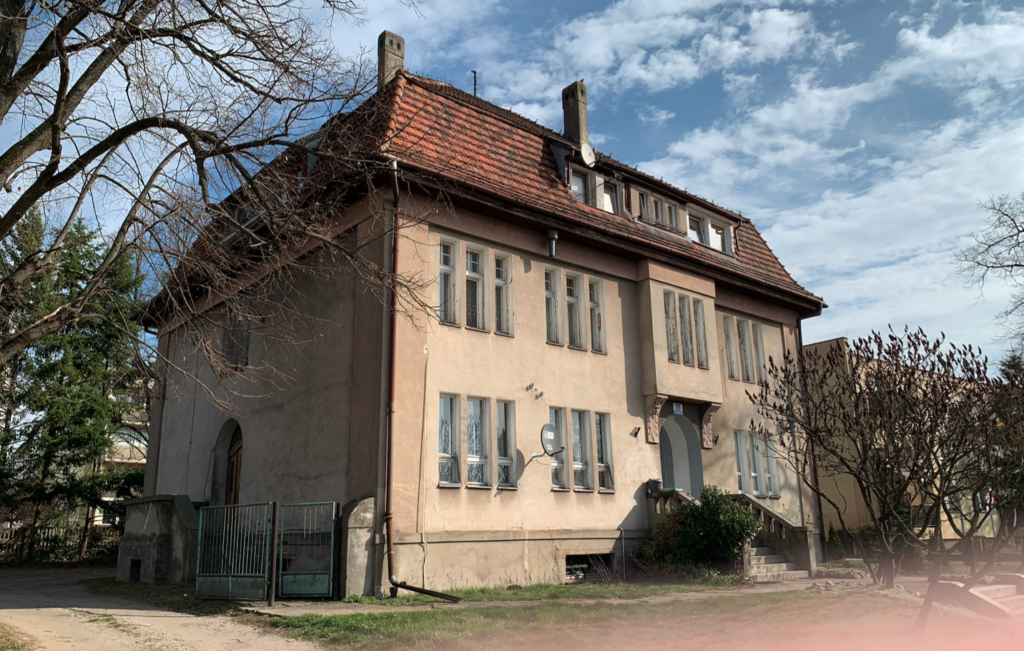
The narrow-gauge Środa County Railway (Schrodaer Kreisbahn in German) was established at the initiative of local landowners and sugar refineries. The support of the German government, in the form of the Act of July 28, 1892, on local railways, played a significant role in these initiatives. Since the most common type of local railway in Germany was the 1000 mm gauge, this gauge was also adopted in Środa. The first tracks began to be laid in 1898, creating a 5.20 km long standard-gauge section between Kobylepole and Główna (Poznań East). Simultaneously, construction began on a narrow-gauge line with a 1000 mm gauge connecting Kobylepole and Środa Wielkopolska. The then village of Kobylepole, now a district of Poznań, was owned by the Mycielski family until 1939. Józef Mycielski, the family’s senior, was one of the originators of the railway. At Kobylepole station, a main locomotive shed was built, serving both standard-gauge and narrow-gauge locomotives. In Środa Wielkopolska, an auxiliary locomotive shed was built, housing only narrow-gauge locomotives. This locomotive shed still exists today. A stately building, No. 25, was built adjacent to the station on Mieczysława Niedziałkowskiego Street in Środa Wielkopolska. The building likely served as an administrative building, but is now a residential building.
The narrow-gauge railway officially began operations on June 23, 1902. In 1902, regular services began, operating during the sugar beet harvest season to efficiently transport sugar beets from the fields to the sugar factory. The railway quickly became profitable. In 1903, these profits allowed for the construction of another standard-gauge line, the Malta–Starołęka line, 5.40 km long. This siding supported the development of industrial plants in the growing city of Poznań.
The narrow-gauge lines continued to be expanded. On May 1, 1910, the Środa–Zaniemyśl section of the line was opened. This section has survived to this day. At that time, the railway primarily transported agricultural produce, construction materials, and coal. Rail transport grew, requiring an expansion of the rolling stock fleet. Customers began to see the benefits of fast and inexpensive transport, not only of agricultural produce but also of other goods and people. The narrow-gauge railway network systematically expanded in every conceivable direction. Initially, the railway connected plants and factories: the Military Works, the Pendowski Paper Factory T.A., ZPMS, Znicz, Naftolej, Carolina, Polmin, Koszewski, Majewski i S-ka, Ciesielczyka Ceramic Works, Ogrodnictwo Mielocha, the “Kobylepole” Brewery, the Wielkopolska Chemical Plant, Stomil, and several others. The narrow-gauge network consisted of the 59-kilometer Kobylepole-Środa-Zaniemyśl main line and a number of sidings and branch lines. Landowners such as O. Starci, F. Hildebrand, and W. Madaliński initiated some of the branch lines. During the sugar beet season, large quantities of sugar beet were transported. The recipient was the “Środa” Sugar Factory, which had sidings leading directly to the storage and unloading yard. In addition to the transport of goods, large streams of passengers were also transported, mainly to Poznań.
At the beginning of the 20th century, standard-gauge wagons were also transported on narrow-gauge tracks. Special bogies, popularly known as “Rollboks,” were used for this purpose, and a standard-gauge wagon was placed on them. This technology allowed for transport without the need for reloading to the destination. This was a common method used on narrow-gauge railways throughout the partitioned territories of the Polish-Lithuanian Commonwealth. The “Rollboks” were four-wheeled bogies placed under each axle of a standard-gauge wagon. An alternative was the use of transport platforms, which carried the entire wagon.
In 1914, the Germans launched the Great World War, and as a result, the Polish-Lithuanian Commonwealth regained its independence. The entire narrow-gauge network fell into Polish hands and continued to expand. In 1925, the 9.50 km long Annopole–Czartonotki siding was built. In 1926, the 5.70 km long Chwałkowo-Brodowo section was opened. At its peak, the Środa County Railway network was 118 km long, with 11 km of 1435 mm gauge track and 107 km of 1000 mm gauge track. The Środa Railway was one of the most developed local government railway networks in the then Second Polish Republic. It generated significant revenue, which led to investments in new technical solutions. In the 1930s, a wind turbine and a wagon paint shop were built. The wind turbine powered a generator and water pumps mounted on deep wells. A diesel-powered motor wagon was also purchased to service the Środa-Zaniemyśl section. A turntable and a garage (shed) were built in Środa Wielkopolska specifically for this purpose, made of red brick and with a semicircular tin roof. On September 1, 1939, the Germans, along with their Muscovite brethren, began World War II. Greater Poland found itself within Germanic borders. Harassment of the Polish population began, with deportations to the General Government, forced labor, or even prisoner-of-war (POW) concentration camps. Germanic settlers were brought in to replace the Polish farmers. World War II brought serious problems to the narrow-gauge railway. Although the railway survived without major damage, many years of intensive operation, without necessary repairs, led to the withdrawal of some of the rolling stock.
The postwar economic situation of the railway was good. The possibility of expanding the narrow-gauge network to Kostrzyn Wielkopolski and Śrem was even considered. However, these plans were thwarted by the nationalization of the local government railways.
On July 1, 1949, the Środa County Railway was incorporated into the Polish State Railways (PKP).
In 1952, the first dismantling of the standard-gauge line between Malta and Brama Warszawska stations took place due to the construction of an artificial reservoir, Lake Malta.
Between 1952 and 1954, the tracks were converted from 1000 mm gauge to the 750 mm gauge required and required in Poland. Interestingly, this change was carried out without interrupting traffic. The track conversion was completed in September 1954. The rolling stock of the former Środa County Railway was primarily used by the Pomeranian Commuter Railways (PKD) and other railways with a 1000 mm gauge. Rolling stock for the 750 mm gauge began to be imported directly from factories to Środa Wielkopolska and Kobylepole stations. These included Px48 steam locomotives, as well as passenger and freight cars. Later, used rolling stock was also brought in. Since all narrow-gauge railways were placed under the single management of the Polish State Railways (PKP), this allowed for the standardization of rolling stock. Plans were made to merge the Średzka, Śmigielska, Opalenica, and Wrzesińska Narrow-Gauge Railways. Through Gniezno, the narrow-gauge lines would have connected to the extensive Kujawskie Koleje Dojazdowe network. This would have been an extensive narrow-gauge railway system in central Poland, with a single 750 mm gauge. However, the plans were not implemented.
Intensive freight transport continued. From the mid-1950s, passenger traffic gradually declined. In 1955, the railway carried approximately 350,000 passengers, the highest number in history. In 1975, approximately 250,000 passengers were carried. Passenger traffic on the main Środa–Kobylepole line was suspended in 1968, a result of the development of road transport. Between 1973 and 1975, all branch lines that could no longer withstand the competition from more flexible truck transport were dismantled. In 1976, the Kobylepole–Środa Miasto section was dismantled, effectively severing the main railway line from Poznań. From that time on, the Polish State Railways operated freight and passenger traffic only on the 14 km Środa Wielkopolska–Zaniemyśl route.
Traffic steadily declined year after year. Consideration was given to completely closing the railway. As a result, unlike other narrow-gauge railways within the PKP (Polish State Railways), the Środa Wielkopolska railway did not receive new rolling stock, which was purchased from Romania: L45H series Lxd2 locomotives, A20D-P units, and MBxd2 motor cars with trailer cars. Lack of investment meant that the condition of the infrastructure and rolling stock steadily deteriorated. Only thanks to the determination of railway workers was rail traffic maintained. Until the summer of 2000, freight and passenger transport was operated exclusively by Px48 series steam locomotives. In 2000, a newer vehicle was delivered to Środa Wielkopolska: a MBxd2 motor car, number 229, from the Krośniewice Commuter Railway.
In 2001, regular passenger and freight traffic was suspended by the PKP operator. The end of passenger service on the former Środa County Railway came on June 10, 2001. On that day, rail service was suspended not only in Środa Wielkopolska; trains also stopped running in Stargard Szczeciński, Koszalin, Ełk, Rogów, and Krośniewice. This is the symbolic date marking the end of passenger service on commuter railways in Poland. This was all connected to the liquidation of railways in Poland, not only narrow-gauge but also standard-gauge, by the governments of the Volksdeutsche, post-communists, and Freemasons. The Środa Commuter Railway was for many years slated for closure, but despite this, it remained in operation until the very end, when other railways failed to do so, despite the investment made in those railways. Earlier, the Opalenica Commuter Railway was liquidated and closed in 1995, and the Gdańsk Commuter Railway closed in 1996. In 2002, after regular service ceased, the line was taken over by the district office. The railway returned to the local government that had created it. At that time, it was renamed the Środa Wielkopolska District Narrow Gauge Railway. However, the takeover took a very long time, as much as eight years. This was due to the central government’s apparent reluctance to return the property to its rightful administrator. This only happened in November 2010. After 61 years, the railway once again became the property of the district. In February 2011, its historical name, Środa District Railway, was restored, and it remains in operation to this day (2026).
Further problems led to its closure in 2014. However, thanks to the enormous commitment of enthusiasts, this historic landmark was revived. In the summer of 2016, the 14-kilometer seasonal tourist line between Środa Wielkopolska and Zaniemyśl was restored. In the fall of 2017, the Px48 steam locomotive, repaired thanks to the efforts of a new operator and the Środa County Council, returned to service.
Currently, the railway operates as the Środa County Railway. During the summer season, from June 1st to August 31st, tourist trains run on the Środa Miasto – Zaniemyśl route. In 2018, a record was set for tourist transport, with approximately 39,000 tourists transported. In 2024, approximately 25,000 tourists were transported.
In 2026, the Środa County Railway had rolling stock; Diesel locomotive Lyd1-210 from 1967. Diesel locomotive Lyd2-63 from 1981. Steam locomotive Px48-1756 from 1951. Steam locomotive Px48-1920 from 1955. 4 1Aw carriages from the period 1954–1959. 1 3Aw Bxhpi carriage 1953 from 1960. 4 BTxi tourist carriages, rebuilt from freight wagons. 2 coal wagons from the period 1950–1960. 1 Ftdxh mail and baggage wagon from 1952. 2 baggage wagons from 1929 and 1952 (series Fxh and Fgxh). 6 covered wagons from the period 1952–1960. 3 transporter wagons from the period 1969–1989. 1 plow wagon from 1959. 4 stanchion bogies for transporting long timber from 1960. 1 WMC-003 diesel draisine from 1982. 1 watering wagon from 1952.
Written by Karol Placha Hetman