Kraków 2022-01-20
PKP Ostbahn. Prussian Eastern Railway. 2022
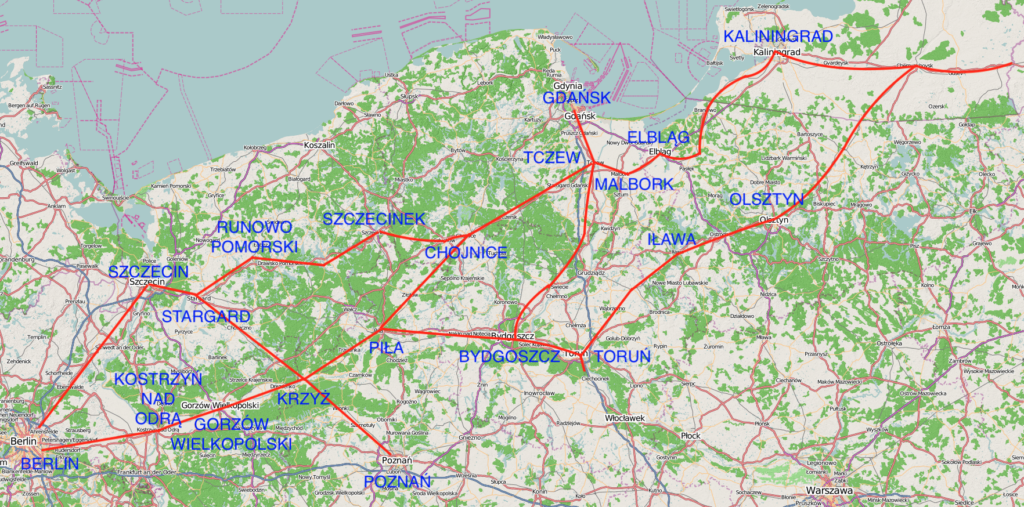
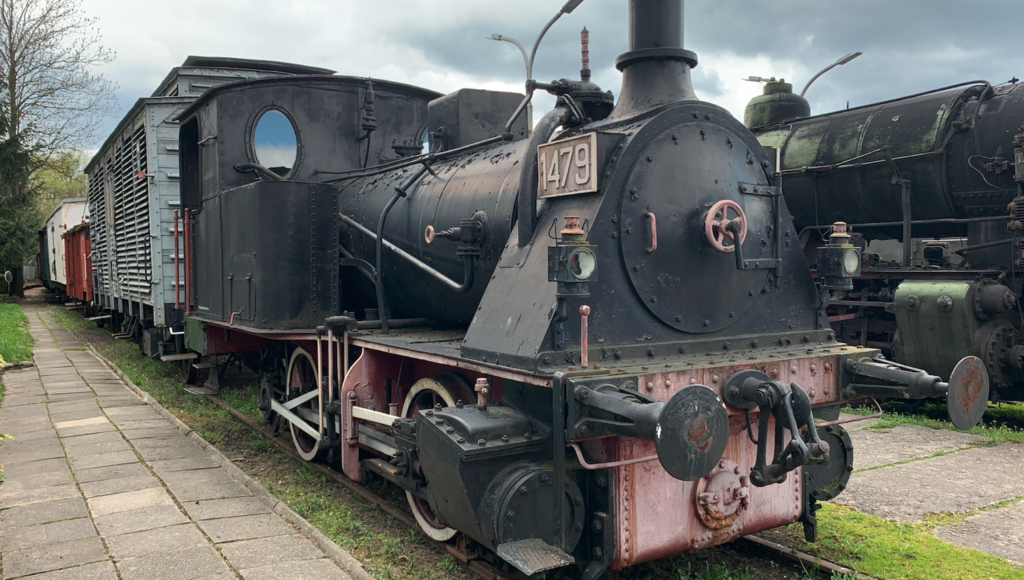
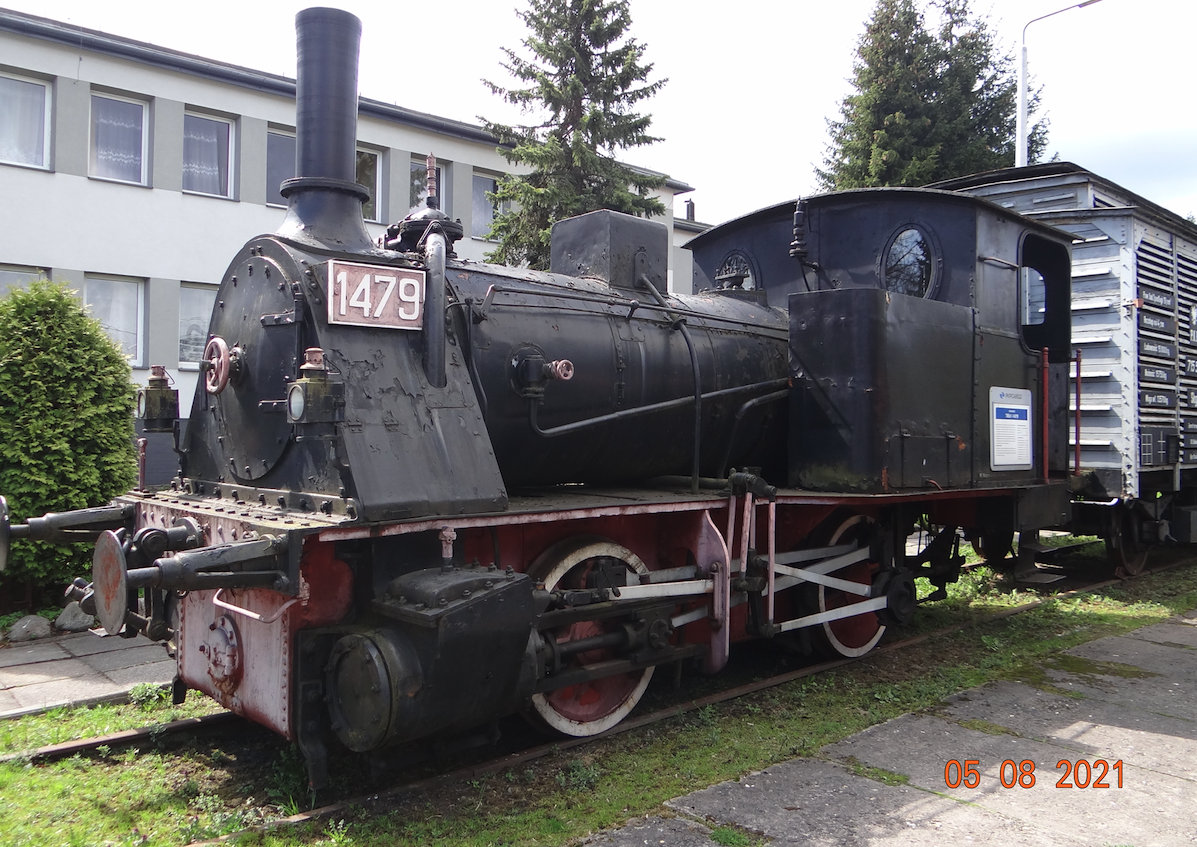
Photo description: Similar steam locomotives operated on the Ostbahn in the 19th century.
The Germanic word “Ostbahn” has two different meanings. The first is the Prussian Eastern Railway. The second is the General Directorate of the Eastern Railway, the railways in the General Government during the occupation of Poland. The first meaning was and remains the pride of the Germans. The Germans refuse to remember the second meaning. Let’s be clear from the outset. If the German army hadn’t started World War II, the Germans would still be peacefully commuting from Berlin to Königsberg. And so, over a beer, they reminisce about the good old days and take sentimental journeys, often renting retro trains in Poland. The Germans are arrogant people who treat other nations with superiority. They oppress their own weakest citizens. They were the first in the world to introduce eugenics and concentration camps. Their national characteristics make them close to the Muscovites and often share common interests. Moreover, there is an eternal friendship between them.
In the Kingdom of Prussia, King Frederick William IV supported the construction of railways. The king participated in all important events related to the railway in Prussia. The concept of building the Ostbahn network was conceived in 1842. However, various ideas clashed over the route of the route and, above all, its financing. The Ostbahn was intended to open up Prussian territories east of Berlin, including the cities of Gdańsk, Königsberg (Königsberg), Bromberg (Bydgoszcz), Thorn (Toruń), and the towns of Eydtkuhnen and Alexandrowo (Aleksandrów Kujawski) on the border with the Muscovites. The classic Ostbahn route was to run from the old Berlin Ostbahnhof at Küstriner Platz via Küstrin (Kostrzyń), Kreuz (Krzyż), Schneidemühl, Dirschau, and Königsberg (Prussia) to Eydtkuhnen on the Prussian-Russian border.
The main idea was to connect Berlin with Moscow and St. Petersburg. Although the goals of the two empires were never entirely aligned, the Ostbahn was officially built to connect Berlin with Königsberg (now Kaliningrad) and further east. The Prussian section of the railway was to terminate at Eytkunami (now Chernyshevskoye). The geographical coordinates were 54 degrees 38 minutes N, 22 degrees 44 minutes E. The Moscow Empire Railway was to be built next. The Prussian, main section of the railway was to be between 790 km and 810 km long, depending on the chosen route.
The Ostbahn was not the first Prussian railway project. Construction of the important Berlin-Szczecin railway line began early, extending it to Stargard Szczeciński (now Stargard). A 180-kilometer Stargard Szczeciński-Poznań line was already planned and implemented. The Berlin-Kostrzyn nad Odrą line was also built. Railway lines were already running from Kostrzyn towards Wrocław and Vienna.
Work on the Ostbahn began in 1846, when construction of a large station and railway line towards Piła, 64 km away, began in the village of Krzyż, at the 93rd kilometer of the Stargard Szczeciński-Poznań line. However, work was soon interrupted and resumed in 1848.
Since no private investors could be found for the railway to the relatively sparsely populated areas of East Prussia, the Ostbahn was built as a state railway. A draft decree was submitted to Parliament in mid-1847. The process took over two years. After administrative changes, the decree was adopted as law on December 7, 1849.
The revolutionary unrest in Berlin in 1848, along with the prevailing unemployment and increasing impoverishment of the population, played a significant role in the construction of the Ostbahn. In the spring of 1848, government officials conceived the idea of removing rebellious and unemployed Berliners from the city, intending to use them to build the Ostbahn.
In June 1848, new construction workers arrived at Dragebruch near Kreuz (Cross). By September 1848, the number of employees had grown to 1,300. They worked 12-14 hours a day. The workers were housed with local farmers, and more often in huts and tents. Engineers delegated from Berlin supervised the workers. Work progressed relatively quickly.
Most of the Ostbahn lines were planned as double-track. Only a few were single-track. European gauge tracks with a 1,435 mm gauge were used. The distance between the track centerlines was 4.00 m. The sleepers were made of pine wood, 2.50 m long. The total track width was 10.40-11.00 m. The single-track track had a minimum width of 4.50 m. The sleepers were laid on a gravel bed, and in places where the gravel was washed away, on a crushed stone bed. Drainage ditches were dug along the track on both sides. This was the case when the line was laid in flat terrain. It was more difficult to build a railway line in undulating terrain, where embankments or cuttings had to be made. In such cases, much larger masses of earth and rock had to be transported. Initially, the rails were made of iron, later replaced with steel rails. This is where the name “Iron Railway” came from. The greatest challenges were posed by constructing bridges over rivers. Bridge abutments were always built with double-track lines in mind, although initially a single-track bridge span was laid. In general, in Pomerania, railway construction was relatively easy and allowed for very long, straight sections. Little construction was done on embankments and cuttings. Telephone lines were built along the tracks.
The Krzyż – Piła route was the first section of the Ostbahn (Ostbahn) route. The route continued to Bydgoszcz (Piła – Bydgoszcz 88 km). The first train to Bydgoszcz arrived on July 27, 1851. The route from Kreuz (Krzyż) to Bromberg (Bydgoszcz) was inaugurated by King Frederick William IV, who traveled this route in a special train and was joyfully welcomed at all stations.
As part of further expansion, station buildings and dispatch buildings were constructed at the stations for passenger and freight traffic. At the larger stations, water towers, coaling facilities for steam locomotives, additional side tracks, loading ramps, and warehouses were built. Buildings were also constructed to house railway workers’ families. The basic equipment at the stations was a telephone and a telegraph. Trains ran on a “scepter” and according to a timetable. Shaped arrival and departure signals were installed at the stations.
The next section, Bydgoszcz-Gdańsk, 156 km long, opened in 1852. In 1853, the Malbork-Elbląg-Königsberg section, 134 km long, was opened. For a time, passengers were transported from Gdańsk and Tczew to Malbork by horse-drawn stagecoaches. This remained the case until the construction of bridges over the Vistula in Tczew and the Nogat in Malbork. In 1857, the bridges over the Vistula and Nogat Rivers were opened.
In 1860, the railway reached the town of Eydtkuhnen (Ejtkuny in Polish, now Chernyshevskoye), on the border with the Moscow Empire.
During this time, the network was expanded by building successive, shorter sections. In 1857, the Krzyż-Kostrzyn-Frankfurt (Oder) section was opened. In 1861, the Bydgoszcz-Toruń section (46 km) was built, extended a year later to Aleksandrów Kujawski by another 20 km. Simultaneously, a new rail-road bridge over the Vistula River was built in Fordon near Bydgoszcz.
In 1871-1873, a second line was built on the right bank of the Vistula, from Toruń via Iława-Olsztyn-Korsze-Gierdawa to Wystruć (now Chermiakhovsk), covering a length of 320 km. Also in the period 1871-1873, an additional line was built: Piła – Złotów – Chojnice – Czersk – Starogard Gdański – Tczew, with a length of 185 km.
In 1874, a new route was opened: Runowo Pomorskie – Drawsko Pomorskie – Złocieniec – Czaplinek – Szczecinek – Człuchów – Chojnice, a 158-kilometer line. The construction of this line was the initiative of the “Pomorska Kolej Centralna” company, which brought together cities in Central Pomerania.
In 1877, the Ostbahn network was 1,895 kilometers long. In 1880, the Ostbahn network reached a length of 2,210 kilometers, and in 1895, it reached 4,830 kilometers. From 1849, the Ostbahn headquarters were located in Bydgoszcz. Between 1886 and 1889, a handsome building was constructed for the headquarters, which stands on present-day Dworcowa Street. In 1888, the Ostbahn management in Bydgoszcz was divided into three districts: Bydgoszcz, Gdańsk, and Königsberg. At the same time, the railway in Pomerania was nationalized.
The construction of the Ostbahn proved to be a step in the right direction, as it became part of the European rail link from Paris via Berlin and Königsberg to St. Petersburg. Various international express and luxury trains, such as the legendary Nord-Express, ran along the Ostbahn route. The Ostbahn railway played a significant role in the economic development of the eastern Prussian provinces and had significant military significance, which was utilized during the Great World War and in the immediate post-war years.
The Rebirth of Poland.
The rebirth of the Polish Republic in 1918 did not sit well with the defeated Germans. The narrow access Poland gained to the Baltic Sea cut off the Ostbahn routes. Despite this, rail transport continued to develop. Germanic trains passed through Polish territory, usually on the Chojnice-Trzew line. Polish trains reached Pruszcz Gdański, Gdańsk, and Sopot. However, the Germans began demanding extraterritorial roads and railways, which was unacceptable to Poland.
Unfortunately, on September 1, 1939, the Germanic army, along with the Red Army (September 17, 1939), invaded Poland, violating all international agreements. The Germans took over the entire Polish railway infrastructure and rolling stock. They did not enjoy their success for long. On January 22, 1945, the last scheduled express train from Königsberg to Berlin ran, carrying mainly Germanic refugees.
From the turn of 1944/1945, Poland found itself under the occupation of Red Moscow. Much Germanic rolling stock, primarily locomotives and freight wagons, was seized by the Red Army. Thousands of kilometers of track were converted to broad gauge to facilitate supplying the war front. Hundreds of kilometers of track on side routes were dismantled and transported as “trophy” to Moscow. When the Soviet army transferred Poland’s railways to the Polish State Railways (PKP), most of the routes were restored to freight and passenger service. Some of the former Ostbahn routes were restored to double track. Some lines have been electrified since 1959. However, a significant portion of the main Ostbahn routes will not be electrified. This is due to Poland’s different economic goals than those of the Germans. The Polish railways run their main routes north-south, not east-west.
Following the socio-economic transformation in Poland in 1989 and the more cooperative relations between Poland and the Federal Republic of Germany, the term “Ostbahn” is being used again among Germans. Polish railway operators are eager to offer train rides on the former Ostbahn routes to Germanic tourists, even offering “Retro” trains. The “Retro” trains are assembled primarily in Wolsztyn. The passenger cars date from the 1930s, and the steam locomotives from the 1940s. The most popular route is the Kętrzyn – Gorzów Wielkopolski – Krzyż – Piła route.
Due to Moscow’s aggressive policy, it is currently impossible to organize Retro trains to Königsberg (Kaliningrad) itself. Moscow has turned the Kaliningrad Oblast into a major military center with thousands of soldiers and weapons. Retro trains can reach the farthest point as far as Braniewo or Korsze. Korsze station can be reached by regular PKP trains. Similarly, stations such as Kętrzyn, Giżycko, and Ełk can be reached.
The largest section of the former Prussian Ostbahn railway is currently located in Poland and is in operation. These are single- and double-track lines. The routes are systematically undergoing renovation and revitalization, adapting them to new requirements and for disabled passengers. New high platforms are being built, and modern rolling stock is being introduced. The remaining small section of the Ostbahn serves the Federal Republic of Germany, the Muscovite state, and Lithuania. The border station between Muscovy and Lithuania is currently Nesterow, formerly Ebenrode or Stallupönen. Eydtkuhnen station was completely dismantled. All station buildings were demolished. The section of the line from Braniewo (formerly Braunsberg) in Poland through the Soviet border station at Mamonowo (formerly Heiligenbeil) just before Kaliningrad has a single track, one broad gauge and one standard gauge.
Written by Karol Placha Hetman